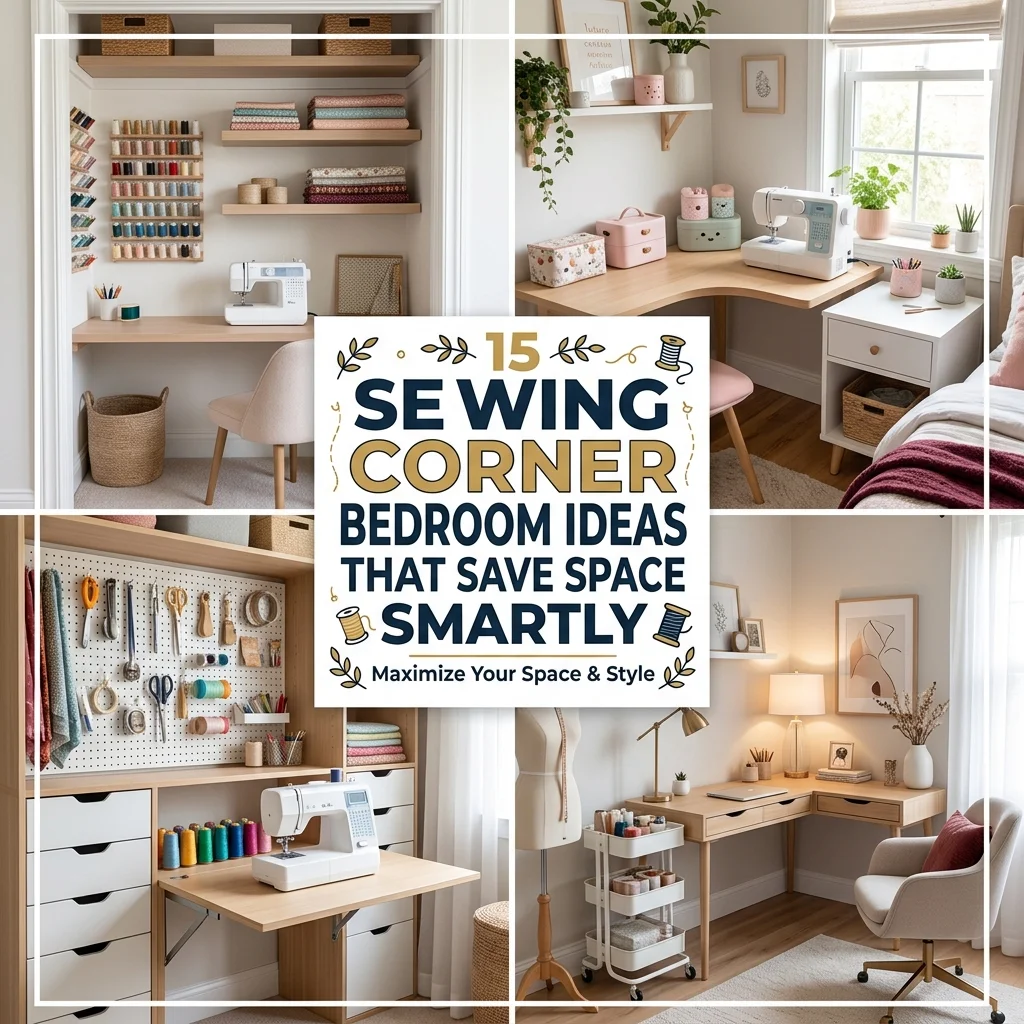
15 Sewing Corner Bedroom Ideas That Save Space Smartly
Introduction
A small bedroom doesn’t have to mean giving up your favorite creative hobby. Sewing corner bedroom ideas save space by turning overlooked areas into practical, beautiful work zones.
Whether you have an empty corner, a narrow wall, a bedside gap, or a multifunctional guest room, the right setup can make sewing feel effortless without overwhelming your bedroom. The best layouts combine compact furniture, vertical storage, flexible surfaces, and thoughtful organization. I’ve noticed that even a tiny workspace can feel surprisingly comfortable when every item has a clear purpose. These ideas will help you create a sewing corner that looks polished, stays organized, and gives you room to create without sacrificing the calm feeling of your bedroom.
Bedside Sewing Nook
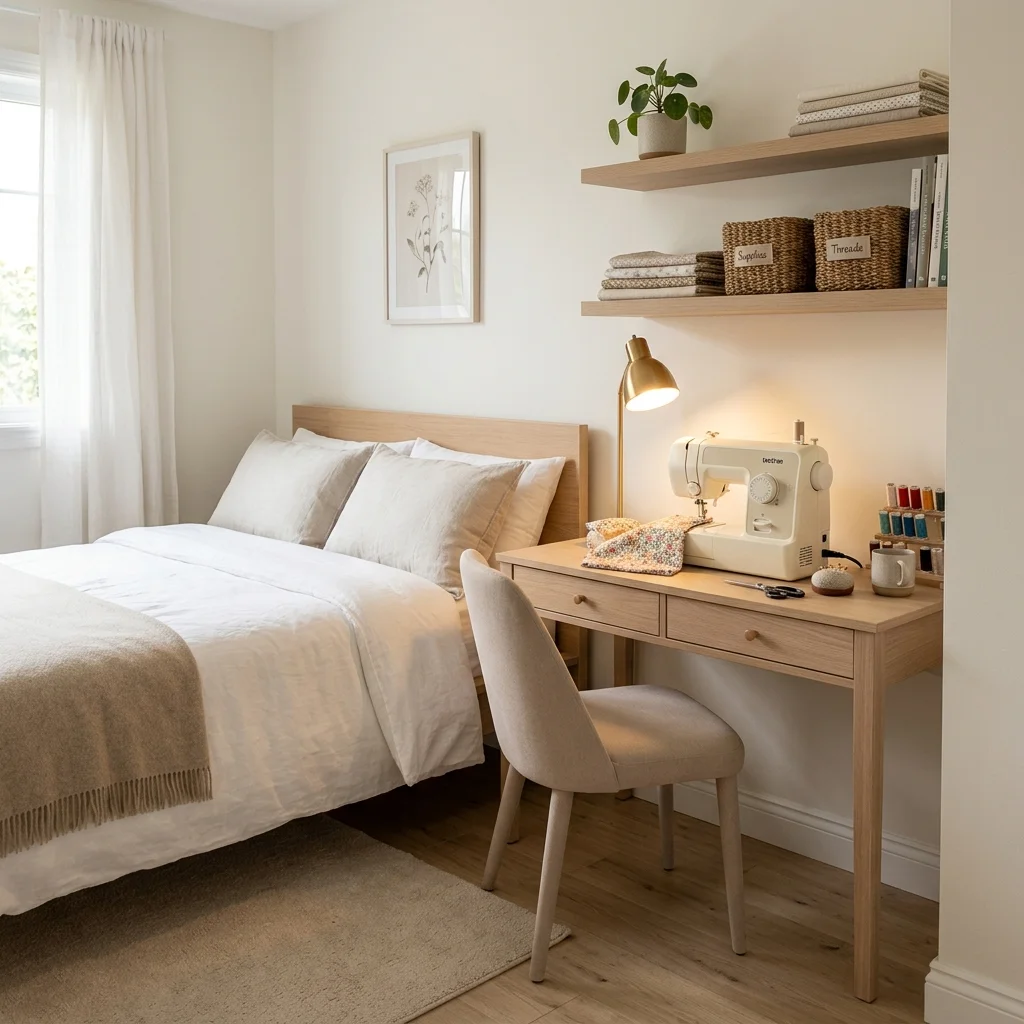
A sewing nook can feel intentional rather than squeezed in when the bed wall and workspace share a thoughtful plan. Tucking a slim desk beside a nightstand creates a clear work zone without stealing valuable floor area. Use a narrow tabletop, wall mounted shelves, and a compact task chair to keep the footprint light. I’ve noticed this arrangement works especially well in bedrooms where every inch matters because the sewing area feels connected to the room instead of looking like an afterthought. Matching finishes across the desk and bedside furniture also make the whole layout feel calmer and more cohesive.
Smart placement makes a small sewing setup surprisingly comfortable. Position the desk where daylight reaches the machine, then add an adjustable lamp for evening stitching and detailed work. Drawers beneath the surface can hold thread, scissors, and rulers, while shallow shelves keep frequently used supplies visible but tidy. A rolling cart adds flexible storage without permanently crowding the walkway. The best part is how quickly the room can switch between creative work and everyday bedroom use. When the chair tucks completely under the desk, the sewing corner visually disappears, leaving the sleeping area open and peaceful.
Corner Workstation
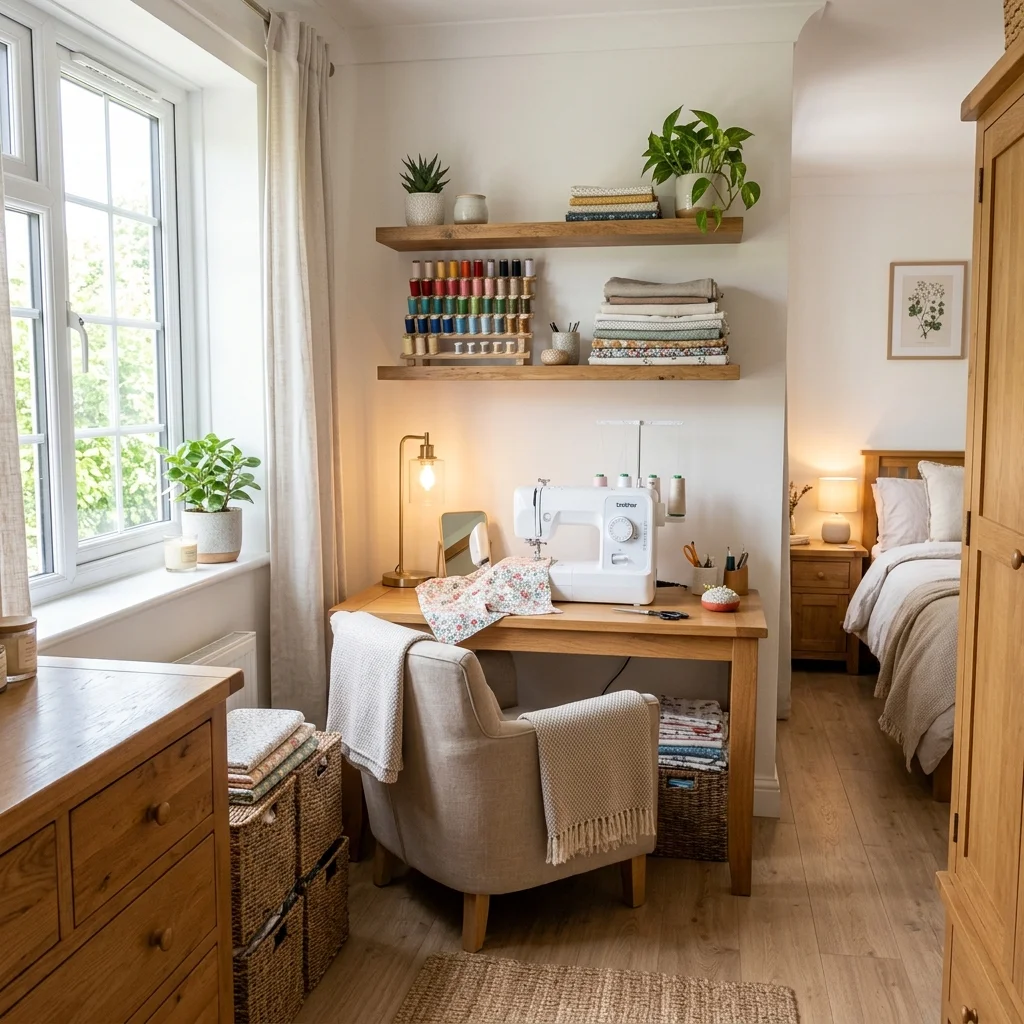
A forgotten bedroom corner can become a beautiful creative station with almost no wasted space. Place a compact sewing table against two walls, using the corner itself for vertical storage and display. Soft white walls, warm wood, woven baskets, and a muted fabric chair create a welcoming palette that feels residential rather than utilitarian. Floating shelves above the machine keep essentials close while preserving floor space below. I’ve seen this approach work particularly well for renters because it relies on furniture and removable storage instead of major construction. The result is a dedicated workspace that feels tidy, bright, and spacious.
The right proportions make this arrangement especially effective in tight rooms. Choose a table that fits the corner without extending far into the walking path, then use shelves to store fabrics, patterns, and smaller tools. A compact chair can slide beneath the desk when the machine is not being used. Keep decorative items minimal so the corner remains visually calm. This setup also makes good use of awkward spaces near closets or windows. Instead of treating an unused corner as dead space, you turn it into a practical creative zone that adds personality without overwhelming the bedroom.
Vertical Supply Storage
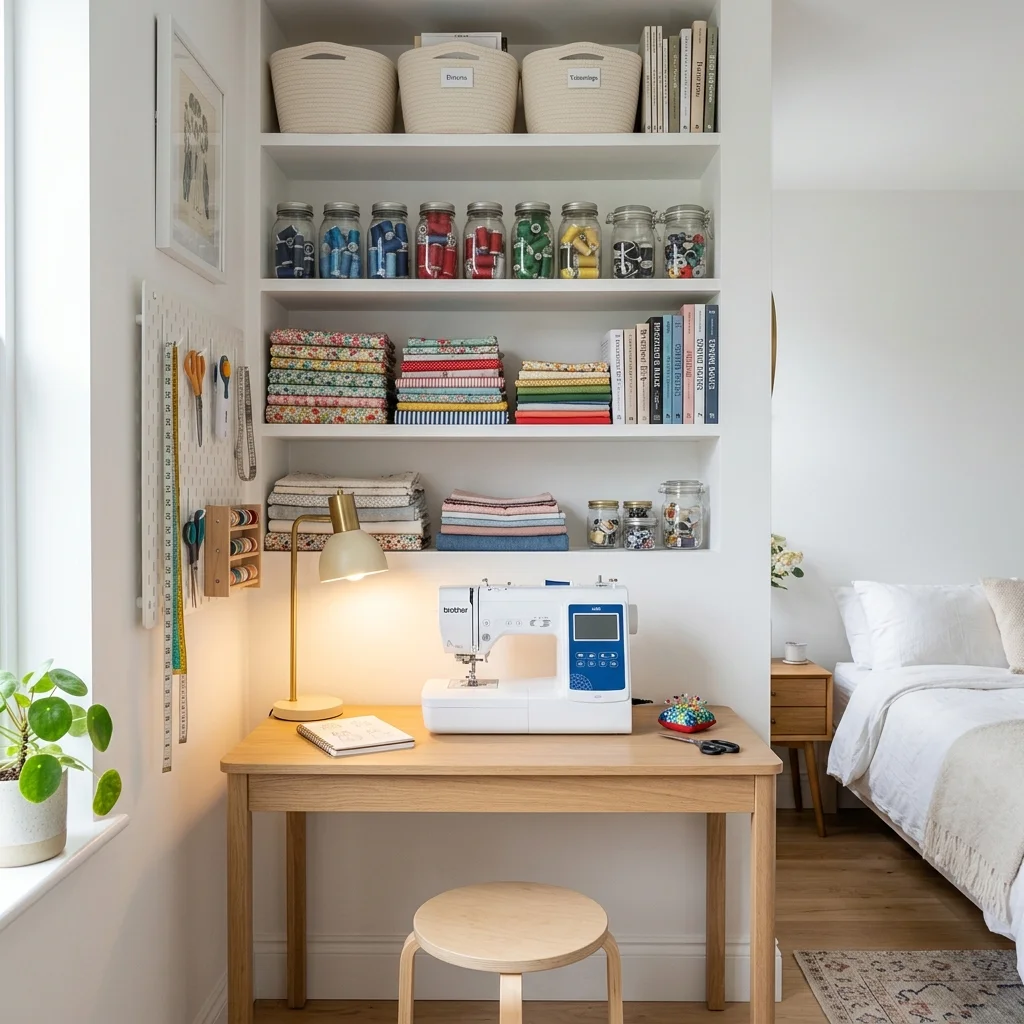
Vertical storage is the quiet hero of a compact sewing area because it moves supplies upward instead of outward. Install slim shelves above the desk for thread jars, folded fabrics, pattern books, and small baskets. Keep heavier items on lower shelves and reserve eye level for tools you reach for often. A pegboard can add another useful layer without making the corner feel bulky. Choose one or two coordinating finishes so the storage looks intentional. With the floor left open, cleaning becomes easier and the bedroom retains a generous visual flow, even when the sewing station is fully stocked.
Good organization can also make sewing feel faster and less frustrating. Group similar supplies together, label small containers, and keep your most-used scissors, needles, and measuring tools close to the machine. Shelves should stay shallow enough to avoid making the workspace feel enclosed. If you prefer a softer bedroom aesthetic, woven baskets can hide less attractive supplies while folded fabrics provide gentle color. I’ve found that visible order matters in small rooms because clutter quickly becomes the focal point. Thoughtful vertical storage keeps everything accessible while allowing the sewing corner to blend naturally with the bedroom.
Under Window Desk
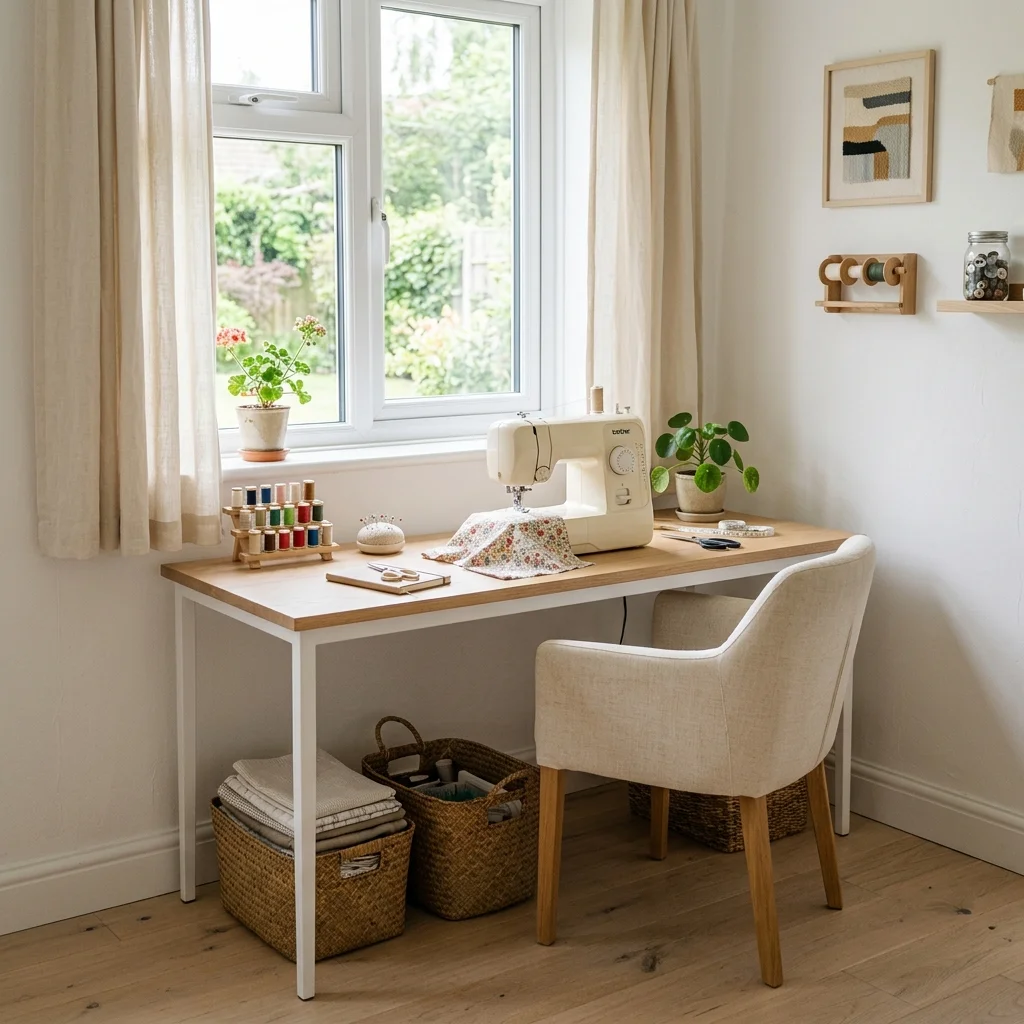
Natural light can transform a small sewing corner, and the space beneath a bedroom window is often perfect for it. A slim desk placed under the sill creates a dedicated workstation while keeping the room bright and open. Choose a tabletop that does not block the window and pair it with a lightweight chair that can slide underneath. Linen curtains and pale wood finishes keep the area soft and bedroom-friendly. In my experience, positioning the machine near daylight makes fabric colors and stitching details easier to see, while the surrounding brightness helps the entire corner feel larger.
A window desk also gives you a simple way to separate creative work from sleeping space without adding partitions. Store supplies in baskets beneath the table or use a narrow drawer unit beside it. Keep the windowsill mostly clear so daylight remains the main feature. If afternoon sun becomes distracting, adjustable curtains or a simple shade can control glare without darkening the room. The setup works particularly well for daytime projects because the workspace feels fresh and inviting. Once the chair is pushed in and supplies are organized, the desk becomes a subtle part of the bedroom rather than a dominant piece.
Fold-Down Sewing Desk
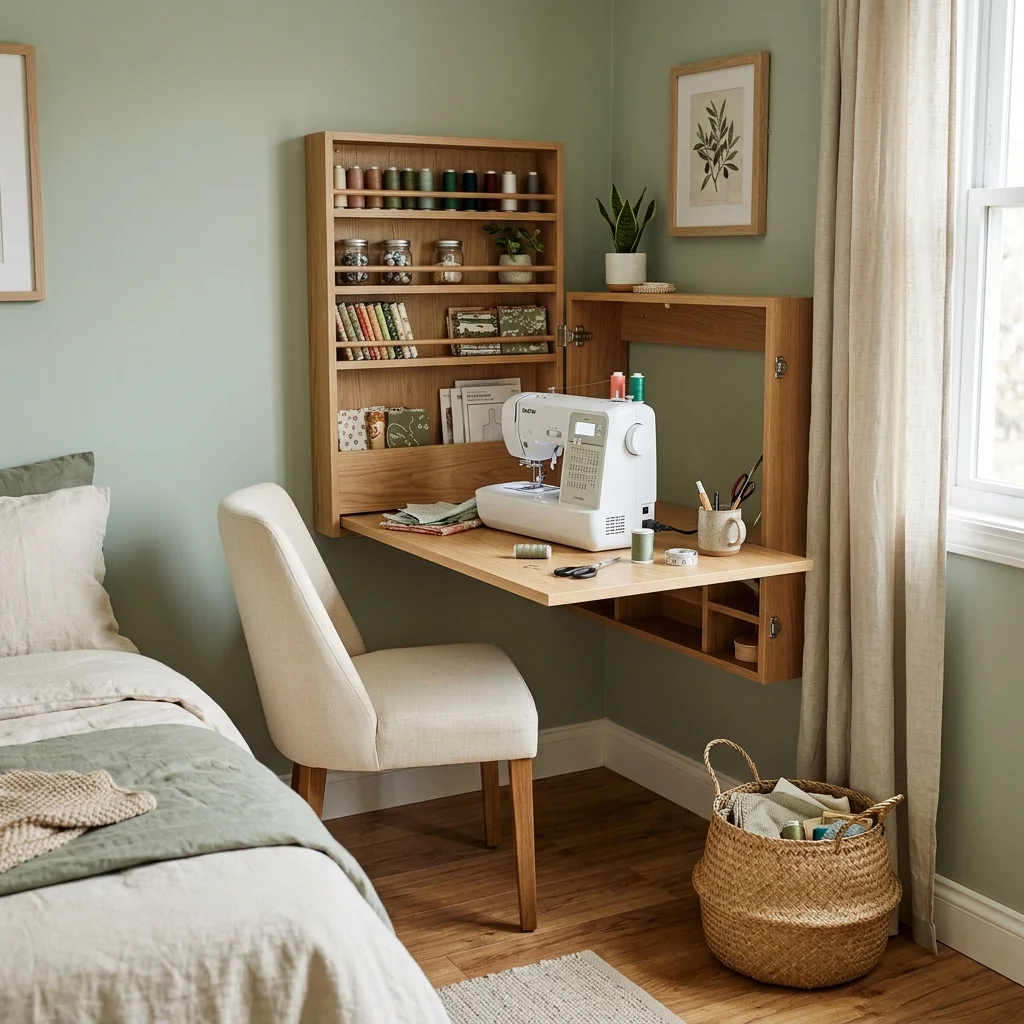
A fold-down desk is one of the smartest choices when a bedroom needs to serve several purposes. Mounted against the wall, it provides a sturdy surface for sewing when open and nearly disappears when closed. Choose a design with built-in compartments for thread, patterns, and smaller tools so storage stays close to the machine. A soft painted wall can make the furniture feel integrated rather than industrial. I’ve noticed this solution is especially useful in guest bedrooms, where a permanent sewing table might otherwise compete with the room’s main purpose and make the space feel crowded.
The key is planning what happens when the desk is folded away. Store the machine safely on a nearby shelf or inside a cabinet, then use the closed surface as a clean visual backdrop. A lightweight chair can move elsewhere in the room when sewing is finished, freeing the floor for everyday activities. Add only a few decorative elements around the workstation so it does not become visually busy. This arrangement gives you a surprisingly complete sewing area without committing valuable floor space to a full-time desk, making it ideal for bedrooms that need to change functions throughout the day.
Closet-Side Station
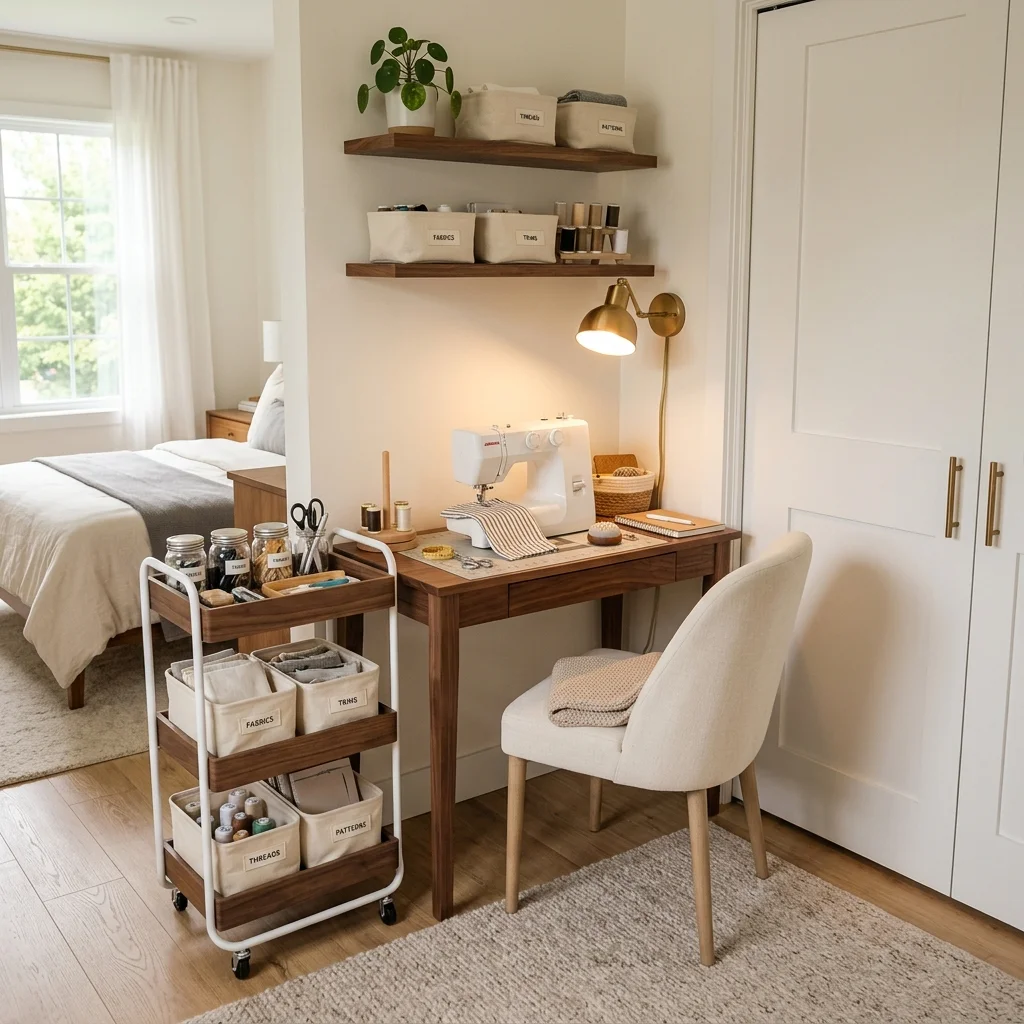
The narrow strip beside a closet can become valuable workspace when every part of the bedroom needs to earn its place. A slim sewing desk positioned along the closet wall creates a practical station without interfering with the bed or main walkway. Keep the furniture shallow and choose a chair that can slide completely underneath. A narrow rolling cart can fit beside the desk for fabric and notions, giving you extra capacity without adding a bulky cabinet. This arrangement feels especially natural when the desk finish complements existing bedroom furniture, helping the creative area blend into the room.
Accessibility matters just as much as appearance in a compact sewing station. Leave enough clearance for closet doors to open fully, and avoid storing anything where it could block drawers or hamper movement. Use a rolling cart for supplies that need to travel between the workstation and another part of the room. Wall-mounted organizers can handle smaller tools while keeping the desktop available for active projects. In a bedroom with limited floor space, these small decisions make a noticeable difference. The sewing area remains functional during projects while the surrounding room stays easy to navigate, organized, and visually balanced.
Built-In Desk Nook
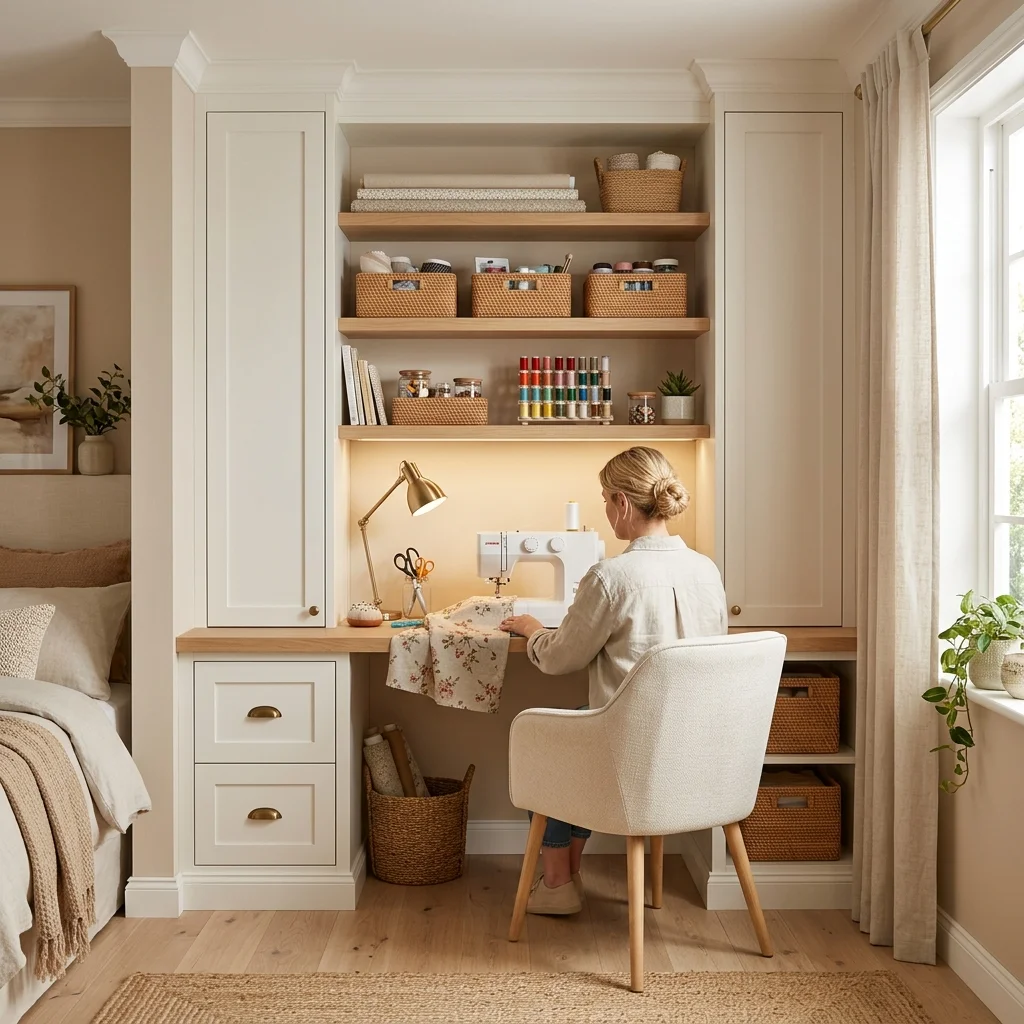
A built-in desk can make a sewing area feel like it was designed with the bedroom from the beginning. Recessing the workstation into an existing alcove or shallow wall section keeps the desk footprint controlled while creating valuable storage above and below. Choose cabinetry that matches the room’s existing finishes for a seamless appearance. Drawers can conceal fabric and notions, while open shelves display neatly folded materials. This approach requires more planning than freestanding furniture, but the payoff is substantial. The finished station feels intentional, streamlined, and surprisingly spacious because the storage follows the architecture instead of extending into the room.
A well-planned built-in can also solve several organization problems at once. Include enough countertop depth for comfortable machine placement, then add task lighting beneath upper shelves to reduce shadows while sewing. Cabinets with doors are useful for unfinished projects because they keep visual clutter hidden between sessions. If you are remodeling, consider electrical outlets inside the workstation so cords stay controlled. Keep the surrounding wall simple rather than filling every shelf. The clean lines of built-in storage already provide visual structure, allowing the bedroom to retain a relaxed atmosphere while supporting serious sewing and crafting activities.
Rolling Cart Corner
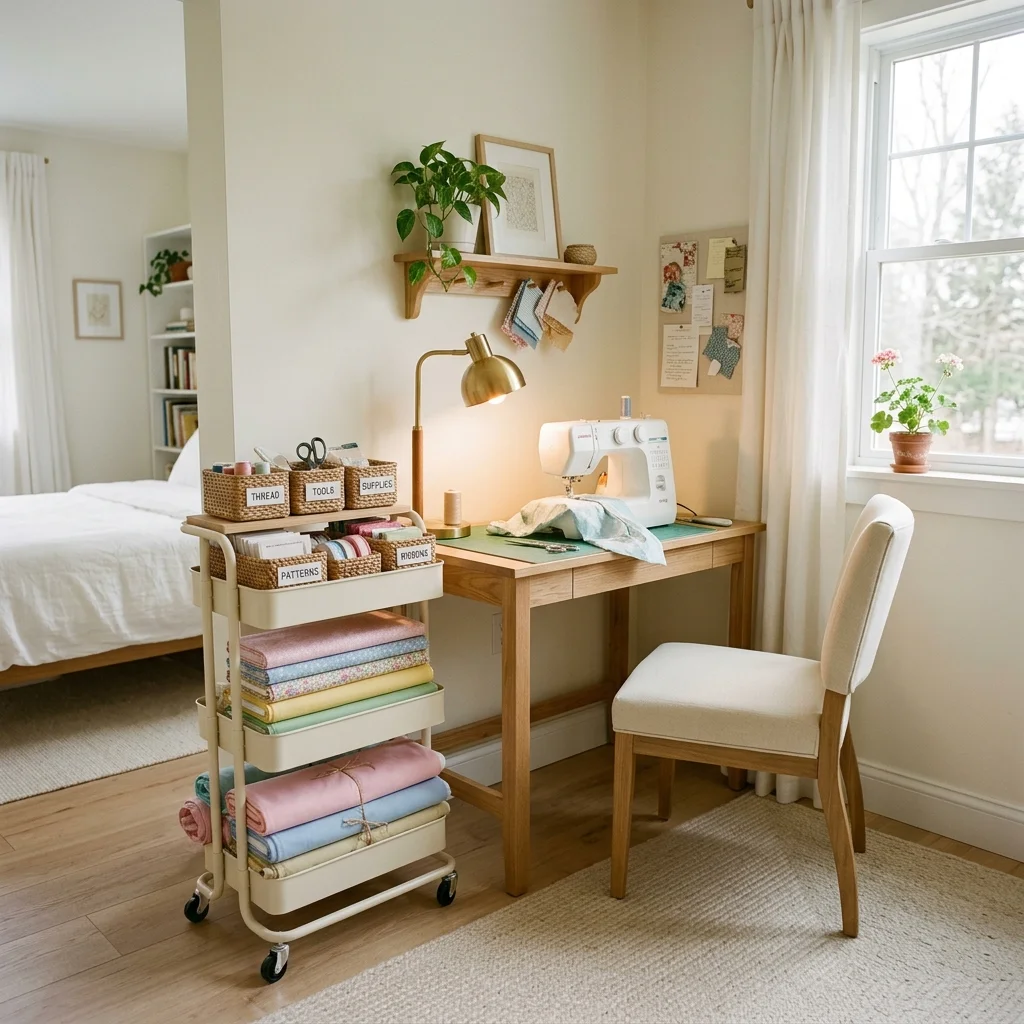
A rolling cart can completely change how a small sewing corner functions. Instead of adding another fixed cabinet, use a narrow cart to hold thread, fabric, patterns, and tools beside the machine. When you need more working room, roll it closer; when the project is finished, move it under the desk or against a wall. This flexibility is particularly useful when a bedroom cannot accommodate permanent storage furniture. I’ve seen compact carts work beautifully because they provide the capacity of a small cabinet while maintaining an open floor plan. Choose one with shallow shelves so supplies remain visible without creating visual heaviness.
The cart becomes even more useful when each shelf has a clear purpose. Keep frequently used tools on the top level, fabric or project boxes in the middle, and heavier supplies lower down. Small labeled baskets prevent loose items from making the area look chaotic. Wheels with reliable locks are worth choosing because the cart should stay stable while you work. For a softer bedroom aesthetic, select wood, metal, or woven details that complement the existing furniture. Once organized, the cart becomes a practical extension of the sewing desk rather than another piece competing for attention.
Bed-End Sewing Area
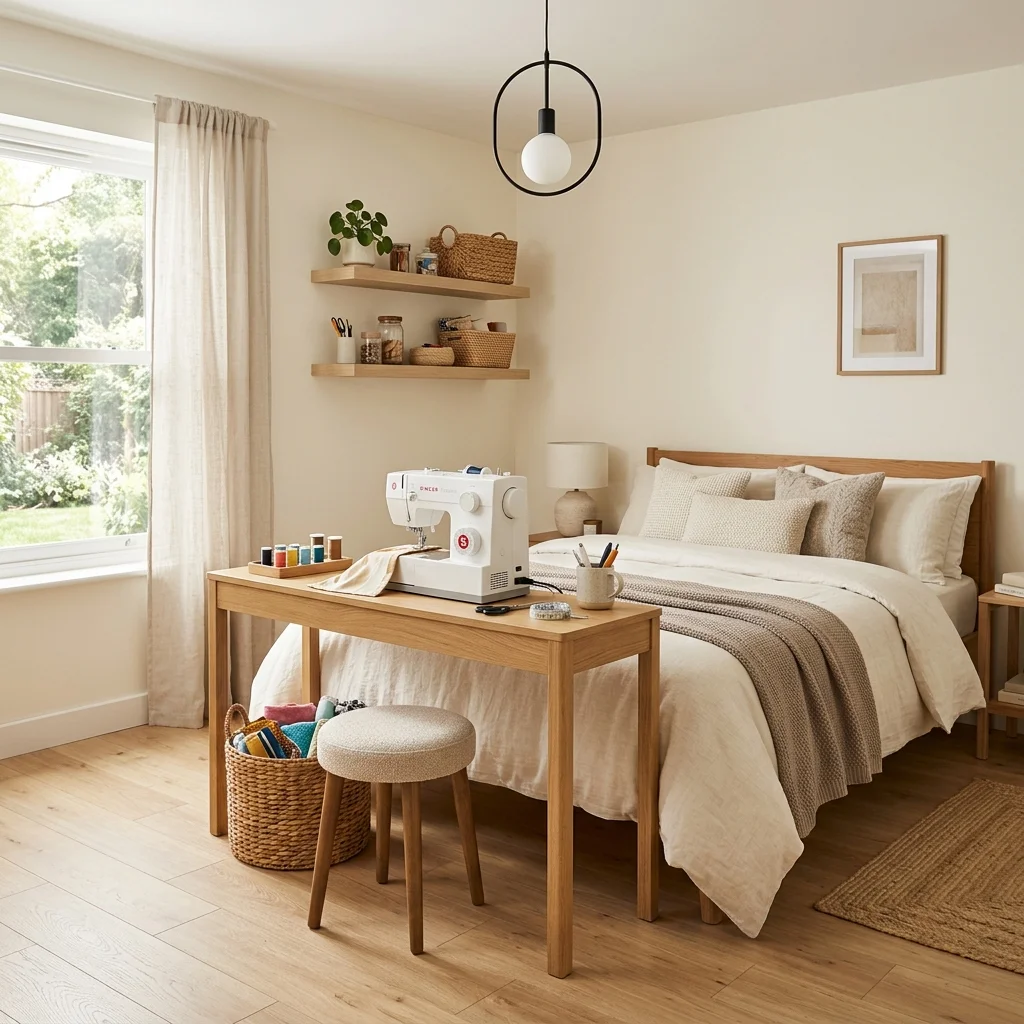
The space at the foot of the bed can become a surprisingly effective sewing zone when the room layout allows enough clearance. A narrow console-style desk provides a useful surface without visually weighing down the bedroom. Keep the furniture considerably shallower than a traditional workstation, and choose a compact stool that can tuck underneath. This creates a clear boundary between the sleeping area and creative zone without requiring a room divider. The arrangement works especially well in longer bedrooms because the desk fills unused floor length rather than competing with the walls, corners, or bedside areas.
Comfort and circulation should guide the final arrangement. Leave enough room between the bed and desk to walk comfortably, pull out the chair, and move around safely. A slim rolling drawer unit can provide additional storage without making the foot of the bed feel enclosed. Keep decorative pieces restrained so the workstation remains visually light. When the machine is not in use, cover it neatly or store it nearby to maintain the bedroom’s restful appearance. With thoughtful proportions, the bed-end setup can turn an awkward empty zone into a practical sewing station that still feels calm and inviting.
Wardrobe Desk Combo
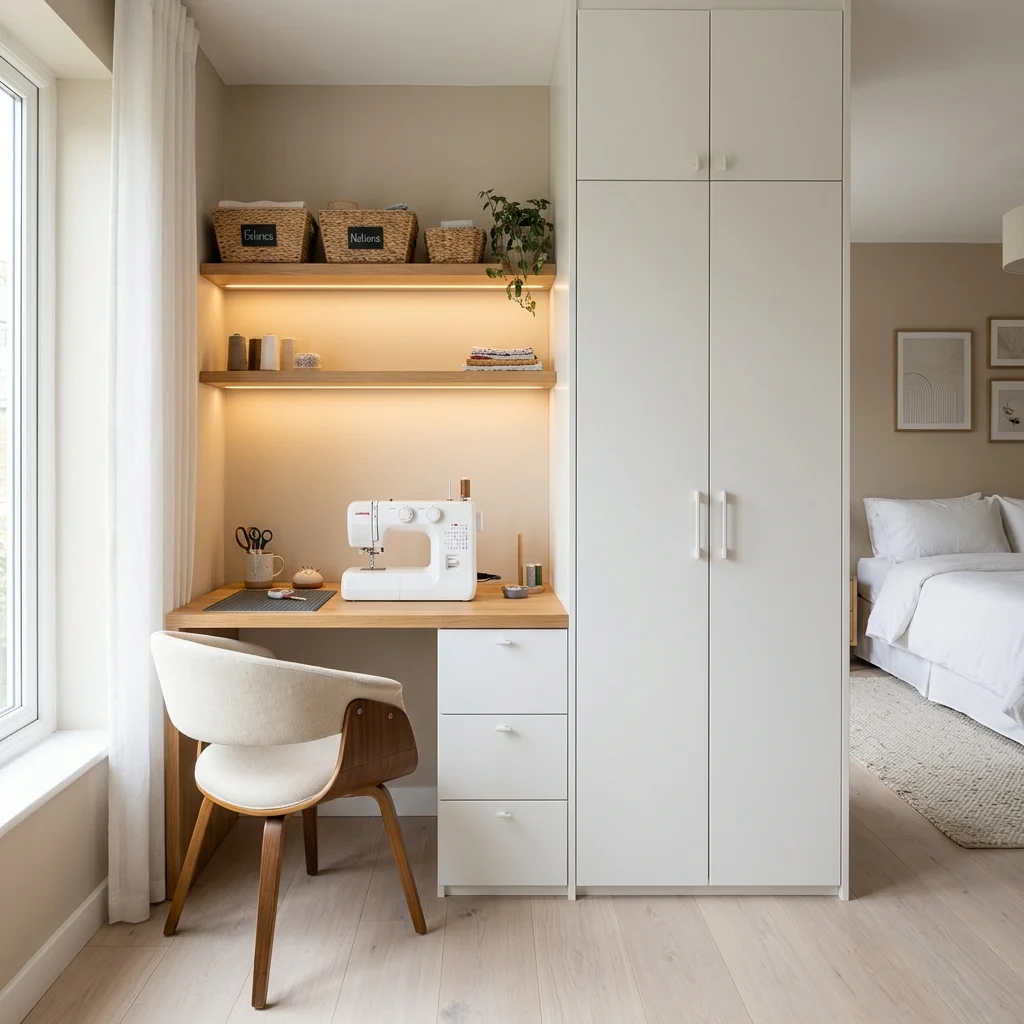
A wardrobe and sewing station can share the same wall when the furniture is planned as one cohesive zone. A compact desk fitted beside or between tall storage units creates a dedicated workspace without spreading furniture across the bedroom. Use matching cabinetry finishes so the area feels intentional rather than pieced together. Drawers beneath the worktop can hold small tools, while taller wardrobe sections store fabric, unfinished projects, or larger equipment. This arrangement is especially useful in bedrooms where a separate sewing table would interrupt the layout. The result is a tidy multifunctional wall that handles storage and creativity together.
The most practical layouts keep the workstation close to everyday storage but protect the desk from becoming an overflow surface. Reserve one or two drawers specifically for sewing supplies and use closed doors for bulkier materials. Under-cabinet lighting can brighten the machine without adding another floor lamp. If the wardrobe has sliding doors, the overall footprint can remain particularly compact. I’ve noticed that matching cabinetry makes a major visual difference in small rooms because continuous lines make the wall appear calmer and more spacious. With careful organization, the sewing station can disappear into the bedroom when the project is finished.
Hidden Sewing Cabinet
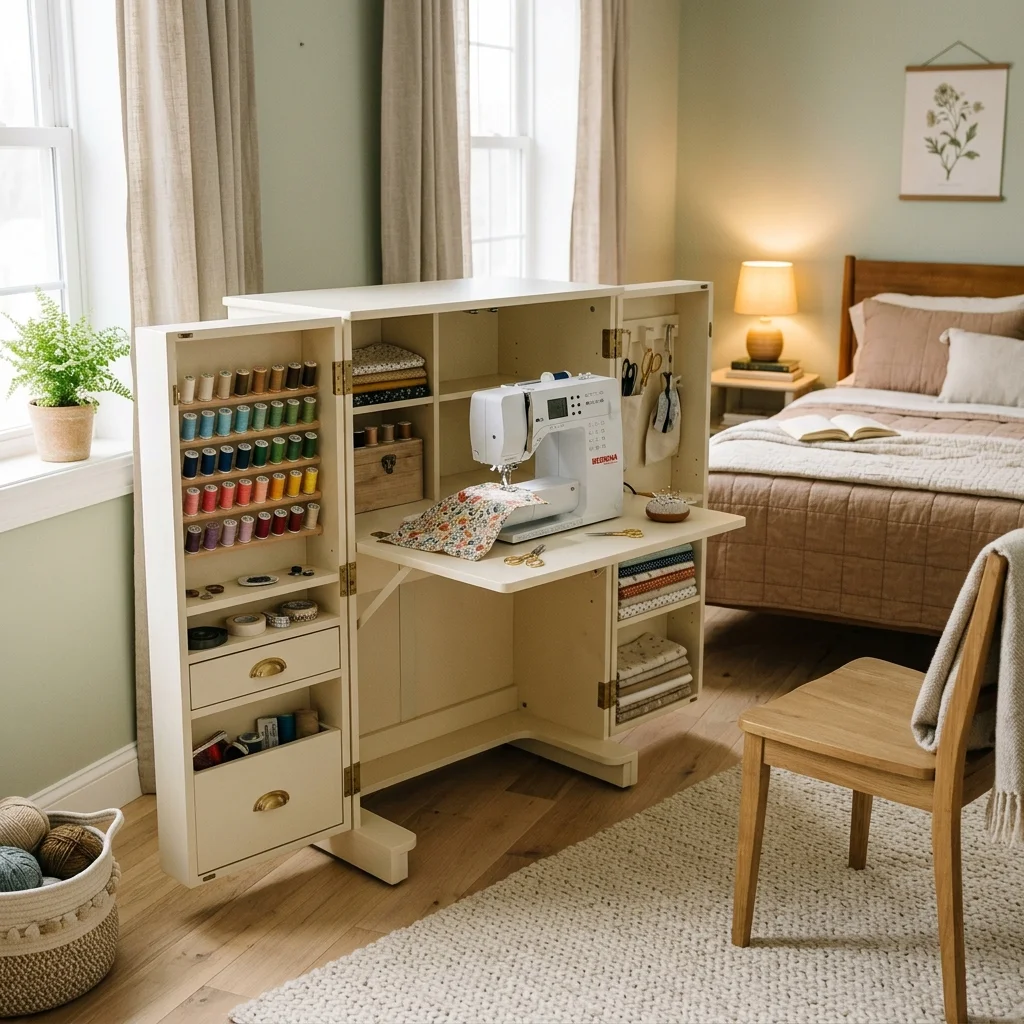
A hidden sewing cabinet is ideal when you want a fully functional workstation without seeing it all day. Closed doors conceal the machine, tools, and unfinished projects, allowing the furniture to look more like a traditional bedroom cabinet. When it is time to sew, the doors open and the work surface can unfold into a practical station. Look for adjustable shelves and compartments that fit your equipment rather than forcing supplies into awkward spaces. This approach is especially valuable in shared bedrooms or multipurpose rooms because the creative setup can disappear completely when you need the space for something else.
Organization inside the cabinet determines whether this idea feels effortless or frustrating. Keep the machine positioned so it can be lifted or rolled into place easily, and store frequently used tools within arm’s reach. Small compartments are useful for thread and notions, while deeper shelves can accommodate fabric containers. Choose cabinet hardware and finishes that complement the rest of the bedroom so the piece feels decorative rather than workshop-like. Once everything has a designated home, closing the doors creates an immediate visual reset. That simple transition can make a compact bedroom feel significantly calmer between sewing sessions.
Floating Sewing Shelf
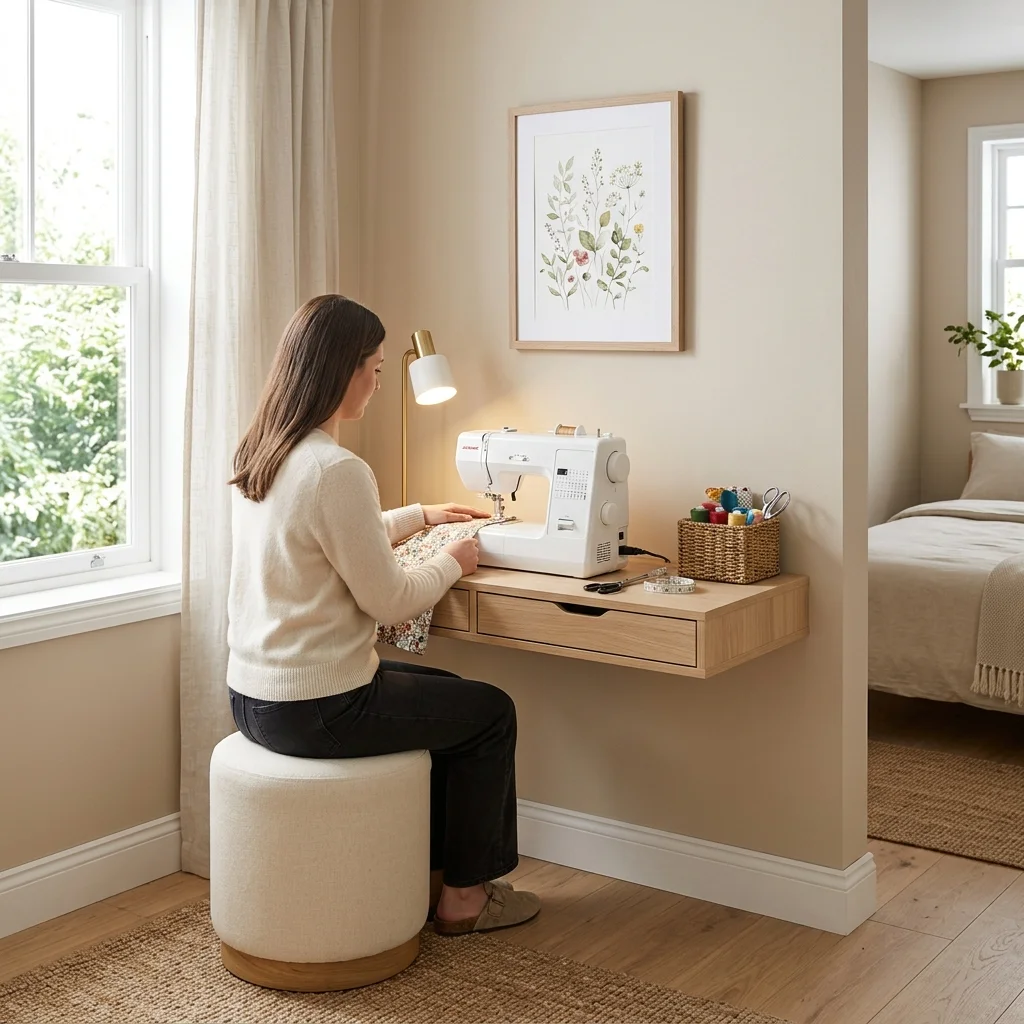
A floating sewing shelf can provide just enough workspace when floor area is extremely limited. Mount a sturdy, generously supported shelf at a comfortable working height, then pair it with a small stool that can slide completely underneath. Because there are no traditional desk legs, the floor remains visually open and easier to clean. Add slim wall-mounted drawers or shelves nearby for supplies that need to stay accessible. This approach works particularly well in minimalist bedrooms where bulky furniture would disrupt the calm aesthetic. The floating surface also gives the sewing corner a clean, custom appearance without requiring a large workstation.
Before installing a floating desk, make sure the wall and mounting system can safely support the sewing machine and working pressure. Once that is established, focus on keeping the surrounding area visually simple. A single framed print, small plant, or woven basket can soften the station without crowding it. Use a compact lamp for detailed work and keep cords routed neatly along the wall. When the stool is tucked away and the machine is stored, the shelf can resemble a simple dressing or display surface. It is a smart way to create function while preserving the bedroom’s sense of openness.
Under-Stair Workspace
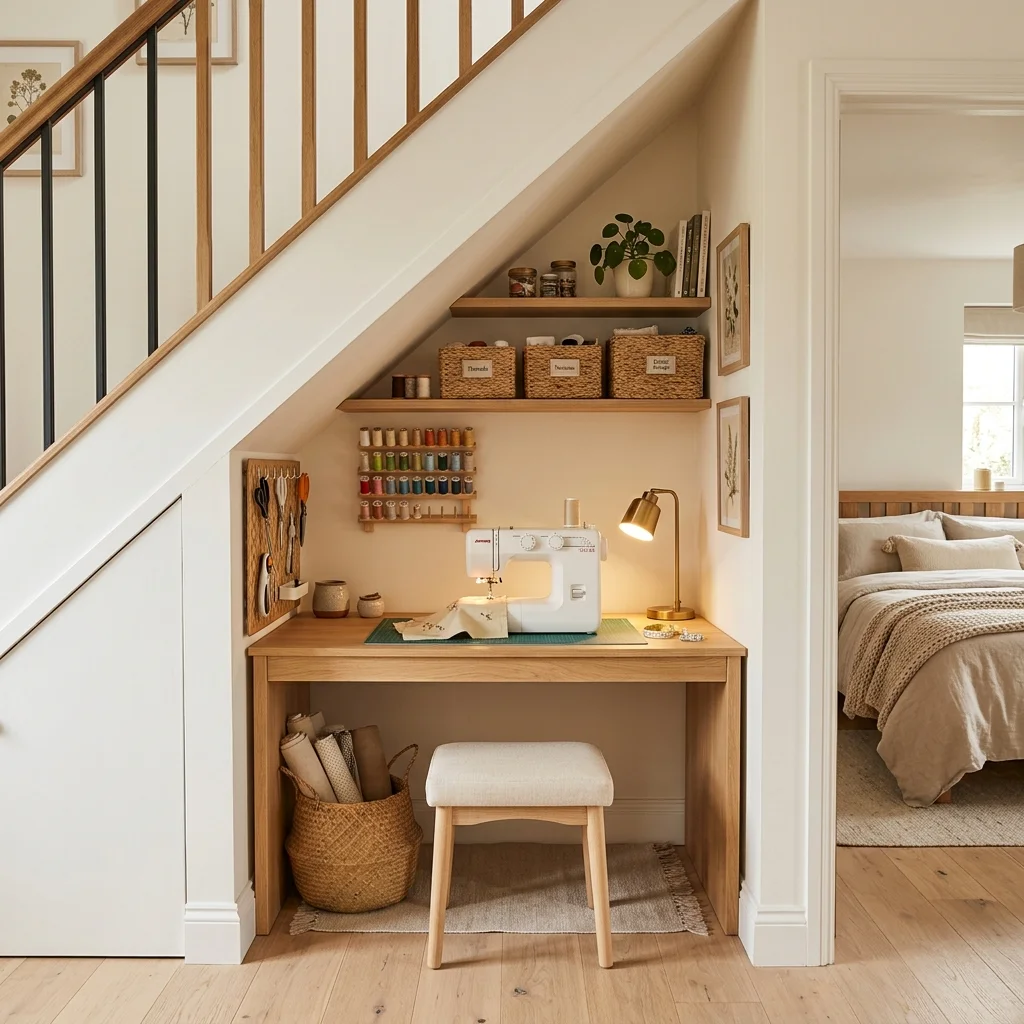
Awkward low spaces can become valuable when furniture follows the architecture instead of fighting it. If a bedroom sits beside or beneath a staircase, the area underneath may provide enough room for a compact sewing station. A shallow desk can fit into the higher portion, while lower sections hold baskets or drawers for supplies. Keep the workstation proportional to the available height and avoid placing frequently used tools where they are difficult to reach. This setup can turn an otherwise forgotten area into a useful creative corner while keeping the bedroom’s primary sleeping and walking zones comfortably open.
Safety and accessibility should come before decoration in an unusual space like this. Make sure the sewing chair can move freely and that lighting is strong enough for detailed work. Use closed storage beneath lower sections to prevent supplies from becoming difficult-to-clean clutter. Wall shelves can occupy the taller area without consuming floor space, giving you additional room for fabric and equipment. A neutral palette helps the compact station feel integrated with the surrounding bedroom. When the layout is planned around the available dimensions, even an awkward architectural pocket can become a practical workspace with plenty of personality.
Nightstand Sewing Desk
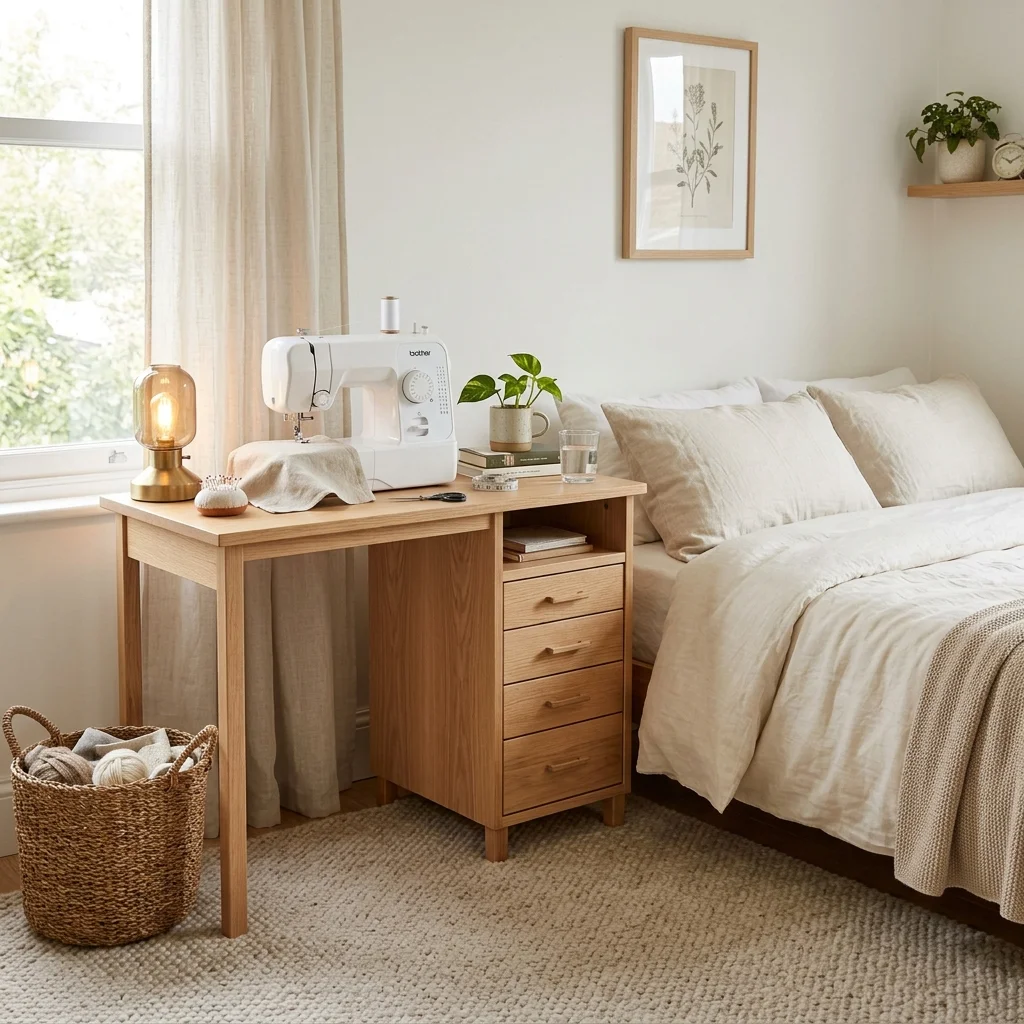
A nightstand-sized sewing desk is a clever solution when there is only a small gap beside the bed. Instead of adding separate furniture, choose a compact workstation that performs both roles. The upper surface can hold a small lamp and sewing machine when needed, while drawers provide space for bedside essentials and sewing supplies. Keep the desk narrow enough to preserve comfortable access around the bed. This arrangement is especially effective in smaller bedrooms because one piece of furniture performs two jobs. The visual continuity between the desk and bed also helps the entire corner feel organized rather than crowded.
The trick is separating everyday bedroom items from sewing materials inside the storage. Reserve one drawer for frequently used tools and another for personal items, using small organizers to keep everything contained. A removable sewing machine cover can protect the equipment while maintaining a polished bedside appearance. Choose soft finishes such as light oak, painted wood, or matte neutral surfaces so the desk feels appropriate next to bedding and textiles. With thoughtful organization, the workstation can transition between sewing and bedside use without requiring a major rearrangement, making every square foot of the room work harder.
Curtain-Hidden Nook
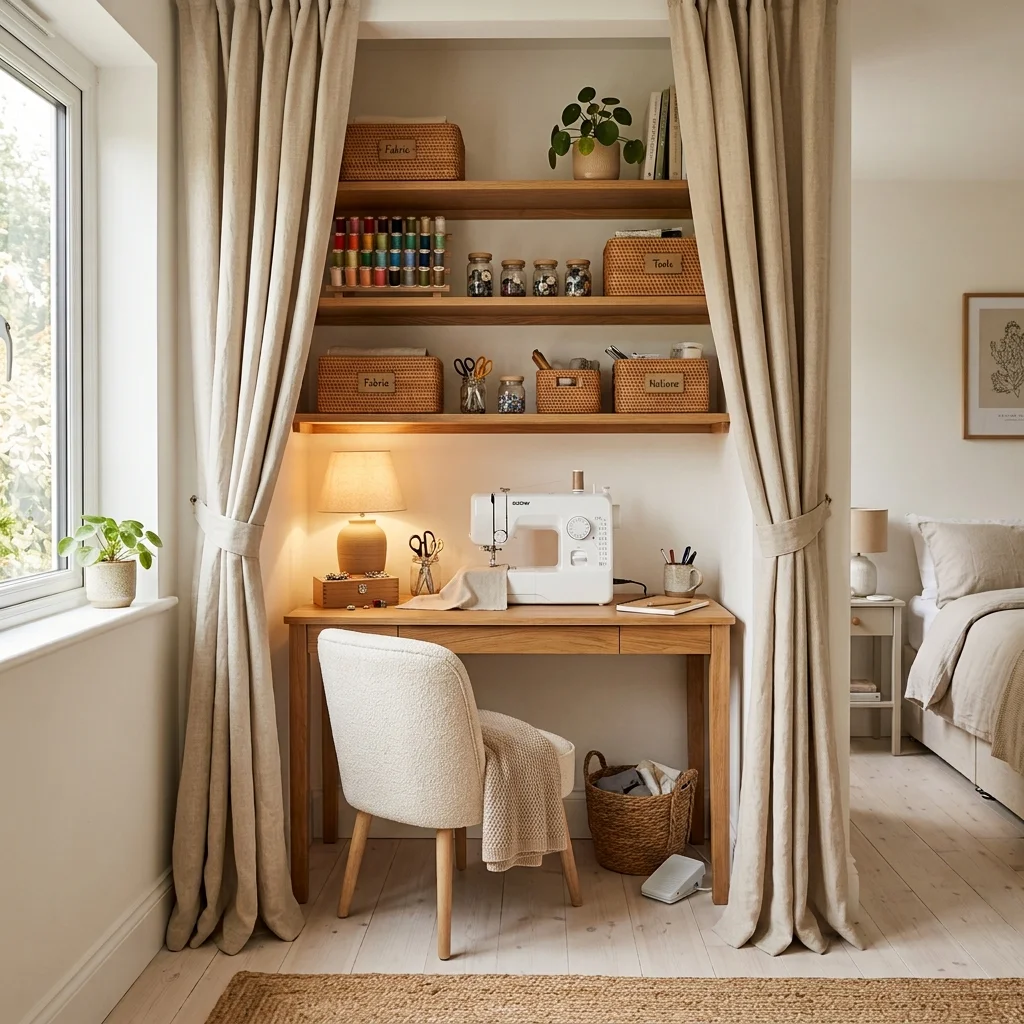
A curtain can create an instant visual boundary around a sewing area without taking up the space required by a solid door. Mount a ceiling or wall track around a compact workstation, then use full-length linen curtains to hide the desk when sewing is finished. The fabric adds softness and helps the creative area feel like part of the bedroom rather than a separate workshop. This solution is especially useful when a sewing station sits in an open corner or alcove. I’ve seen fabric partitions work beautifully because they conceal unfinished projects while still keeping the room light and flexible.
Choose curtains with enough fullness to close completely, and leave adequate clearance so the fabric does not interfere with the sewing chair or equipment. Behind the curtain, use shelves, baskets, and drawers to keep supplies organized rather than simply hidden. Neutral linen or cotton blends usually complement bedroom interiors better than heavy fabrics. When open, the workstation remains easy to access and well connected to the room. When closed, the curtains create a clean visual reset that makes the bedroom feel restful again. It is a simple design trick with a surprisingly strong impact on perceived space.
Conclusion
Creating a sewing area in a bedroom is less about having extra space and more about using the space you already have wisely. From floating desks and rolling carts to hidden cabinets and vertical storage, these solutions can make even compact rooms feel organized and inspiring. The goal is to create a setup that works beautifully during sewing projects and blends quietly into the bedroom afterward. Save these sewing corner bedroom ideas save space to Pinterest for your next room refresh, try the layout that best fits your needs, and share the inspiration with another sewing enthusiast. Small changes really can transform a room.
Read More : 18 Sewing Hacks and Alterations That Save Clothes Fast