18 DIY Round Coffee Table Ideas for Creative Furniture
Introduction
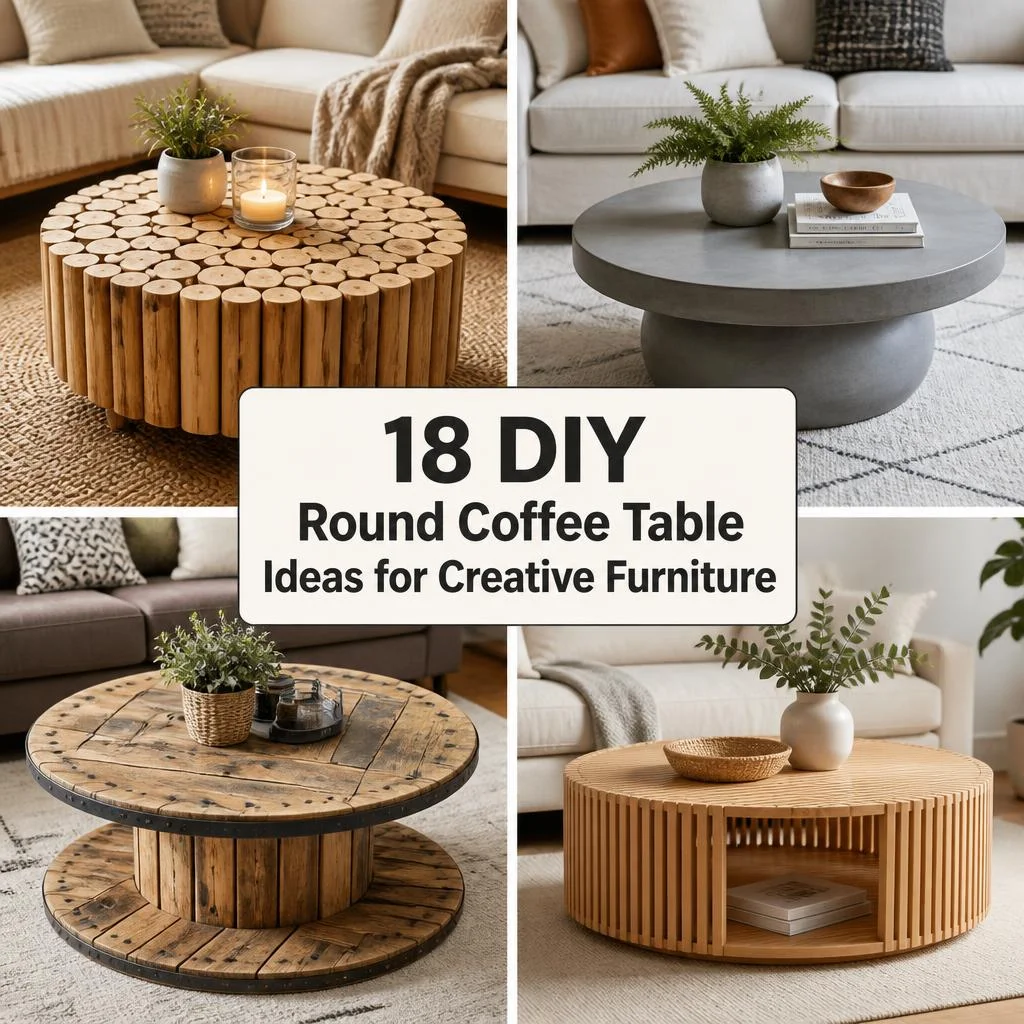
A round coffee table can completely change the feel of your living room, and these diy round coffee table ideas make that transformation achievable without sacrificing style. From natural wood and reclaimed materials to painted patterns, concrete, rattan, and modern metal bases, these creative designs offer something for nearly every decorating style and skill level.
Whether you want extra storage, a rustic centerpiece, a minimalist accent, or a statement-making tabletop, the right design can make your seating area feel more finished and functional. Many of these projects can also be customized to suit your available space, preferred colors, and existing furniture. With a little creativity and thoughtful material selection, you can create a piece that feels personal rather than mass-produced.
Natural Wood Round
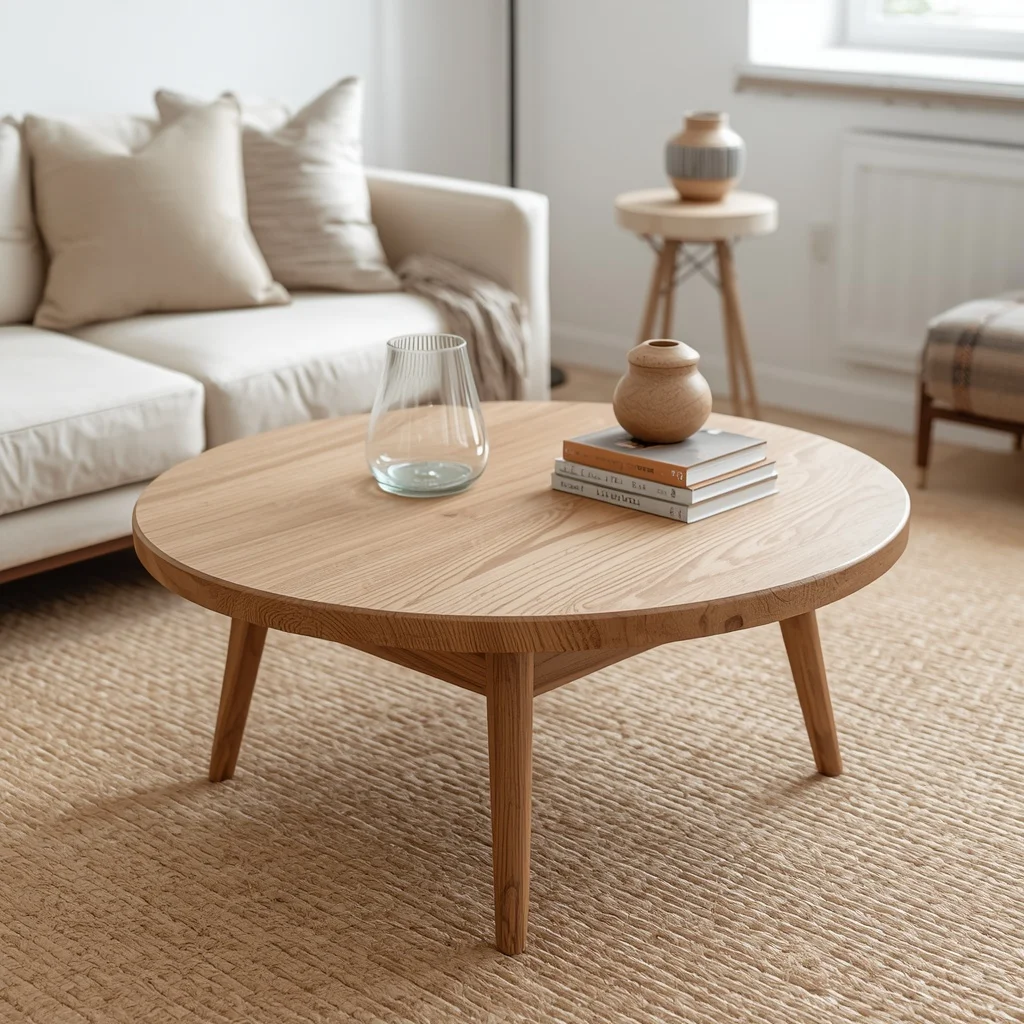
Start with a simple silhouette, and the whole room can feel instantly more intentional. A round wooden table softens spaces filled with straight lines, square seating, and sharp furniture edges. Choose a warm oak or pine finish for an inviting foundation, then pair it with a neutral rug and cream sofa. The curved top also creates smoother movement around the seating area, making the layout feel less crowded. In my experience, a lightly finished wood surface is especially forgiving in busy homes because small marks blend naturally with the grain while still looking polished.
A natural wood finish brings warmth without overwhelming the rest of the room. Keep the styling simple with a ceramic bowl, a small stack of books, or one low vase so the tabletop remains useful for everyday living. Tapered or angled legs can add subtle character while keeping the design visually light. For smaller rooms, choose a thinner tabletop and a slightly raised base to preserve an airy feel. The result is a practical centerpiece that looks handmade, balanced, and easy to refresh as your decor changes throughout the year.
Matte Black Finish
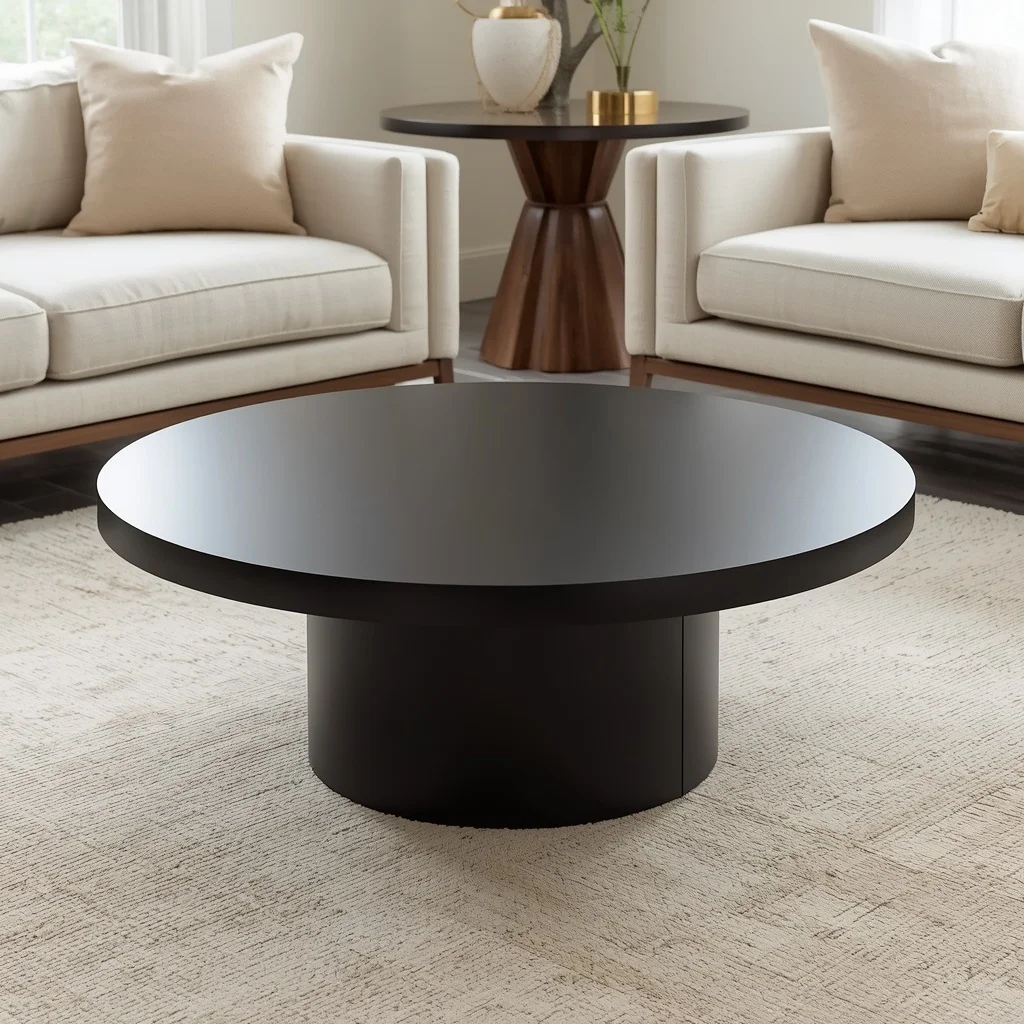
Bring a little drama to the living room with a dark painted tabletop that anchors lighter furniture beautifully. Charcoal, deep espresso, or soft black can make a simple round shape feel sophisticated without requiring complicated construction. Pair it with a pale rug, warm wood accents, and textured upholstery for contrast. The circular form keeps the darker finish from feeling too heavy, while the smooth surface creates a clean focal point. I’ve noticed this approach works especially well when a room needs definition because one strong furniture piece can visually organize the surrounding decor.
A dark finish is also practical when you want the table to look refined between decorating updates. Choose a durable furniture paint or topcoat, especially if the surface will hold drinks, books, or decorative objects regularly. Keep accessories restrained so the color remains the star, using brass, cream, or natural wood accents for gentle contrast. Rounded edges make the piece feel approachable rather than formal. Whether your room leans modern, classic, or eclectic, this simple update can turn an ordinary table into a confident centerpiece that gives the entire seating area more visual weight.
Reclaimed Wood Style
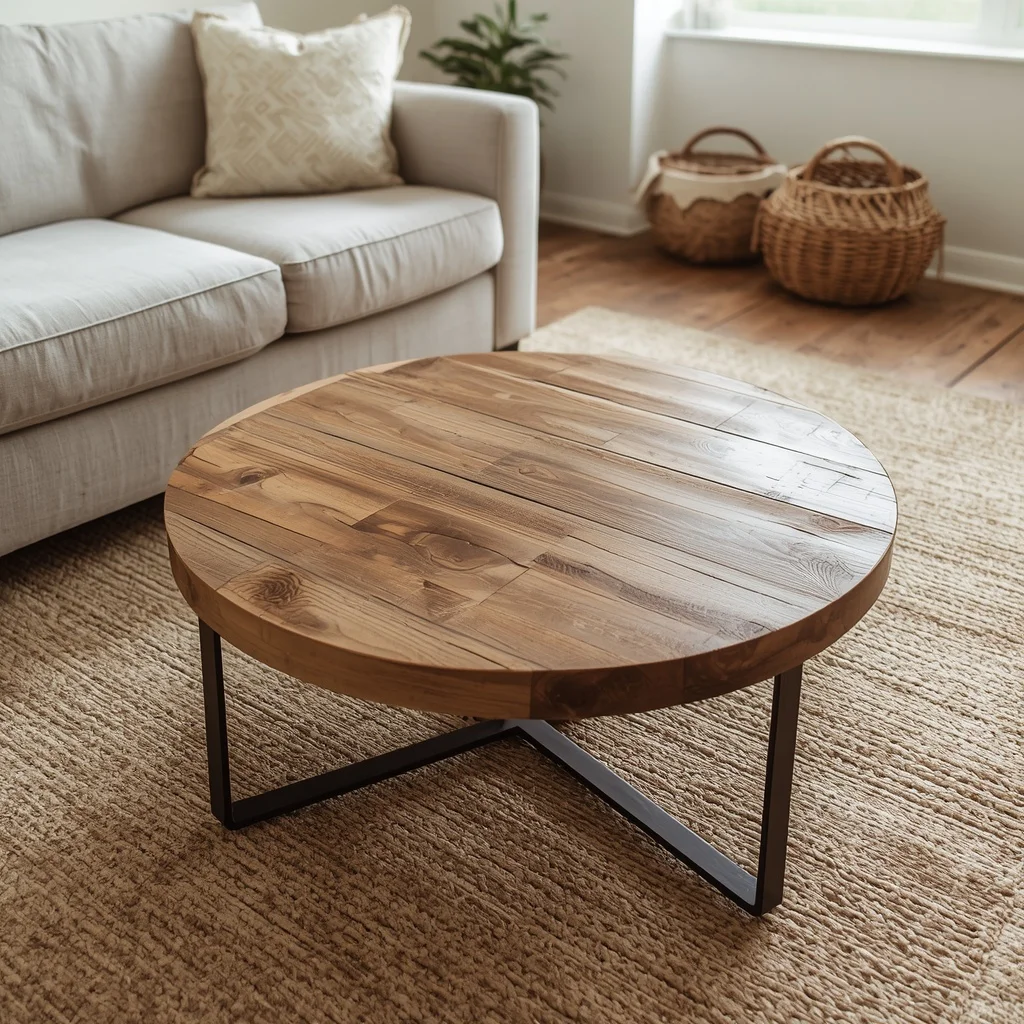
Make a compact living area feel custom with a round table built from a reclaimed wood top. Weathered boards, visible grain, and slightly varied tones create texture that instantly adds personality. Keep the base simple so the top remains the visual feature, then soften the rustic character with a neutral sofa, woven basket, and understated textiles. The circular shape helps reclaimed materials feel less bulky than they might on a rectangular table. In my experience, preserving a few natural imperfections makes handmade furniture look more authentic and gives the room a relaxed, collected character.
Reclaimed wood works particularly well when you want furniture that feels useful rather than overly precious. Sand the surface enough to remove rough splinters while keeping knots, grain lines, and gentle color variation visible. A clear protective finish can make everyday cleaning easier without hiding the material’s character. Balance the rugged top with smooth upholstery and simple decor to avoid a visually busy room. This approach can also be budget friendly when you already have usable boards available, turning leftover material into a substantial centerpiece with warmth, texture, and a distinctly personal finish.
Hairpin Leg Table
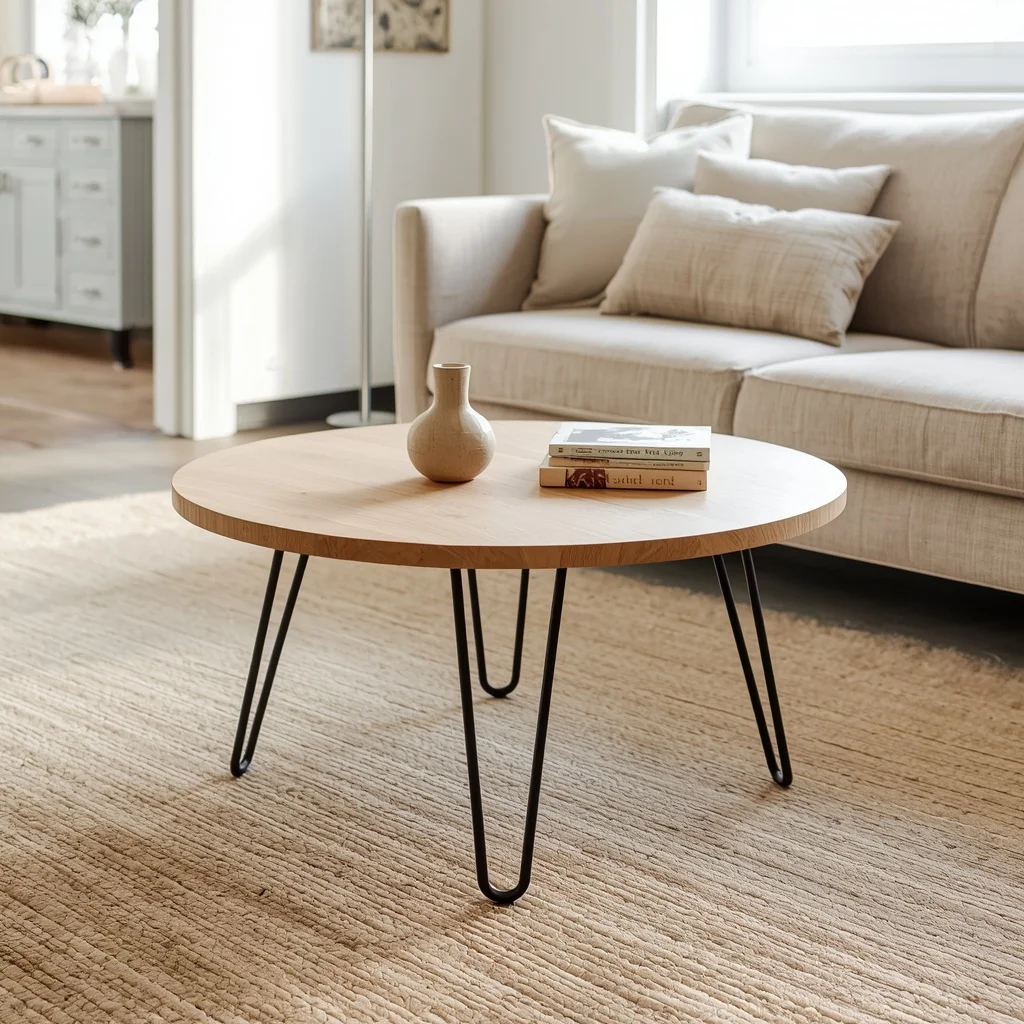
Give a simple tabletop a modern lift with slim hairpin legs that keep the base visually light. This combination works because the warm wood surface adds softness while the dark metal introduces crisp contrast. The open space beneath the table also helps a small seating area feel less crowded. Choose three evenly spaced legs for a balanced appearance, making sure they are positioned securely beneath the circular top. A thin protective finish on the wood can preserve its natural beauty while making the surface easier to wipe after everyday use.
Hairpin legs are especially useful when you want furniture that feels contemporary without looking overly complicated. Their narrow profile lets more of the flooring remain visible, which can make the entire room appear more spacious. Pair the table with a woven rug and low-profile sofa for a relaxed look, or add leather seating for stronger industrial character. Keep tabletop accessories minimal because the open base already provides visual interest. With a few straightforward materials, you can create a functional centerpiece that looks intentional and works comfortably with different decorating styles.
Whitewashed Farmhouse
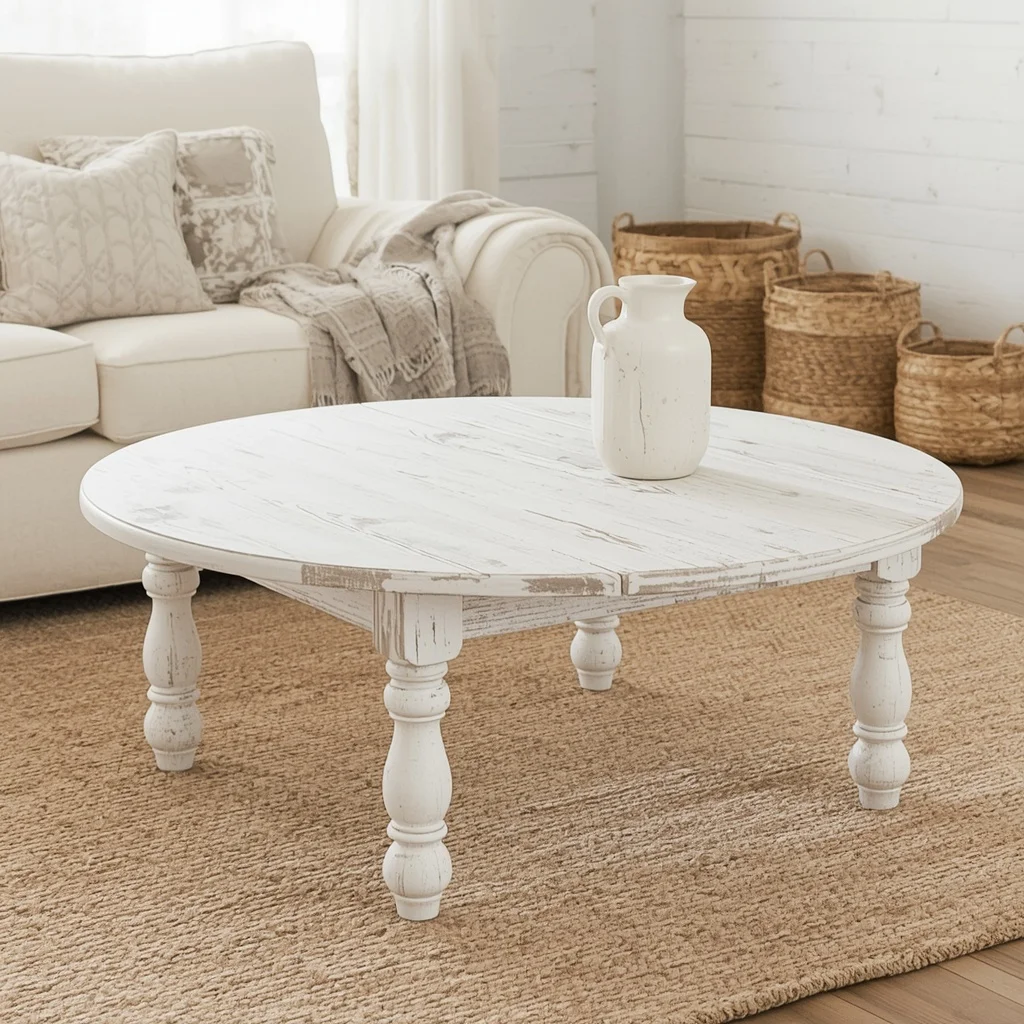
Turn a basic wooden table into a bright farmhouse centerpiece with a soft whitewashed finish. The translucent treatment allows some natural grain to remain visible, giving the surface warmth instead of making it look completely painted. Pair the table with linen upholstery, woven textures, and creamy neutrals to create a relaxed setting. Light finishes are especially helpful in rooms with limited natural light because they reflect more brightness around the seating area. I’ve found that gentle distressing looks more convincing when concentrated around edges and high-touch areas rather than spread evenly across the entire tabletop.
The beauty of this style comes from its balance between fresh color and natural texture. Choose a warm white rather than a stark, cool shade if you want the room to feel welcoming. Chunky legs can reinforce the farmhouse character, while a simple rounded top keeps the furniture from appearing too heavy. Add a small ceramic vessel or woven tray without filling every inch of the surface. Finish the tabletop with an appropriate protective coating so the beautiful pale finish can handle coffee cups, books, and regular family use.
Layered Pedestal Base
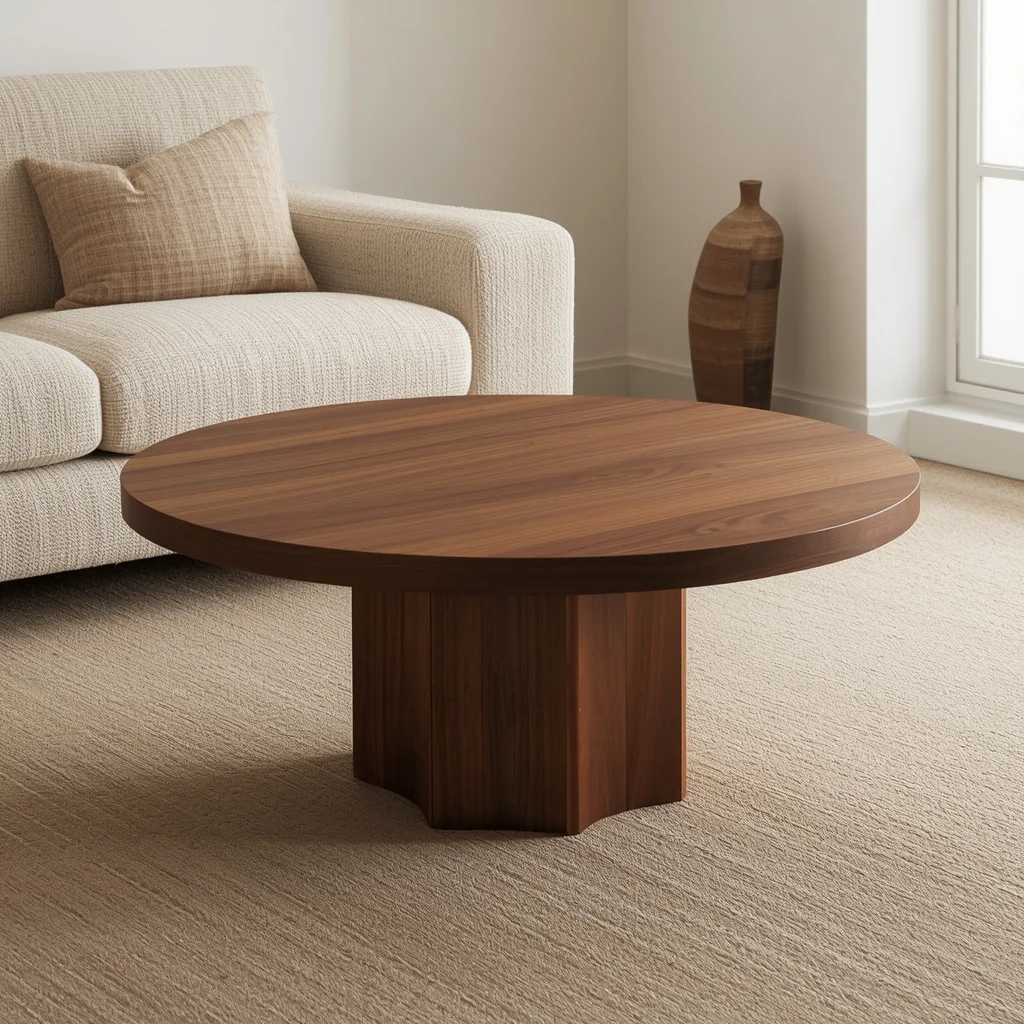
Create a stronger focal point by replacing traditional legs with a single pedestal base. The uninterrupted circular silhouette gives the table a sculptural quality while keeping the design visually cohesive. A walnut or medium-brown finish works beautifully with cream upholstery and neutral flooring because the darker wood provides grounding contrast. The central support also leaves more open space around the seating area, making it easier to move chairs or stretch your legs. When choosing the base, prioritize stability and weight distribution so the finished piece feels solid rather than merely decorative.
A pedestal design can also make a homemade table look surprisingly refined. Keep the tabletop edge smooth and understated, then let the base provide most of the visual interest. For a contemporary room, use a rounded or gently flared pedestal; for a more organic style, consider a chunky wood form with visible texture. Avoid overcrowding the surface with accessories, since the sculptural foundation already creates a statement. In my experience, this style looks best when surrounded by simple furniture, allowing the unusual base and circular top to become the room’s natural conversation piece.
Concrete Top Design
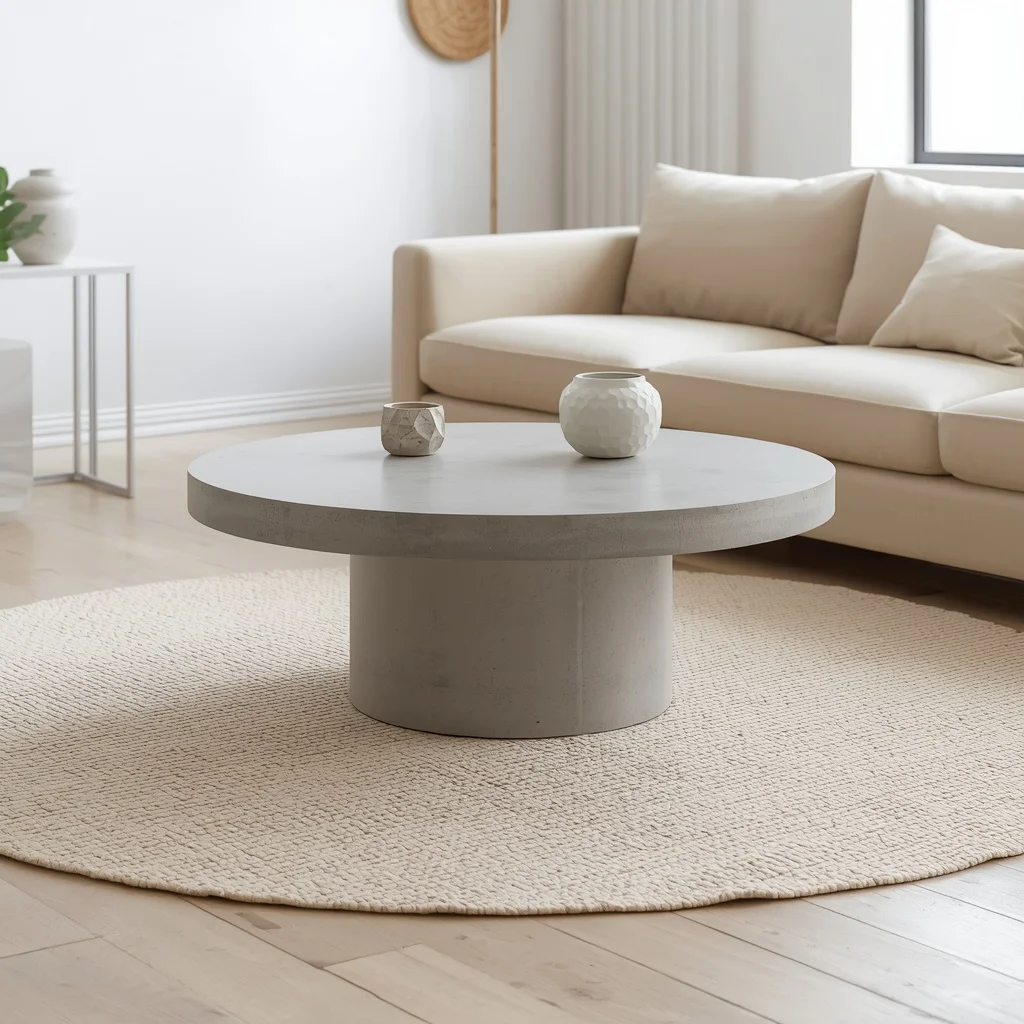
Add an architectural touch to your living room with a round concrete tabletop. Its cool gray surface creates a striking contrast against warm wood flooring, soft upholstery, and woven textiles. The circular shape prevents the substantial material from feeling too rigid, while a simple cylindrical or solid base keeps the design cohesive. This approach works particularly well in contemporary or industrial spaces where texture matters. If you are working with concrete, pay close attention to the finished weight and support structure because a beautiful tabletop still needs a stable foundation for safe everyday use.
The understated surface also gives you plenty of freedom when styling the room. Pair it with cream cushions, natural wood, black accents, or muted green plants to soften the industrial character. A smooth protective sealer can reduce staining and make routine cleaning more convenient. Keep decorative pieces low and lightweight so the tabletop remains visually open. The result is a substantial centerpiece that feels modern without relying on complicated ornamentation. For a smaller room, a thinner concrete profile can provide the same visual impact while maintaining a lighter overall appearance.
Two-Tone Wood
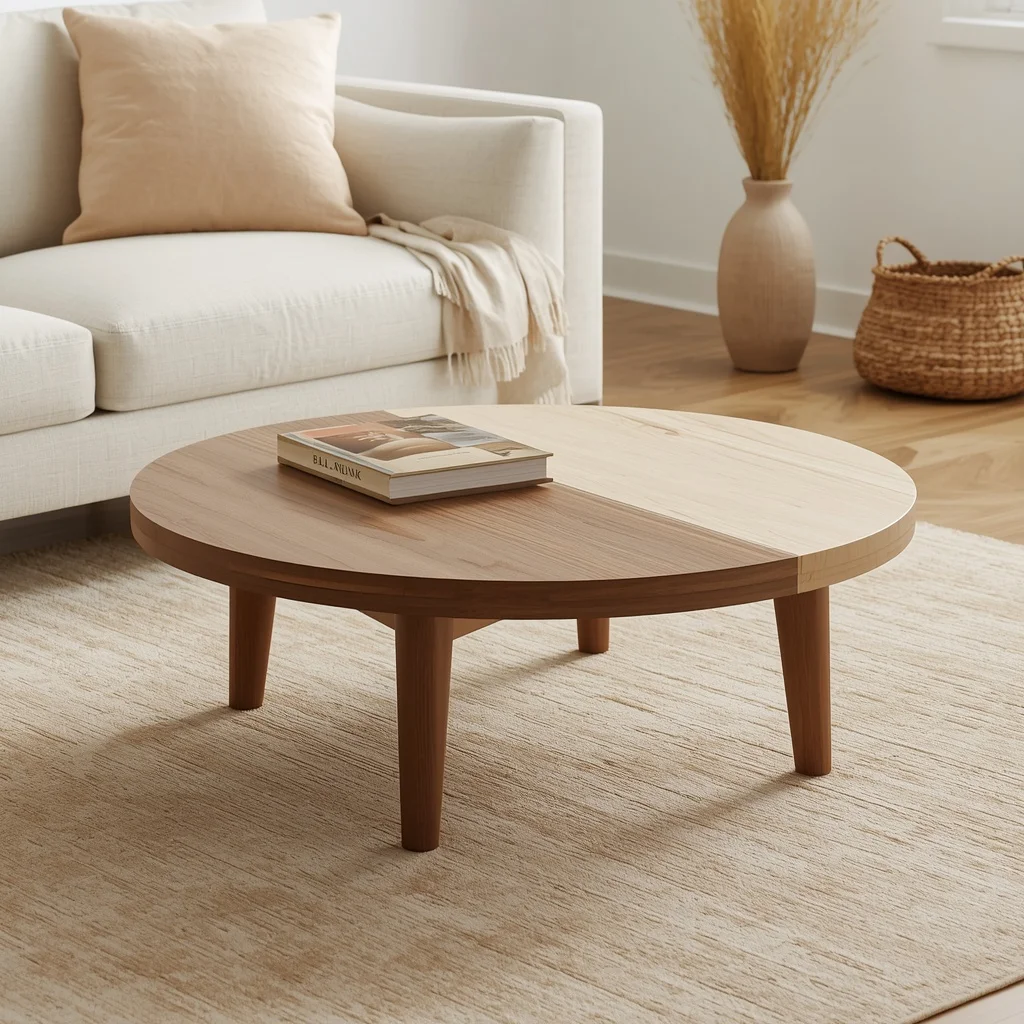
Make an ordinary wooden table feel more custom by combining two complementary wood tones. A light oak top with a deeper walnut edge creates a subtle contrast while preserving a natural, timeless appearance. The darker border can also emphasize the circular silhouette and make the tabletop look more finished. This technique works particularly well when the room already mixes wood furniture in different shades. Instead of trying to match every piece perfectly, use related undertones to create a layered appearance. A consistent protective finish across both tones helps the design feel intentional and cohesive.
Two-tone furniture offers a clever way to add personality without complicated decoration. Keep one tone dominant and use the second as an accent around the edge, legs, or lower section. This keeps the table visually interesting without competing with rugs, artwork, or upholstery. Add simple ceramic pieces and woven textures to reinforce the organic character. If using different stains, test them on scrap wood first because the same stain can appear dramatically different depending on the grain. With thoughtful contrast, even a straightforward circular table can look like a carefully designed statement piece.
Tile Mosaic Top
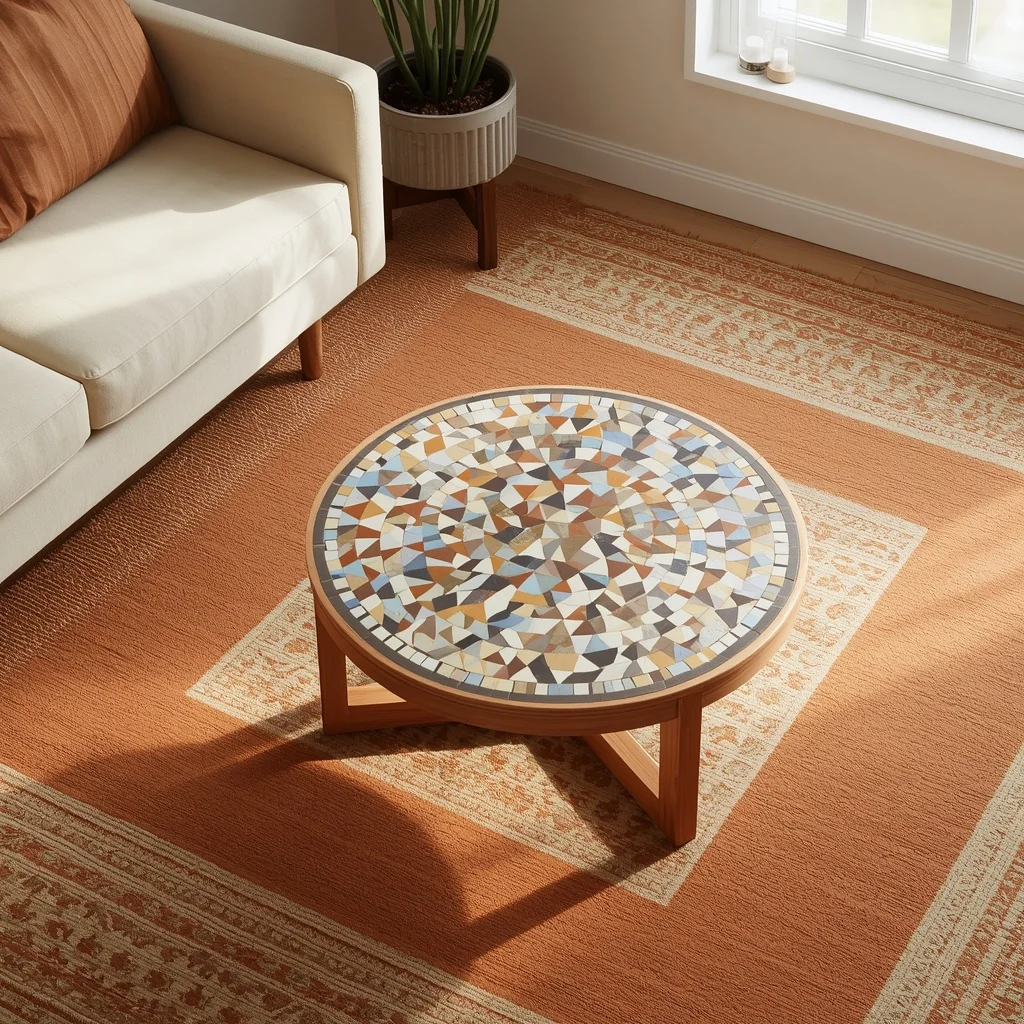
Turn the tabletop into artwork with a carefully arranged tile mosaic. Small ceramic pieces make it easier to follow the curve of a round surface while creating opportunities for geometric patterns, subtle borders, or playful color combinations. A neutral base such as cream, terracotta, sage, or soft blue can keep the design approachable. The table becomes especially effective in rooms with simple furniture because the patterned surface provides a clear focal point. Before attaching anything permanently, lay out the complete arrangement first to check spacing, balance, and how the pattern meets the circular edge.
A mosaic top is also a practical choice when you want furniture that feels highly personalized. Use durable tiles and appropriate adhesive, then finish the grout carefully so crumbs and spills are easier to remove. A slim wooden frame can soften the tile surface and give the project a polished edge. Because the tabletop already contains plenty of detail, keep nearby accessories simple and let the pattern remain visible. I’ve seen small handmade imperfections make mosaic projects feel more charming, especially when the colors are coordinated rather than perfectly uniform. The result feels artistic, useful, and distinctly your own.
Rattan Wrapped Base
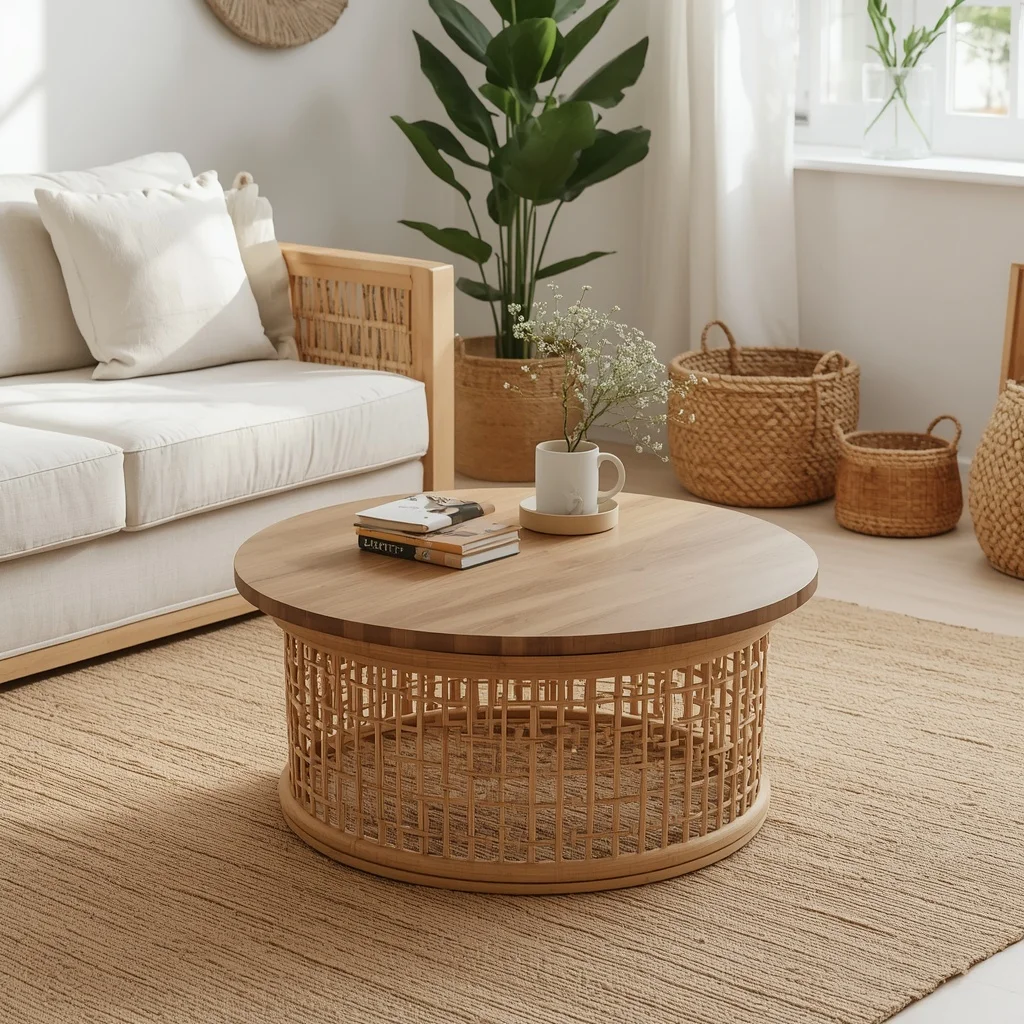
Bring relaxed texture into the living room with a rattan-wrapped base beneath a simple round wooden top. The woven material introduces warmth and visual depth while keeping the overall palette soft and natural. A drum-style base can also hide storage components if you want the table to serve more than one purpose. Pair it with linen upholstery, jute rugs, and leafy plants for an organic look. Make sure the woven material is firmly attached and protected from excessive moisture so the finished table remains attractive through regular household use.
This design works especially well when a room feels too plain but you do not want bold colors. The combination of natural wood and woven fibers creates interest through texture instead of pattern. Keep the tabletop relatively simple with a small tray, ceramic bowl, or one decorative object. For a coastal-inspired space, choose pale wood and light rattan; for a warmer bohemian room, deeper natural tones can create more richness. The result is a welcoming centerpiece that feels handcrafted, comfortable, and connected to the relaxed character of natural materials.
Rustic Barrel Base
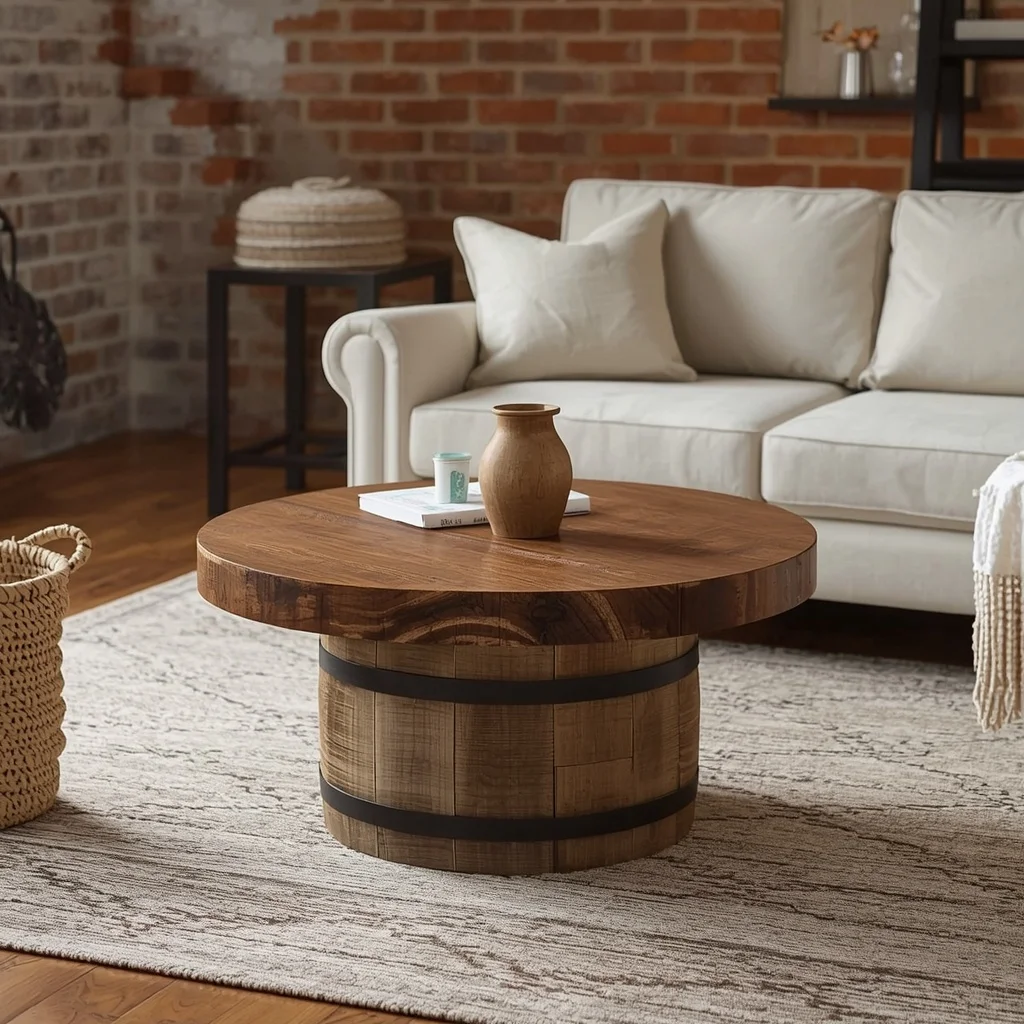
Give your living room a sturdy rustic centerpiece by pairing a circular wood top with a barrel-inspired base. The substantial shape feels especially natural in farmhouse, lodge, and industrial interiors where heavier materials are part of the design language. Reclaimed or distressed wood can add knots, grain variation, and subtle imperfections that make the furniture feel collected rather than mass-produced. Balance the weight of the table with a soft rug and upholstered seating. If the base is built from multiple pieces, check every connection carefully because stability matters more as the structure becomes larger.
The barrel silhouette also gives you an opportunity to make the table functional without sacrificing its character. A partially enclosed base can provide hidden space for throws, magazines, or small living-room essentials. Keep the exterior finish slightly understated so the natural material remains the focus. Warm brown tones work beautifully with cream, charcoal, olive, and muted rust accents. Add one or two vintage-inspired accessories rather than filling the tabletop. The finished piece can make a modern room feel more grounded while still providing a practical surface for everyday gatherings.
Minimal Hairpin Circle
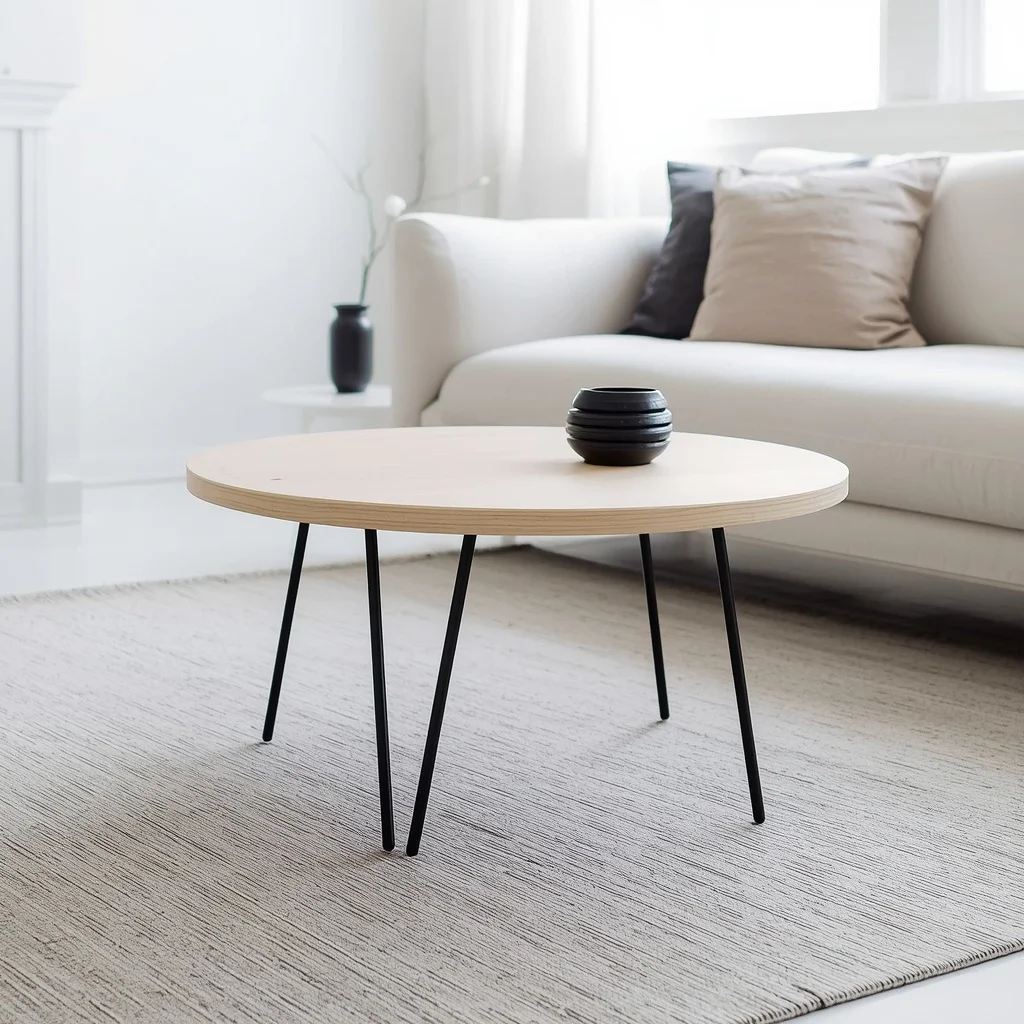
Keep the design exceptionally simple with a thin circular tabletop and three slender metal legs. This lightweight combination is ideal for modern apartments, compact lounges, and Scandinavian-inspired interiors where visual clutter needs to stay low. Pale wood reflects natural light while black hairpin legs provide just enough contrast to define the structure. The open space beneath the table also keeps more flooring visible, helping the room feel spacious. Choose a tabletop with a smooth edge and adequate thickness so the finished piece remains both comfortable to use and structurally dependable.
The minimalist shape makes decorating refreshingly easy because almost anything placed nearby can become part of the composition. Pair the table with a boucle sofa, soft gray rug, or simple linen chair for a calm palette. A single ceramic vase or small stack of books is usually enough for the tabletop. If you want more personality, introduce one contrasting accent such as a dark planter or textured tray. In my experience, restraint makes simple furniture look more expensive because every proportion becomes noticeable. Let the clean silhouette do most of the decorating work.
Storage Shelf Base
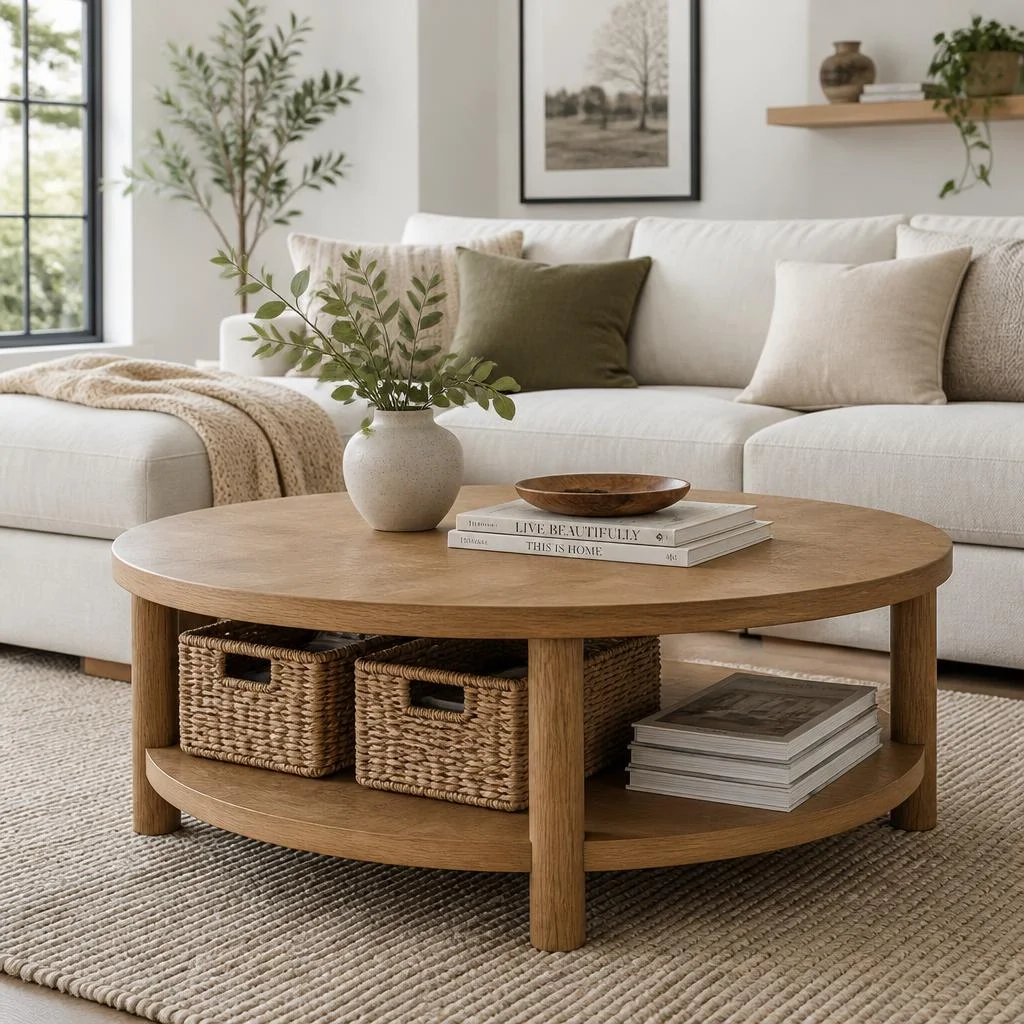
Make the coffee table work harder by adding an open shelf beneath the round tabletop. This extra level creates convenient space for books, magazines, baskets, or decorative objects without requiring a separate storage unit. A warm wood finish keeps the design visually cohesive, while the circular top softens the practical shelving structure. This option is particularly helpful in smaller living rooms where every piece of furniture needs to provide value. Keep the shelf slightly recessed so the table still feels balanced and does not appear wider than necessary.
Open storage can also help reduce tabletop clutter because frequently used items have an easy place to go. Use woven baskets for remote controls and blankets, while leaving a few favorite books visible for decorative interest. Avoid filling the entire shelf, since negative space helps the furniture look lighter. A sturdy shelf support is important if you plan to store heavier items. The combination of display and storage makes this design especially useful for busy households, giving you a practical centerpiece that can adapt as your organization needs change.
Glass Top Accent
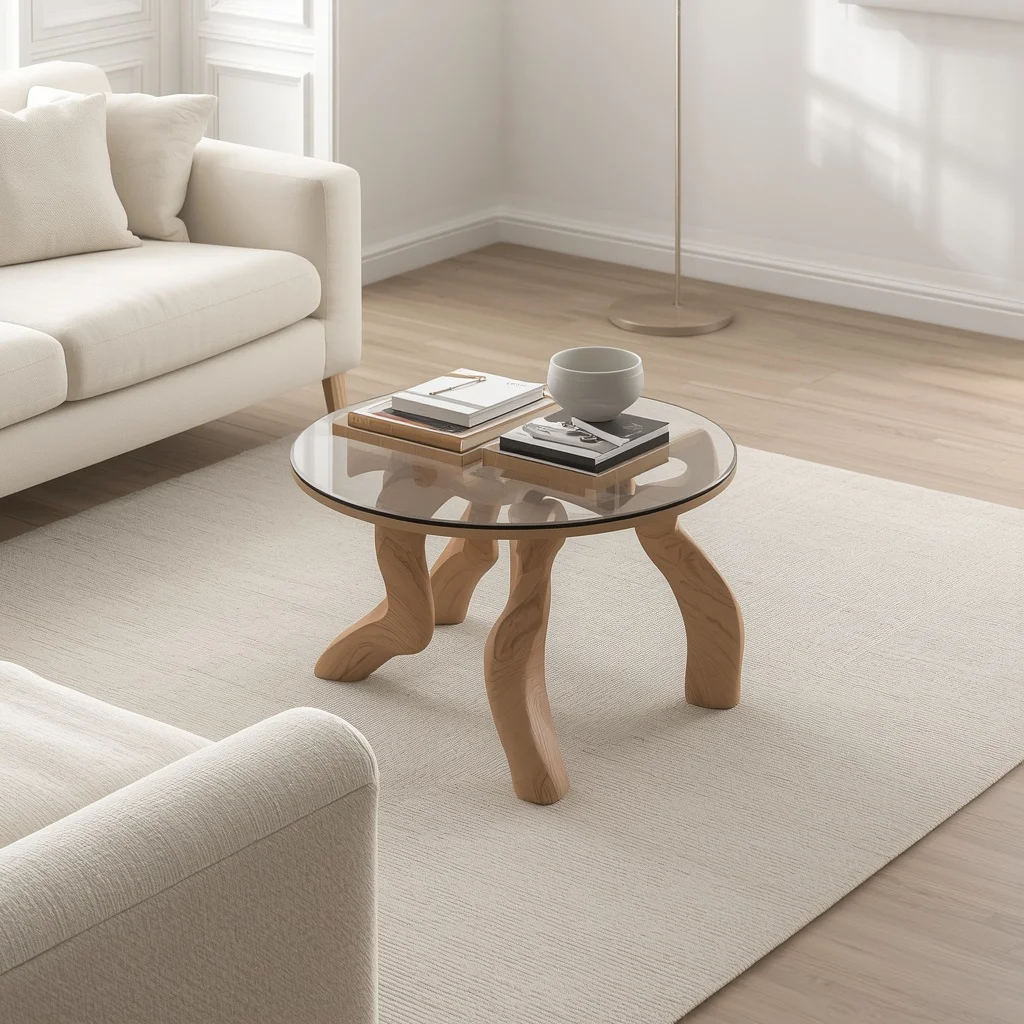
Create an airy centerpiece by combining a transparent glass top with a warm wooden base. The see-through surface allows the rug and flooring to remain visible, making the furniture feel less substantial in smaller rooms. A natural wood frame keeps the design from becoming too cold, while the circular outline maintains a soft, approachable appearance. Choose tempered glass designed for furniture use and ensure the edges are properly finished. This combination is particularly effective when you want a statement piece that adds structure without visually blocking the surrounding seating area.
The transparent surface also gives you an interesting way to showcase the base itself. Sculptural legs, woven details, or carefully arranged lower accessories become visible from different angles. Keep the surrounding palette neutral so the materials remain the focus. Glass does require more frequent wiping than wood, especially in homes with children or pets, so consider whether the maintenance suits your routine. For a polished finish, use simple decor underneath or directly on the tabletop rather than creating visual overload. The result is elegant, light, and surprisingly versatile.
Painted Pattern Top
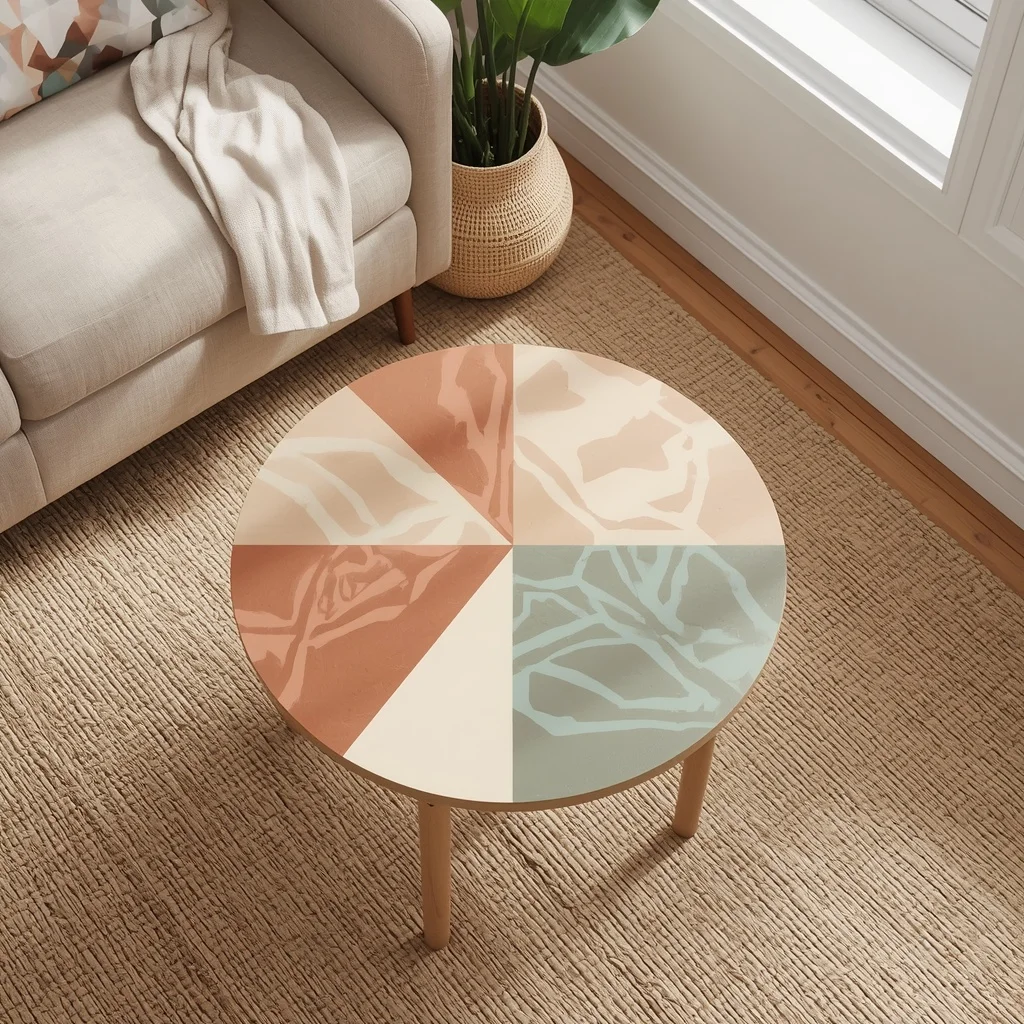
Turn the tabletop into a decorative feature with a painted geometric pattern. Circles, arches, checkerboard shapes, or simple botanical motifs can transform an otherwise plain surface into something highly personal. Choose colors already present in your room so the pattern feels connected rather than random. Muted terracotta, cream, sage, navy, or warm brown can provide interest without overwhelming the space. Before painting, sketch the design and mark the center carefully because symmetry becomes more noticeable on a round surface. A smooth base coat will also help the finished pattern appear cleaner.
A patterned tabletop can refresh an old piece without requiring a complete rebuild. Use furniture-appropriate paint and allow each layer to dry fully before adding details or protective coating. Keep the legs relatively simple so the artwork remains the focal point. If the pattern is bold, balance it with a plain rug and neutral upholstery; if it is subtle, add colorful cushions or artwork nearby. In my experience, handmade patterns look most appealing when they have slight character rather than appearing mechanically perfect. That small imperfection can make the finished table feel genuinely crafted.
Fluted Wood Base
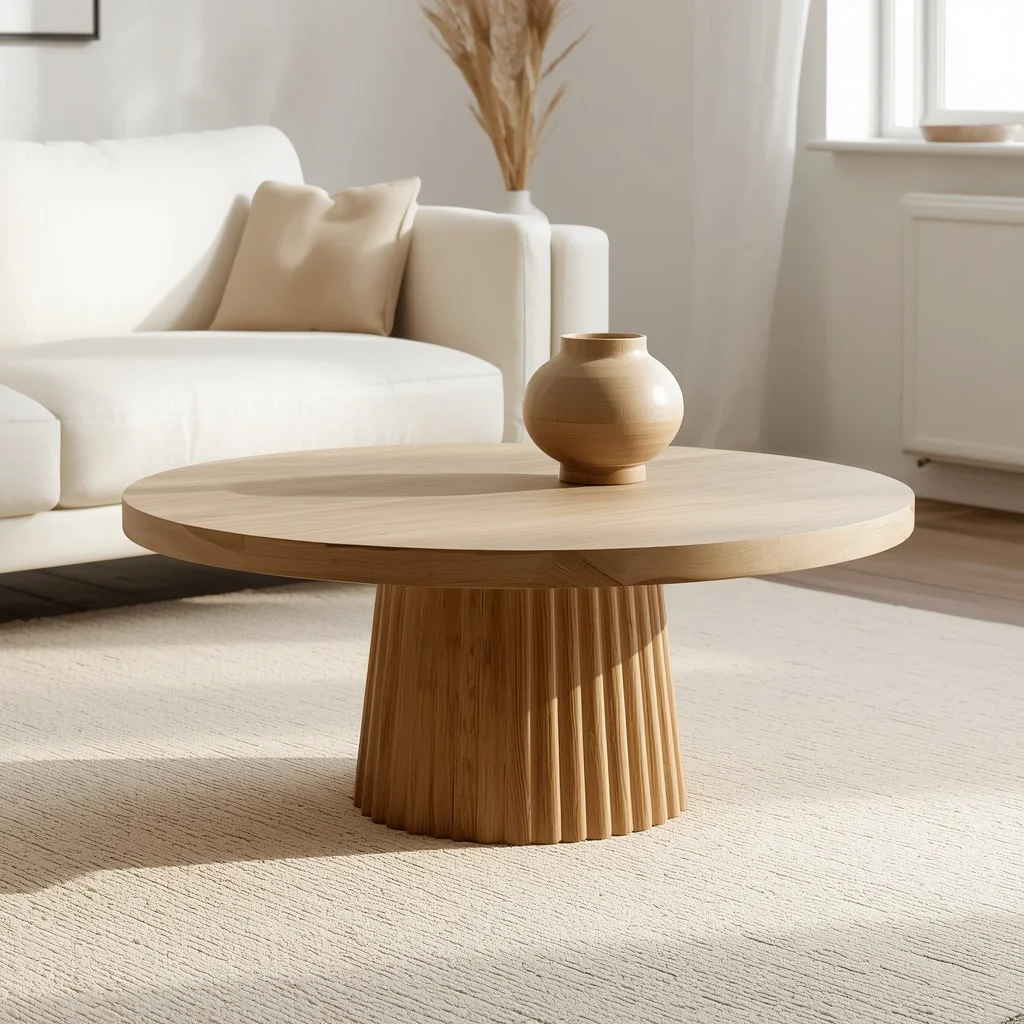
Add subtle architectural detail with a fluted pedestal base beneath a smooth circular tabletop. Repeated vertical grooves create shadows that change beautifully as natural light moves across the room. The textured base feels sophisticated without requiring elaborate decoration, making it especially suitable for organic modern or contemporary interiors. Pair the table with boucle upholstery, a textured rug, and warm neutral walls for a cohesive setting. When building or adapting the base, keep the grooves evenly spaced so the finished piece looks intentional from every angle.
The beauty of fluted furniture comes from its ability to create interest through texture rather than strong color. A natural oak or medium walnut finish can make the grooves especially noticeable while keeping the overall design warm. Choose a wider pedestal for a substantial statement or a slimmer base for a lighter appearance. Avoid placing too many decorative objects on the tabletop because the base already provides visual detail. The finished table can feel designer-inspired while remaining practical, giving your seating area a polished centerpiece with a distinctly handcrafted character.
Folding Leg Design
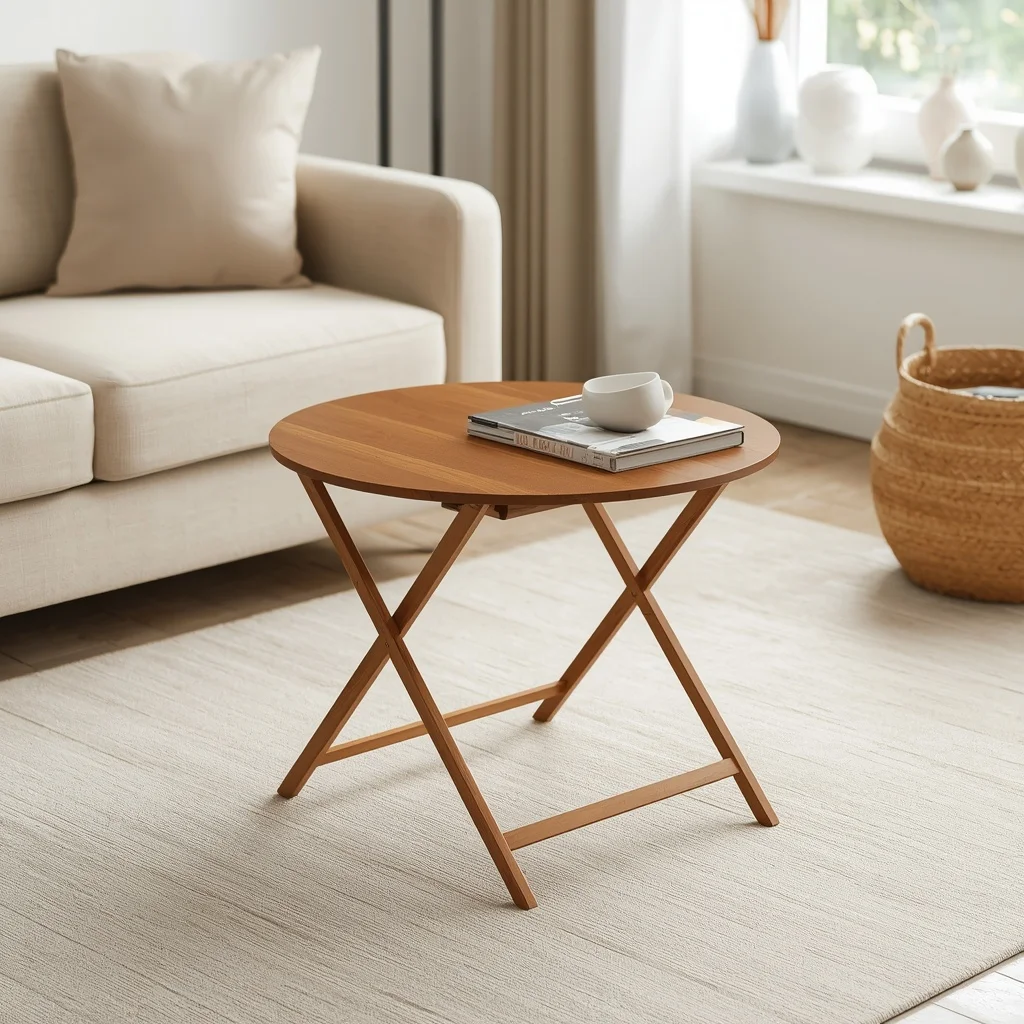
Choose a folding-leg design when flexibility matters as much as appearance. A round wooden top gives the table a familiar, welcoming shape, while collapsible legs allow the piece to be moved or stored when the room needs more floor space. This can be especially useful in apartments, multipurpose rooms, or homes where seating arrangements change frequently. Use strong hinges and reliable hardware designed for repeated movement, and make sure the legs lock securely when opened. A stable structure should always come before decorative details when building furniture meant to be repositioned regularly.
The practical construction does not mean the table needs to look temporary. Choose a warm stain, rounded tabletop edge, and clean-lined hardware to give it a finished furniture appearance. When the table is in use, style it with a tray, books, or a small plant; when extra floor space is needed, simply fold and move it aside. Keep the overall profile relatively slim so the piece remains easy to handle. This design combines convenience with attractive simplicity, making it a smart choice for anyone who wants furniture that can adapt to changing everyday needs.
Industrial Metal Fram
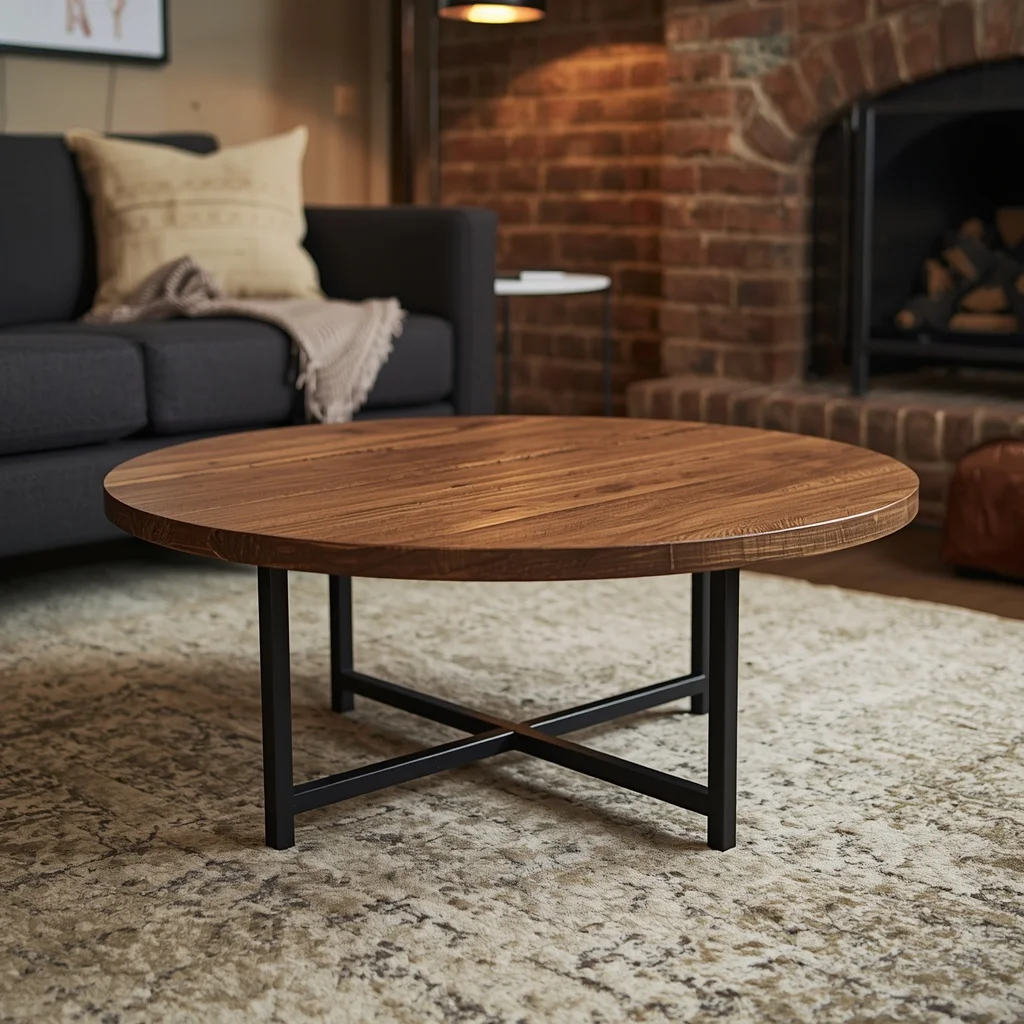
Create a bold centerpiece by combining a round reclaimed wood top with a dark metal frame. The contrast between warm timber and cool steel gives the table an unmistakable industrial character while keeping the circular silhouette approachable. A cross-shaped or geometric frame can add structural interest beneath the tabletop without competing with the wood grain. Pair the table with leather seating, exposed brick, or neutral textiles to reinforce the aesthetic. When constructing the base, check the frame for wobble and ensure every connection is securely tightened before placing weight on the surface.
Industrial materials can still feel comfortable when balanced with softer textures. A cream rug, linen cushions, woven basket, or warm lighting can prevent the metal from making the room feel overly stark. Choose a matte black or dark charcoal frame for a contemporary look, then let the wood provide natural variation. Keep the tabletop finish durable enough for regular use while preserving visible grain. The combination works because each material contributes something different: steel provides strength and structure, while wood introduces warmth. Together, they create a functional table with plenty of visual personality.
Conclusion
The right coffee table does more than fill an empty spot—it helps bring the entire living room together. From warm reclaimed wood and fluted bases to colorful mosaics, painted surfaces, and practical storage designs, these ideas show how much personality a simple round shape can offer.
Choose a style that fits your space, then customize the materials, finish, colors, and proportions to make it truly yours. I’ve seen how small furniture changes can completely refresh a room without requiring a full makeover. Save these diy round coffee table ideas on Pinterest, try your favorite design, and share the inspiration with someone ready for their next creative furniture project.
Read More: 17 DIY Room Decor Ideas for Teens Stylish Budget Makeover