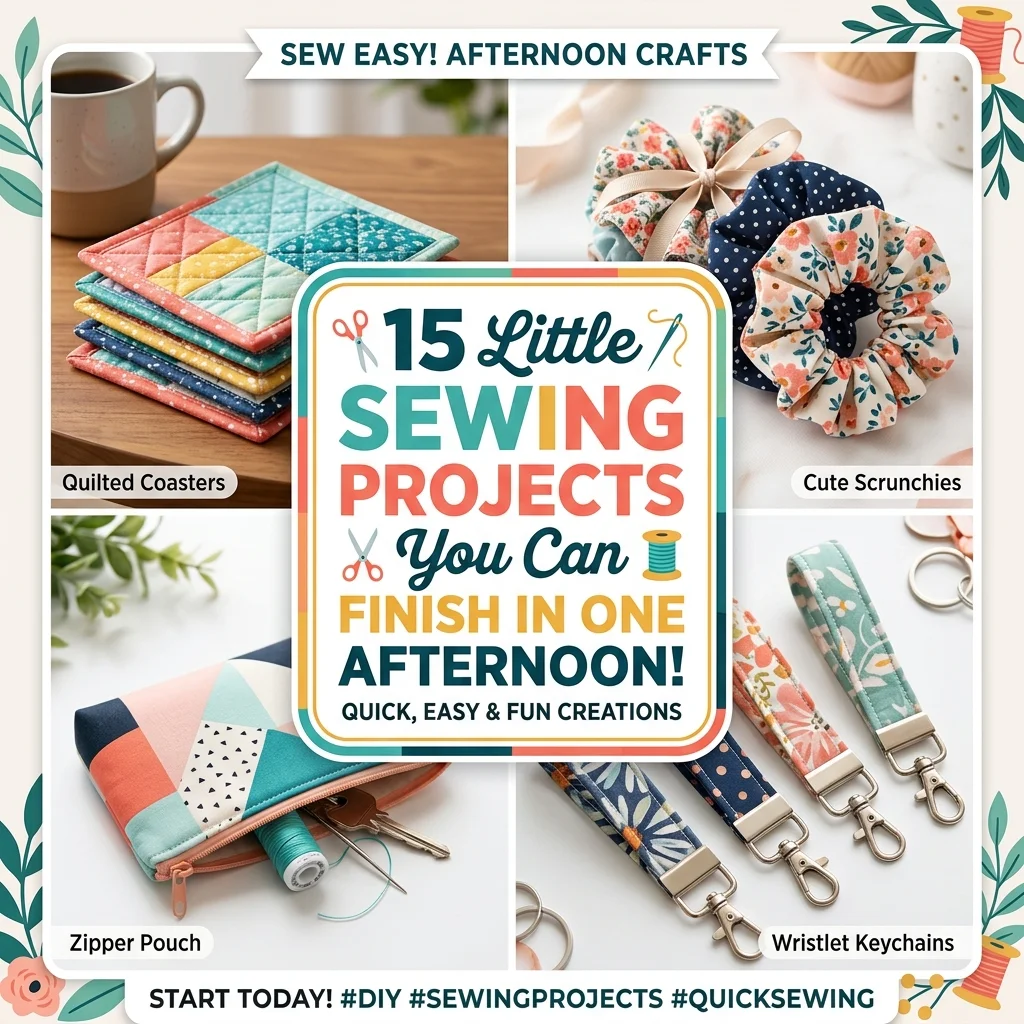
15 Little Sewing Projects You Can Finish in One Afternoon
Introduction
Need a creative win without spending your whole weekend at the sewing machine? These little sewing projects finish in one afternoon and turn simple fabric scraps into useful handmade pieces.
From pretty pouches and cozy mug rugs to practical organizers and mini totes, this collection is packed with approachable ideas for beginners and experienced sewists alike. Each project is designed to feel achievable, visually appealing, and genuinely useful in everyday life. You can work with fabrics already hiding in your stash, experiment with colors you love, and finish something tangible before the day is over. I’ve noticed that quick sewing projects are often the most motivating because they let you enjoy the satisfaction of making without the pressure of a large commitment.
Zippered Pouch
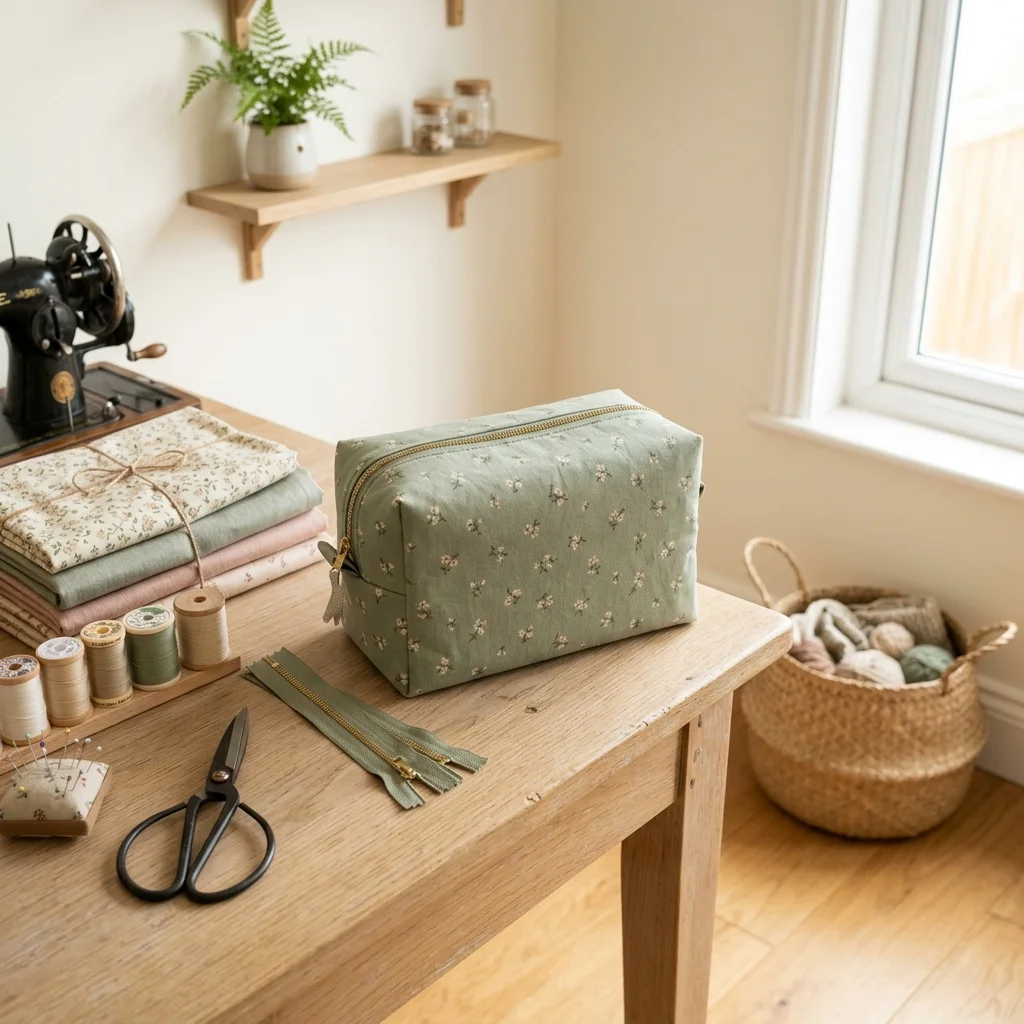
Grab your fabric scraps and make the afternoon count with a tiny project that feels surprisingly polished. A simple zippered pouch is one of the most useful beginner sewing makes because it needs little fabric, basic straight stitching, and only a few supplies. Choose a cheerful cotton print for the outside and a solid lining for contrast. The finished pouch can organize earbuds, makeup, sewing notions, or small desk essentials. I’ve noticed that practical projects like this are especially satisfying because you get a finished result quickly, without committing to a complicated pattern or a full weekend of sewing.
Start with a 9-by-7-inch pouch for an easy, manageable size, then adjust the dimensions once you feel comfortable. A medium-weight cotton is forgiving, presses neatly, and holds its shape without becoming bulky. Add a coordinating zipper and press each seam as you work for a cleaner finish. The biggest visual improvement comes from careful alignment around the zipper and crisp corners. Once finished, keep one in your handbag, desk drawer, or craft basket. This small make proves that useful sewing does not need hours of cutting, fitting, or complicated construction to look thoughtfully designed.
Bowl Cozy
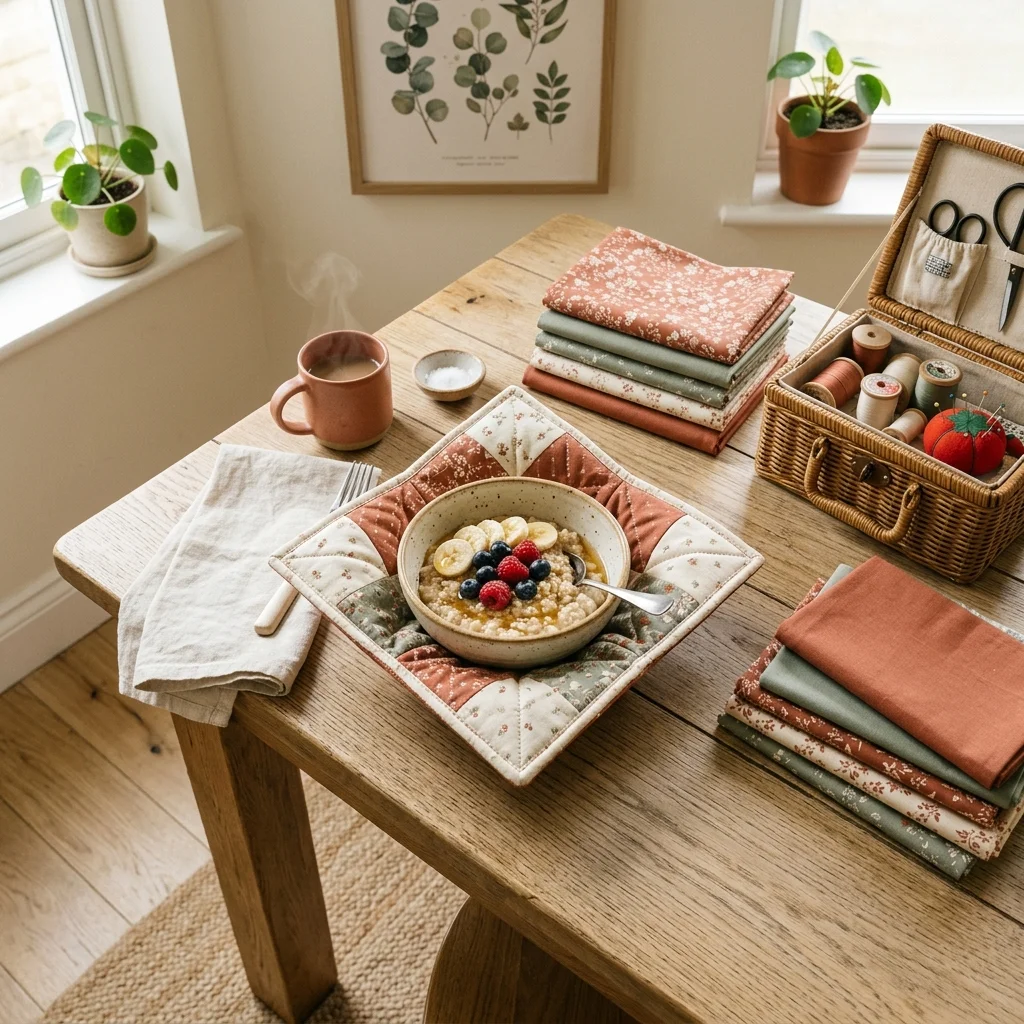
Bring a little charm to your kitchen with a fabric bowl cozy that turns an everyday meal into a prettier, more comfortable moment. This project works beautifully with quilting cotton, making it ideal for using small coordinated prints from your stash. Choose a soft botanical, gingham, or geometric pattern, then pair it with a simple neutral for a calm handmade look. The cozy adds a layer of protection when carrying a warm bowl from the microwave to the table. In my experience, quick practical accessories like this become favorites because they solve a problem while adding personality to ordinary routines.
For a polished result, cut your fabric and batting evenly, then quilt the layers with simple diagonal or grid lines before shaping the cozy. Keep the stitching evenly spaced so the surface looks intentional rather than busy. Rounded corners create a softer silhouette, while contrasting binding can add a crisp finishing detail. Use only microwave-safe materials and avoid metallic trims, embellishments, or fabrics that are not suitable for microwave use. Once completed, stack several in a basket near the kitchen table. They take little storage space and make a thoughtful handmade gift for anyone who enjoys cozy meals.
Fabric Key Fob
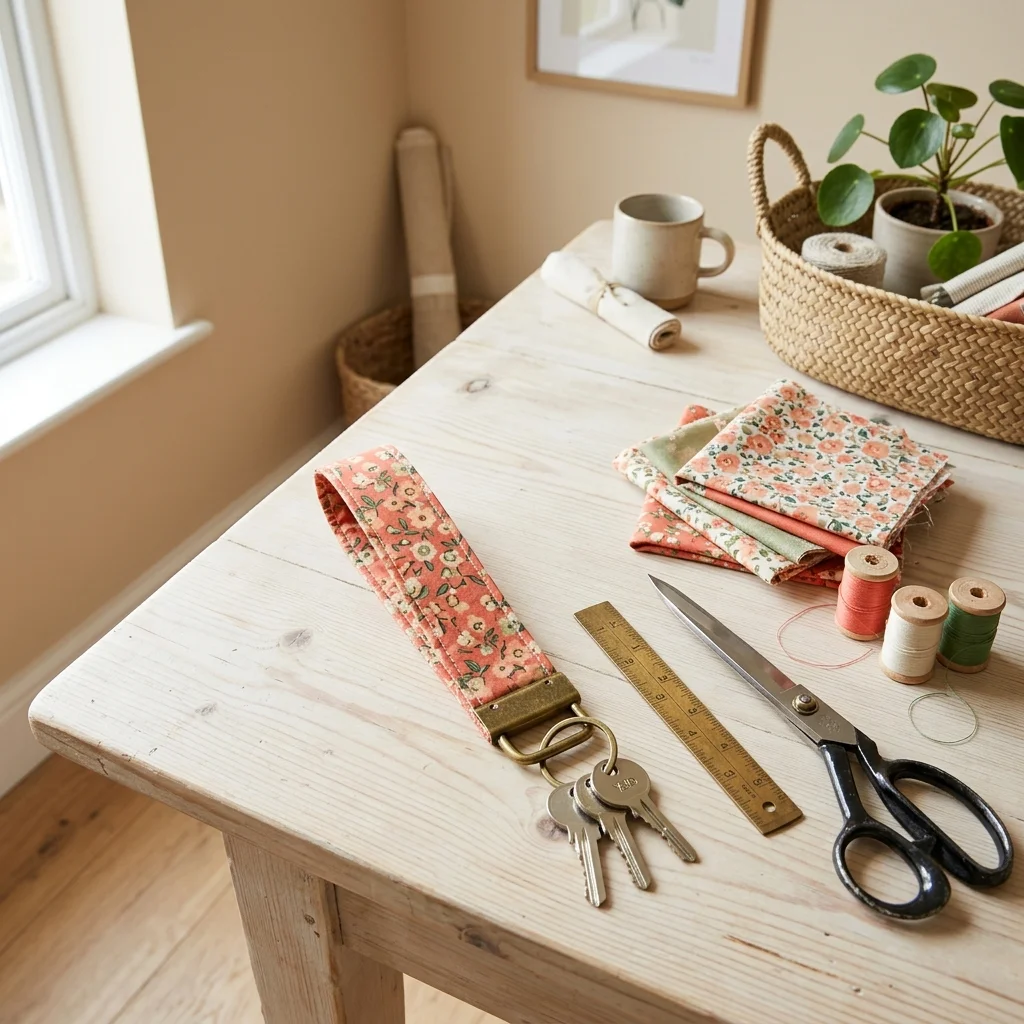
Give your favorite tote or handbag a fresh personality with a fabric key fob made from a narrow strip of cotton. This tiny accessory is perfect when you want something handmade but have barely enough time for a larger project. Pick a bright floral, striped canvas, or leftover quilting cotton, and add a sturdy swivel clasp for a finished look. The result can make keys easier to spot while giving a plain bag a cheerful handmade accent. I’ve seen these small accessories work especially well as gifts because they are useful, inexpensive, and easy to personalize with colors someone loves.
Keep the construction simple: fold the fabric strip neatly, press the edges, stitch along both sides, and secure it firmly around the hardware. For extra durability, use interfacing or a second fabric layer, especially if the fob will carry heavy keys every day. A contrasting thread can create a decorative border, while matching thread gives a cleaner, minimalist finish. Make several from leftover scraps and keep them ready for gifts. Because each one takes so little material, this is an easy way to turn fabric remnants into polished accessories instead of letting useful pieces disappear into the scrap basket.
Scrunchie Set
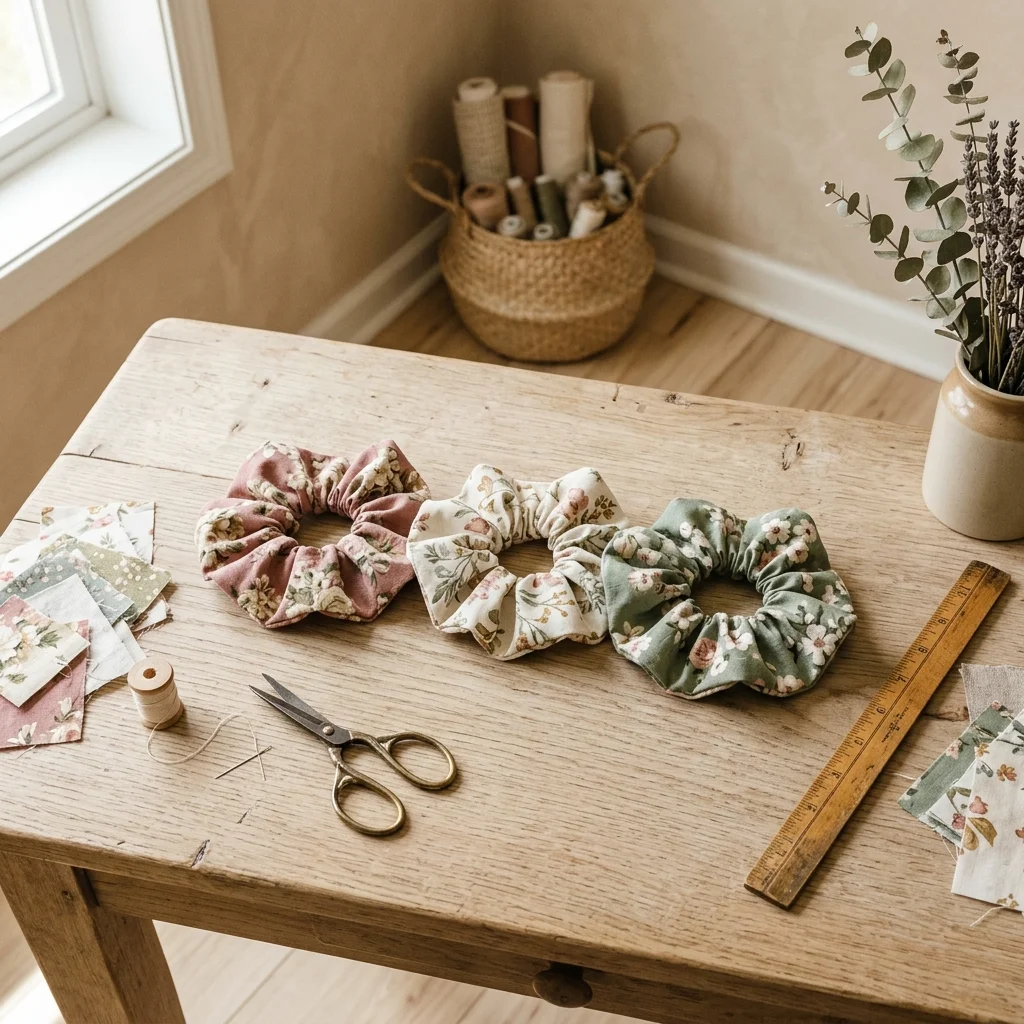
Turn leftover fabric into a small accessory collection with a few cheerful scrunchies. This is one of those satisfying afternoon projects where tiny pieces become something useful and attractive before you know it. Floral cottons, soft ginghams, and leftover dressmaking fabrics all work beautifully. Mixing three or four coordinating prints makes the finished set look intentionally designed rather than random. Scrunchies are also forgiving because small variations rarely affect their usefulness. I’ve noticed they are particularly handy for beginners because the sewing is straightforward, the fabric requirements are minimal, and mistakes are easy to correct without wasting much material.
For the neatest result, cut your fabric strips evenly and choose elastic that comfortably fits the intended wearer. Press the fabric tube before inserting the elastic so the edges remain crisp and manageable. A simple topstitch can add structure and make the seam look more finished. Try making one neutral version for everyday wear and a few brighter options for variety. Once complete, place them in a small ceramic dish, basket, or drawer organizer. They can become practical little gifts too, especially when grouped with a matching pouch or other handmade accessory.
Lavender Sachets
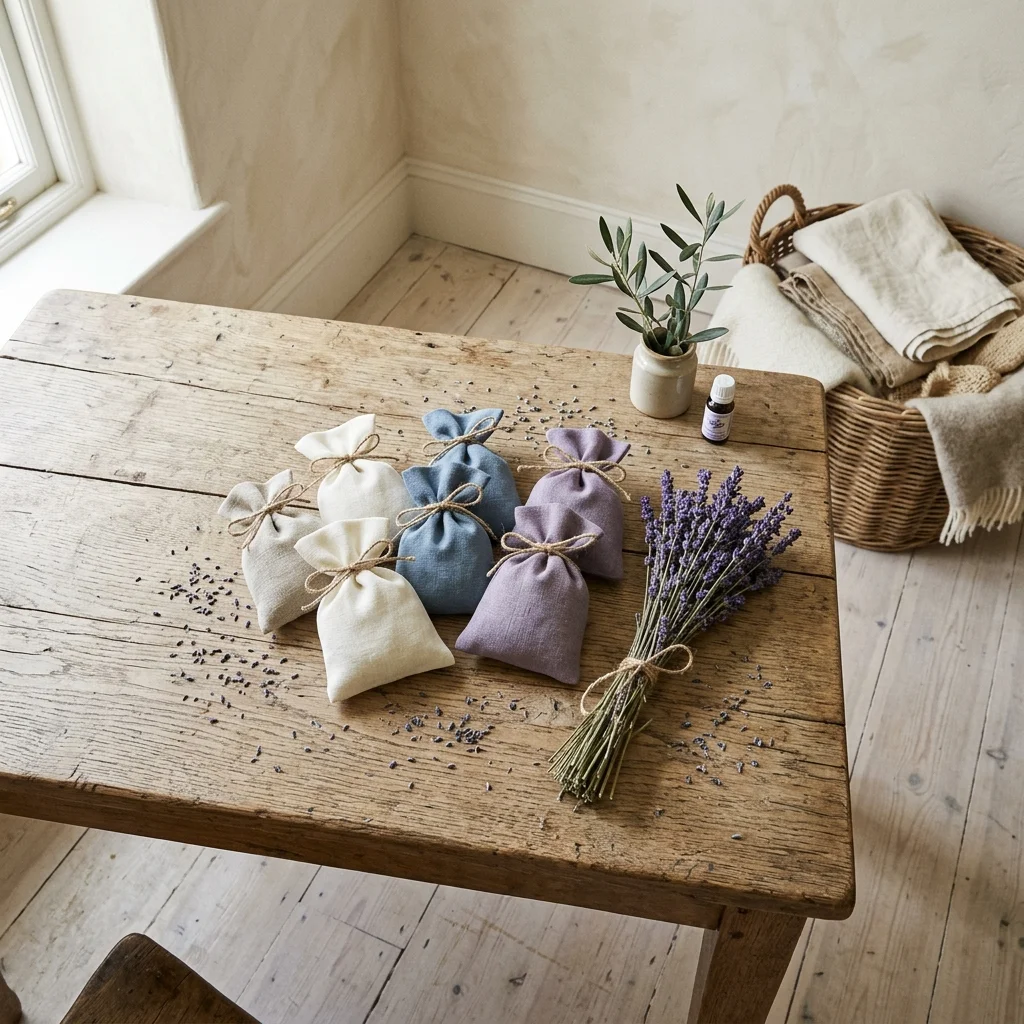
Create a handful of fabric sachets when you want a quick sewing project that also adds a lovely finishing touch to drawers and closets. Small pieces of linen or cotton can be transformed into simple scented pouches with almost no complicated construction. Soft lavender, cream, dusty blue, and botanical prints create a relaxed visual palette that suits bedrooms and linen cupboards. The finished sachets are also an easy way to use fabric remnants that are too small for larger projects. In my experience, these little makes feel especially rewarding because they combine sewing with something sensory and practical.
Cut two matching rectangles, stitch around the edges while leaving a small opening, then turn and fill the pouch before closing it securely. Use dried lavender or another suitable dried botanical filling, and keep the construction simple so the fabric remains the focus. A narrow ribbon loop can make the sachet easier to hang from a closet hook. For an elevated appearance, add a small embroidered initial or decorative stitch before assembling the pieces. Arrange several together in a shallow basket, or tuck individual sachets between folded linens for a subtle handmade detail.
Reusable Snack Bags
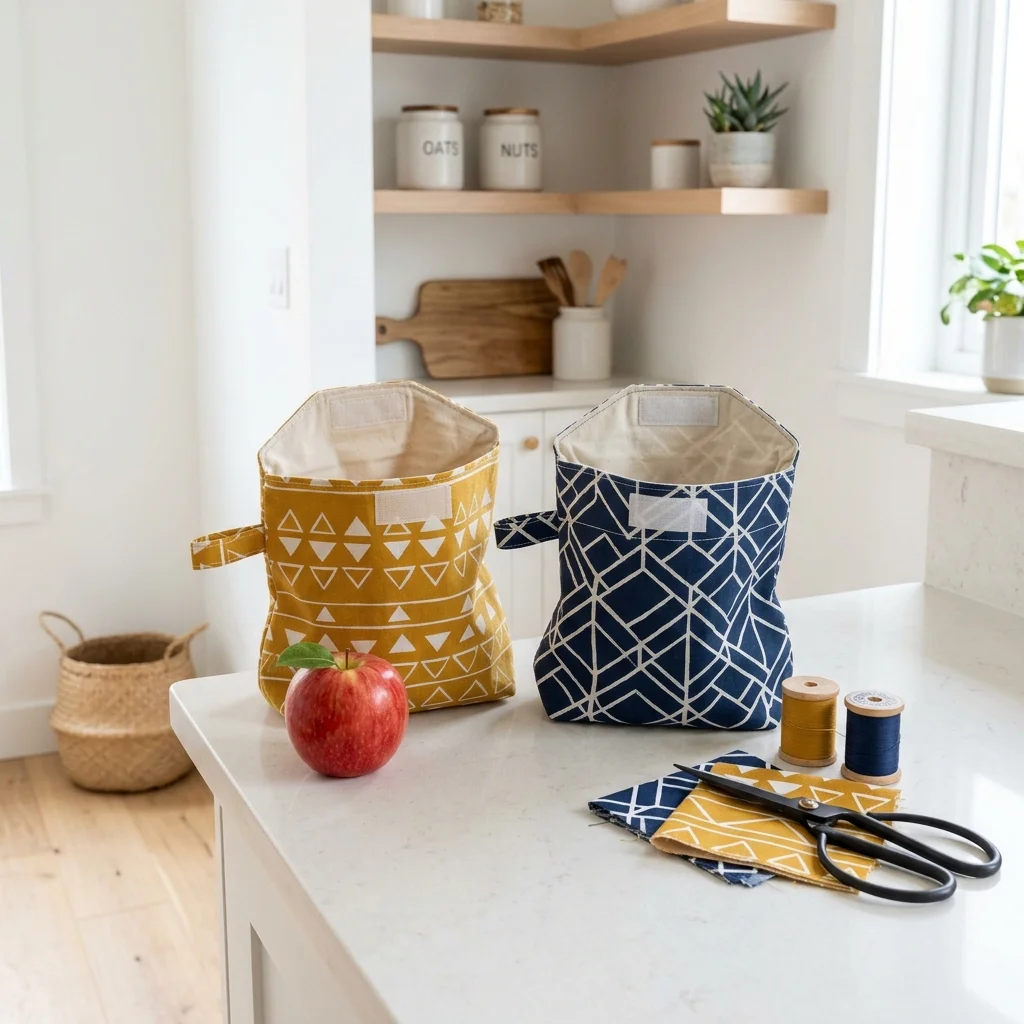
Make everyday packing a little prettier with reusable snack bags sewn from colorful fabric. These compact pouches are useful for school lunches, work snacks, picnics, and short outings, making them a practical alternative to disposable storage. Choose cheerful cotton prints for the exterior and an appropriate washable, food-contact-safe lining for the interior. Different sizes can handle everything from crackers to sandwiches. The simple shape also gives beginners plenty of room to practice straight seams and neat corners. I’ve found that projects connected to daily routines are often the ones people keep using long after the excitement of finishing them fades.
For a clean finish, press your fabric carefully before assembling the layers and make sure the closure is positioned evenly across the opening. A simple hook-and-loop closure can be beginner-friendly, while another suitable washable closure can create a more structured look. Always select materials according to their intended food-contact and washing requirements. Keep the finished bags in a kitchen drawer or basket so they are easy to grab when packing snacks. Making several at once also saves preparation time and lets you create a coordinated collection in different colors, patterns, and sizes.
Book Sleeve
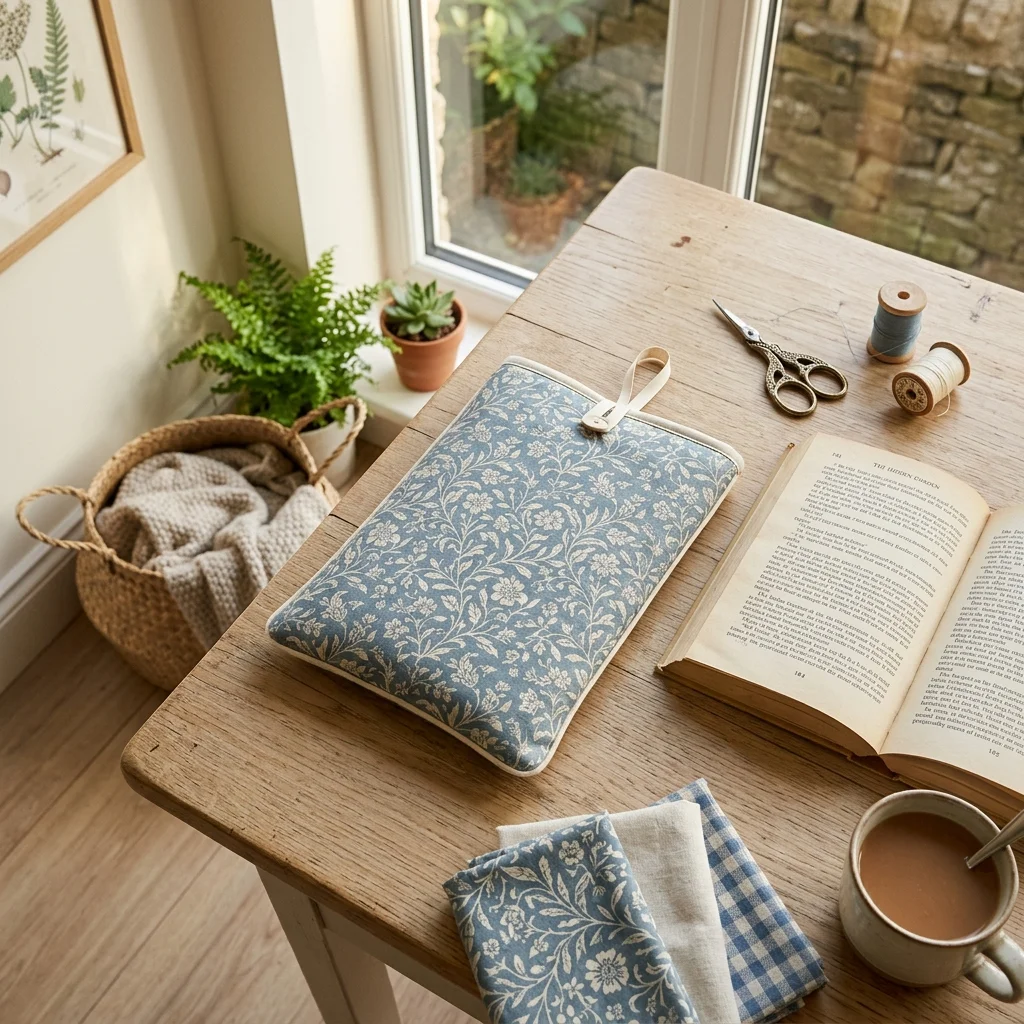
Give your favorite book a handmade layer of protection with a simple fabric sleeve. This compact project is ideal for an afternoon because the basic construction involves straight seams, light padding, and a straightforward closure. A botanical print can make the sleeve feel soft and timeless, while stripes or geometric fabrics create a more modern appearance. The padding helps protect covers from scratches and everyday bag wear. If you enjoy reading outside the house, this little accessory can also keep your book looking tidier between uses. I’ve noticed that practical sewing projects like this often become everyday favorites.
Start by measuring the book rather than relying on a standard size, allowing enough room for the cover and a comfortable fit. Add lightweight batting or suitable padding between the fabric layers, then press thoroughly before sewing. A simple flap with a button, snap, or other suitable closure can keep the book secure without making the design bulky. For a decorative finish, try a narrow border of contrasting fabric around the flap. Once finished, keep the sleeve near your reading chair or place it inside your everyday bag so your book is always ready for the next chapter.
Mug Rug
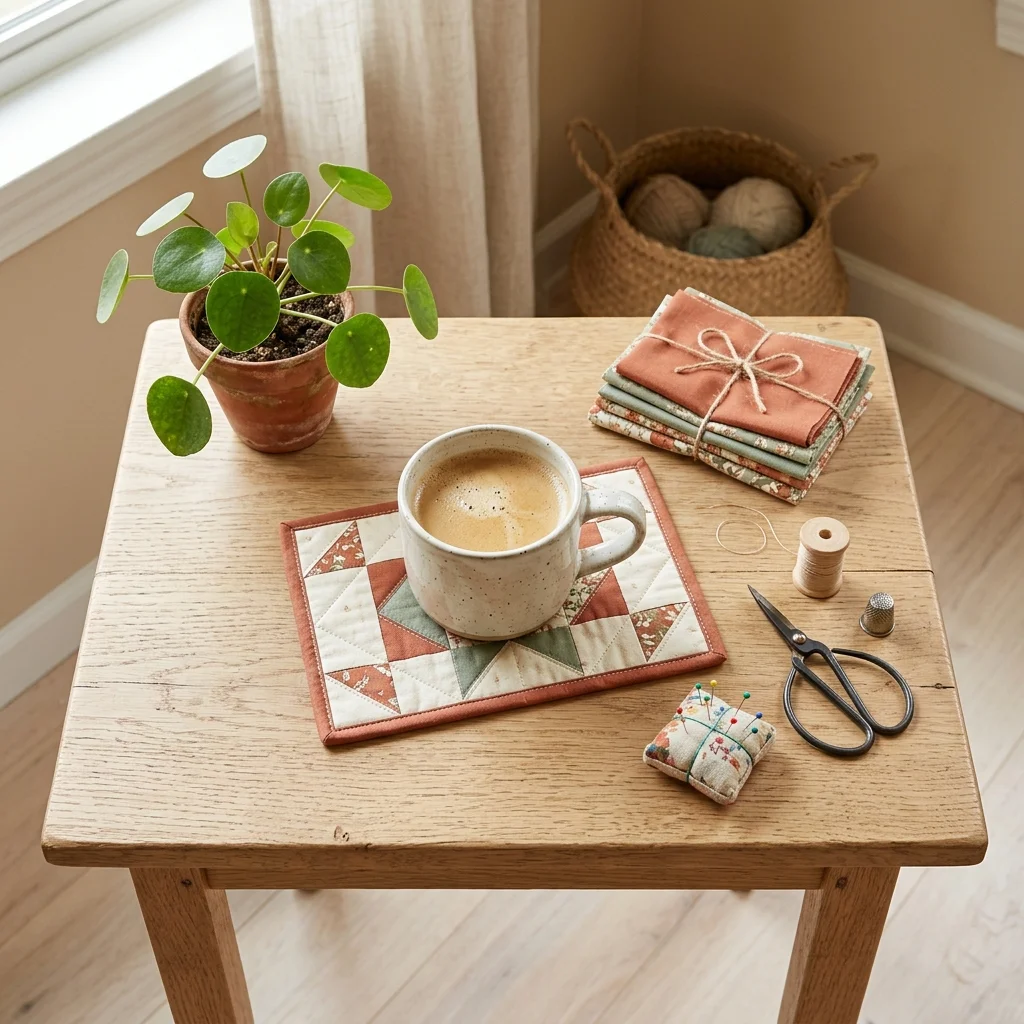
Brighten a coffee break with a small quilted mug rug that gives your tabletop a finished, intentional look. Unlike a traditional coaster, a mug rug offers extra surface area for a spoon, biscuit, or small snack while protecting the table from warmth and moisture. It is also an excellent scrap-friendly project because small fabric pieces can become the main design feature. Mix two or three complementary colors rather than too many competing prints. In my experience, simple patchwork becomes especially attractive when the palette stays controlled, allowing the stitching and fabric textures to stand out.
Keep the shape uncomplicated with a rectangle or rounded square, then layer cotton fabric with suitable batting before quilting. Straight parallel lines are enough to create a handmade texture without requiring advanced techniques. Finish the edges with binding or a neatly turned seam, depending on your comfort level. A small mug rug can transform a plain desk, bedside table, or breakfast nook with almost no visual clutter. Make a coordinated set in different patterns and stack them in a shallow basket. They also make thoughtful handmade gifts when paired with a favorite mug or tea towel.
Cord Organizer
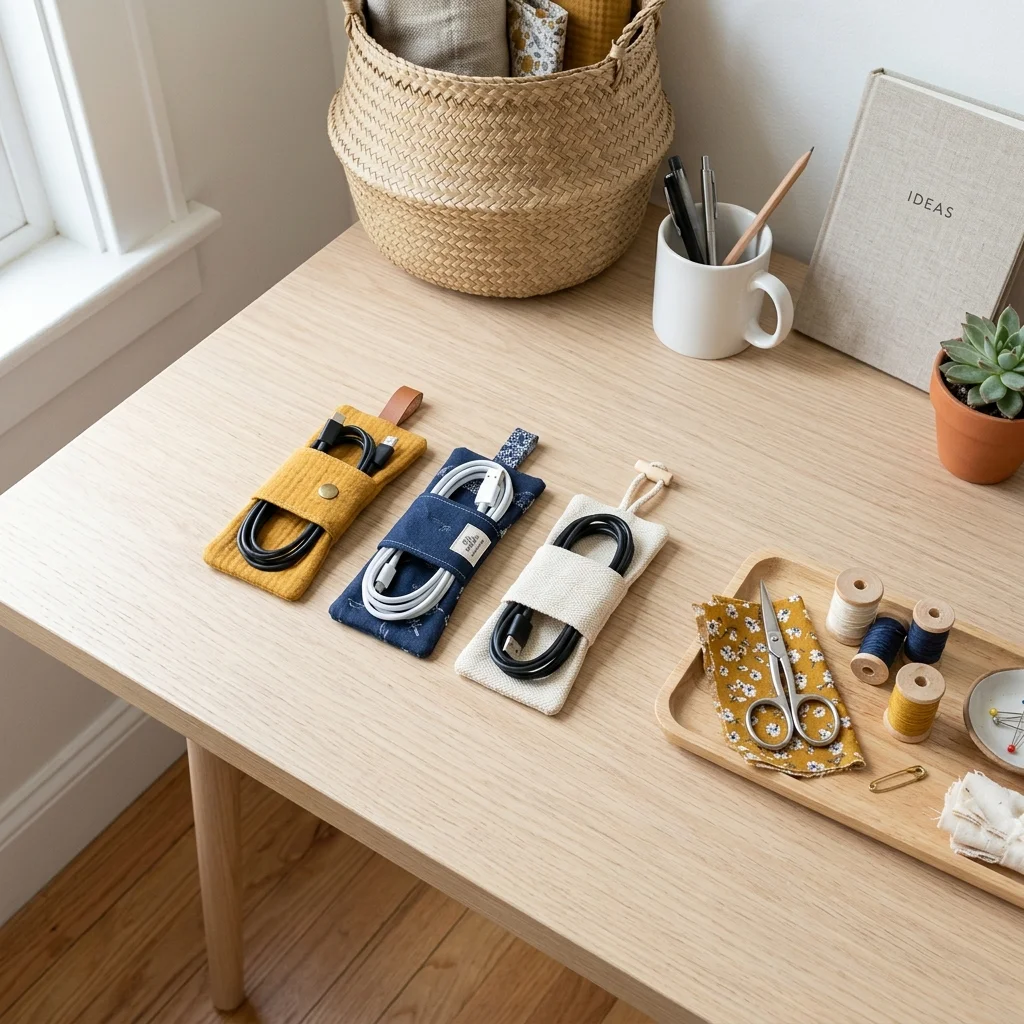
Tame messy charging cables with a tiny fabric cord organizer that takes very little time or material to make. These simple wraps are perfect for using narrow scraps that might otherwise be difficult to repurpose. Choose sturdy cotton in colors that coordinate with your workspace, then add a secure closure to keep each wrap neatly around its cable. The result is small enough to store in a drawer, travel pouch, or desk organizer. I’ve seen quick organization projects make a noticeable difference because they solve a frustrating everyday problem without requiring expensive storage products or complicated sewing techniques.
For a reliable finish, reinforce the area around the closure so repeated opening and closing does not quickly weaken the fabric. Interface the cotton if it feels too soft, especially when using thinner quilting fabric. Keep one organizer slightly longer for thick charging cables and make smaller versions for earbuds or short cords. Matching fabrics can create a coordinated desk setup, while mixed prints bring more personality. Store the finished organizers beside your electronics or inside a small basket. Once you make a few, you may find yourself reaching for fabric scraps whenever another tangled cable needs a simple solution.
Pin Cushion
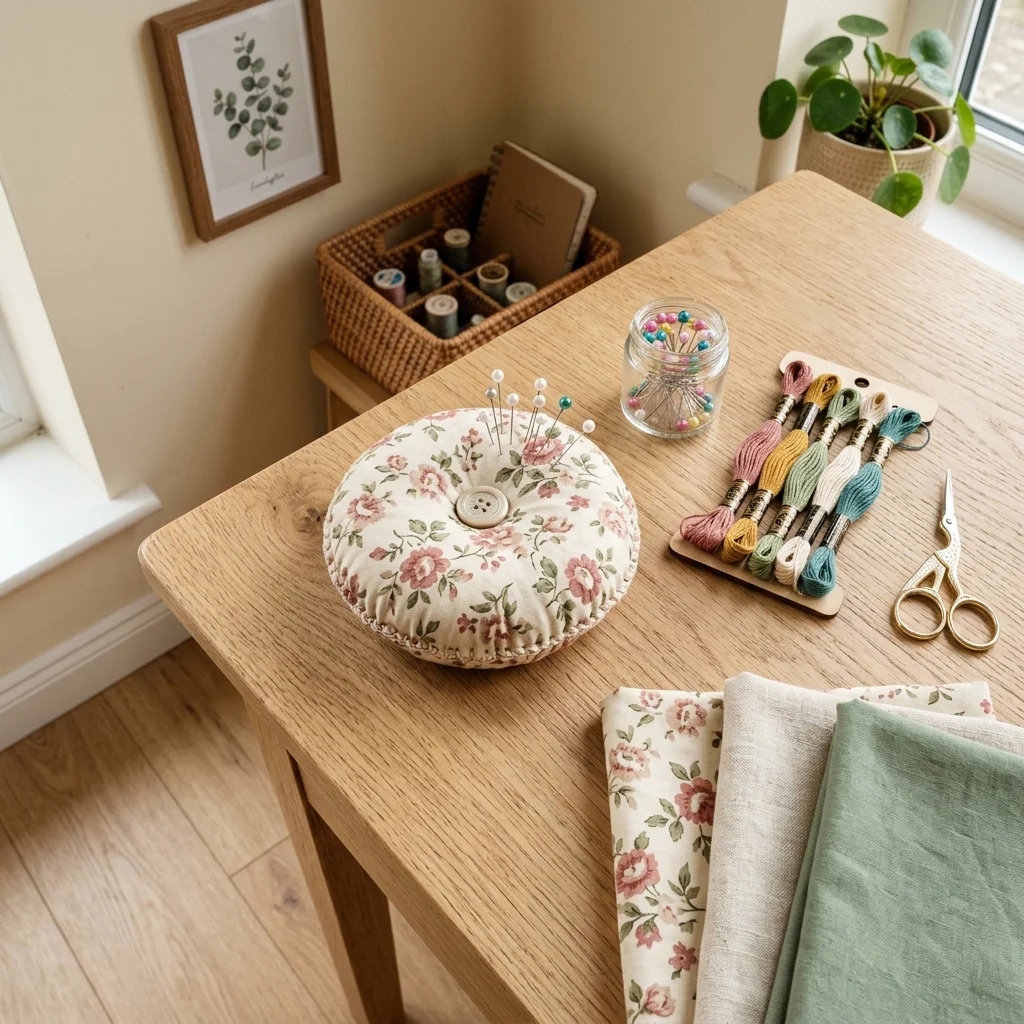
Give your sewing space a cheerful little upgrade with a handmade pincushion. This small project requires very little fabric, making it ideal for scraps left from larger makes. A round cushion is simple to shape, while a square version can be even quicker to assemble. Choose a bright floral or contrasting solid so the pincushion is easy to find among your tools. Keeping pins in one dedicated spot also makes sewing more comfortable and organized. I’ve noticed that tiny studio accessories can make a workspace feel much more personal without adding unnecessary clutter or taking up valuable table space.
For a polished result, cut matching fabric pieces carefully and stitch around the shape while leaving enough room for turning and filling. Use an appropriate stuffing material and fill the cushion firmly enough to support pins without making it excessively hard. A button secured through the center can create a classic tufted appearance, while simple embroidery can add personality. Keep the finished pincushion beside your sewing machine or attach it to a small base for stability. Once completed, it becomes both a useful tool and a charming handmade detail that makes your sewing area feel more inviting.
Fabric Bookmark
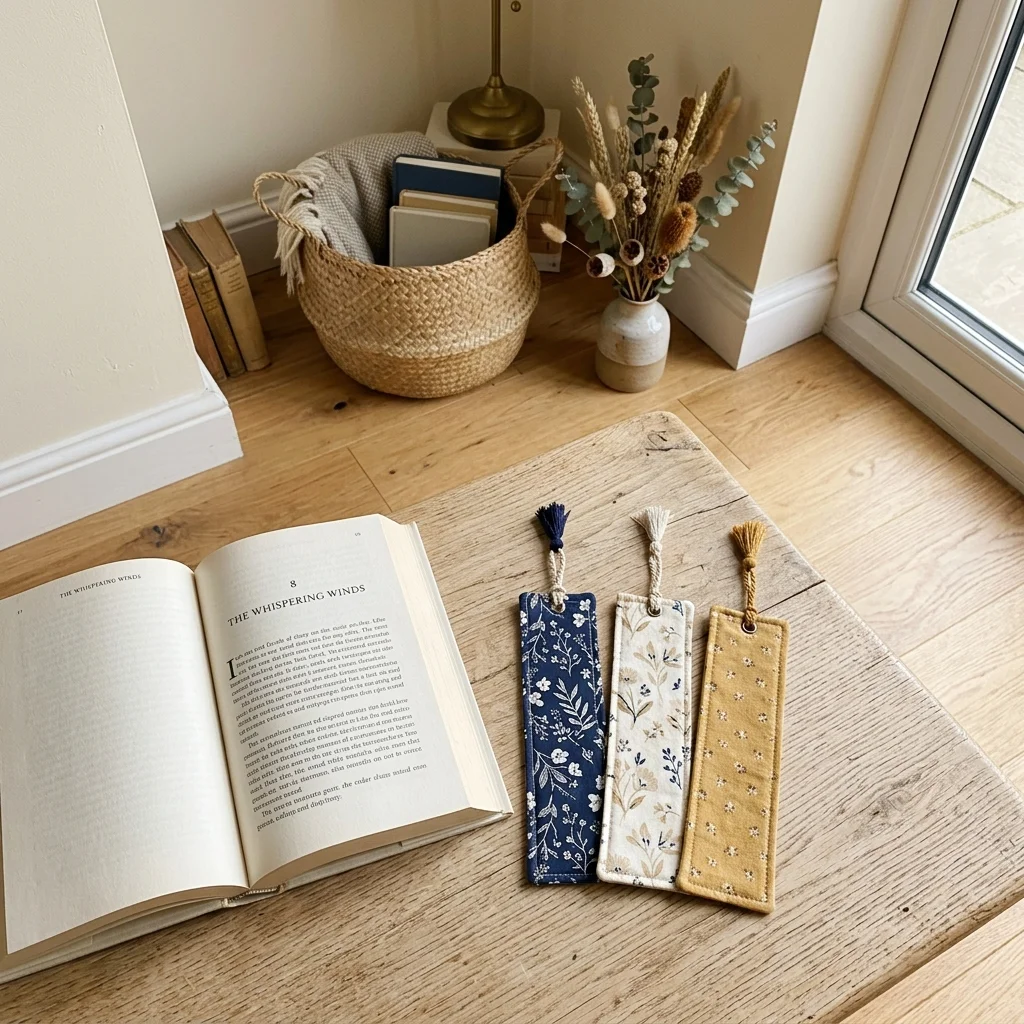
Make reading time feel a little more special with a slim fabric bookmark that can be sewn from even the smallest useful scraps. This project is quick enough for a short sewing session and simple enough for beginners who want to practice straight stitching. Choose a favorite cotton print, add lightweight interfacing for structure, and finish the edges neatly. A narrow ribbon or fabric loop can create an attractive detail at the top. Because bookmarks are small and practical, they also make lovely handmade gifts for readers, teachers, coworkers, or anyone who enjoys keeping a physical book nearby.
For a crisp appearance, press the fabric before and after adding the interfacing, then stitch close to the edge for a clean border. Rounded corners can soften the design, while pointed ends create a more traditional bookmark silhouette. Try making a small collection from coordinating scraps rather than repeating one fabric. Store finished bookmarks in a little cup beside your reading chair or tuck one into each book you are currently reading. This tiny project can also become a useful way to test decorative stitches, contrasting thread, or small embroidery details without committing to a larger piece.
Tissue Pouch
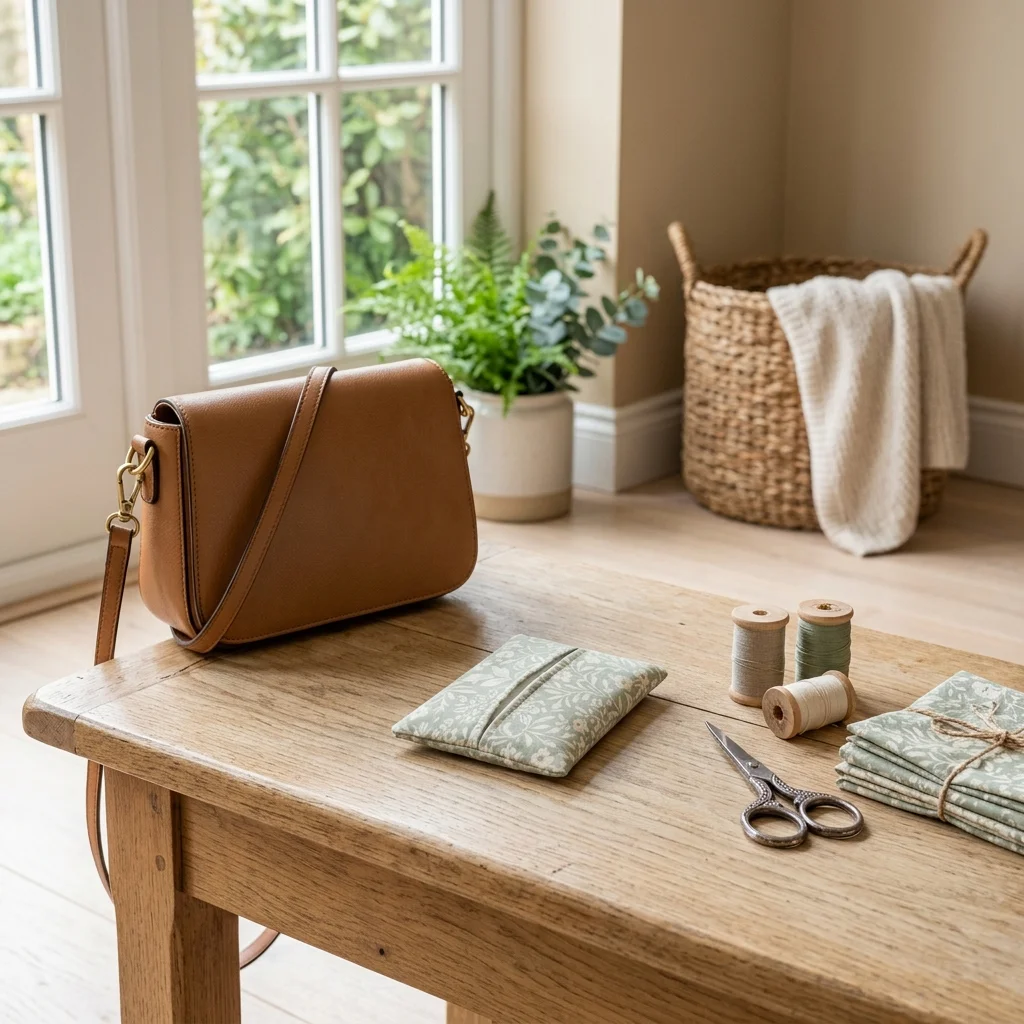
Keep everyday essentials neatly tucked away with a small fabric tissue pouch. Its compact shape makes it especially useful for handbags, backpacks, desks, and travel bags, while the decorative fabric turns a basic necessity into something much more attractive. Floral cotton can create a soft feminine look, while stripes, checks, or neutral solids feel more understated. This is also a smart scrap-busting project because it requires only a small amount of fabric. In my experience, projects that combine organization and aesthetics are the easiest to keep using because they make ordinary routines feel slightly more intentional.
Begin with a simple rectangular design sized around the tissue packet you plan to carry, allowing enough ease for comfortable insertion and removal. Press each fold carefully before stitching so the finished pouch lies flat. A contrasting lining can add durability and a small surprise of color inside. Finish the opening with neat topstitching for a clean handmade appearance. Once complete, keep one in your handbag and another in a travel pouch. Making several from different fabrics also gives you an easy way to use coordinating scraps while creating useful little accessories for yourself or thoughtful gifts.
Eyeglass Case
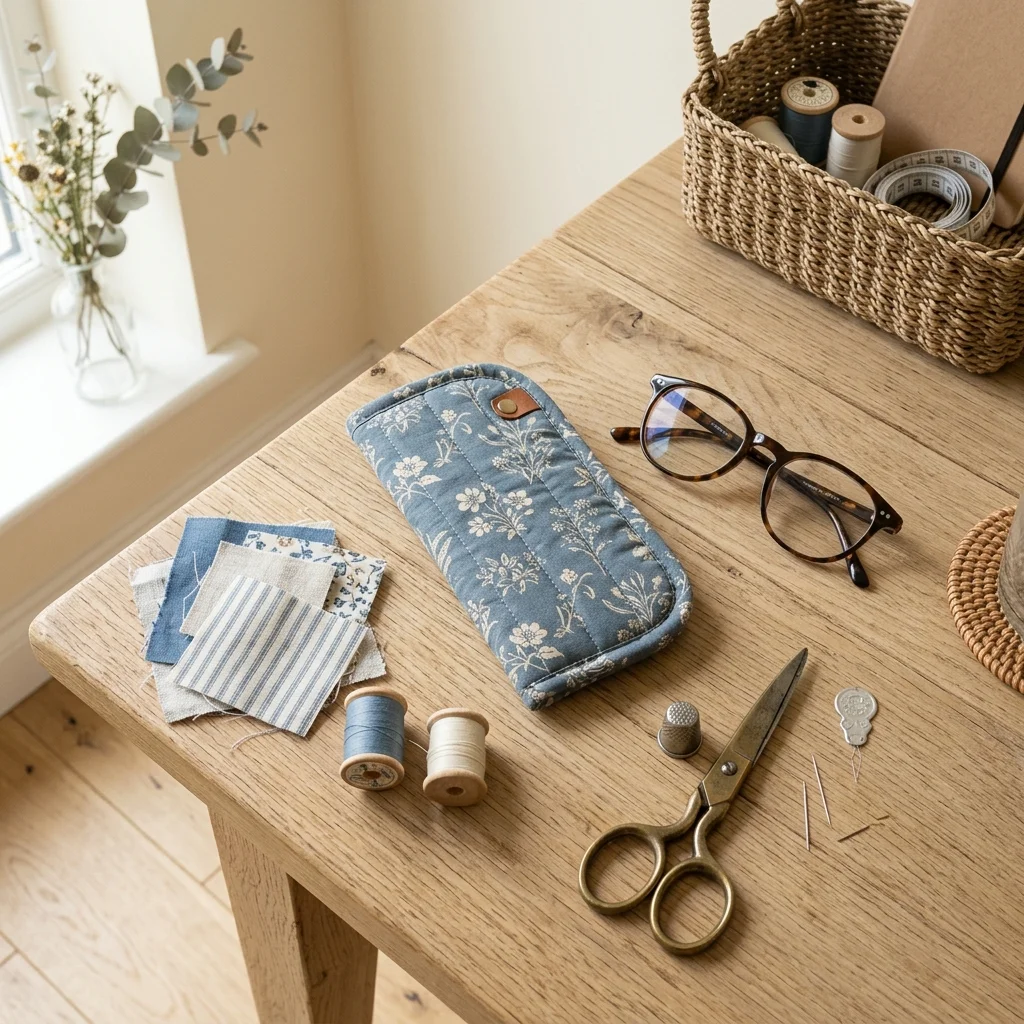
Protect your glasses while adding a handmade touch to your everyday essentials with a simple fabric case. This compact project is ideal for an afternoon because it can be constructed from a few fabric pieces, lightweight padding, and basic stitching. Choose a pretty floral, geometric, or solid fabric that reflects your personal style. A softly padded case can help protect glasses from scratches when they are tucked into a handbag or drawer. I’ve noticed that small protective accessories are especially satisfying to sew because they combine a polished appearance with a clear practical purpose.
Measure the glasses before cutting so the finished case has enough room without becoming unnecessarily loose. Add suitable batting or interfacing between the fabric layers to create gentle structure and cushioning. A curved top edge can soften the silhouette, while a straight flap creates a clean, modern appearance. Finish the opening with neat topstitching and add a suitable closure if desired. Keep the completed case in your handbag, bedside table, or desk drawer. Making a second version from a different print is an easy way to create a coordinated accessory while using only a small amount of fabric.
Tabletop Coasters
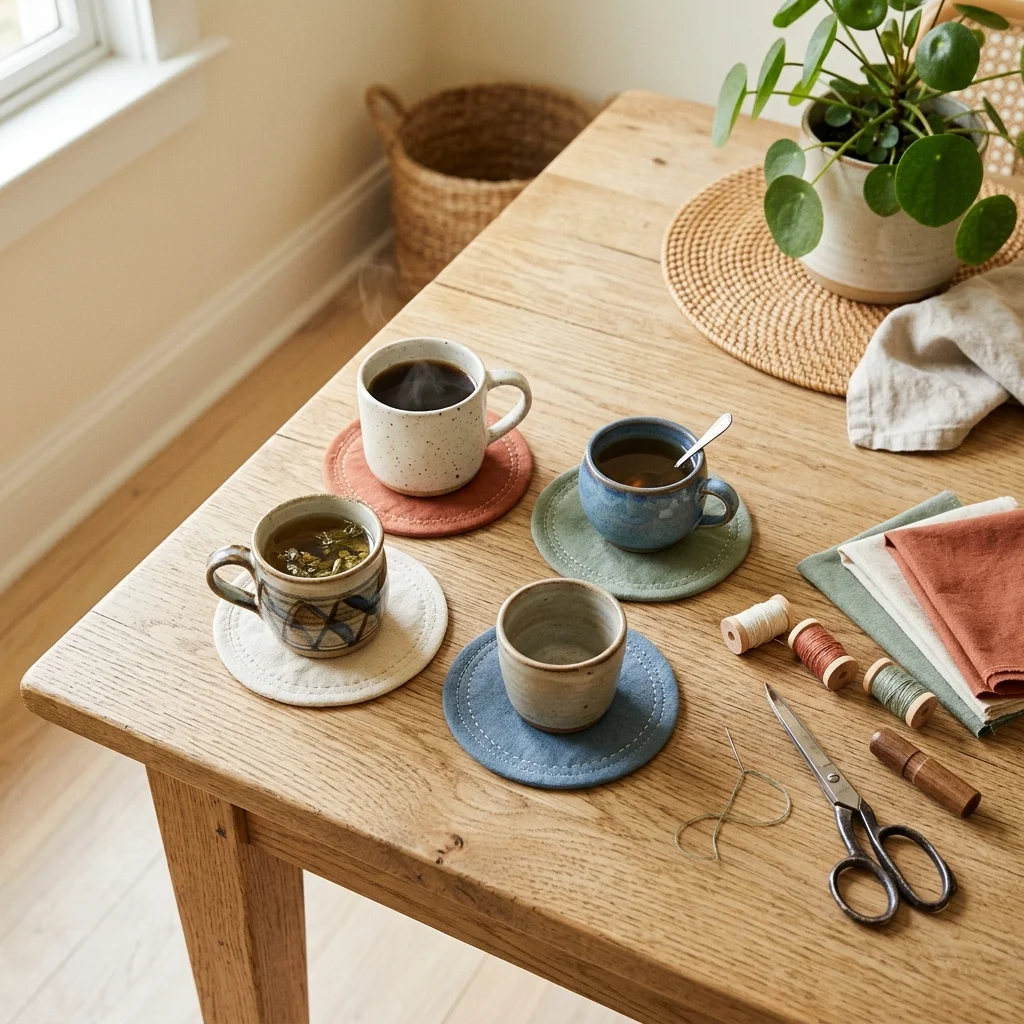
Refresh your coffee table or dining area with a set of fabric coasters made from colorful cotton scraps. These small pieces are quick to cut, sew, and finish, making them perfect when you want a useful result before the afternoon is over. Choose a coordinated palette of two to four colors so the set feels intentional. Florals, checks, stripes, and small geometric prints can work beautifully together. Beyond protecting surfaces from moisture and warmth, fabric coasters add softness to tables filled with hard materials such as wood, glass, and ceramic. They are also simple enough for confident beginners.
For a more substantial coaster, layer two pieces of cotton with suitable batting and quilt them before finishing the edges. A round shape creates a softer decorative effect, while squares with clipped corners offer a modern appearance. Pressing carefully throughout construction makes a noticeable difference, especially around curves and finished edges. Make several matching pieces and store them in a shallow basket near your favorite seating area. A coordinated set can instantly make a casual coffee corner look more finished, and the small size gives you plenty of opportunities to experiment with fabrics, stitching, and decorative details.
Mini Tote Bag
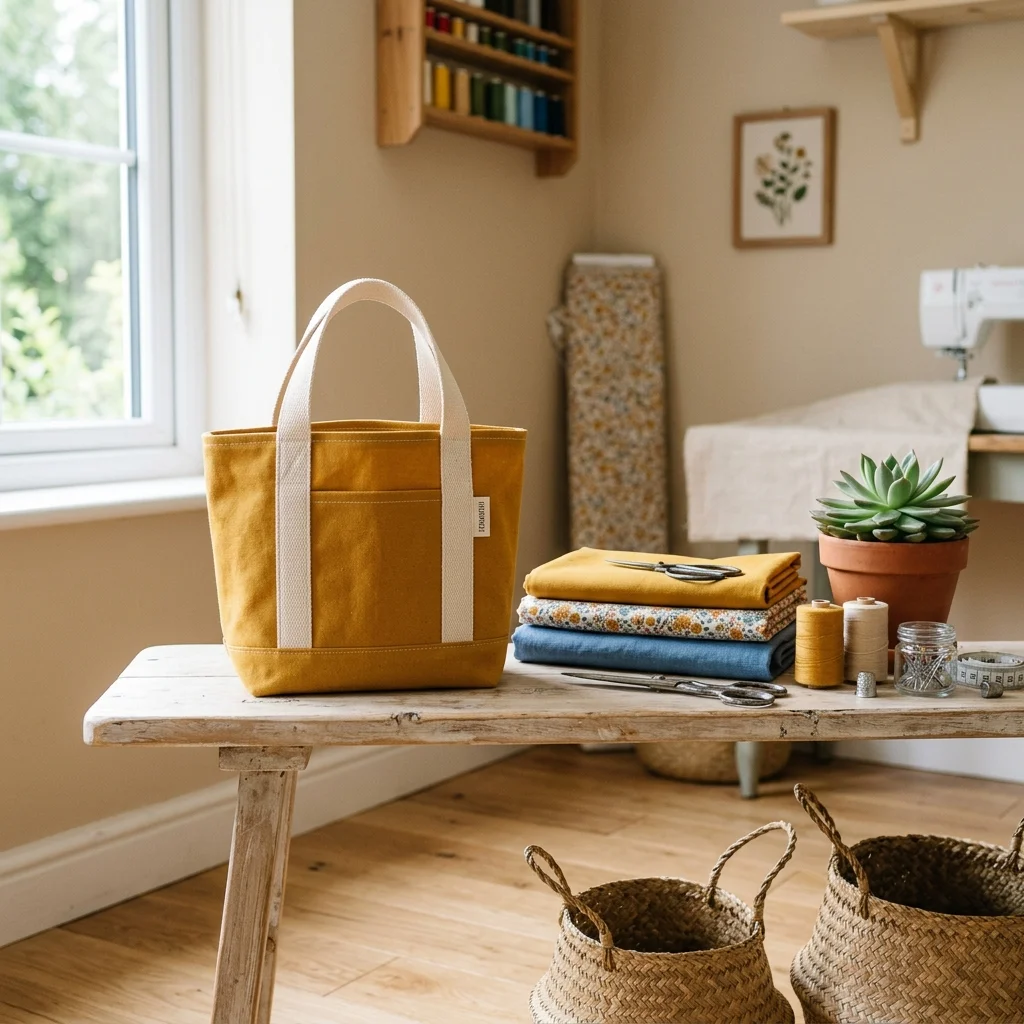
Finish your afternoon with a useful mini tote that can carry small groceries, craft supplies, books, or everyday essentials. A compact tote has the satisfaction of a larger sewing project without requiring complicated shaping or a long list of pattern pieces. Choose sturdy cotton or canvas for the exterior and a lighter coordinating fabric for the lining. Simple handles can create a clean silhouette, while contrasting fabrics make the finished bag more visually interesting. I’ve found that small bags are particularly rewarding because they are practical enough to use immediately and simple enough to customize.
Start with a straightforward rectangular body and keep the construction uncomplicated if you want to finish quickly. Reinforce the handle attachment points because these areas receive the most stress during everyday use. Press the seams as you go to help the bag hold its shape and give the finished piece a more professional appearance. Add an interior pocket if you have extra time, or leave the design minimal for a faster finish. Once complete, use the tote for a small shopping trip, craft supplies, or library visits. It is a satisfying final project for a productive afternoon of sewing.
Conclusion
A free afternoon is all you need to make something useful, beautiful, and completely your own. These little sewing projects finish in one afternoon while giving you plenty of opportunities to use fabric scraps, practice your skills, and refresh everyday spaces with handmade details. Start with the project that feels easiest, then experiment with different prints, textures, and colors as your confidence grows. I’ve seen how small handmade pieces can make ordinary routines feel much more personal. Save this collection on Pinterest, choose your favorite idea, and share it with another sewing enthusiast who loves a satisfying afternoon make.
Read More : 18 Flower Crochet Grid Pattern Ideas for Handmade Designs