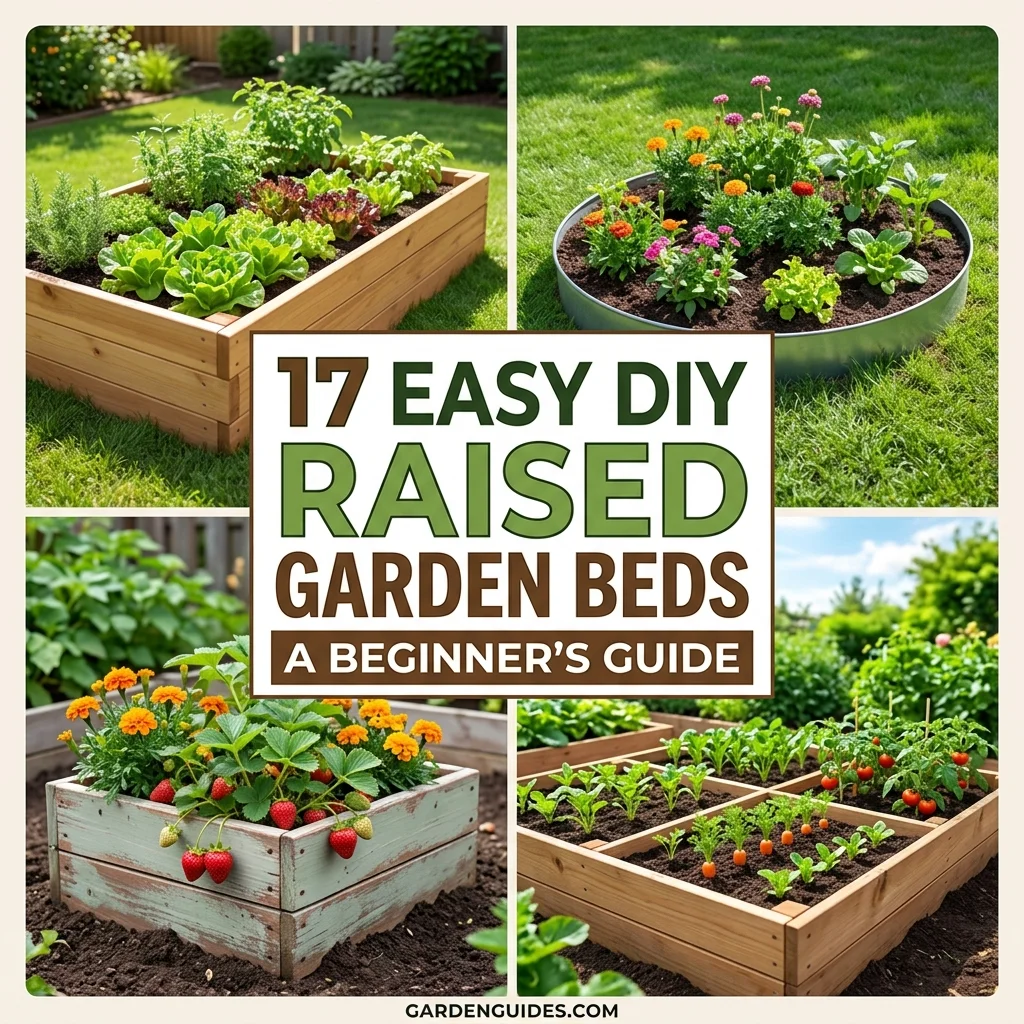
17 Easy DIY Raised Garden Beds for Beginners Guide
Introduction
Dreaming of growing your own vegetables, herbs, or flowers but not sure where to begin? These easy diy raised garden beds for beginners will show you that creating a beautiful and productive garden doesn’t have to be complicated or expensive.
Whether you have a spacious backyard, a compact patio, or an unused corner waiting for a purpose, the right raised bed can completely change how your outdoor space looks and functions. From rustic pallet planters to timeless cedar boxes and space-saving vertical designs, these ideas combine practicality with visual appeal to make gardening more enjoyable.
I’ve noticed that many first-time gardeners gain confidence much faster when they start with simple, well-designed raised beds. Clear planting areas, better soil control, and easier maintenance remove many of the common frustrations beginners face. This collection is designed to inspire you with approachable projects that look Pinterest-worthy while delivering real everyday benefits, helping you create a garden you’ll enjoy planting, harvesting, and spending time in throughout the seasons.
Cedar Box Beds
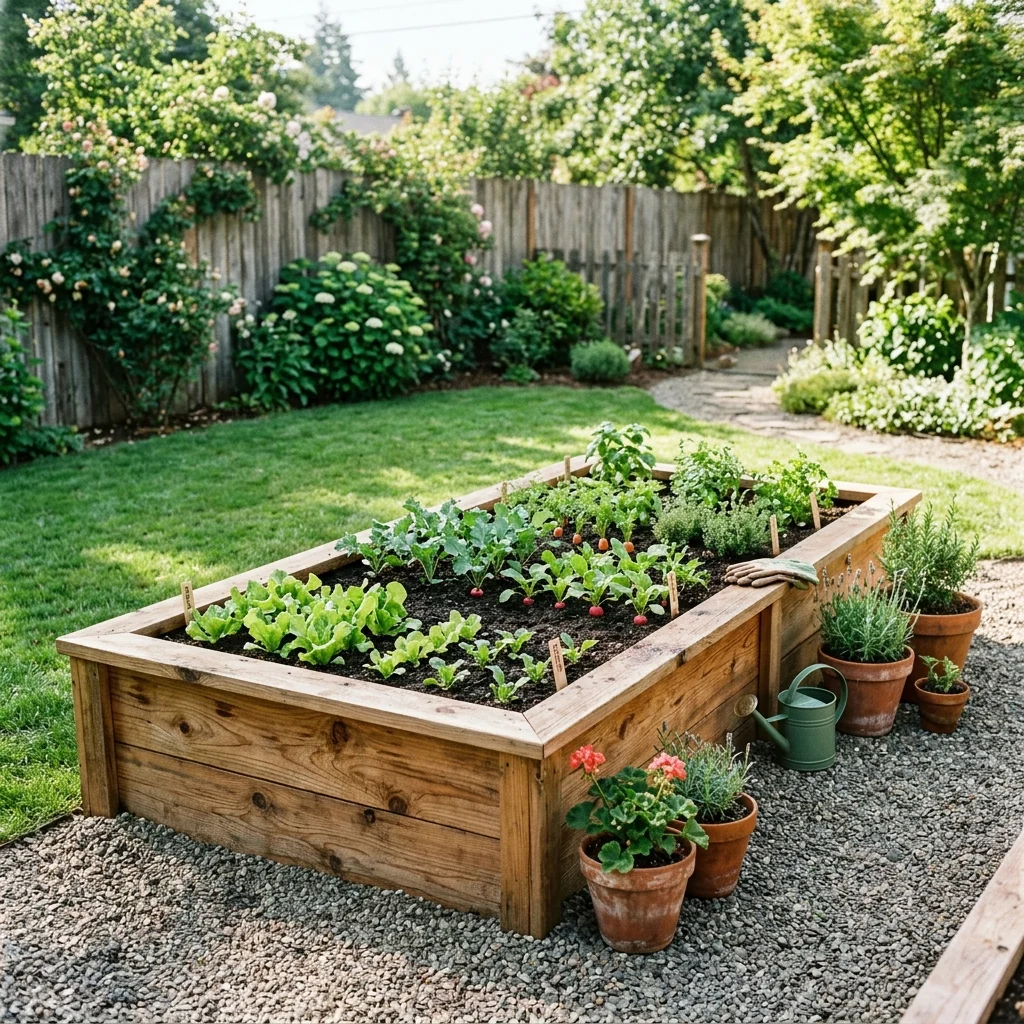
Starting with cedar is one of the easiest ways to build a productive growing space without making the project feel overwhelming. Clean lines and natural wood instantly create an organised look while defining planting areas with minimal effort. In my experience, beginners appreciate how forgiving cedar is during assembly because minor imperfections rarely affect the finished result. The finished bed feels sturdy, attractive, and welcoming, encouraging more time outdoors while making vegetables, herbs, and flowers easier to care for throughout the changing gardening seasons with confidence.
One of the biggest advantages is how neatly everything stays contained from the very beginning. Soil remains deeper, weeds become easier to manage, and watering feels more efficient because the growing area is clearly defined. Many gardeners also notice healthier root development thanks to improved drainage and better soil quality. This style works equally well beside patios, fences, or open lawns, making it a flexible option for anyone creating easy diy raised garden beds for beginners while keeping maintenance manageable and the overall garden visually polished.
Corner Garden Bed
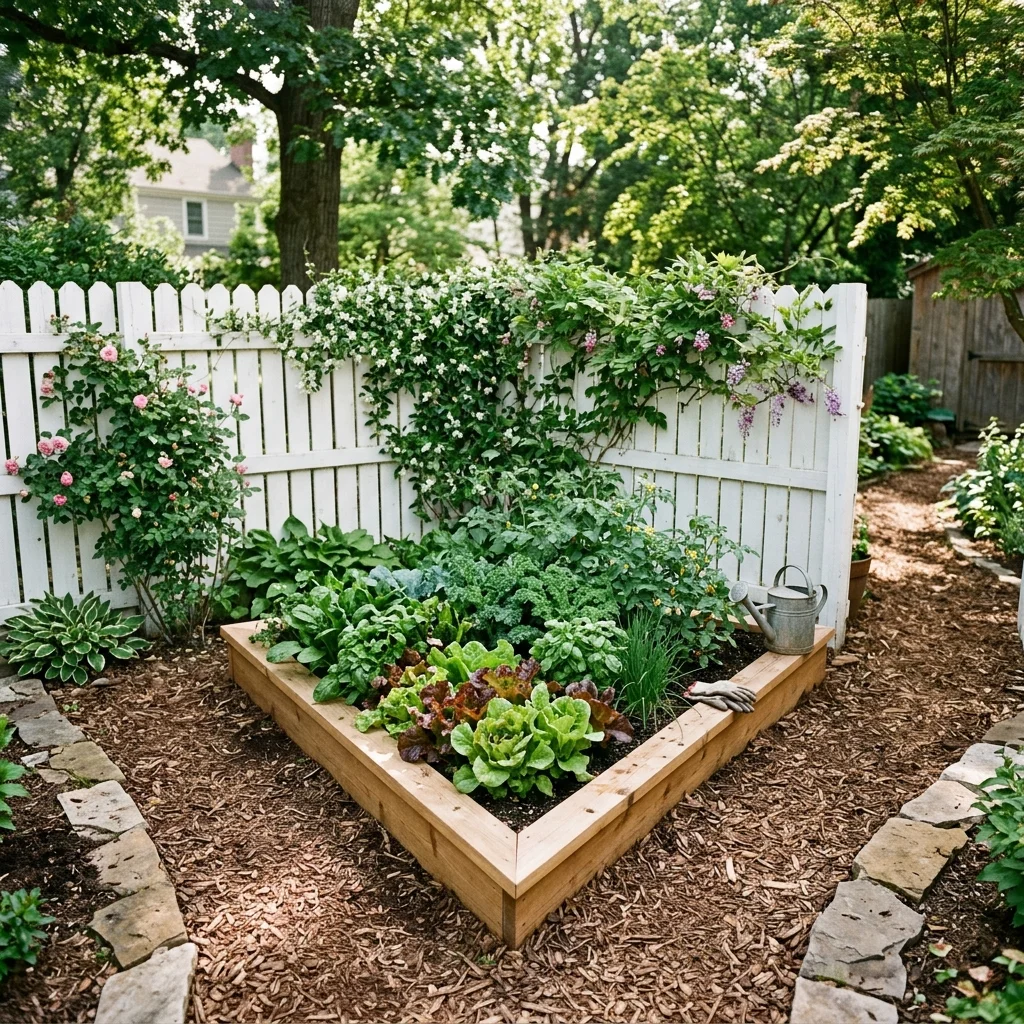
Unused corners often become forgotten spaces, yet they can transform into productive planting zones with a thoughtfully shaped raised bed. A corner layout naturally frames the garden while making every square metre more useful. I’ve noticed this arrangement also creates a pleasant visual balance because it softens empty edges without overcrowding the yard. Whether growing herbs, leafy greens, or colourful flowers, the compact footprint encourages efficient planting while maintaining clear walking areas that feel open, organised, and welcoming throughout every gardening season.
Beyond improving appearance, this design simplifies everyday maintenance because every plant stays within comfortable reach. Watering becomes less awkward, harvesting requires fewer steps, and the surrounding landscape feels intentionally planned rather than randomly filled. Corner beds can also act as attractive transitions between fences, patios, and lawns, tying different outdoor elements together. Choosing this layout helps maximise available space without requiring complicated building techniques, making it especially appealing for new gardeners eager to complete an achievable weekend project with satisfying results.
Pallet Wood Planter
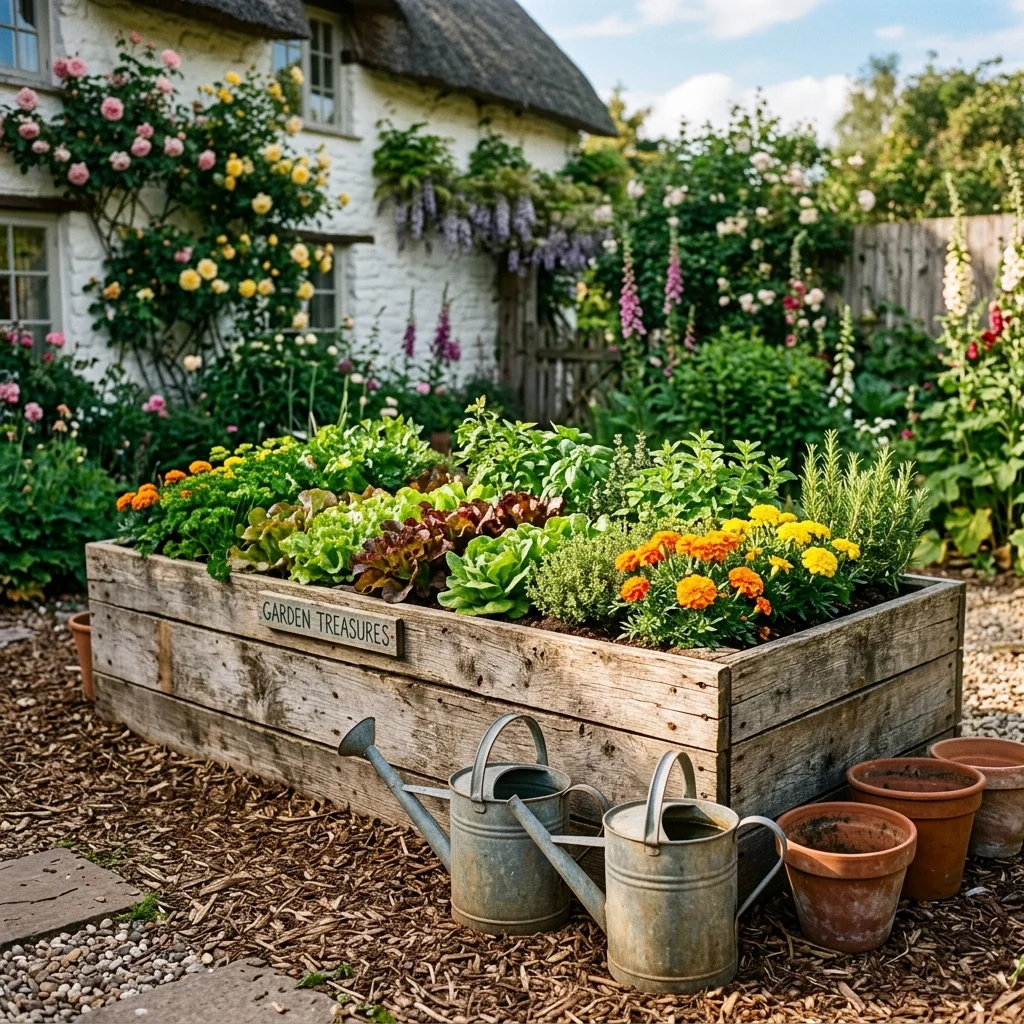
Repurposed pallets offer an affordable way to create attractive planting beds while giving old wood a useful second life. The weathered texture brings instant rustic character that pairs beautifully with vegetables, herbs, and colourful companion flowers. Before building, always confirm the pallets are safe for gardening use and free from harmful treatments. That extra step protects both plants and soil quality. Simple construction methods also allow beginners to gain confidence without investing heavily in expensive materials or specialised woodworking equipment during their first project.
The finished planter delivers much more than cost savings because it creates a unique focal point filled with personality. Natural imperfections in reclaimed wood often enhance the overall appearance instead of distracting from it. Adding a protective finish can extend its lifespan while preserving the rustic charm. This design works especially well in compact gardens, patios, or alongside existing beds where extra growing space is needed. It’s an excellent introduction to creative gardening projects that combine sustainability, functionality, and visual appeal without unnecessary complexity.
Metal Stock Tanks
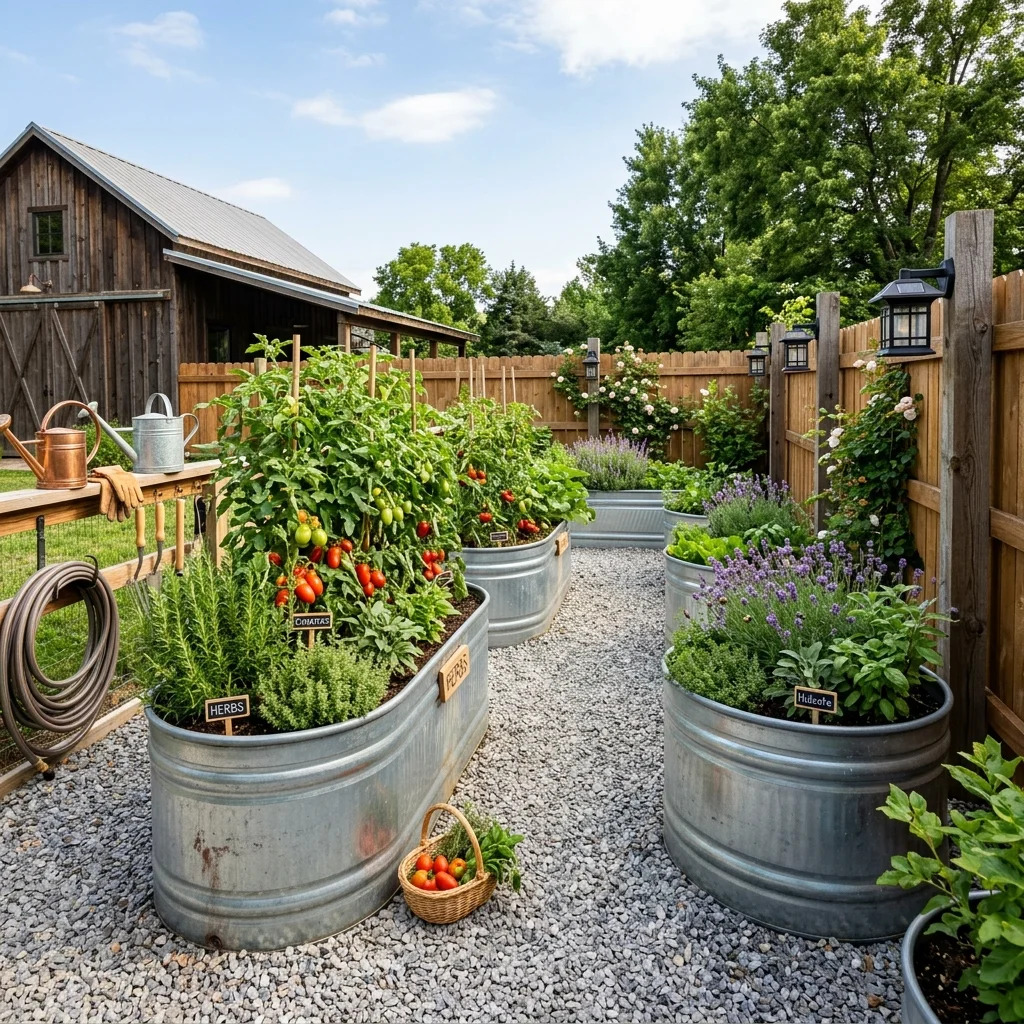
Metal stock tanks offer a clever shortcut for gardeners who want a polished look without building a traditional wooden frame. Their generous depth provides plenty of room for vegetables with extensive root systems while creating a clean, organised appearance. I’ve seen this option work especially well for busy homeowners because installation takes far less time than constructing beds from scratch. With proper drainage holes added before filling, these containers become practical growing spaces that combine durability with a distinctive design many outdoor spaces naturally complement.
Their rounded shape also softens hard landscaping while introducing an appealing industrial touch that blends beautifully with wood, stone, and greenery. During warm weather, adding mulch helps regulate soil temperature and moisture for healthier plants. Positioning tanks where they receive consistent sunlight encourages reliable harvests throughout the season. For beginners seeking attractive results without advanced carpentry skills, this approach delivers impressive visual impact while reducing the effort typically associated with building raised planting structures from individual materials and separate hardware components.
Brick Border Beds
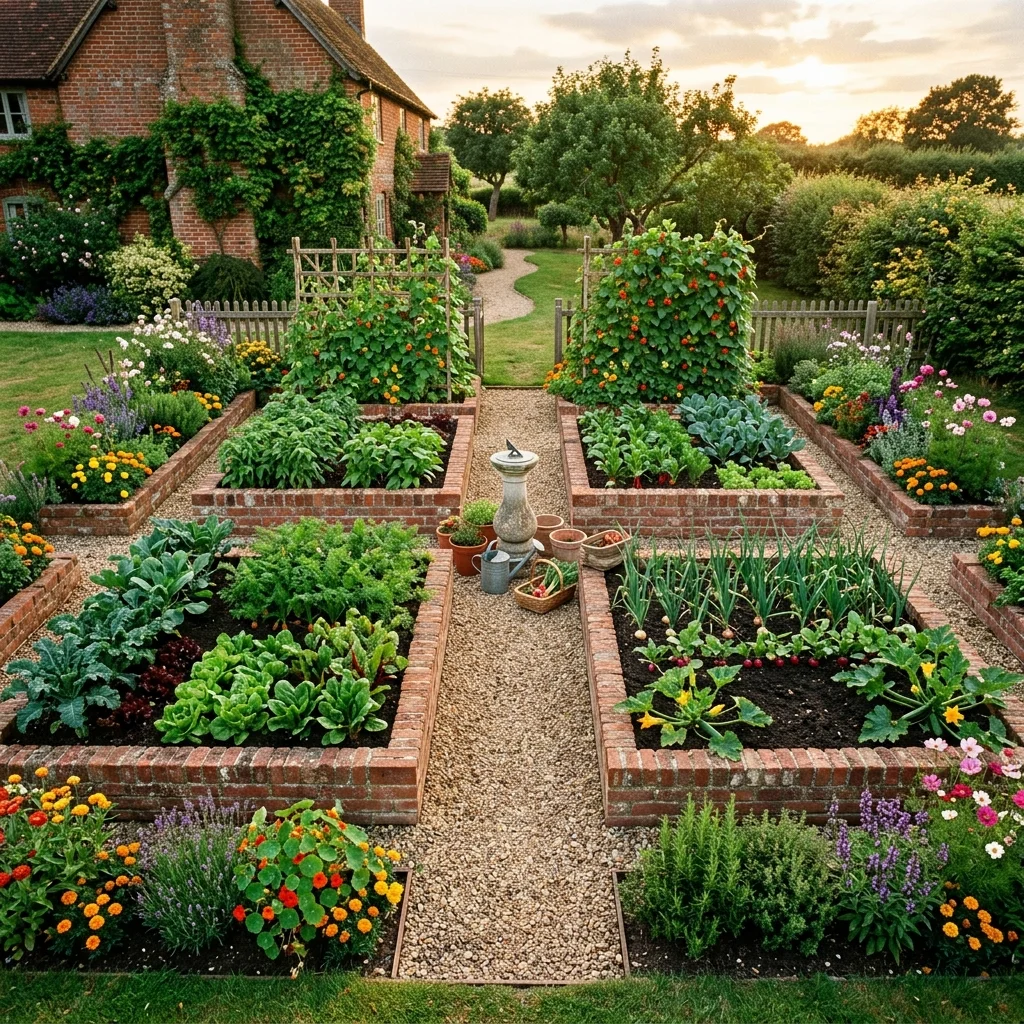
Brick raised beds instantly create a sense of permanence that elevates even the simplest backyard garden. Their structured edges define planting areas beautifully while introducing classic texture that ages gracefully over time. In my experience, brick blends effortlessly with both modern and traditional homes, making it a versatile long-term investment. Once the layout is planned carefully, the finished bed feels stable and organised, giving vegetables, herbs, and flowers an attractive framework that enhances the overall landscape without appearing overly formal or difficult to maintain.
Practical benefits extend beyond appearance because brick absorbs daytime warmth and gradually releases it as temperatures cool, helping create a steadier growing environment. Strong edging also keeps pathways neat by preventing soil from spilling into walking areas after watering or heavy rain. Pairing the beds with gravel or mulch creates attractive contrast while improving accessibility. Although construction requires a little more effort than some alternatives, the finished result rewards beginners with impressive durability, dependable performance, and enduring visual appeal throughout many gardening seasons.
Tiered Garden Beds
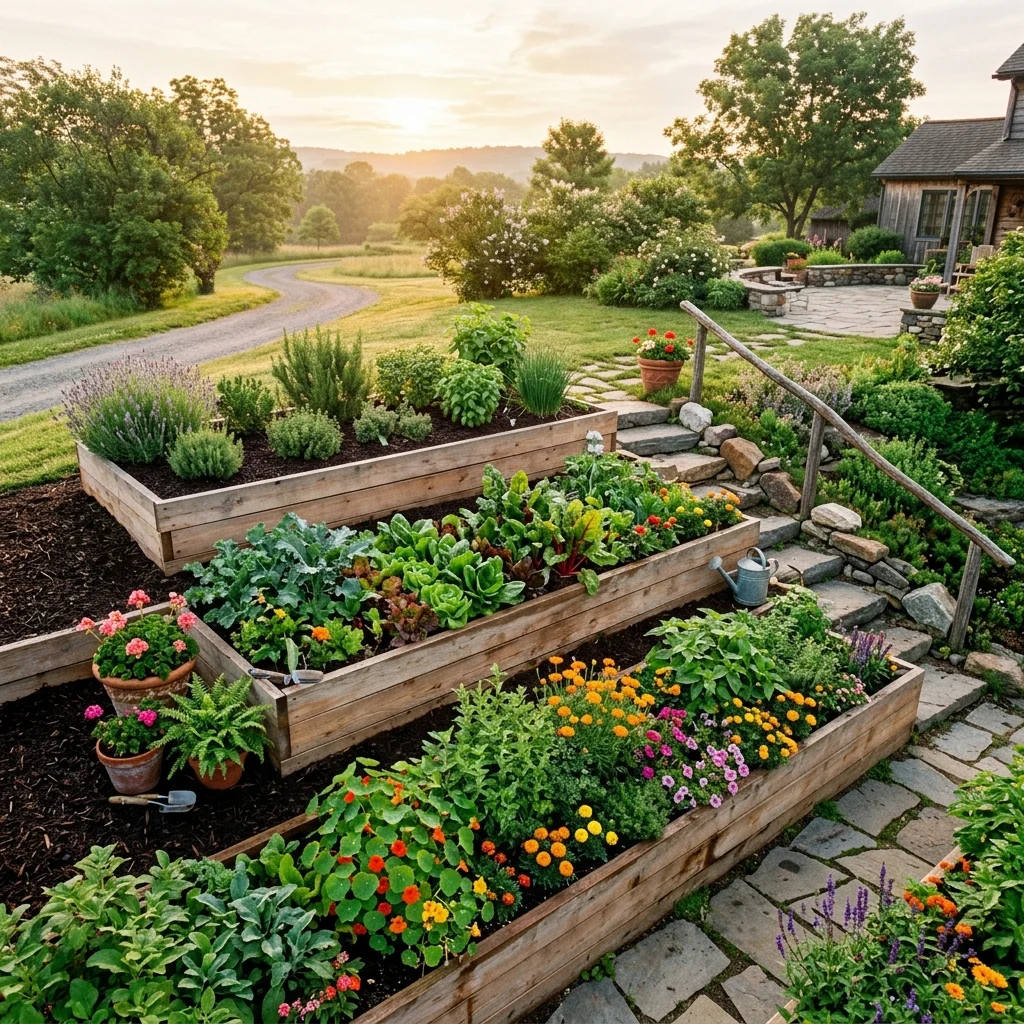
A tiered layout transforms uneven ground into an organised growing space while creating impressive visual interest from every angle. Each level naturally draws the eye upward, making even modest gardens appear larger and more thoughtfully designed. I’ve noticed this arrangement encourages better planning because vegetables, herbs, and flowers can each occupy their own dedicated section. The layered effect also improves accessibility by reducing awkward bending and allowing gardeners to reach plants comfortably without stepping into valuable growing areas or compacting the soil.
Beyond appearance, multiple levels create flexible planting opportunities throughout the season. Taller crops can occupy higher sections without blocking sunlight from lower beds, while herbs remain easy to harvest near pathways. Good drainage between levels further supports healthy root development and reduces waterlogging after heavy rainfall. Although building requires careful measuring, the finished result feels rewarding and highly functional. This design combines practicality with standout curb appeal, offering beginners an inspiring project that continues delivering beauty and productivity year after year.
Concrete Block Beds
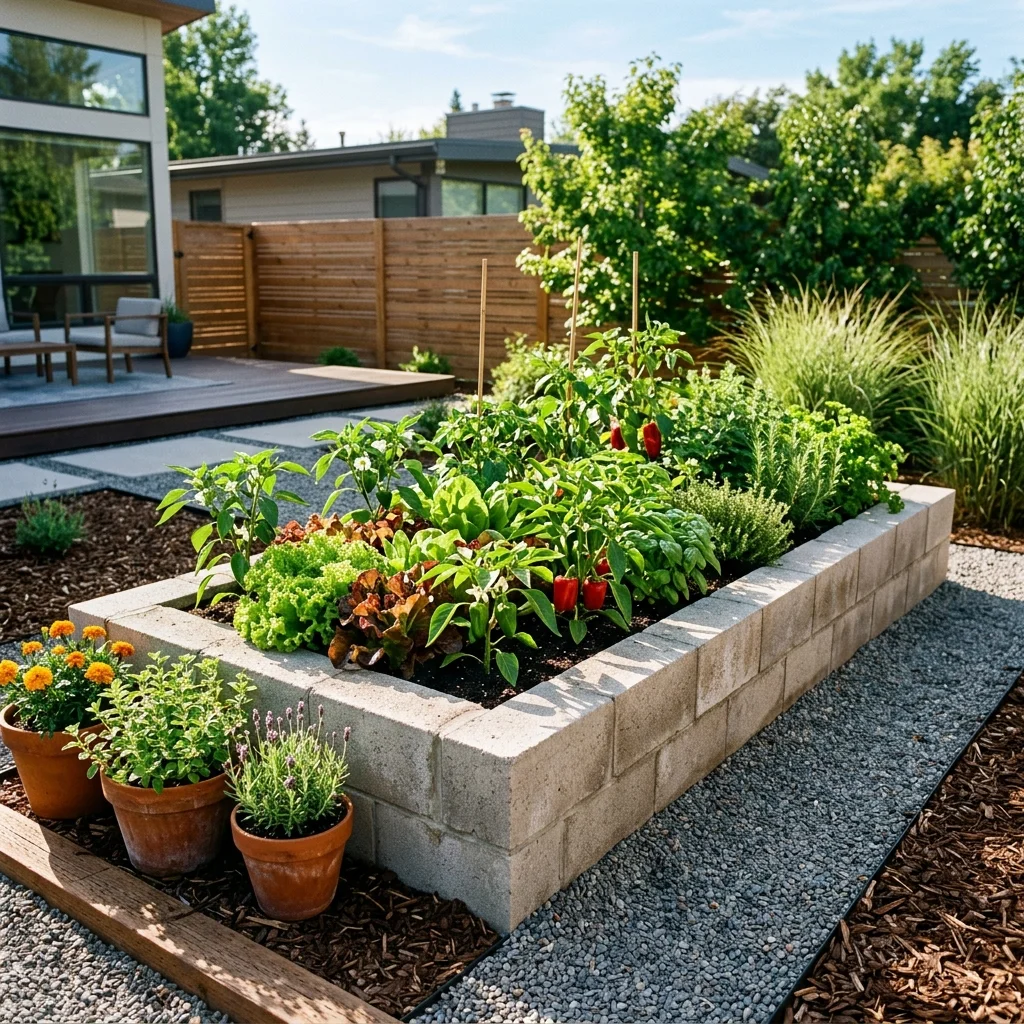
Concrete blocks create dependable raised beds that balance affordability with long-term durability. Their straightforward construction removes much of the guesswork from a first garden project because the blocks stack neatly without complicated cutting. I’ve found they work especially well for gardeners who want a solid, permanent layout that requires little maintenance after installation. The clean lines also give vegetable patches a tidy appearance while providing generous planting depth for strong root growth and healthier crops throughout the growing season with minimal ongoing effort.
One overlooked advantage is the versatility of the hollow block openings, which can be planted with herbs, trailing flowers, or pollinator-friendly blooms for extra colour and productivity. The finished bed feels structured and organised, helping define pathways and separate growing areas clearly. Adding quality soil and compost from the beginning creates an excellent foundation for healthy plants. This practical design delivers reliable results while allowing beginners to complete a satisfying project using readily available materials and straightforward construction techniques.
Wattle Fence Beds
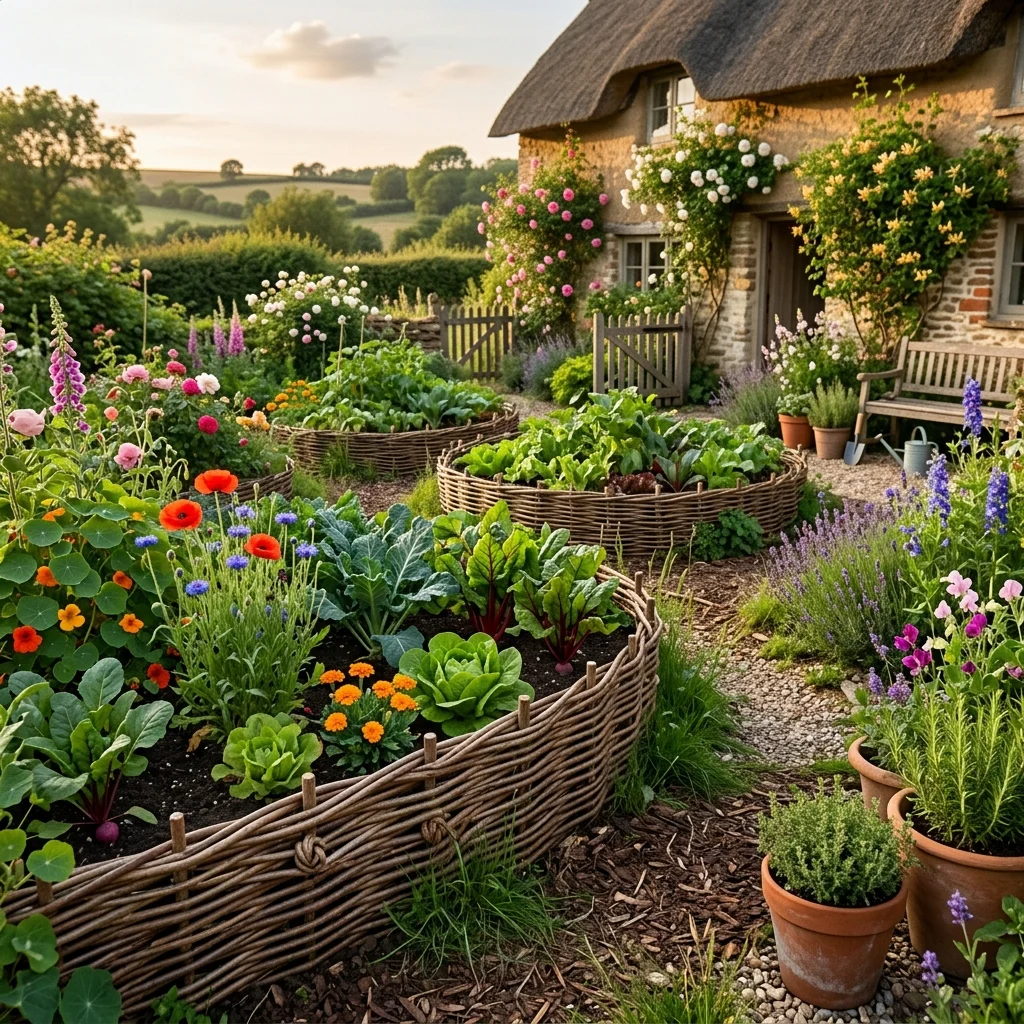
Wattle fencing introduces timeless character while celebrating traditional garden craftsmanship in a fresh, approachable way. Woven branches soften the landscape with natural texture that pairs beautifully with herbs, vegetables, and flowering plants. In my experience, these beds feel especially welcoming because they avoid rigid lines and instead create a relaxed, lived-in atmosphere. The handmade appearance adds personality without overwhelming the surrounding space, making even small gardens feel thoughtfully designed and full of visual warmth from the very first planting season.
Although lighter than timber or brick, woven beds still provide effective boundaries that keep soil neatly contained while enhancing the overall design. Regular inspection helps replace any branches that naturally weather over time, preserving both strength and appearance. Surrounding the beds with mulch or gravel further highlights their rustic appeal while improving access after rain. This style suits gardeners who enjoy natural materials and want an inviting outdoor space that feels connected to the landscape rather than dominating it.
L-Shaped Beds
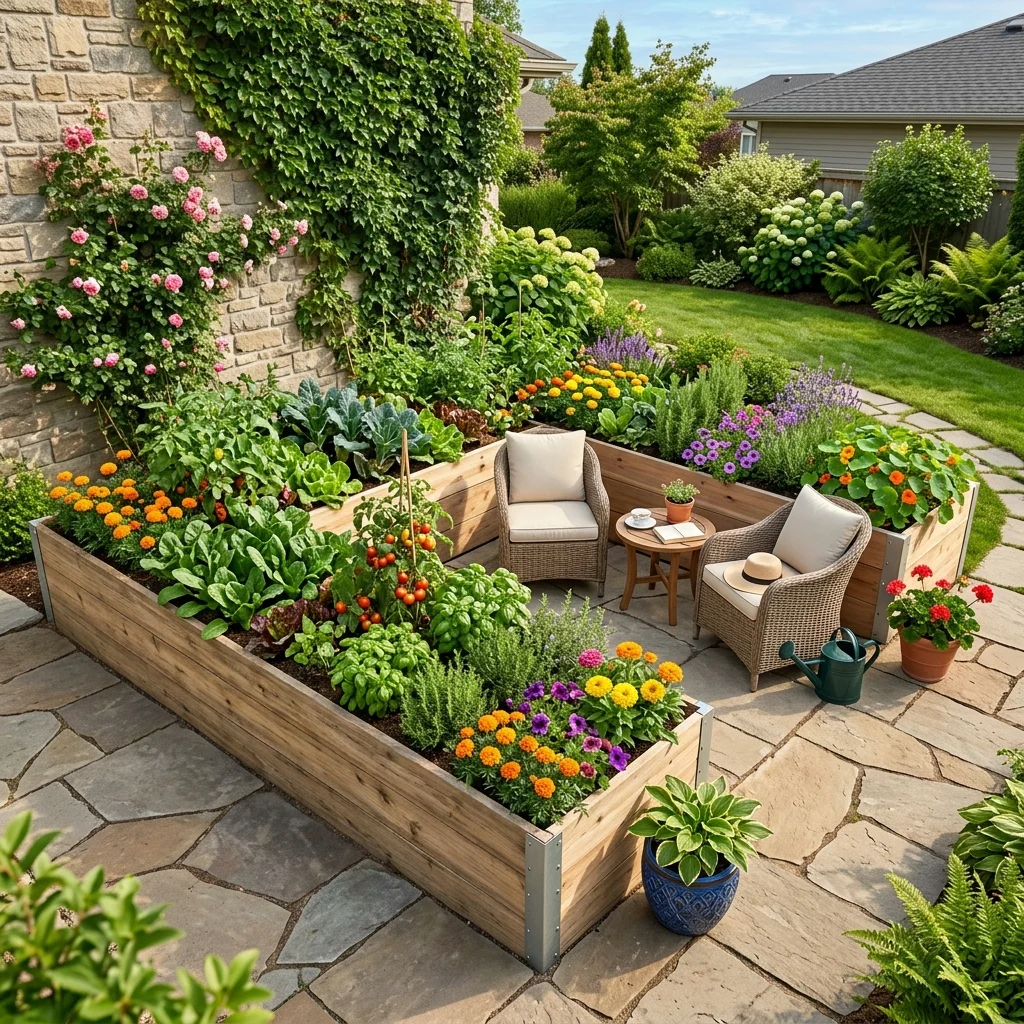
An L-shaped raised bed is an excellent solution for making overlooked corners feel productive without sacrificing valuable outdoor living space. The extended layout creates generous planting areas while maintaining comfortable access from multiple sides. I’ve seen this design work particularly well beside patios and fences because it frames the space naturally without making the garden feel crowded. The finished arrangement encourages organised planting and allows gardeners to group crops according to sunlight, watering needs, or harvesting schedules with impressive efficiency.
This layout also improves the overall flow of the garden by clearly separating planting zones from seating and walking areas. Longer edges make harvesting easier, while the corner naturally becomes a focal point filled with lush greenery and seasonal colour. Choosing durable materials such as cedar helps maintain the clean appearance for years with minimal upkeep. Beginners often appreciate how adaptable this design is because it fits both compact gardens and larger landscapes while providing plenty of room for future planting ideas.
Herb Spiral Bed
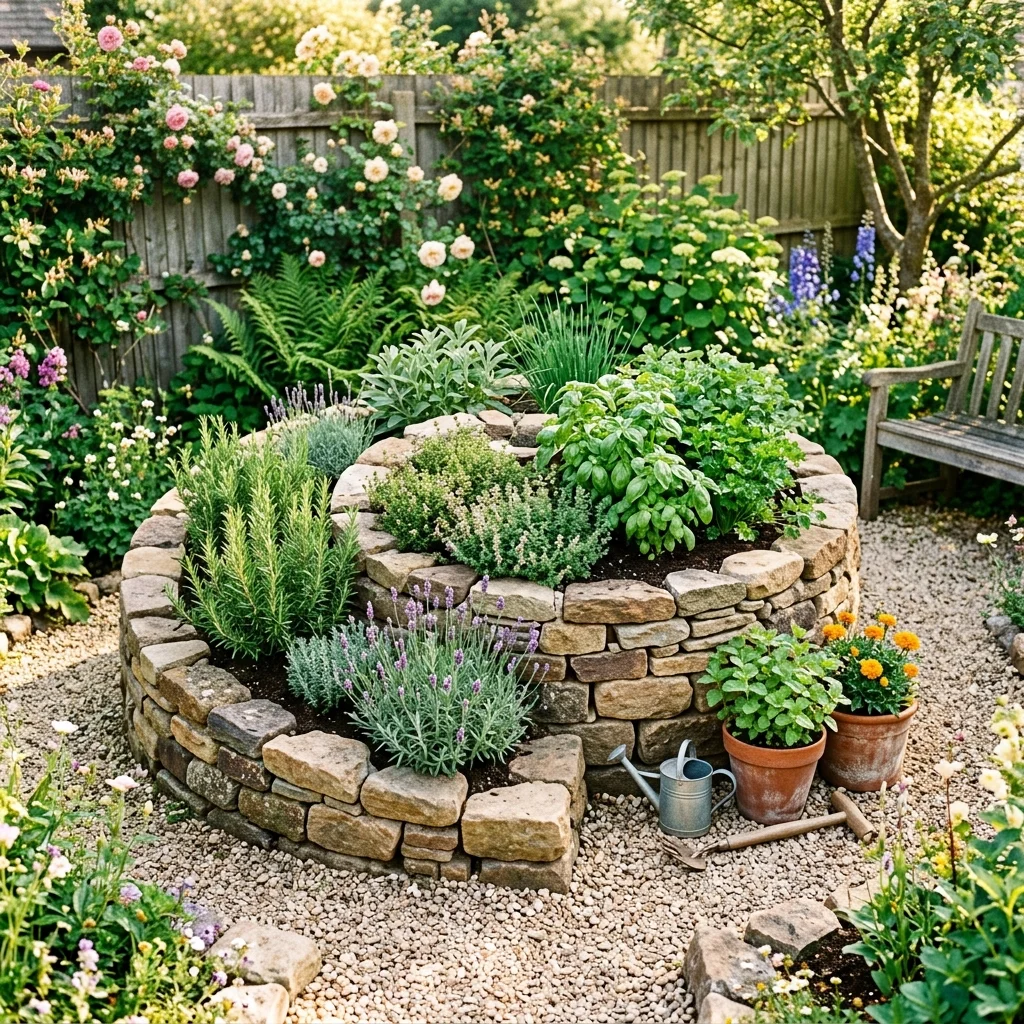
A herb spiral turns a simple planting area into an eye-catching garden feature while making excellent use of limited space. The gradual height changes naturally create slightly different growing conditions, allowing herbs with varying moisture preferences to thrive together. In my experience, this layout also makes harvesting much more enjoyable because everything is organised and easy to access. The spiral shape introduces movement and texture that instantly lifts the overall appearance of the garden, giving even beginners an impressive project with lasting visual appeal.
Beyond its attractive design, a spiral bed encourages healthier plant growth by improving drainage and increasing sun exposure across different sections. Mediterranean herbs enjoy the drier upper levels, while moisture-loving varieties perform well lower down. Stone construction also stores warmth during the day, creating favourable conditions for many culinary herbs. This clever arrangement blends beauty with function, helping gardeners grow fresh ingredients while adding a distinctive focal point that visitors are likely to admire throughout the growing season.
Wheelbarrow Planter
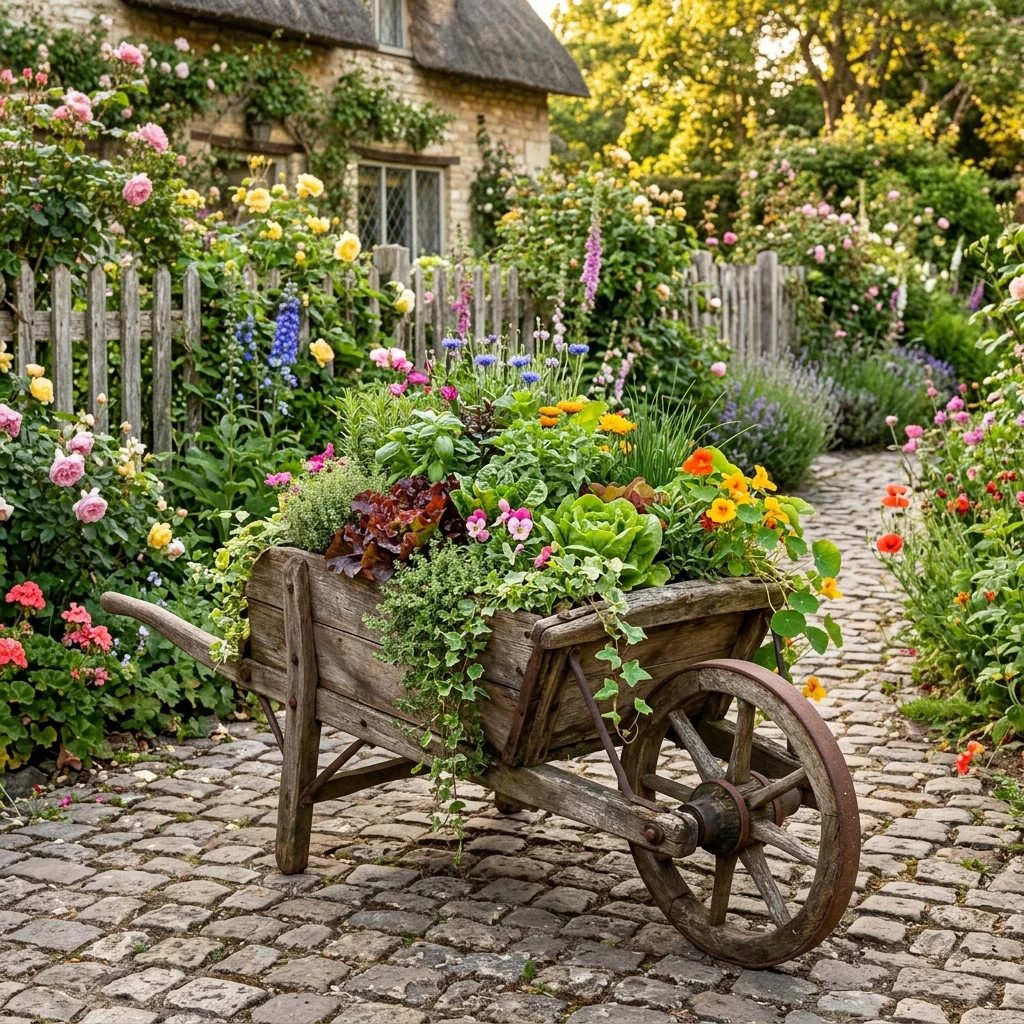
Repurposing an old wheelbarrow into a raised planter is a creative way to combine gardening with rustic garden décor. Its elevated height makes small crops easier to reach while introducing a charming focal point that feels both practical and personal. I’ve noticed that reclaimed pieces often spark conversations because they add unique character impossible to replicate with new materials. Whether positioned beside a patio or nestled among flower beds, this planter brings warmth and individuality without requiring complicated construction or specialised woodworking skills.
Drainage is essential, so adding several holes before filling the wheelbarrow with quality soil helps keep plants healthy. Compact crops such as herbs, leafy greens, and edible flowers thrive in this setup while remaining easy to harvest. Because the planter can be moved when necessary, it offers flexibility for changing sunlight throughout the season. This simple upcycling idea proves that beautiful gardens often come from imaginative thinking rather than expensive materials, making it an enjoyable project for first-time gardeners.
Raised Veggie Rows
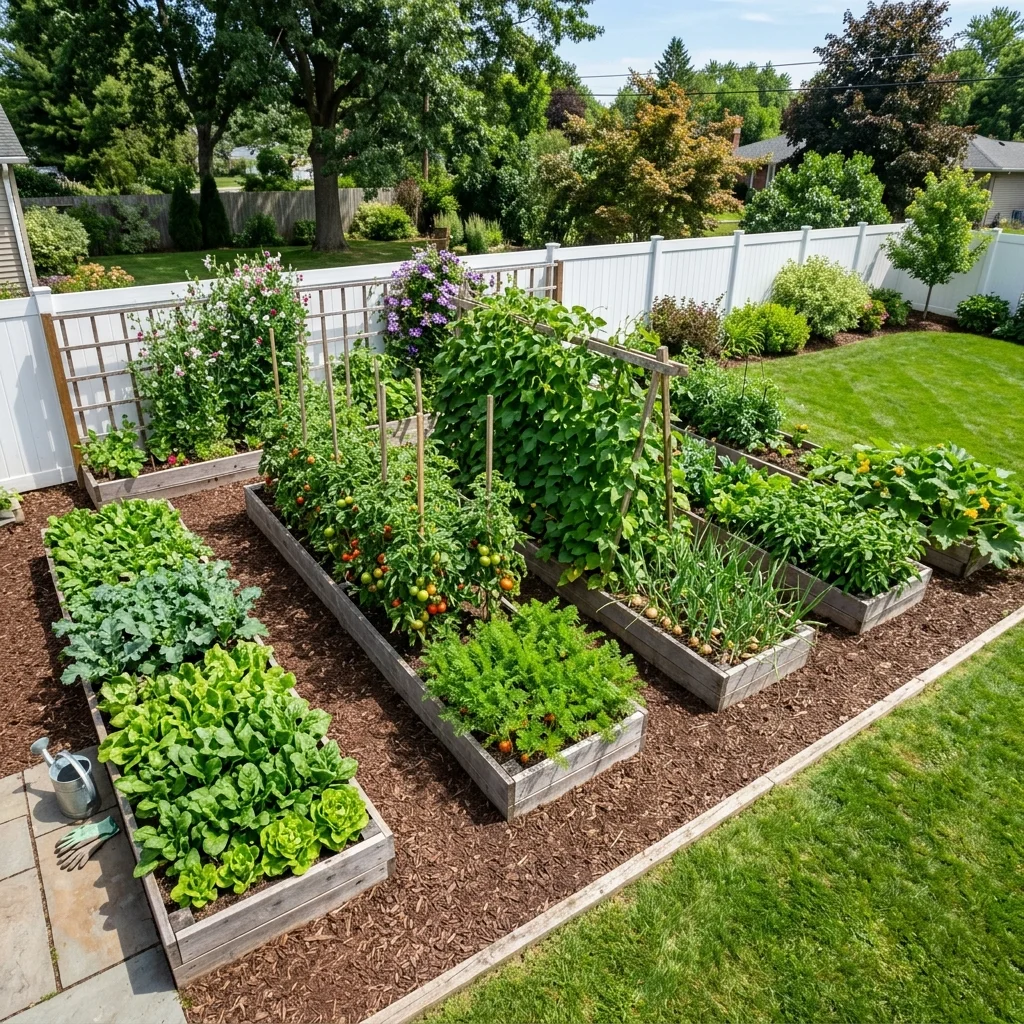
Long raised rows offer one of the most efficient ways to grow a wide variety of vegetables while maintaining an organised outdoor space. Clearly defined planting areas make seasonal planning much easier, allowing crops to rotate each year with minimal confusion. I’ve seen this layout work exceptionally well for families because every bed has a clear purpose, reducing maintenance and improving harvesting efficiency. Wide pathways also encourage comfortable movement, making everyday gardening tasks feel less demanding and more enjoyable throughout the season.
Spacing each bed properly encourages better airflow, helping reduce excess moisture around foliage and supporting healthier plant growth. Dedicated paths also prevent soil compaction because gardeners no longer need to step into planting areas during routine care. This arrangement is especially useful for growing multiple vegetables while keeping everything tidy and accessible. For anyone planning easy diy raised garden beds for beginners, organised raised rows provide a practical foundation that combines attractive structure with dependable productivity year after year.
Trellis Frame Beds
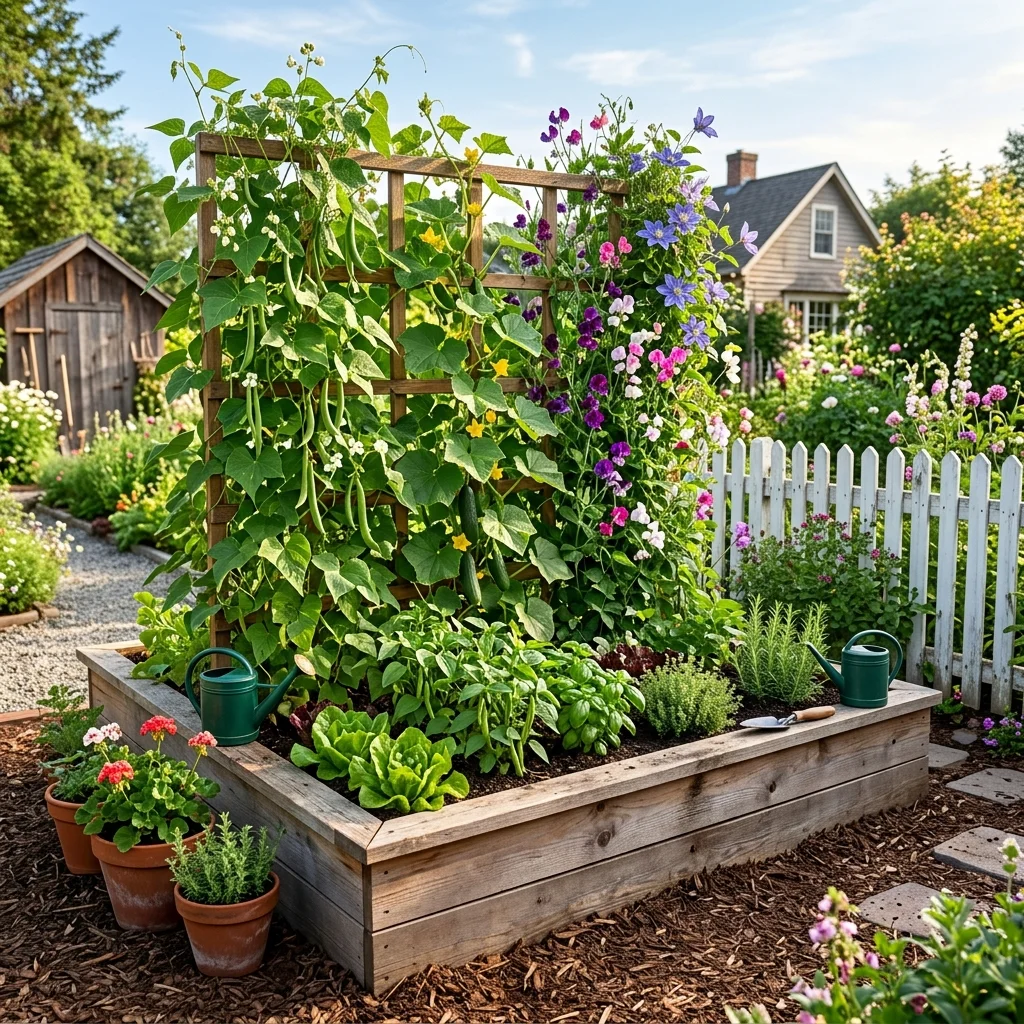
Adding a trellis to a raised bed instantly increases its growing potential while creating a striking vertical feature in the garden. Climbing vegetables such as beans, cucumbers, and peas benefit from extra support, leaving more room below for companion plants or herbs. In my experience, vertical gardening also makes routine care much simpler because vines remain organised instead of spreading across the ground. The finished bed feels balanced and productive, transforming an ordinary planting area into a visually appealing focal point with practical everyday benefits.
A strong frame also improves airflow around foliage, helping leaves dry more quickly after watering or rainfall. Better circulation often supports healthier plants while making it easier to spot developing fruit during harvest time. Pairing natural timber with lush greenery creates a timeless garden style that works beautifully in both modern and traditional landscapes. Beginners often appreciate how one simple addition can dramatically increase productivity without expanding the overall footprint of the garden.
Cinder Block Planters
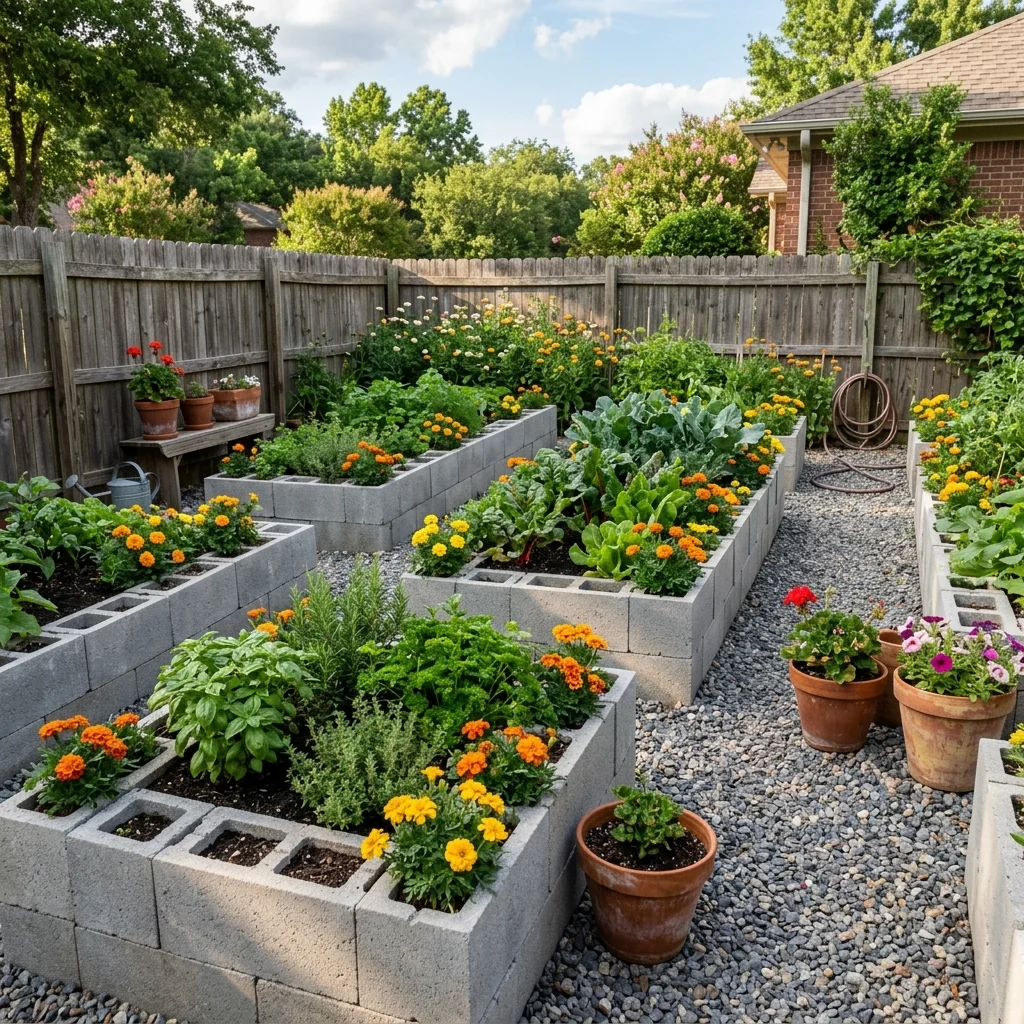
Cinder block planters offer remarkable flexibility because they can be arranged into countless shapes without requiring advanced carpentry. Their sturdy design creates dependable planting spaces that remain stable through changing seasons while keeping maintenance simple. I’ve found they are particularly useful for gardeners who enjoy experimenting with different layouts since additional sections can be added later. The clean geometric appearance also introduces a contemporary touch that contrasts beautifully with vibrant foliage and colourful flowers growing throughout the bed.
The hollow sections provide extra opportunities to grow herbs, strawberries, or pollinator-friendly blooms that soften the overall appearance. Filling the main bed with nutrient-rich soil establishes excellent growing conditions for vegetables and seasonal plants. Gravel pathways around the structure further improve drainage while creating a tidy finish that highlights the planter’s shape. This adaptable design combines practicality, durability, and visual interest, making it an excellent long-term solution for gardeners developing their skills.
Compact Patio Beds
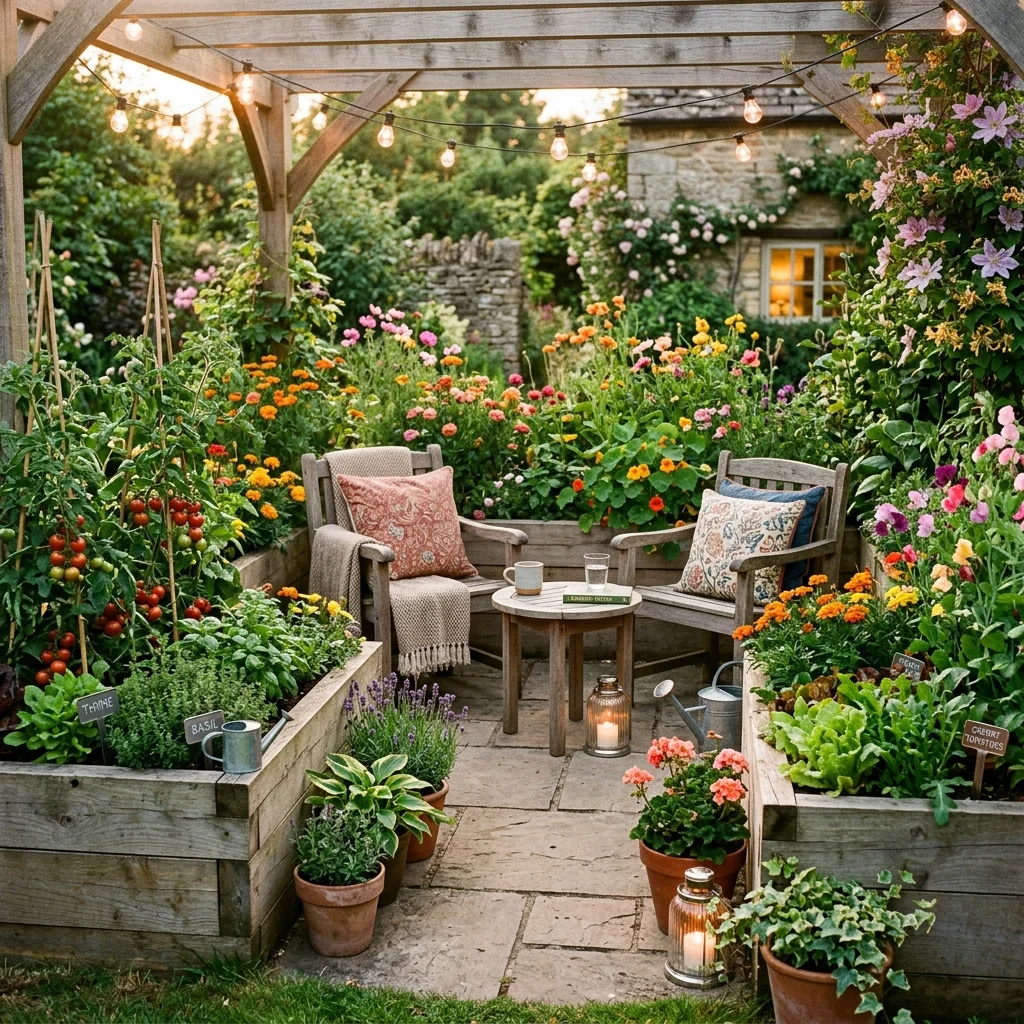
A compact patio bed proves that productive gardening does not require a large backyard. Even a modest planting area can provide fresh herbs, leafy greens, and seasonal vegetables while adding colour around outdoor seating. I’ve noticed people spend more time enjoying their patios when edible plants become part of the overall design. The combination of greenery and comfortable living space creates a welcoming atmosphere where gardening feels integrated into everyday life instead of separated from places used for relaxing and entertaining.
Keeping planting beds close to the home also encourages regular watering, harvesting, and routine care because everything remains conveniently accessible. Attractive containers, soft lighting, and coordinated planting schemes help the garden feel intentional and inviting throughout the season. This layout is especially valuable for beginners with limited outdoor space who still want satisfying harvests and beautiful surroundings. Small changes like these often make patios feel larger, greener, and far more enjoyable for everyday use.
Fence Line Beds
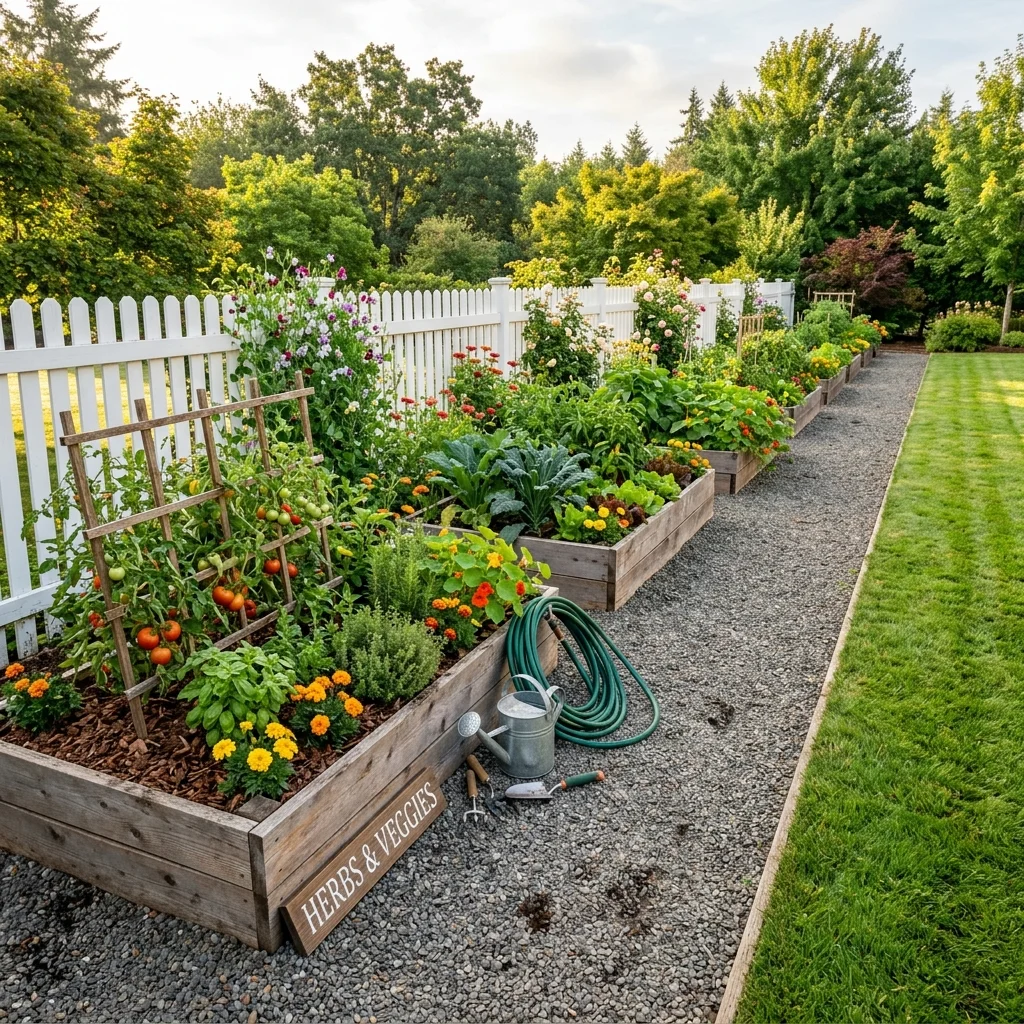
Fence line beds are a smart way to transform overlooked edges into productive growing spaces while giving the entire garden a more finished appearance. Instead of leaving long boundaries empty, they become attractive planting zones filled with vegetables, herbs, and seasonal colour. I’ve seen this approach work particularly well in smaller gardens because it preserves valuable open space in the centre for movement or outdoor seating. The clean linear design naturally guides the eye through the landscape, creating an organised and welcoming environment that feels larger and more intentional.
Positioning beds alongside a fence also creates opportunities to install trellises for climbing beans, peas, or cucumbers without taking up additional ground space. Consistent access along one side simplifies watering, harvesting, and seasonal maintenance while keeping pathways uncluttered. Choosing companion flowers at intervals introduces colour and encourages beneficial pollinators throughout the growing season. This practical layout blends productivity with attractive landscaping, giving beginners an easy way to maximise every available metre of their outdoor space.
Kids’ Garden Boxes
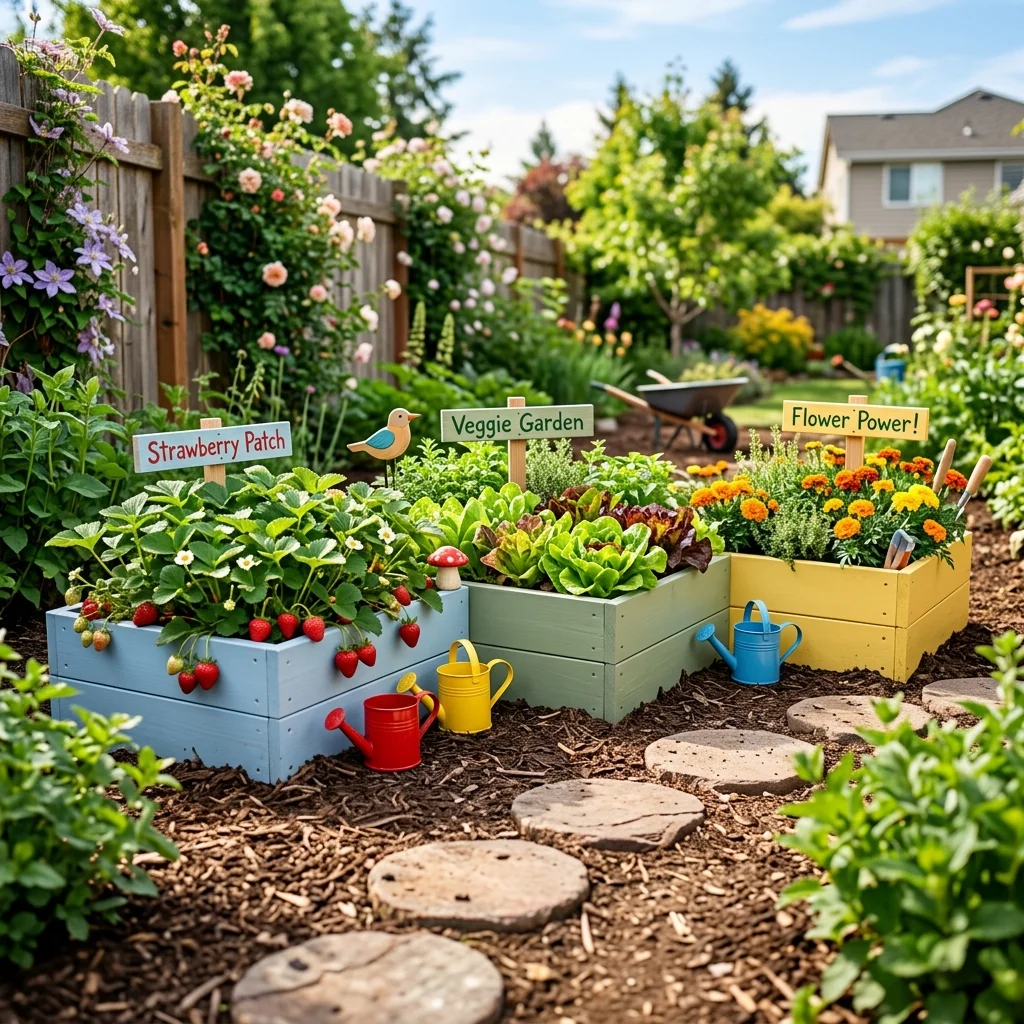
Creating child-friendly raised beds turns gardening into an engaging family activity while helping young gardeners build confidence through simple successes. Smaller boxes allow children to reach every plant comfortably, making watering, planting, and harvesting enjoyable rather than frustrating. In my experience, children become much more interested when they have a dedicated space to care for themselves. Watching seedlings develop into edible vegetables or colourful flowers creates excitement, encourages responsibility, and builds lasting appreciation for nature through rewarding everyday experiences.
Choosing easy crops such as strawberries, lettuce, radishes, or herbs helps maintain enthusiasm because results appear quickly and harvesting feels rewarding. Adding colourful signs, painted boxes, or decorative stones personalises each garden and encourages creativity alongside practical learning. Adults also benefit because organised children’s beds reduce accidental damage to larger planting areas while creating meaningful opportunities to garden together. This welcoming project ends the collection with an inspiring reminder that gardening can be enjoyable, educational, and shared across every generation.
Conclusion
Building a beautiful garden doesn’t require professional skills or a large budget—just a little creativity and the willingness to get started. These 17 ideas prove that easy diy raised garden beds for beginners can be practical, stylish, and rewarding, no matter the size of your outdoor space. Choose the design that fits your yard, personalise it with your favourite plants, and enjoy watching it grow season after season. I’ve seen how small changes like these can completely transform a space. If these ideas inspired you, save this guide on Pinterest, share it with fellow gardening enthusiasts, and start building your dream garden today.
Read More : 16 DIY Spice Rack Ideas from Recycled Wood Easy Build