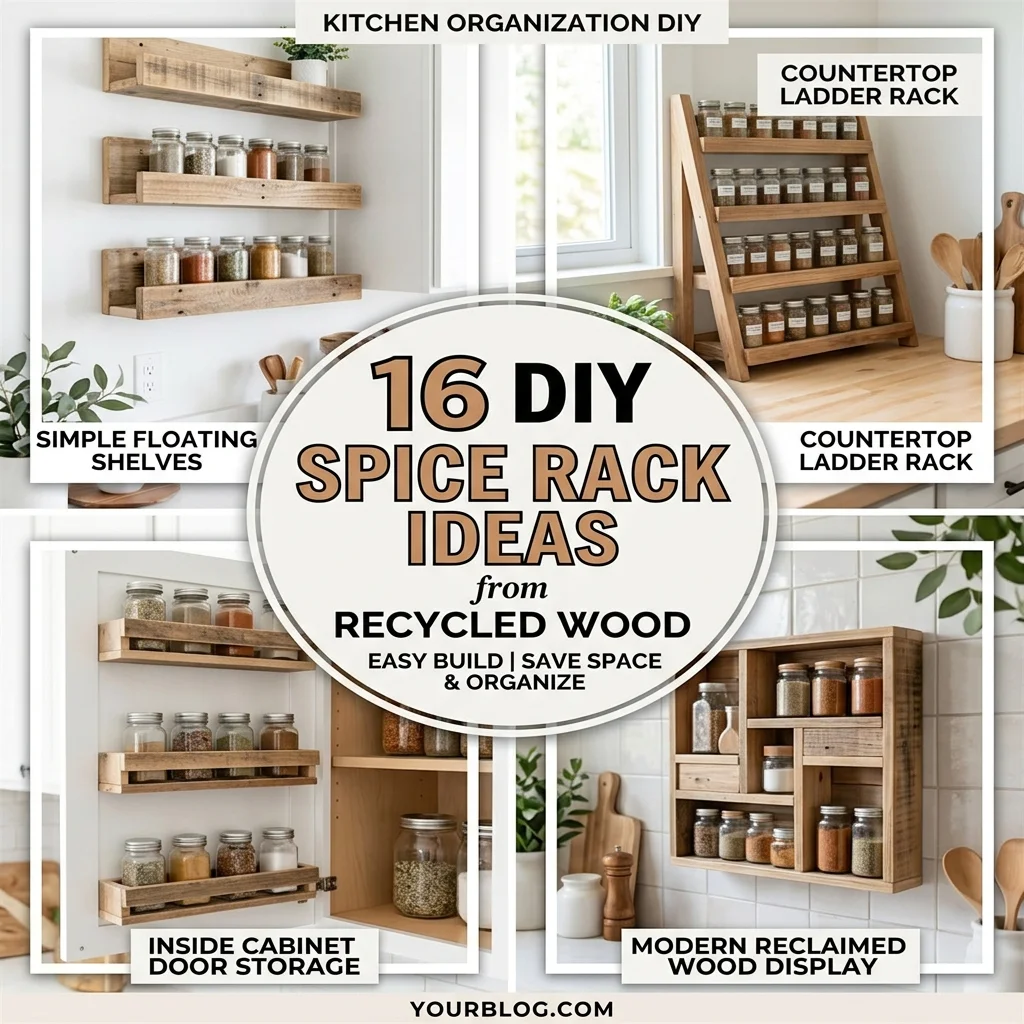
16 DIY Spice Rack Ideas from Recycled Wood Easy Build
Introduction
Looking for how to create a diy spice rack from recycled wood without spending a fortune? You’re in the right place. These creative ideas prove that reclaimed timber can become beautiful, practical kitchen storage while adding warmth and personality to your home.
Whether you’re working with old pallets, vintage drawers, fence boards, or leftover lumber, there’s a design here for every skill level and decorating style. Each project helps maximise storage, reduce waste, and showcase the natural character that only recycled wood can provide. In my experience, reclaimed materials often create the most memorable DIY projects because every piece carries its own unique texture and history. From minimalist floating shelves to charming farmhouse-inspired displays, these sixteen ideas will inspire you to organise your spices, refresh your kitchen, and enjoy building something that’s both functional and beautifully handcrafted.
Pallet Wall Rack
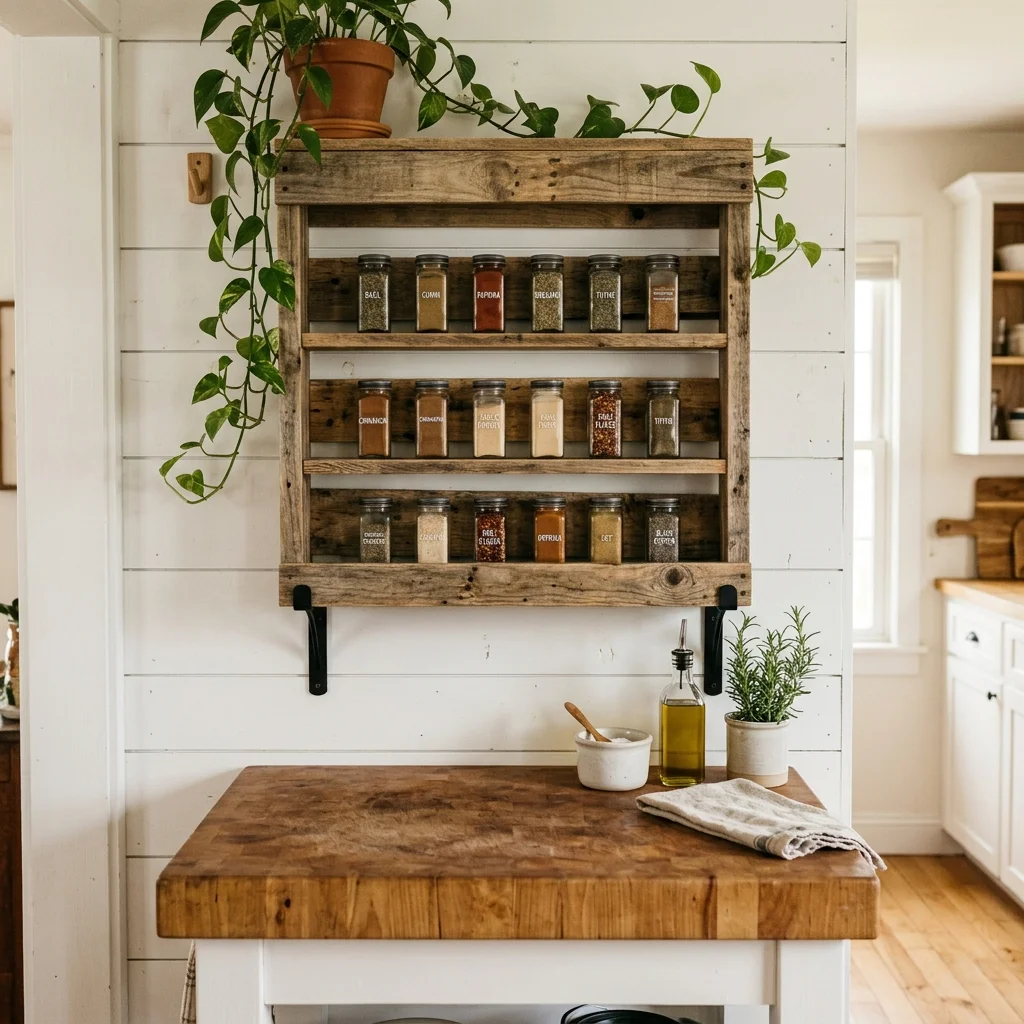
Nothing refreshes a kitchen faster than adding natural wood texture to an empty wall. A pallet wall rack delivers practical organisation while introducing handcrafted character that feels warm rather than manufactured. Carefully sanded reclaimed boards preserve authentic grain patterns, giving every rack a one-of-a-kind appearance. Even small kitchens benefit because vertical storage frees valuable worktops for food preparation. In my experience, reclaimed pallet wood often develops richer colour after a light coat of natural oil, creating a finish that looks professionally crafted without requiring expensive materials or advanced woodworking experience.
The beauty of this design comes from balancing function with timeless visual appeal. Uniform glass jars create an organised display while the rustic frame softens modern appliances and bright cabinetry. Open shelving encourages quick access during cooking, making meal preparation smoother and more enjoyable. Small decorative touches, such as tiny herb pots or wooden labels, personalise the finished piece without overwhelming the design. The result is a storage solution that feels intentional, welcoming, and easy to integrate into kitchens of many different sizes and decorating styles.
Crate Corner Shelf
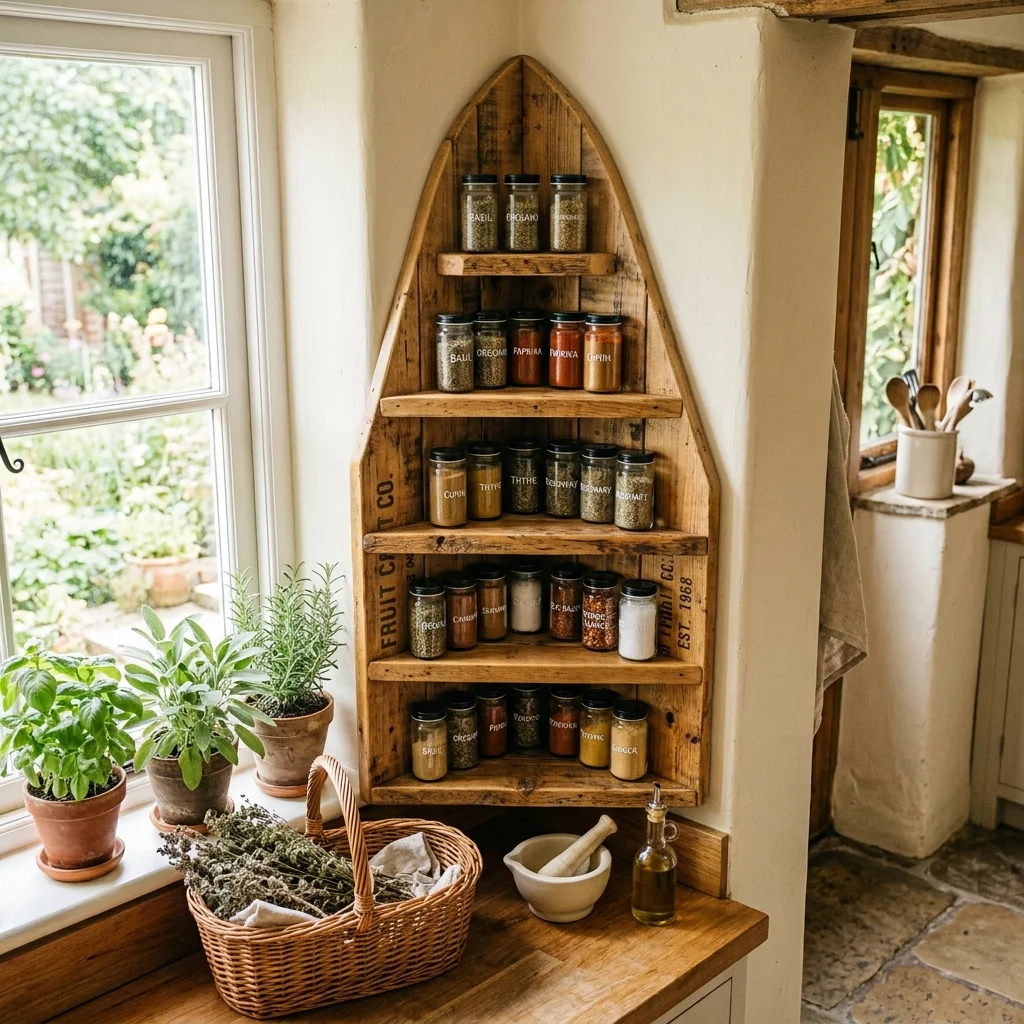
Unused kitchen corners often become forgotten spaces that collect clutter instead of serving a purpose. Transforming recycled crate wood into a compact corner shelf creates additional storage while maintaining an open and airy appearance. The angled shelves naturally display spice jars, allowing labels to remain visible from different viewpoints. I’ve noticed this arrangement works especially well for smaller kitchens where every centimetre matters. Because the shelf hugs the corner, it increases storage capacity without interrupting movement or making the room feel enclosed by bulky furniture.
Simple construction makes this project approachable for beginners looking to build with reclaimed materials. Crate boards usually require only light sanding before assembly, preserving their authentic character while ensuring smooth edges. Natural wood tones pair beautifully with neutral walls, colourful spices, and fresh herbs, creating visual warmth that instantly livens the cooking area. Decorative brackets or subtle staining can elevate the overall appearance without adding complexity. This thoughtful combination of practicality and rustic charm helps the finished shelf become both useful storage and attractive wall décor.
Floating Jar Ledge
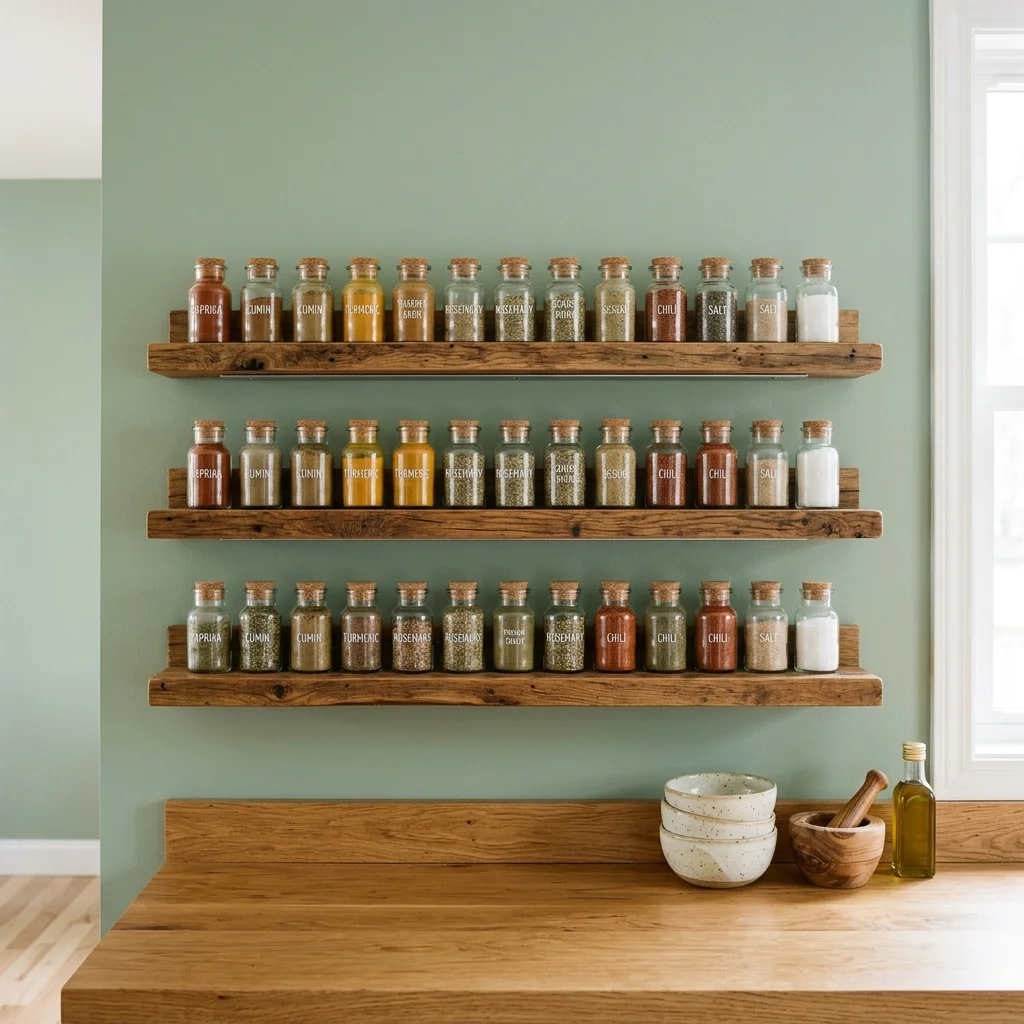
Few storage ideas look as effortlessly clean as simple floating ledges filled with matching spice jars. Their streamlined profile keeps attention on the natural beauty of reclaimed wood while allowing colourful spices to become part of the décor. This approach feels light and spacious, making even compact kitchens appear larger. If you’re wondering how to create a diy spice rack from recycled wood, floating ledges provide one of the most beginner-friendly starting points because they require relatively few materials and straightforward installation techniques.
Beyond their attractive appearance, floating shelves improve everyday cooking efficiency in subtle but meaningful ways. Frequently used seasonings remain easy to grab without opening crowded cupboards, reducing unnecessary movement while preparing meals. I’ve seen this style work especially well in kitchens that combine modern cabinetry with vintage accents because the reclaimed timber introduces welcome texture and warmth. Carefully spaced shelves also leave room for decorative elements like miniature plants or framed recipe cards, creating a display that feels balanced, functional, and inviting every day.
Ladder Spice Rack
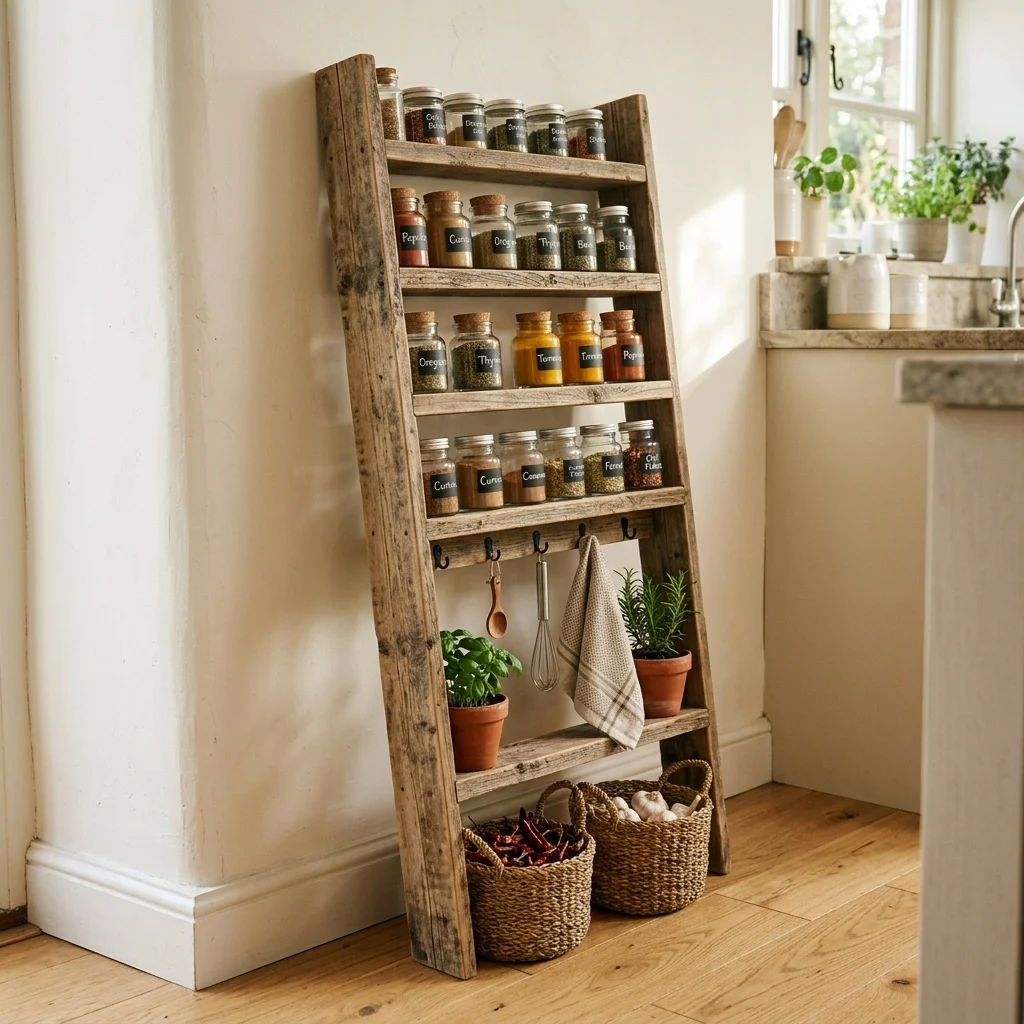
Sometimes the simplest designs create the biggest visual impact in a kitchen. A ladder-inspired spice rack introduces height while keeping seasonings neatly displayed on staggered shelves that feel open rather than crowded. Reclaimed fence boards bring weathered character that contrasts beautifully with clean countertops and modern appliances. The slim profile allows the rack to fit comfortably into compact spaces, making it practical for apartments as well as larger family kitchens. Natural imperfections in the timber become part of the design, giving every finished project an authentic handcrafted appearance.
The open structure also makes everyday cooking more efficient and enjoyable. Frequently used spices remain visible at a glance, helping reduce time spent searching through cabinets. I’ve found that evenly spaced shelves create a balanced display while preventing jars from feeling cramped. Adding small hooks beneath the lowest shelf offers extra room for measuring spoons or lightweight kitchen accessories. This combination of attractive styling and thoughtful functionality transforms an ordinary storage solution into a decorative feature that naturally complements rustic, farmhouse, or modern interiors.
Box Frame Display
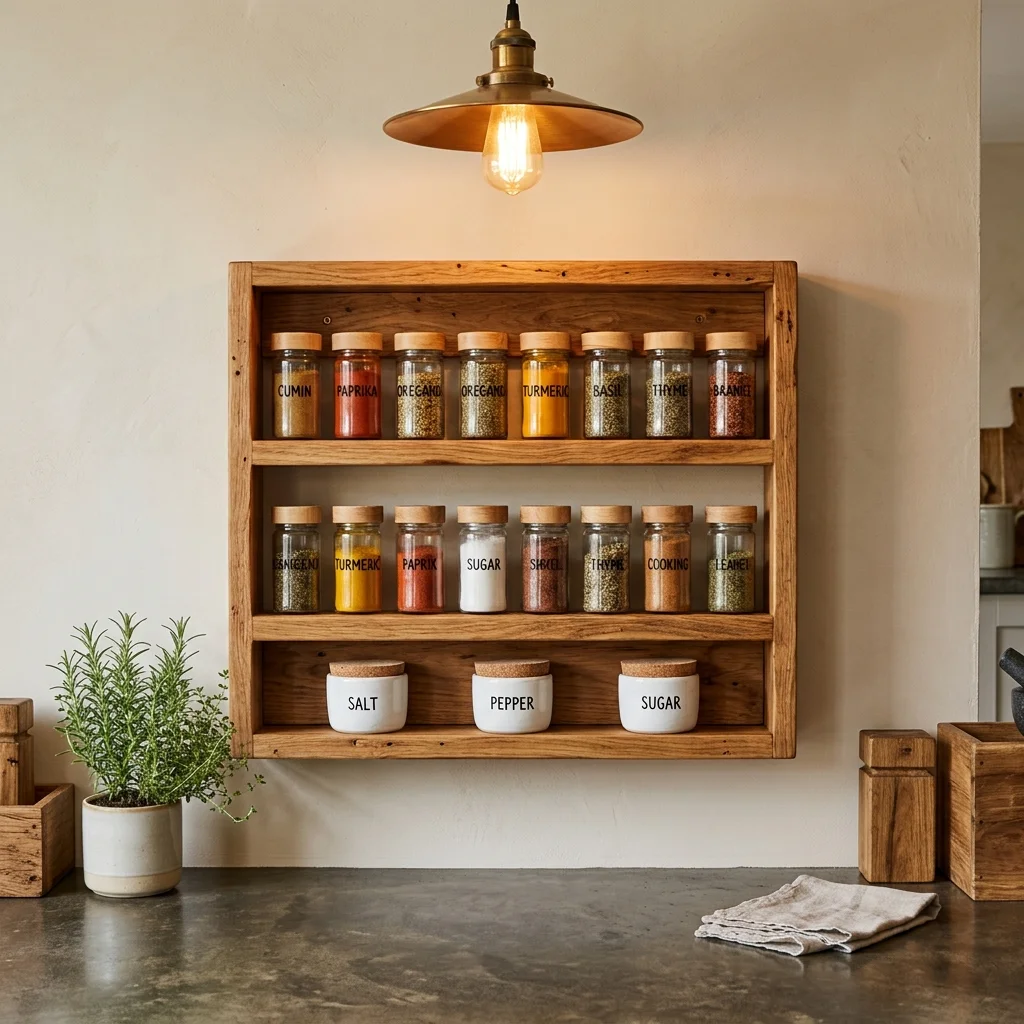
Clean lines and organised compartments make this design feel both practical and visually satisfying. A sturdy box frame offers dedicated spaces for each spice jar, reducing clutter while creating a display that feels intentional and balanced. Recycled wood develops new life through careful sanding and finishing, allowing its unique grain to remain the centrepiece. The structured layout also makes it easier to maintain organisation over time, especially for households that regularly cook with a wide variety of herbs, blends, and seasonings throughout the week.
Small design choices can elevate the finished piece without increasing the difficulty of the build. Rounded edges soften the overall appearance, while matching jar labels create a cohesive display that photographs beautifully for Pinterest inspiration. In my experience, leaving a little space between compartments prevents the rack from appearing overcrowded and makes jars easier to remove during busy meal preparation. The finished result combines handcrafted warmth with neat organisation, giving the kitchen a more refined yet welcoming atmosphere that remains highly functional every day.
Window Frame Shelf
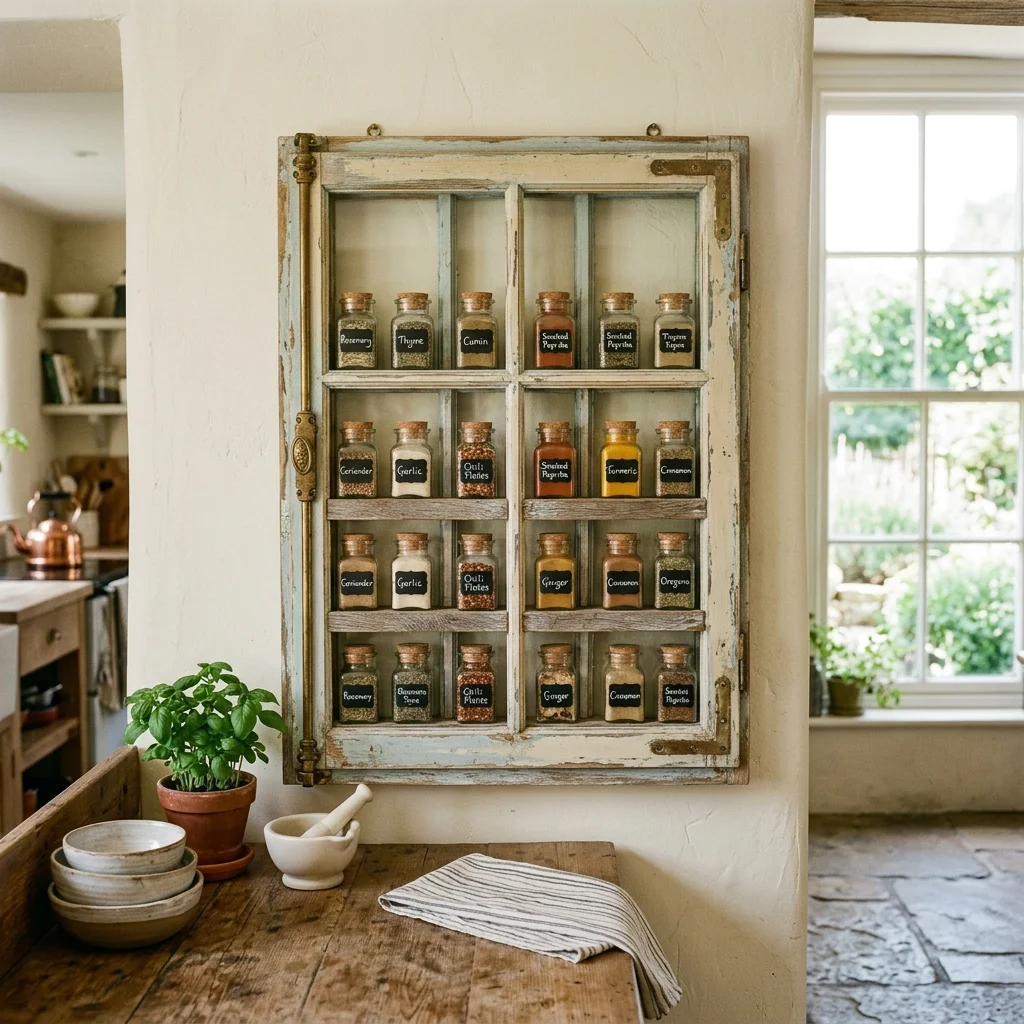
Vintage window frames bring instant personality that newer materials often struggle to replicate. Their aged finishes, subtle imperfections, and distinctive proportions create a decorative backdrop that makes even ordinary spice jars feel thoughtfully displayed. Repurposing an old frame also supports sustainable decorating by extending the life of quality wood that still has years of usefulness. Decorative crossbars naturally divide the display into attractive sections, helping organise seasonings while adding visual interest that enhances both classic farmhouse kitchens and relaxed cottage-inspired interiors.
This idea works especially well for homeowners who appreciate meaningful details and handcrafted décor. Each reclaimed frame tells its own story through weathered paint, gentle wear, and authentic craftsmanship that cannot be artificially reproduced. Thoughtful placement above a preparation area keeps favourite spices close at hand while enhancing the room’s overall character. Soft lighting further highlights the aged textures, making the finished rack feel like a carefully curated design feature instead of simple storage. It is an eye-catching project that blends history, creativity, and everyday practicality effortlessly.
Pipe Industrial Rack
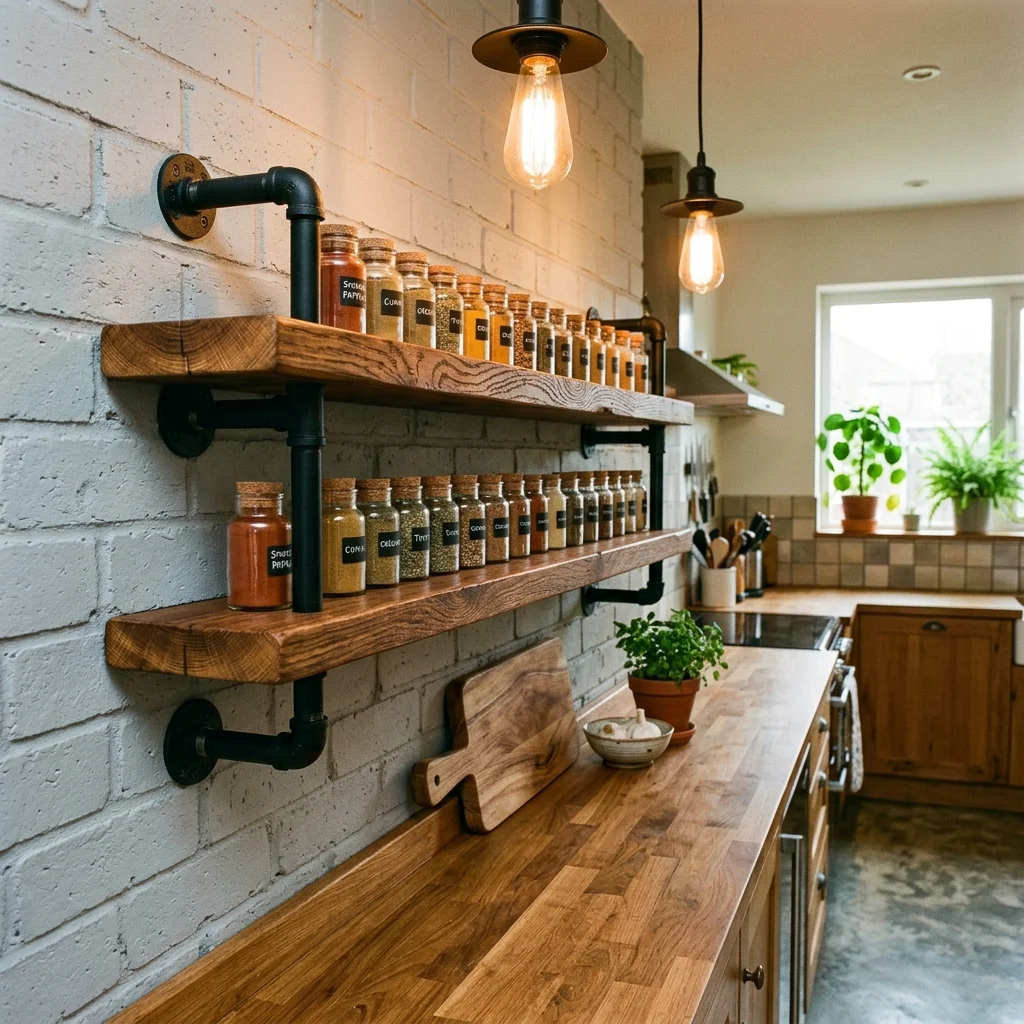
Industrial-inspired storage instantly adds personality while keeping everyday essentials organised and accessible. Recycled wood paired with black pipe fittings creates an eye-catching contrast that feels sturdy and timeless. The natural texture of reclaimed boards softens the bold metal details, resulting in a balanced design that suits many decorating styles. Open shelving encourages a tidy arrangement of matching spice jars, turning practical storage into a decorative feature. Even in compact kitchens, this combination delivers impressive visual impact while preserving valuable workspace and maintaining a clean, uncluttered appearance.
Durability is one of the biggest strengths of this practical design. Thick reclaimed boards comfortably support rows of spices, while metal fittings provide dependable stability for years of daily use. I’ve noticed this style looks even better as the wood naturally develops a richer patina over time. Small finishing touches, such as handwritten labels or miniature herb plants, add warmth without distracting from the industrial aesthetic. The completed rack feels handcrafted, functional, and stylish, making it a rewarding project for anyone who enjoys practical home improvements.
Tiered Counter Stand
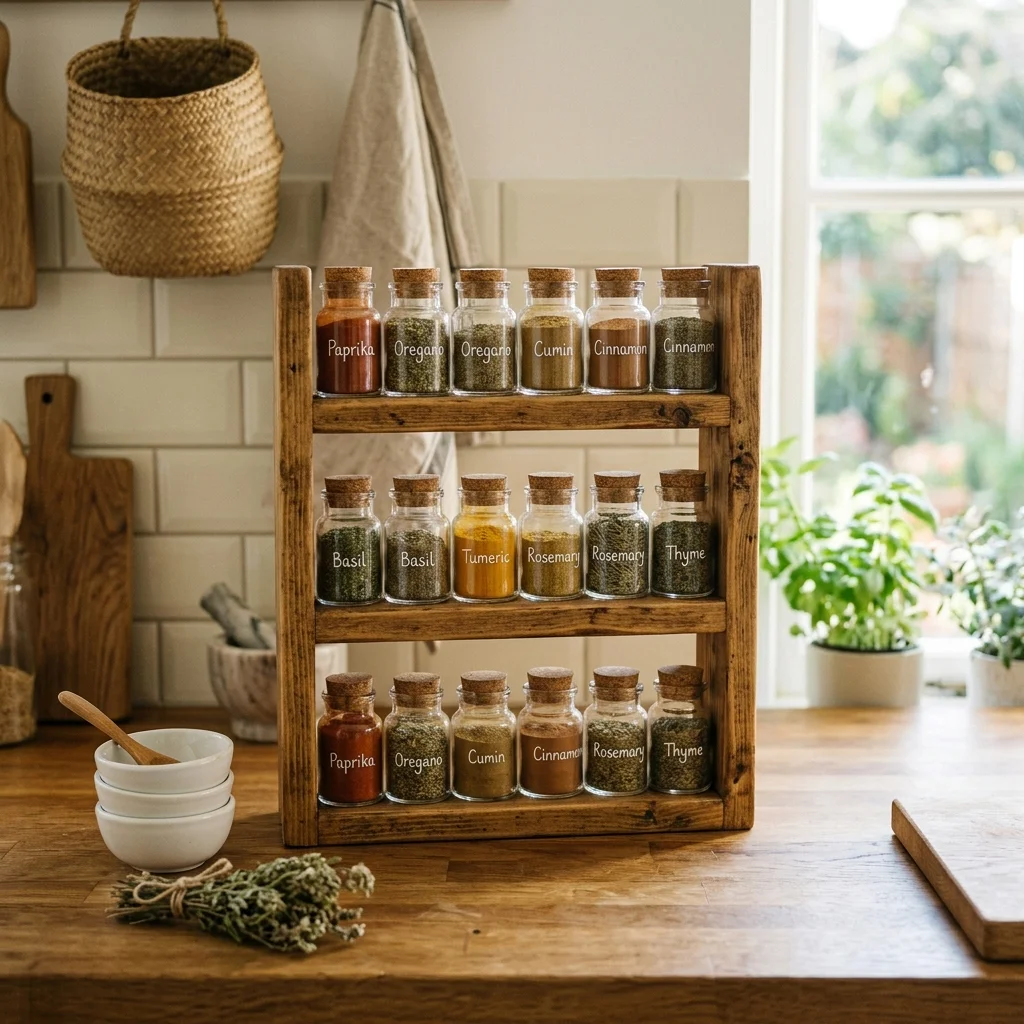
Countertop organisers can be just as attractive as wall-mounted storage when thoughtfully designed. A tiered stand made from reclaimed wood creates clear visibility while using vertical space efficiently. Each level lifts spice jars slightly higher, making labels easier to read during busy cooking sessions. The compact footprint prevents valuable preparation areas from becoming crowded, while the warm wood finish introduces a cosy handcrafted element. This practical arrangement blends beautifully into both traditional and contemporary kitchens without requiring permanent installation or major renovations.
Its flexibility makes this project especially appealing for renters or frequent redecorators. The stand can easily move wherever it is most convenient, adapting to changing layouts or seasonal decorating updates. In my experience, staggered shelves also encourage better organisation because every jar remains visible instead of disappearing behind others. A protective finish helps the reclaimed wood resist everyday splashes while preserving its natural character. The result is an attractive, portable storage solution that enhances both efficiency and visual appeal throughout the kitchen.
Drawer Insert Grid
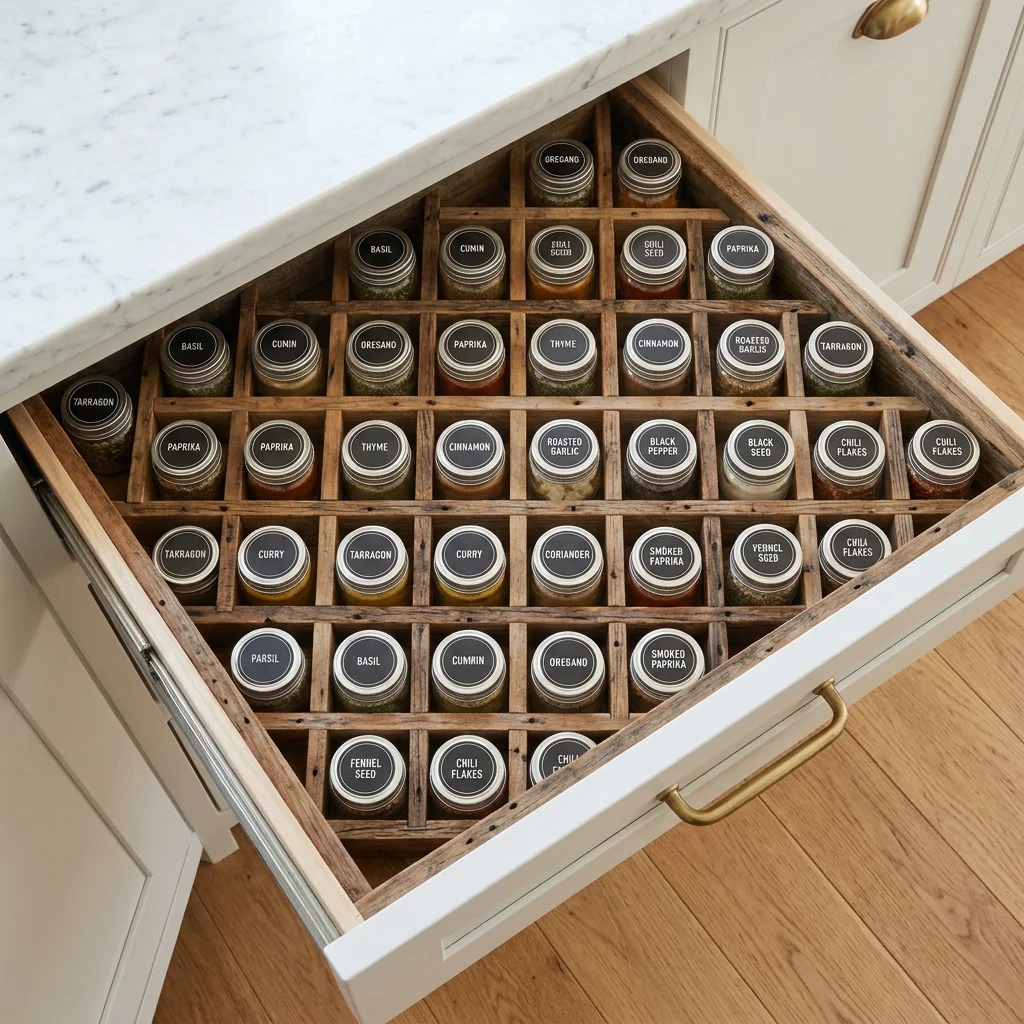
Hidden organisation often creates the calmest and most functional kitchens. A custom drawer insert transforms an ordinary drawer into a perfectly arranged spice station where every jar has its own place. Recycled hardwood strips create durable dividers while giving new purpose to leftover timber. Opening the drawer reveals a tidy display that simplifies meal preparation and reduces unnecessary searching. For anyone exploring how to create a diy spice rack from recycled wood, this clever solution proves that practical storage does not always need to be displayed on the wall.
Thoughtful measurements make this project especially satisfying to use every day. Dividers sized to fit your favourite spice jars keep everything secure, even when drawers open and close frequently. I’ve seen this approach work wonderfully for busy households because maintaining order becomes almost effortless. A light natural finish protects the reclaimed wood while preserving its distinctive grain and texture. The completed insert keeps countertops clear, cabinets uncluttered, and cooking routines noticeably smoother, all while celebrating the beauty and sustainability of reclaimed materials.
Hexagon Honeycomb
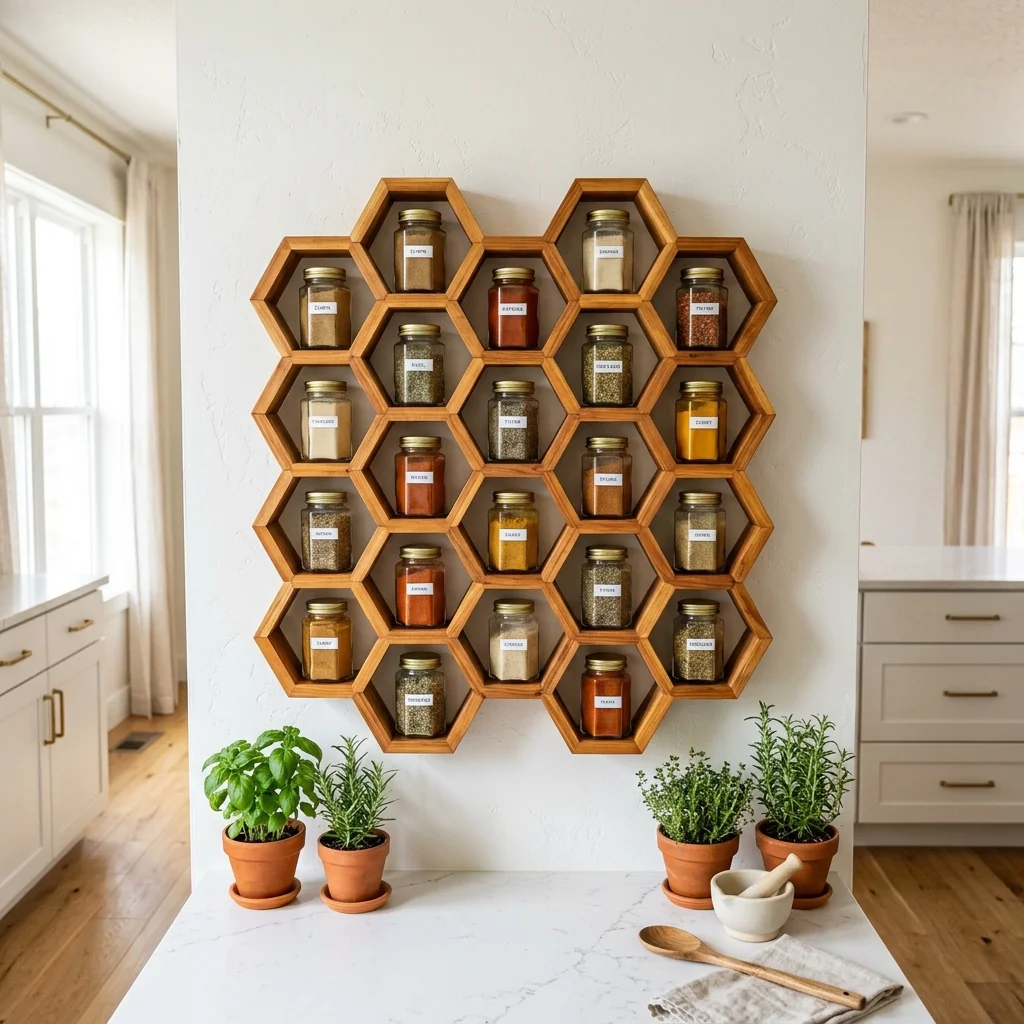
Bold geometric patterns can instantly refresh a kitchen while providing practical everyday storage. A honeycomb rack built from reclaimed wood combines artistic design with useful organisation, creating a display that feels both modern and handcrafted. Each hexagonal compartment naturally frames individual spice jars, giving the collection a balanced and visually satisfying appearance. The repeating pattern draws attention without overwhelming the room, making it ideal as a decorative focal point. Carefully finished reclaimed timber also introduces texture that softens sleek cabinetry and polished surfaces throughout the kitchen.
This design rewards careful planning with an impressive finished result. Precise cuts help every section align cleanly, producing a professional appearance despite using recycled materials. I’ve found that mixing a few decorative jars with frequently used spices creates an arrangement that feels curated instead of purely functional. Soft wood finishes pair beautifully with greenery, ceramic accessories, and neutral colour palettes, allowing the rack to blend effortlessly into many décor styles. The completed piece becomes practical storage while doubling as eye-catching wall art.
Rustic Cubby Rack
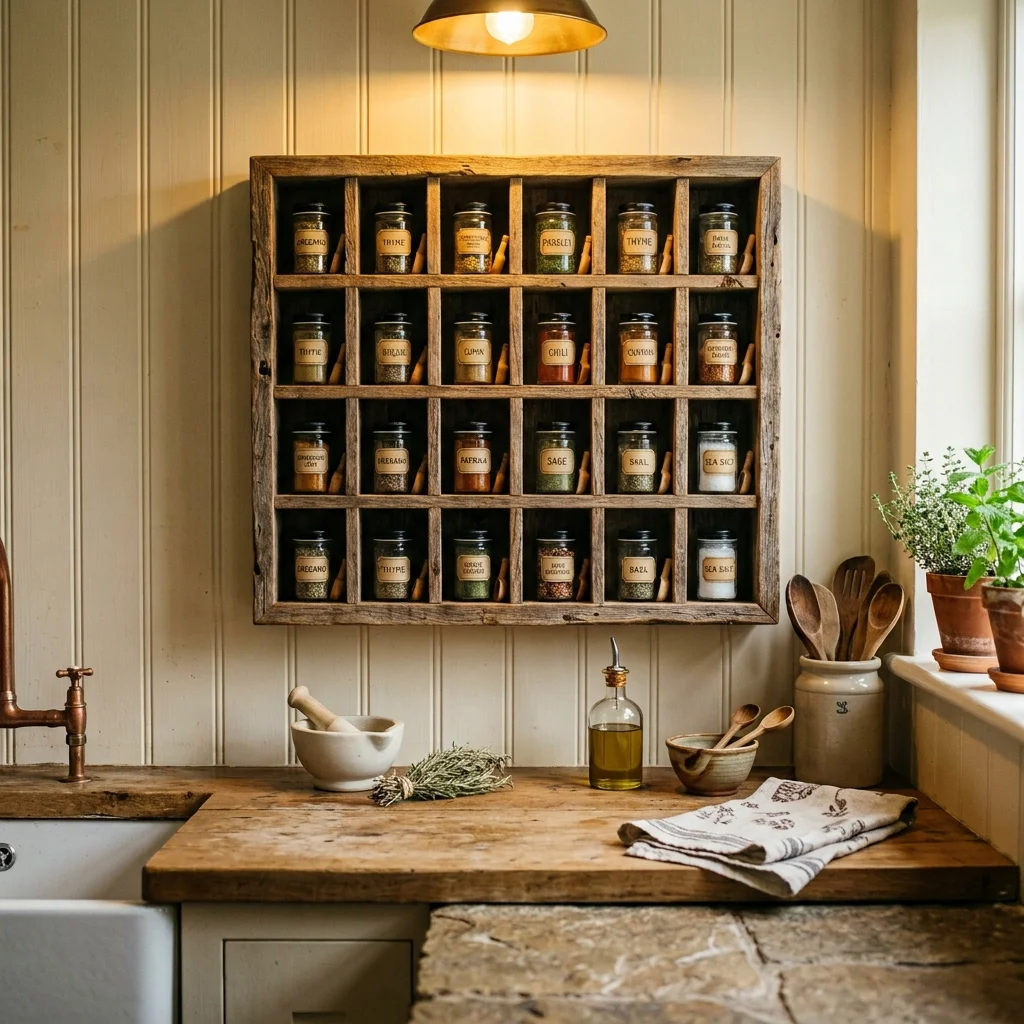
There is something undeniably welcoming about furniture made from old barn wood. A rustic cubby rack embraces those aged textures while creating practical spaces for organising herbs, spices, and seasoning blends. Individual compartments encourage consistency, helping each jar return to its proper place after cooking. The reclaimed timber’s distinctive grain and natural imperfections add authenticity that factory-made shelving rarely achieves. This thoughtful design transforms everyday storage into a decorative feature that feels timeless, comfortable, and full of handcrafted personality.
The simple grid layout also makes this project easy to customise for changing needs. Larger cubbies can accommodate taller grinders, while smaller sections neatly hold everyday seasonings. I’ve noticed that lightly sanding rough edges preserves rustic charm without sacrificing usability or safety. A clear protective finish enhances the wood’s colour while maintaining its natural appearance. Together, these small details create a storage solution that feels organised, attractive, and built to serve busy kitchens for many years with minimal maintenance.
Magnetic Wood Strip
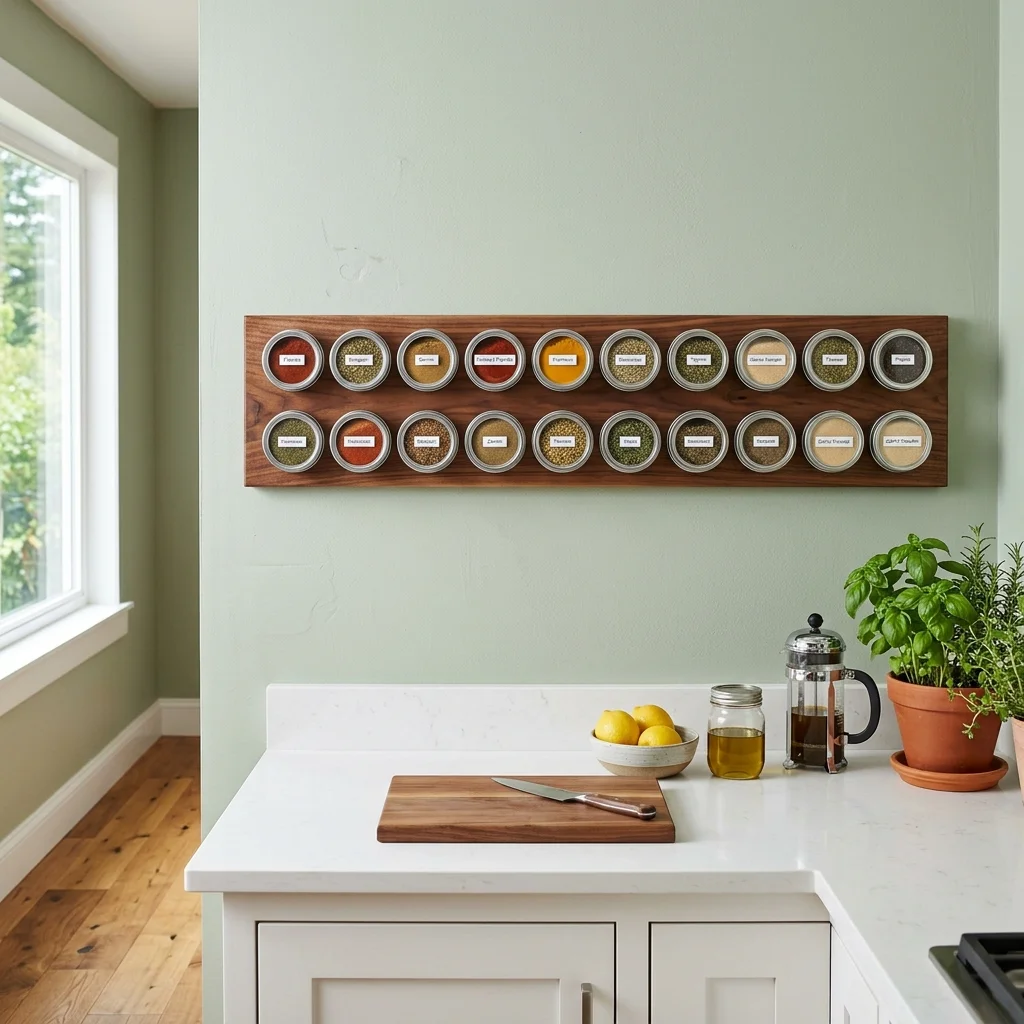
Minimalist storage often has the greatest impact because every detail feels intentional. A reclaimed wooden strip fitted with concealed magnets offers an elegant way to display spice tins while keeping preparation areas uncluttered. The simple horizontal arrangement creates visual order and makes each seasoning easy to identify at a glance. Smooth reclaimed walnut or oak introduces warmth that balances the cool finish of metal containers, producing a sophisticated combination that works beautifully in modern, Scandinavian, or transitional kitchen designs.
Beyond its attractive appearance, this layout supports faster and more enjoyable meal preparation. Frequently used spices remain within comfortable reach while preserving valuable shelf space for larger kitchen essentials. I’ve seen this solution work especially well in compact kitchens where every available surface matters. Matching magnetic tins enhance the streamlined aesthetic and create a polished look that photographs beautifully for inspiration boards. The finished rack proves that reclaimed wood can feel both contemporary and inviting while delivering practical everyday organisation.
Cabinet Door Rack
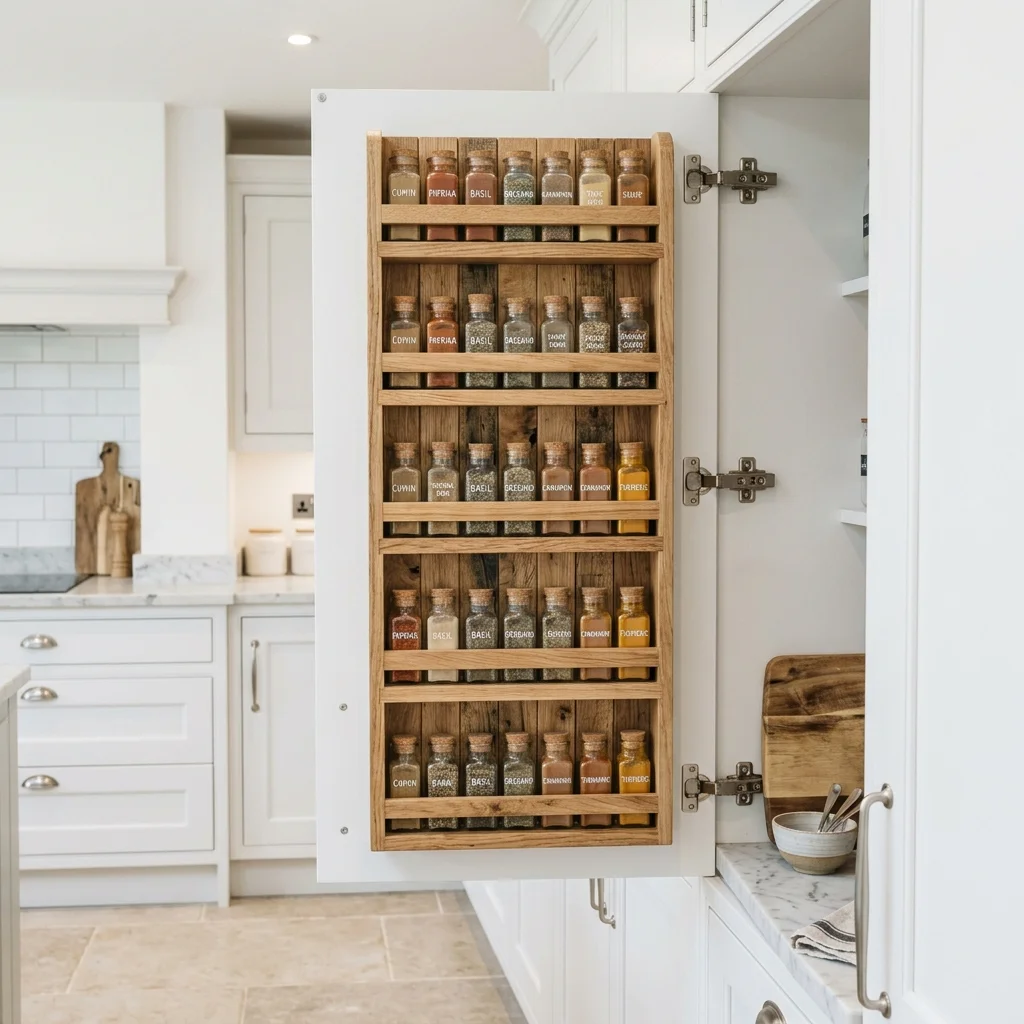
Hidden storage solutions often make a kitchen feel larger without changing its footprint. A reclaimed wood rack mounted inside a cabinet door keeps favourite seasonings organised while maintaining a clean, uncluttered appearance. Slim wooden rails securely hold spice jars in place, allowing easy access whenever you’re preparing meals. The concealed location also protects spices from direct sunlight, helping preserve freshness for longer. Thoughtfully sanded reclaimed timber introduces warmth and texture, even inside cabinetry, proving that practical upgrades can still showcase beautiful craftsmanship.
This project is surprisingly adaptable to different cabinet sizes and layouts. Adjustable shelf spacing allows room for various jar heights, making future organisation simple. I’ve found that adding a small lip along each shelf prevents containers from shifting whenever the cabinet door opens or closes. A natural clear finish protects the reclaimed wood against everyday wear while highlighting its unique grain. The completed rack creates a tidy, efficient storage system that keeps cooking essentials close without sacrificing valuable shelf or counter space.
Vintage Drawer Shelf
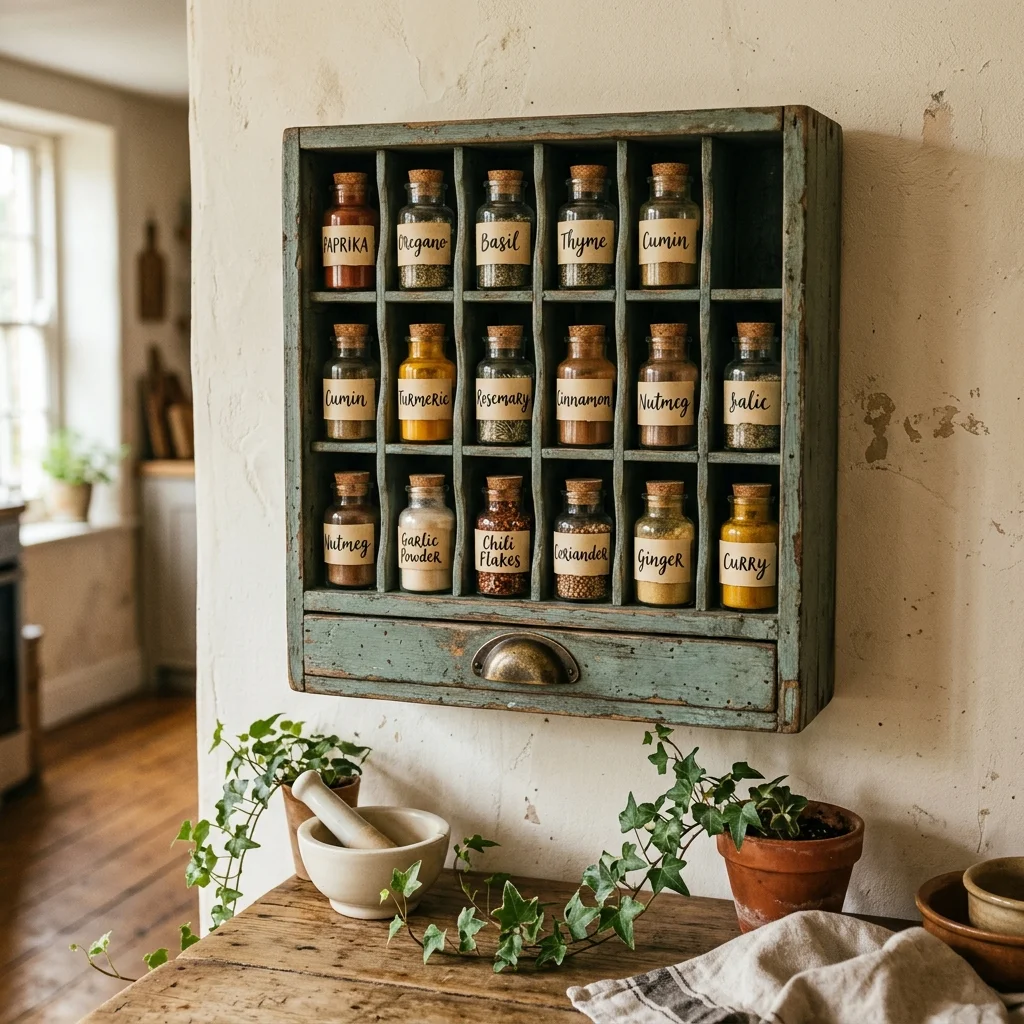
Repurposing an old drawer creates a storage piece filled with charm and history. Its existing frame provides ready-made structure, reducing construction time while preserving vintage details that give the finished project personality. Reclaimed drawer fronts, worn paint, and original handles contribute authentic character that cannot be replicated with new materials. Mounted securely on the wall, the drawer becomes an attractive display for everyday seasonings while introducing a nostalgic focal point that naturally complements farmhouse, cottage, and eclectic kitchen styles.
The versatility of this design makes it enjoyable to personalise. Decorative labels, small hooks, or miniature herb pots can easily be added without overwhelming the vintage appearance. I’ve noticed that lightly refinishing the interior while preserving exterior imperfections creates a beautiful balance between old and new. The finished shelf celebrates sustainability by transforming forgotten furniture into something useful, stylish, and full of individuality. Every reclaimed drawer tells its own story, making each completed spice rack genuinely one of a kind.
Open Beam Rack
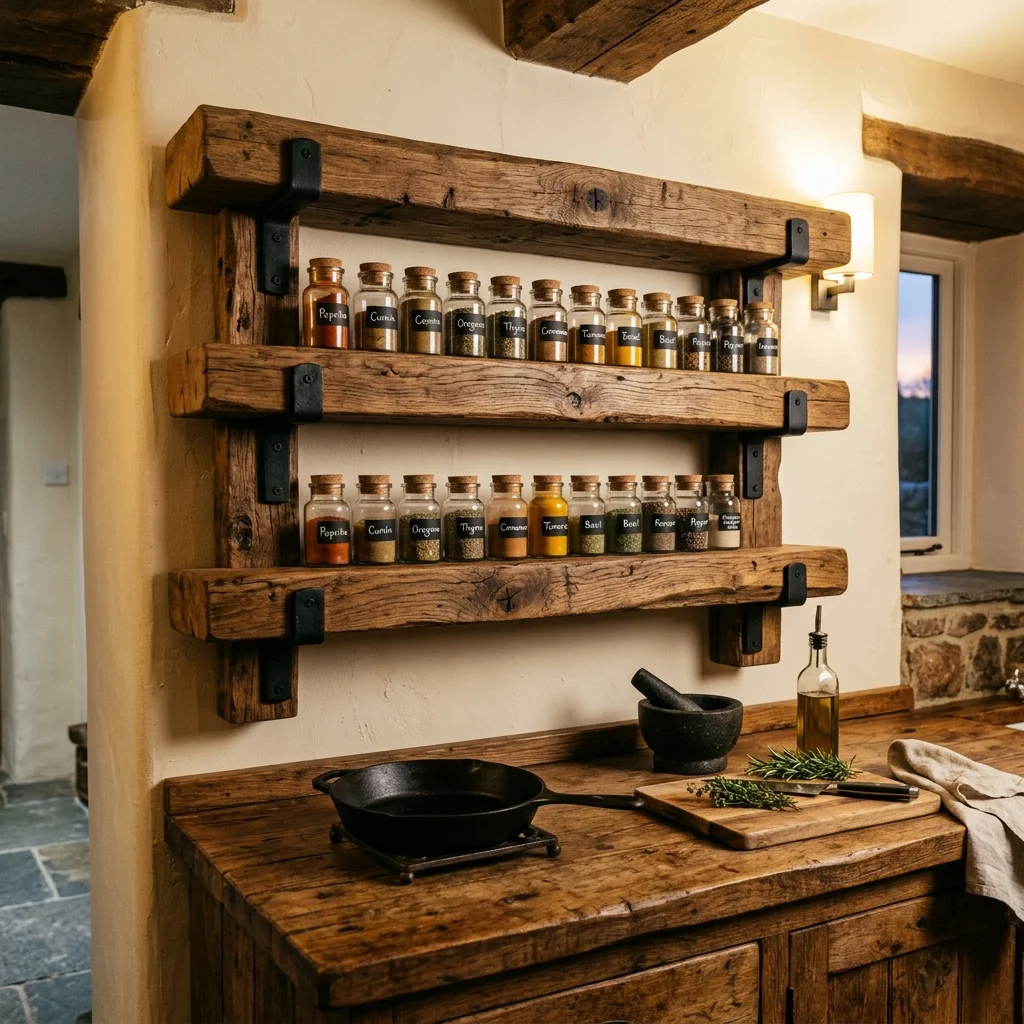
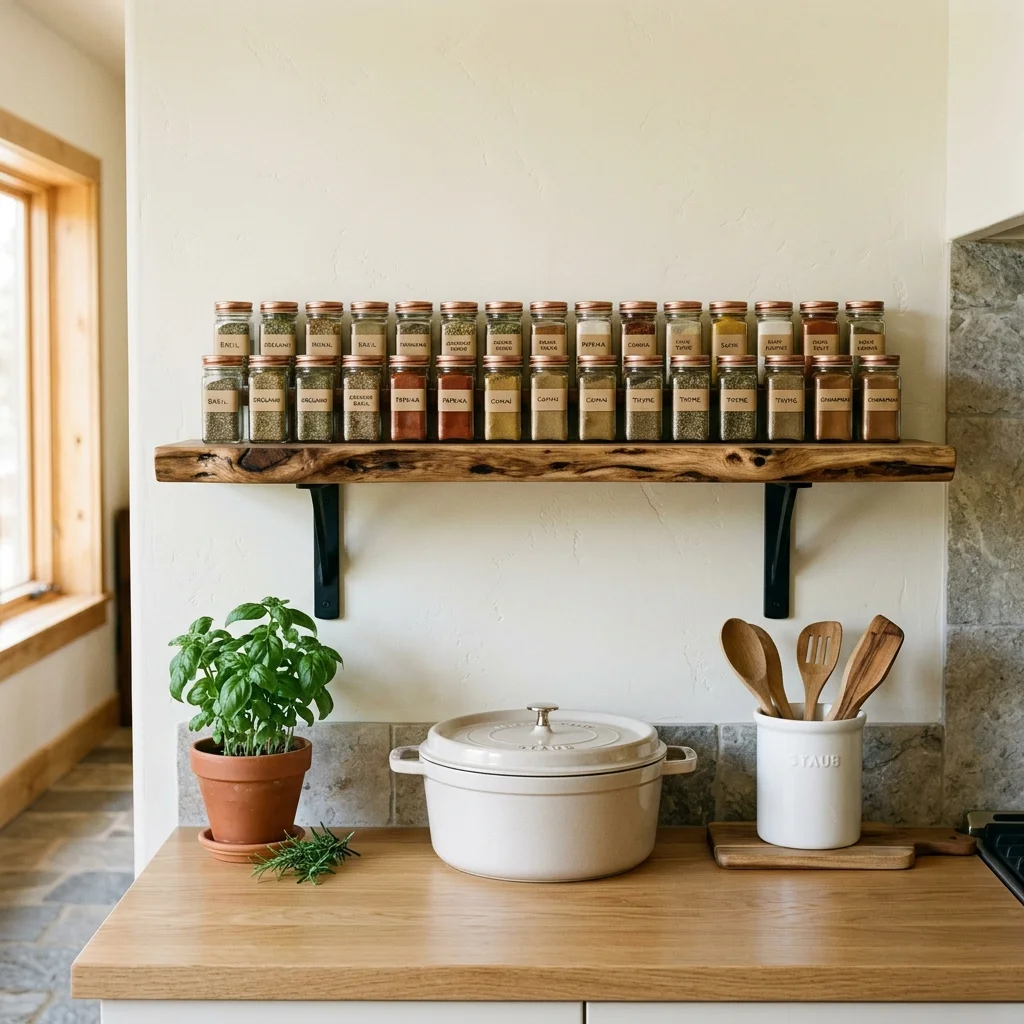
Large reclaimed beams instantly introduce depth and authenticity to a kitchen. Their substantial proportions create a spice rack that feels more like custom-built furniture than simple shelving. Rich wood grain, natural knots, and aged textures become standout design elements while providing dependable support for rows of neatly organised jars. This style pairs beautifully with stone worktops, shaker cabinets, and industrial accents, creating a balanced mix of rustic charm and practical function that feels welcoming throughout every season.
Strong materials ensure this rack remains both beautiful and dependable for years. Careful sanding smooths rough surfaces while preserving the beam’s distinctive character and natural imperfections. I’ve seen this style work especially well in open-plan kitchens where architectural features deserve equal attention alongside furniture. Thoughtfully arranged jars and a few decorative accents keep the display organised without distracting from the reclaimed timber itself. The finished rack becomes a lasting centrepiece that combines craftsmanship, sustainability, and everyday convenience in one impressive design.