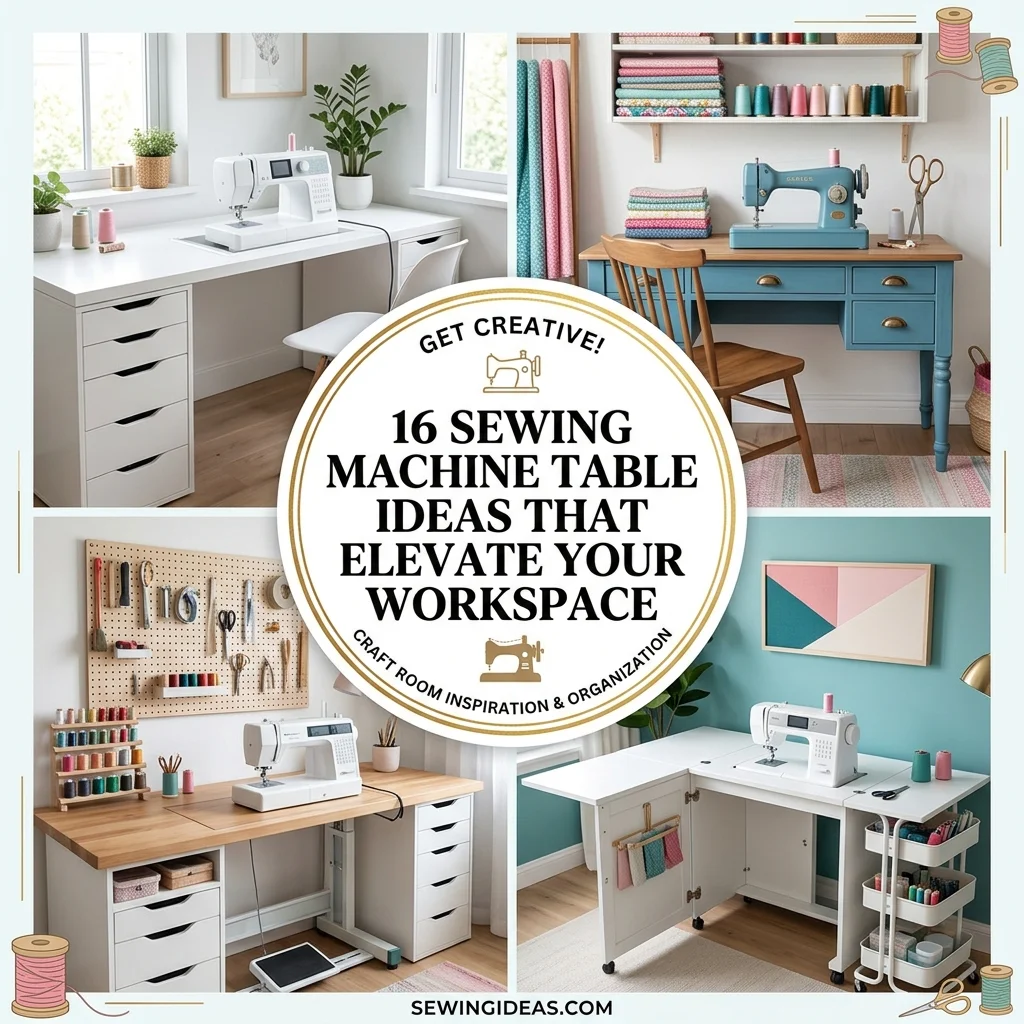
16 Sewing Machine Table Ideas That Elevate Your Workspace
Introduction
Your sewing space should inspire you—not make you feel boxed in by clutter.
These sewing machine table ideas that elevate your workspace can help you create a setup that feels beautiful, organized, and genuinely easier to use.
Whether you have a dedicated craft room, a small apartment corner, or a multipurpose home office, the right table can completely change how the space functions. We’ll explore 16 practical designs, from compact fold-down stations and rolling carts to built-in counters, vintage desks, and spacious sewing islands.
I’ve noticed that the most enjoyable sewing areas are rarely the biggest ones. They simply make smart use of available space. With thoughtful storage, comfortable positioning, good lighting, and a cohesive color palette, even a modest workstation can feel like a creative retreat.
Bright Corner Station
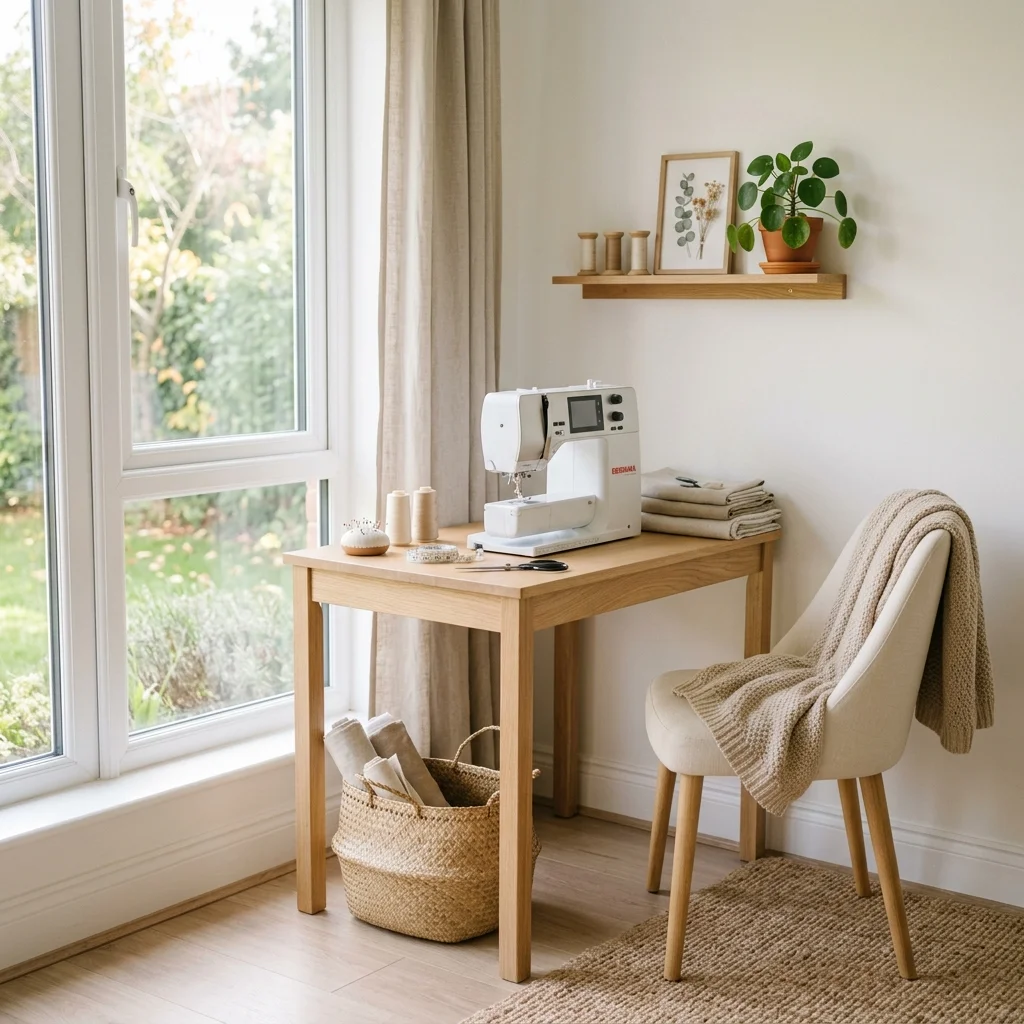
A well-planned corner can make sewing feel instantly more inviting. A compact table tucked into a bright room creates a dedicated workstation without overwhelming the floor plan. Choose a sturdy wood or laminate surface with enough depth for your machine, fabric, and everyday tools. Keeping the table close to a window adds useful daylight and makes the area feel open. In my experience, a simple setup like this is easier to maintain because everything has a clear place. Add one slim drawer unit underneath for scissors, thread, and measuring tools, while keeping the tabletop visually calm.
The right corner setup can turn an unused area into a productive sewing station. Position the machine so you can sit comfortably with your elbows relaxed and your chair able to slide freely beneath the surface. Light walls and pale flooring help the workspace feel larger, while a woven basket or small plant adds warmth without stealing valuable working room. I’ve noticed that open access to frequently used supplies makes projects feel less interrupted. A narrow rolling cart beside the table can hold fabric and notions, then move away when you need extra cutting space.
Farmhouse Worktable
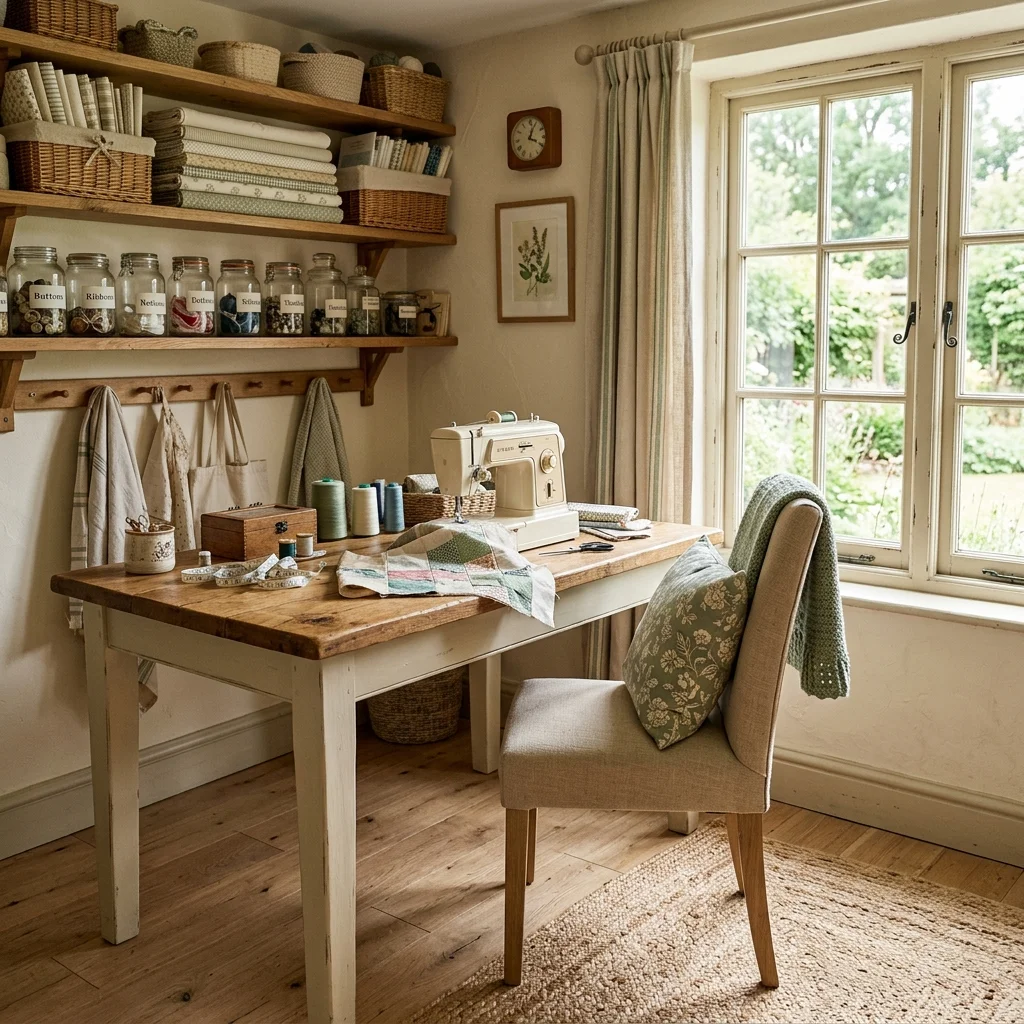
A farmhouse-inspired table brings warmth to a sewing room while keeping the workspace practical. Start with a solid wood tabletop, painted base, or repurposed desk, then pair it with a comfortable upholstered chair. Soft cream walls, natural wood tones, and muted sage accents create a relaxed palette that photographs beautifully. Open shelving above the machine can display neatly folded fabric, baskets, and vintage-style storage jars. The surface also gives you room to organize supplies without making the station feel crowded. It is a lovely choice when you want your sewing area to feel connected to the rest of your home.
A warm, layered workspace makes creative time feel easier to settle into. Place the table against a light wall, leaving enough clearance behind the chair for comfortable movement. A woven rug can soften hard flooring, while brass hardware, linen curtains, and wooden storage boxes add subtle character. I’ve seen this style work especially well in multipurpose rooms because the furniture looks intentional rather than purely functional. Keep only your prettiest tools and fabrics visible, and store the rest in labeled containers. That balance gives you the charm of a craft room without the visual clutter that can build up quickly.
Built-In Craft Counter
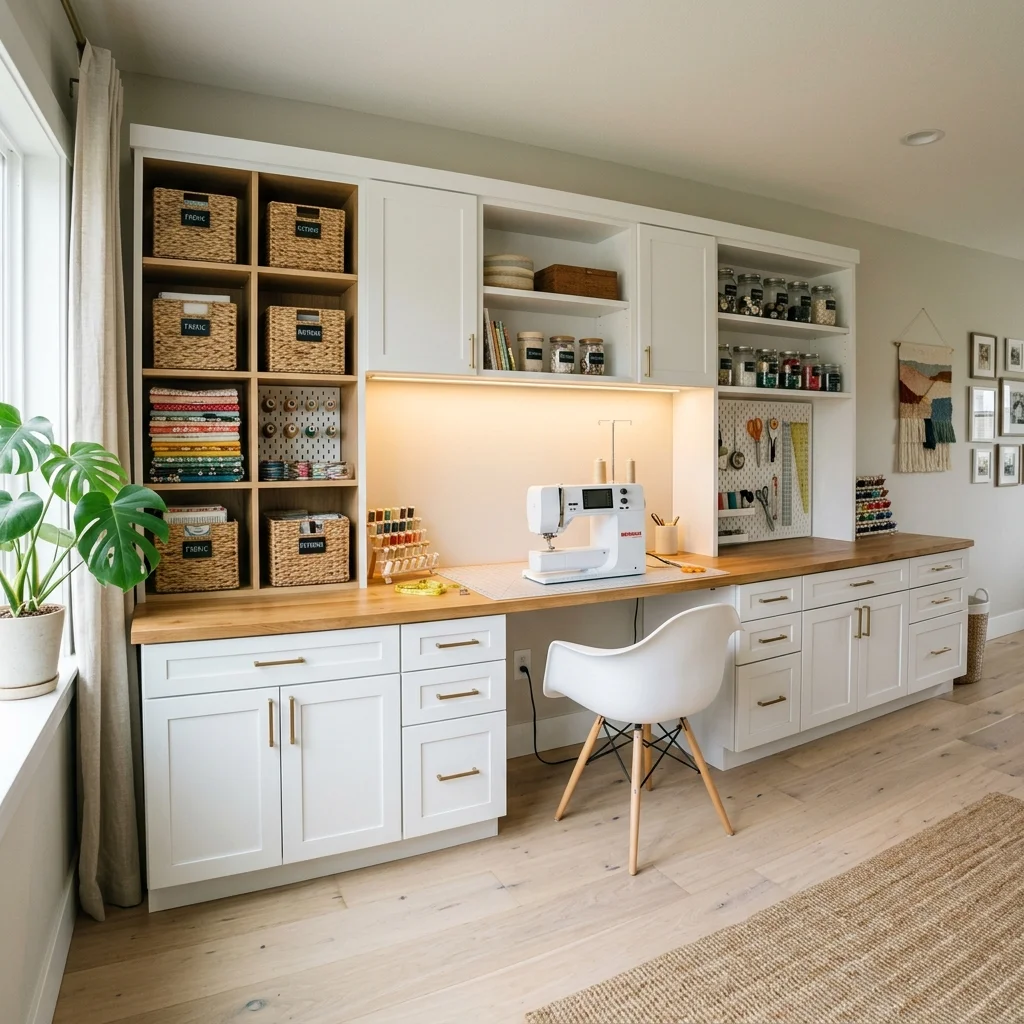
A built-in sewing station can make even a busy craft room feel organized. Run a long countertop along one wall and position the machine in the most comfortable working zone. Cabinets below keep fabric, patterns, and accessories hidden, while open cubbies can hold attractive baskets and everyday supplies. Choose white cabinetry with a warm wood counter for a clean, timeless look, or match the finishes to your existing room. The continuous surface is especially useful when projects expand beyond the machine. I’ve noticed that having storage directly below the worktop reduces the small interruptions that make sewing spaces feel messy.
Smart storage can change the entire rhythm of a sewing room. With a built-in counter, you can leave the machine ready to use instead of clearing a table before every project. Add task lighting beneath upper cabinets so the needle area stays bright without filling the room with harsh overhead light. Drawers of different depths are helpful for thread, rulers, scissors, and larger tools. Keep frequently used items within arm’s reach and reserve higher shelves for occasional supplies. This arrangement creates a polished backdrop for photos while giving serious hobbyists a dependable surface for longer sewing sessions.
Fold-Down Station
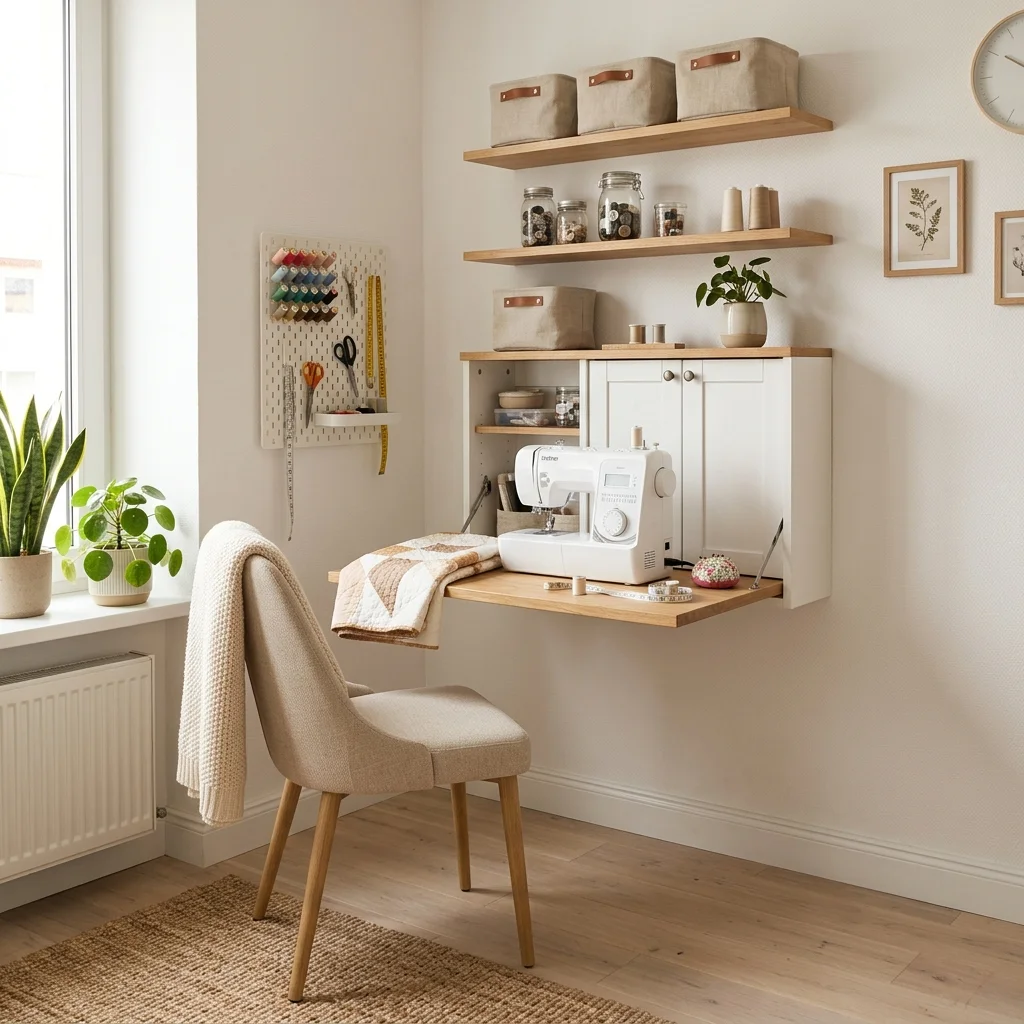
Small spaces can still support a beautiful sewing routine. A fold-down wall table gives you a full work surface when needed, then disappears neatly after a project. Choose a sturdy hinged panel in natural wood or painted white, with brackets strong enough to support your machine safely. Add shallow wall shelves above for thread, patterns, and small tools. This approach keeps the floor open and works especially well in bedrooms, apartments, or shared craft areas. I’ve noticed that compact furniture feels much more useful when every inch has a purpose and setup takes only a few minutes.
A folding workstation can make a room feel remarkably flexible. Mount the table at a comfortable height and leave enough clearance underneath for your knees and chair. When sewing is finished, fold the surface upward and use the remaining wall area for artwork, baskets, or a pegboard. Soft neutral colors help the station blend into the room instead of announcing itself as a craft corner. Choose smooth hardware and a durable finish so repeated opening and closing does not become frustrating. The result is a tidy, adaptable workspace that supports creativity without permanently taking over valuable floor space.
Vintage Desk Setup
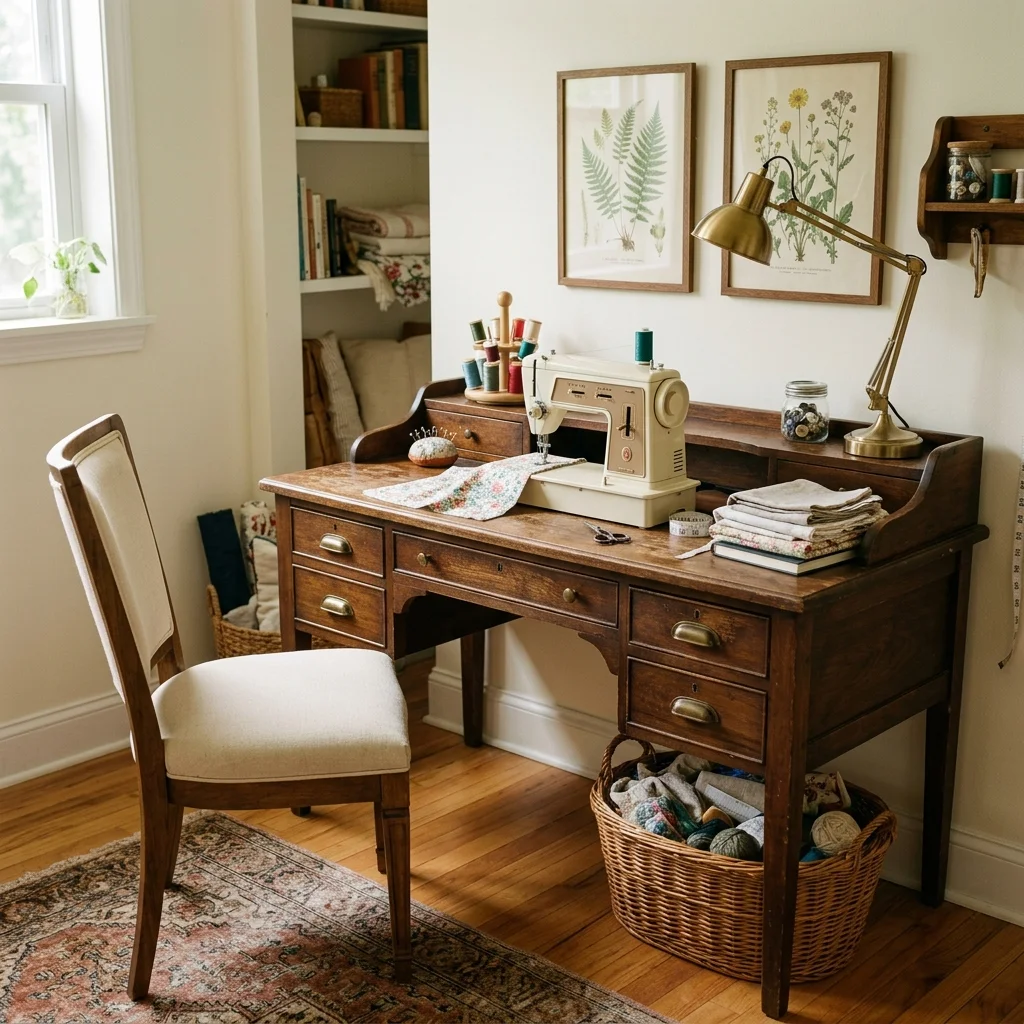
A vintage desk can become the heart of a charming sewing room. Look for a sturdy piece with generous drawers, solid construction, and enough depth for your machine. Natural wood, painted details, or gently aged hardware can add personality while keeping the setup practical. Place the desk near good natural light and pair it with a supportive chair that complements its character. In my experience, repurposed furniture often makes creative spaces feel more personal because the room gains visual history rather than looking like a collection of matching storage units. Keep modern sewing tools organized inside the original drawers.
Old furniture can offer surprisingly practical storage for modern sewing projects. A vintage desk with multiple drawers lets you separate thread, needles, patterns, and measuring tools while keeping the countertop uncluttered. Add a small task lamp for focused lighting and a washable cushion if the original chair is uncomfortable. Keep the surrounding decor simple so the desk remains the visual anchor. A woven basket underneath can hold larger fabric pieces, while a framed print or small plant adds softness nearby. The combination creates a workspace that feels collected and welcoming while still supporting everyday sewing needs efficiently.
Dedicated Cutting Table
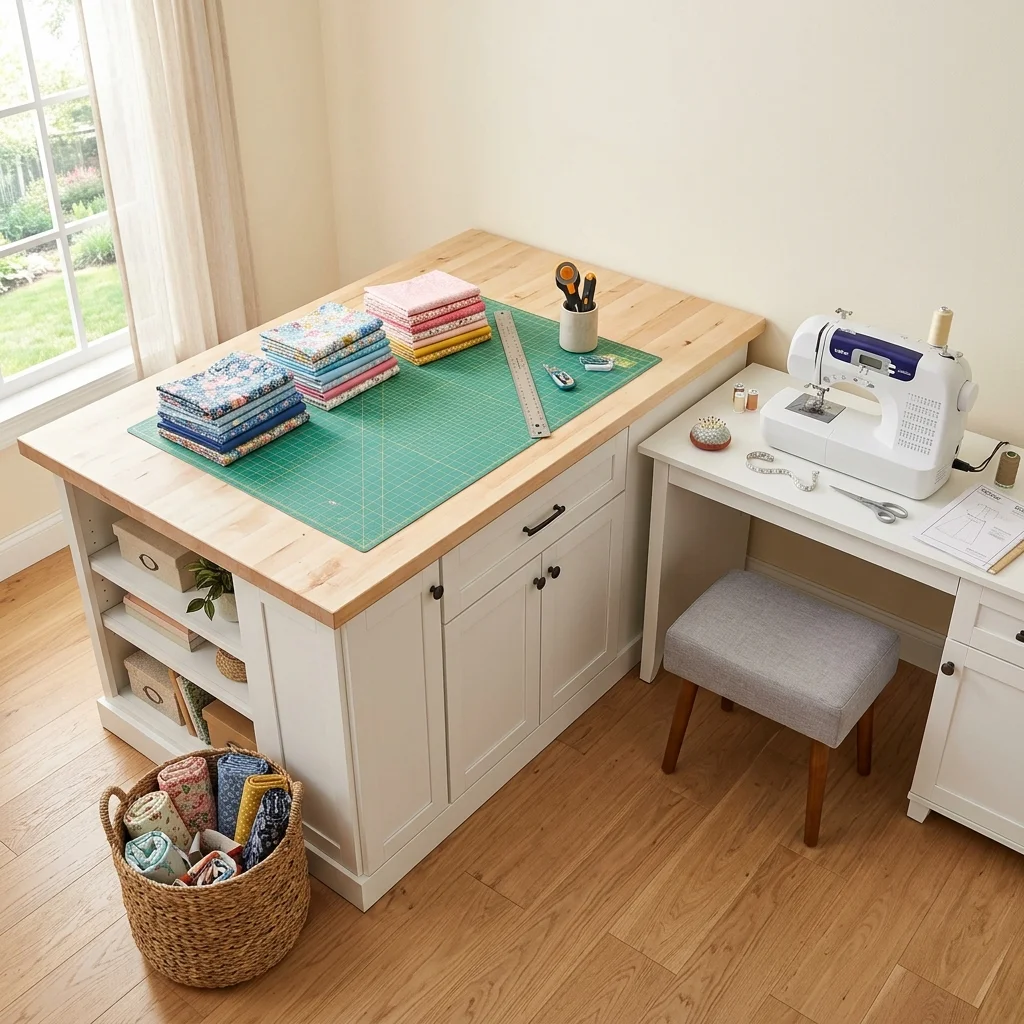
A dedicated cutting zone can instantly improve a sewing room’s flow. Use a wide table with a durable, smooth surface and enough clearance to spread fabric without constantly repositioning it. Pair the table with a comfortable stool or adjustable chair, then place rulers, mats, and scissors in nearby drawers or wall storage. Pale wood, white cabinetry, and soft daylight keep the area bright and visually clean. I’ve found that separating cutting from machine work makes larger projects feel less cramped because each task has its own surface. Leave walking space around the table so fabric can move freely.
A separate cutting table turns a busy sewing room into a more efficient creative zone. Position it where natural or overhead light reaches the entire surface, and choose a height that reduces excessive bending during long projects. Storage underneath can hold cutting mats, bolts, and unfinished pieces without cluttering the room. Add a simple woven basket for scraps and a small tray for frequently used tools. Keeping this area visually restrained helps fabric become the colorful focal point. The result is a workspace that feels intentional, spacious, and easier to navigate when projects require several stages.
Rolling Sewing Cart
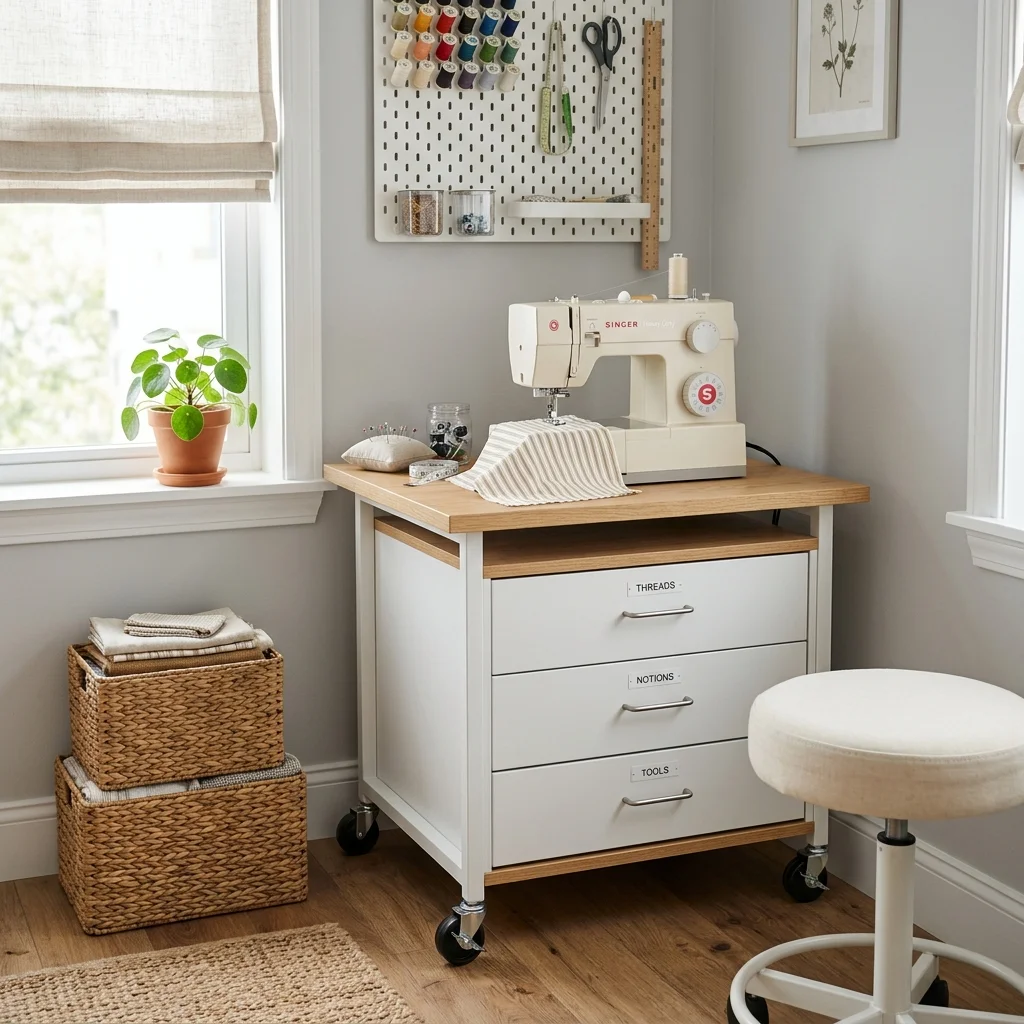
Flexibility can make a sewing room feel twice as useful. A rolling cart lets you move the machine closer to natural light, a cutting table, or extra storage whenever a project demands it. Choose a sturdy frame with locking casters so the station stays secure while sewing. Multiple drawers keep small supplies organized, while an open lower shelf can hold fabric baskets. A pale wood top paired with white cabinetry gives the cart a fresh, lightweight appearance. I’ve noticed that movable furniture works particularly well in shared rooms where the sewing area needs to adapt throughout the day.
A mobile workstation also makes cleaning and rearranging much easier. When your project is finished, simply roll the cart against a wall or beneath a larger counter to reclaim floor space. Keep frequently used notions in the top drawers and reserve deeper storage for bulkier materials. Lock the wheels before starting the machine, especially if the floor is smooth. A small plant or attractive container can soften the practical furniture without creating clutter. This setup is ideal when you want a dedicated sewing area but do not want one large piece of furniture permanently defining the room.
Window-Facing Desk
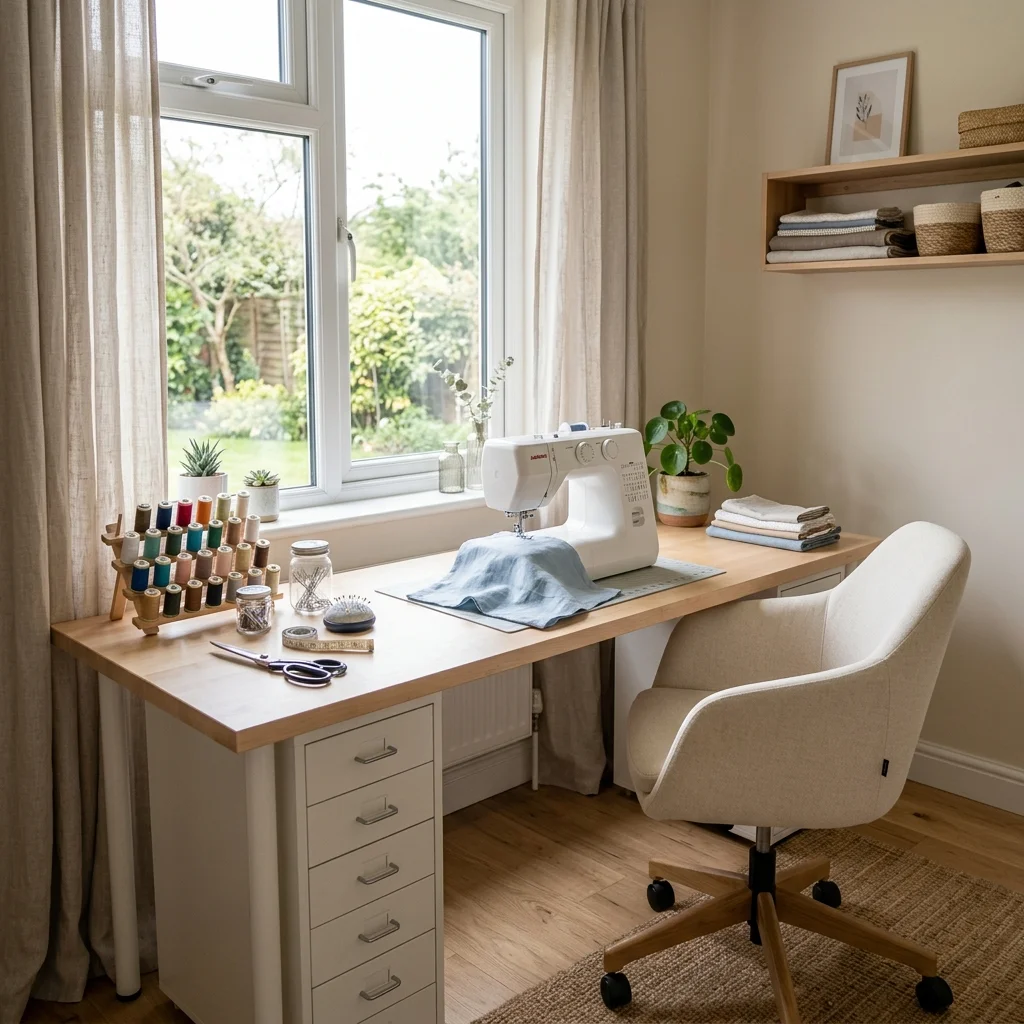
Natural light can completely change the feel of a sewing station. Placing the desk near a window gives you bright daytime illumination while making the workspace feel connected to the outdoors. A slim wood tabletop keeps the arrangement visually light, while white drawers provide discreet storage underneath. Use linen or sheer curtains to diffuse harsh sunlight without blocking the view. In my experience, a window-facing setup feels especially pleasant during detailed projects because the area looks brighter and less enclosed. Just make sure direct sunlight does not fall continuously on delicate fabrics or finished pieces.
A window workstation can combine practical lighting with a beautiful room layout. Position the sewing machine so your work area receives side or front light without creating distracting glare on the needle plate. Add an adjustable task lamp for cloudy days and evening projects. Keep the surrounding decor restrained with neutral walls, pale flooring, and one or two natural accents. This allows the window to become part of the visual composition rather than competing with the sewing equipment. Leave enough space behind the chair for movement, and avoid placing bulky storage directly beside the window.
Colorful Craft Hub
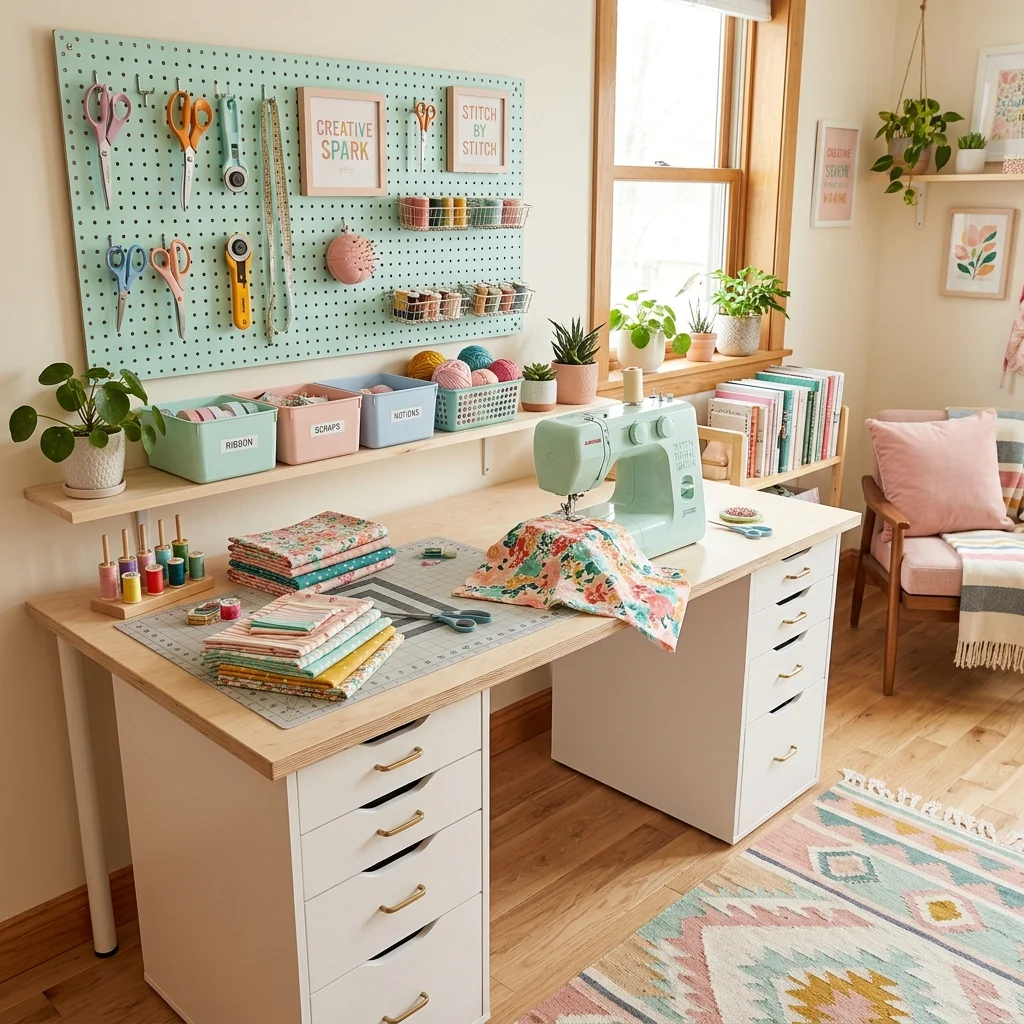
A colorful sewing station can make creativity feel visible before you even begin a project. Start with simple furniture in white or pale wood, then let fabrics, thread spools, storage bins, and artwork introduce cheerful color. A pegboard above the desk keeps tools accessible while creating an attractive display. Grouping supplies by color can make the area feel intentional rather than chaotic. I’ve seen this approach work beautifully for hobby spaces because the materials themselves become part of the decor. Keep the main furniture neutral so brighter accents stand out without overwhelming the room or making the workspace feel smaller.
The best colorful craft rooms still benefit from visual balance. Choose two or three accent shades and repeat them through baskets, fabric stacks, artwork, or small accessories. Keep cutting tools and frequently used notions within easy reach, but place less attractive supplies inside drawers or closed containers. A patterned rug can add another layer of personality while defining the workstation from the rest of the room. Good lighting is equally important, especially when working with contrasting fabrics. With a thoughtful palette and practical storage, your sewing area can feel energetic, organized, and inspiring without sacrificing everyday usability.
Minimalist White Desk
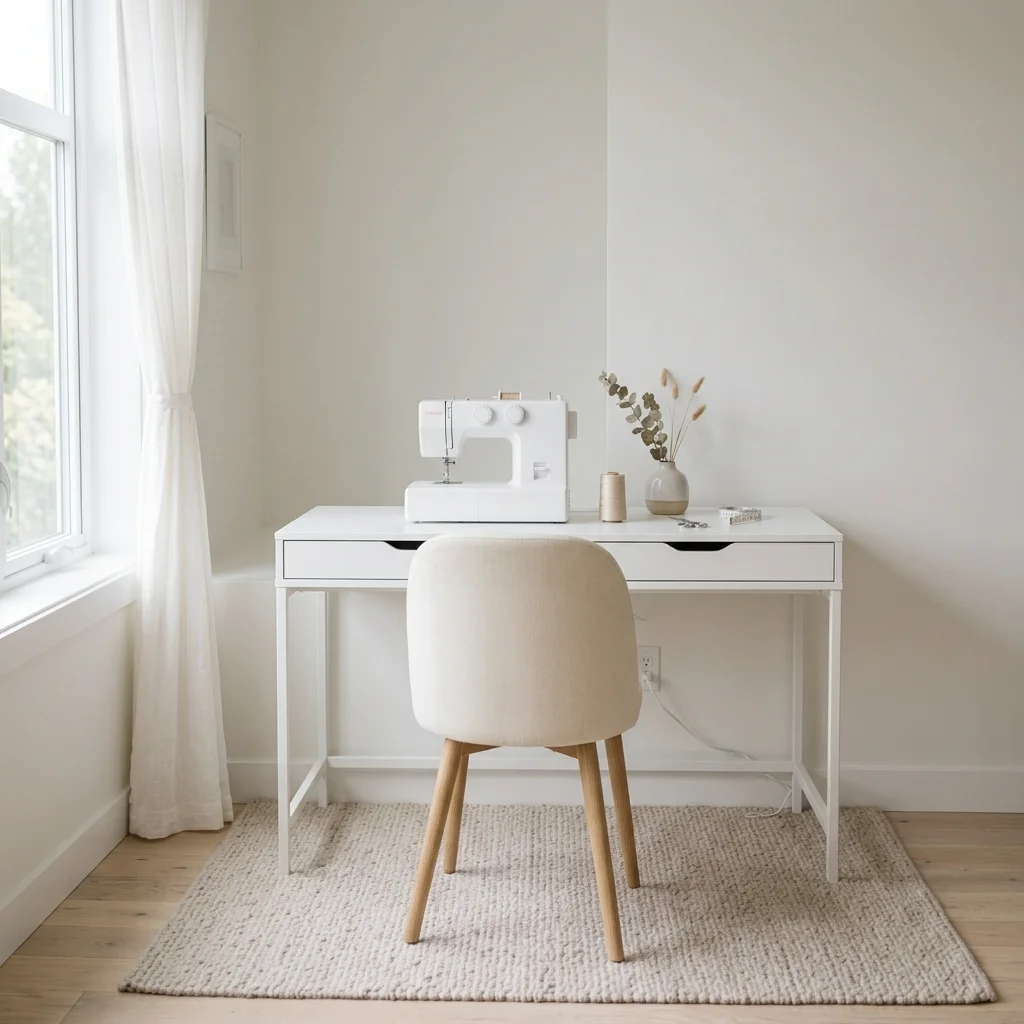
Clean lines can make a small sewing area feel surprisingly spacious. A minimalist white desk reflects natural light and creates a calm backdrop for colorful fabrics and projects. Choose a smooth surface with enough depth for your machine, then use drawers or cabinets to hide supplies when they are not needed. Warm wood flooring, a beige rug, or a small ceramic accent can keep the palette from feeling too stark. I’ve noticed that simpler workstations are often easier to reset after a project because there are fewer surfaces where clutter can accumulate. The result feels polished without sacrificing practicality.
A restrained setup also makes your sewing equipment easier to organize visually. Keep the machine centered and leave clear space on both sides for fabric movement and tools. Store thread, scissors, and measuring supplies in dedicated compartments so the countertop remains open between projects. Add one adjustable lamp if natural light is limited, choosing a simple design that complements the furniture. Soft textiles can introduce warmth without disrupting the clean aesthetic. This approach works especially well in multipurpose rooms because the desk can resemble a stylish home office while still providing a reliable surface for sewing and creative work.
Industrial Wood Station
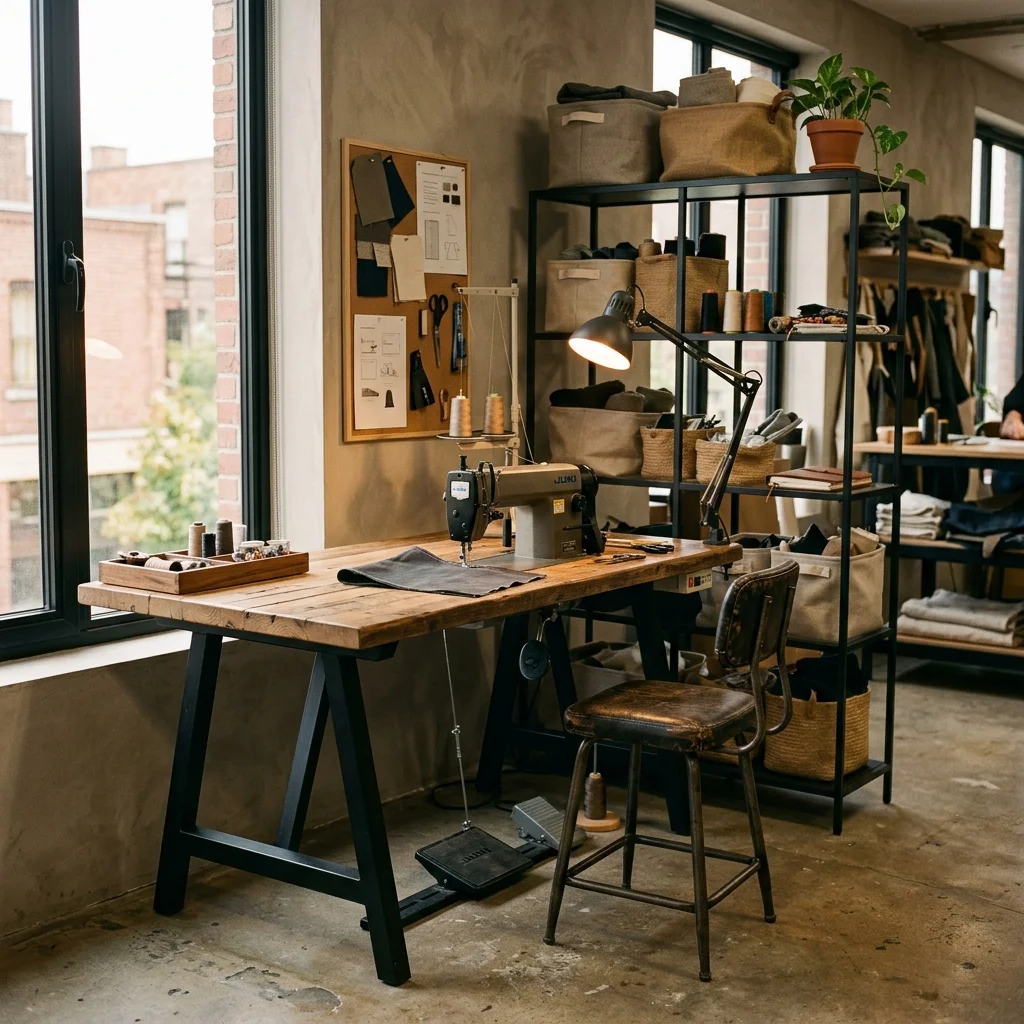
Strong materials can give a sewing station a confident, workshop-inspired character. Pair a thick reclaimed wood top with black metal legs or a sturdy steel frame for an industrial look that also feels durable. Open shelving underneath or beside the desk provides convenient storage for fabric baskets and larger tools. Warm wood tones prevent the space from becoming too cold, while a black task lamp reinforces the design. In my experience, this style works particularly well for serious hobbyists who want furniture that feels substantial. Keep the surface broad enough to support both the machine and active project materials.
Industrial furniture can still feel comfortable and welcoming with the right balance of textures. Add a cushioned stool, woven baskets, or a soft neutral rug to contrast with metal and concrete-inspired finishes. Keep tools organized in matching containers so open storage looks intentional rather than cluttered. A large task lamp can provide focused illumination while becoming a useful design feature. Position the workstation where you have enough room to move fabric around the machine without hitting nearby furniture. The combination of rugged materials and organized storage creates a practical sewing corner with plenty of visual personality.
Hidden Storage Desk
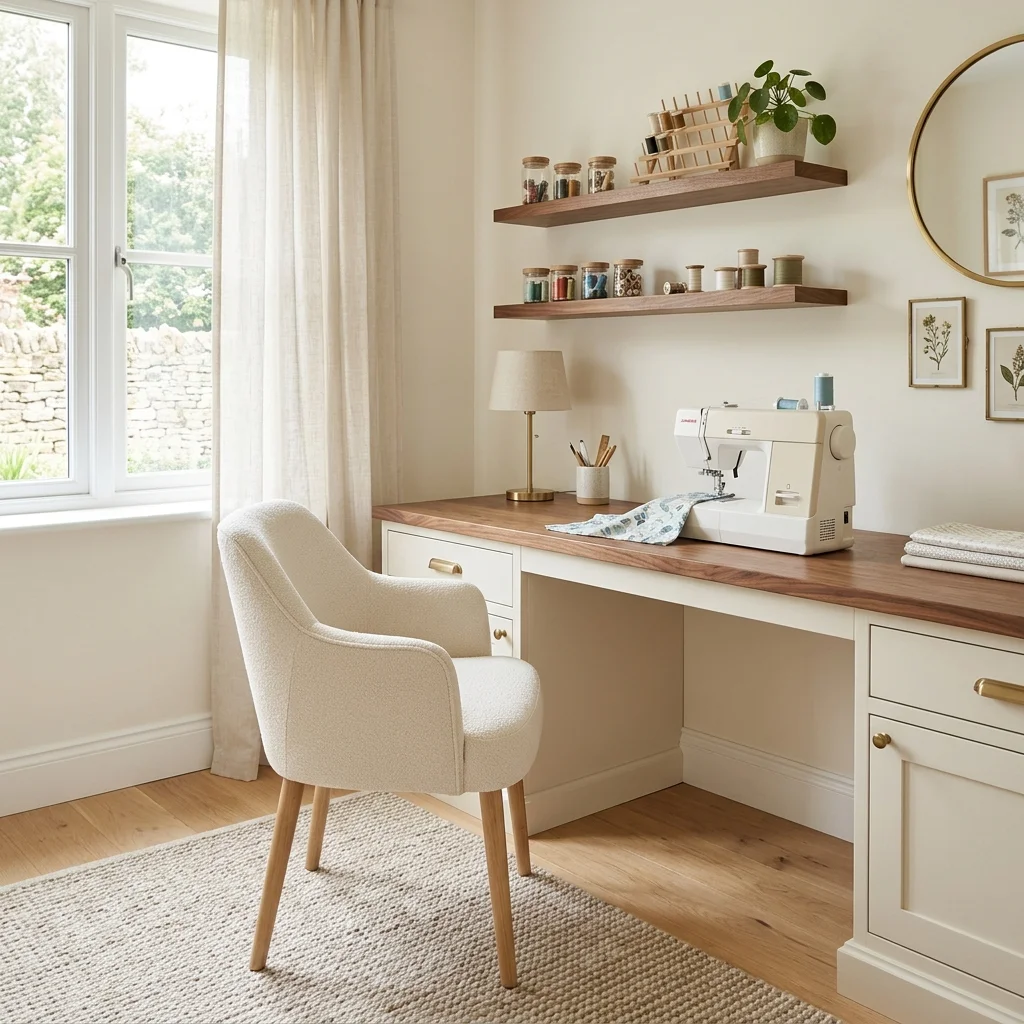
Hidden storage can make a sewing workspace look finished even during busy weeks. Choose a desk with deep drawers, cabinet doors, or integrated compartments where fabric, patterns, and accessories can disappear quickly. A warm walnut surface paired with cream cabinetry creates a sophisticated palette without feeling overly formal. Keep the machine and a few frequently used tools visible, then tuck everything else behind closed storage. I’ve noticed that this arrangement is especially helpful when a sewing room doubles as another living space. A quick tidy becomes much easier when there is a dedicated place for every supply.
Good concealed storage is about more than hiding clutter; it improves how the workstation functions. Use shallow drawers for thread and needles, medium compartments for scissors and rulers, and deeper cabinets for fabric or unfinished projects. Label containers inside larger cabinets so supplies remain easy to find after being stored away. Brass or brushed-metal handles can add a subtle decorative detail while maintaining a clean appearance. Keep the chair and surrounding floor area open so the desk remains comfortable to use. With thoughtful organization, the room can shift from active craft space to polished everyday room in minutes.
Compact Apartment Desk
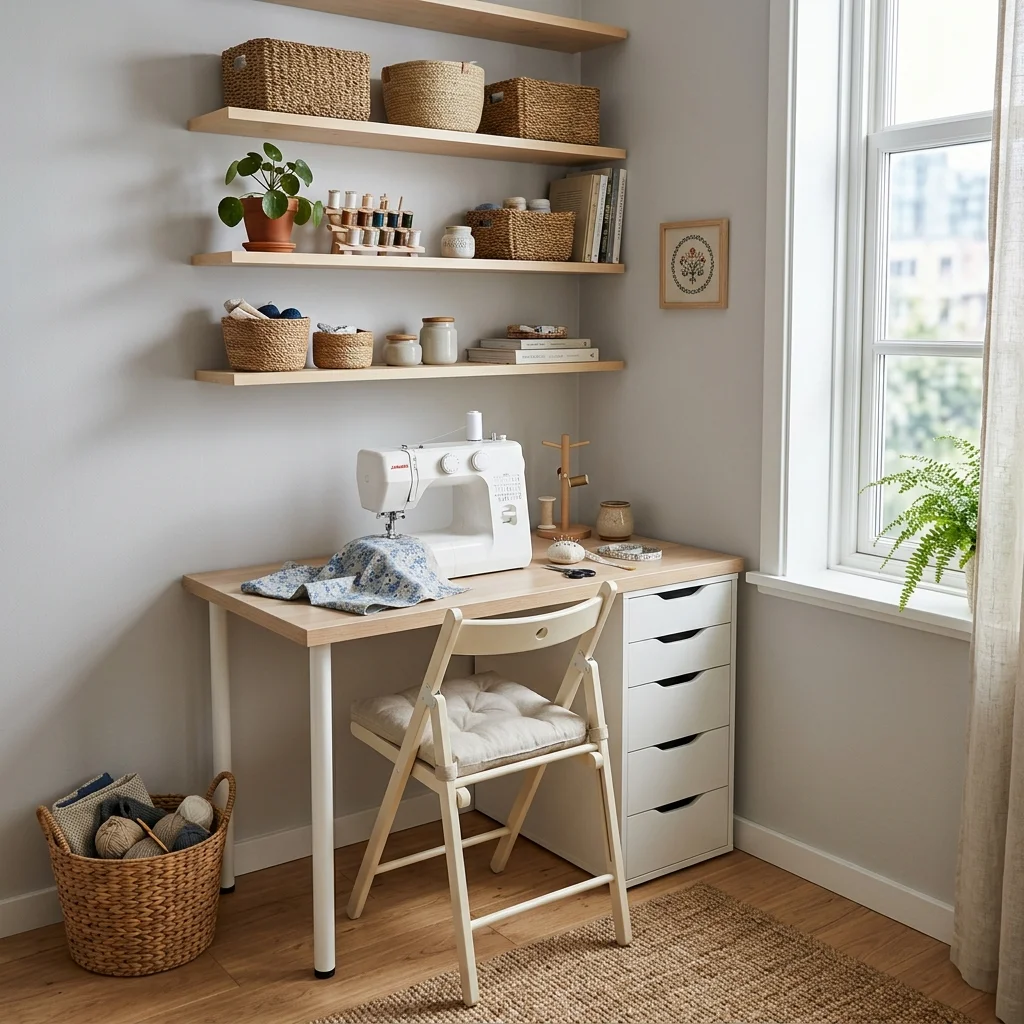
Small rooms can still accommodate a functional sewing station with the right proportions. A narrow desk gives you enough space for the machine while leaving valuable floor area open. Choose a light wood or white finish to visually blend with the surrounding room, then use vertical shelves for storage rather than adding bulky furniture. A folding chair can disappear when the desk is not being used. I’ve noticed that compact workstations feel more comfortable when storage grows upward instead of outward. Keeping the machine near a window can also make the entire corner feel brighter and more inviting.
A small footprint does not mean sacrificing comfort or organization. Measure the available wall space before choosing your desk, and make sure the machine can sit securely without crowding your elbows. Floating shelves can hold thread, patterns, and lightweight baskets while keeping the floor clear. Use one larger basket underneath for fabric or unfinished projects, then return everything to its place after sewing. Soft neutral colors help the station blend naturally into an apartment interior. With careful planning, even a narrow corner can become a practical creative zone that feels intentional rather than squeezed into leftover space.
L-Shaped Sewing Zone
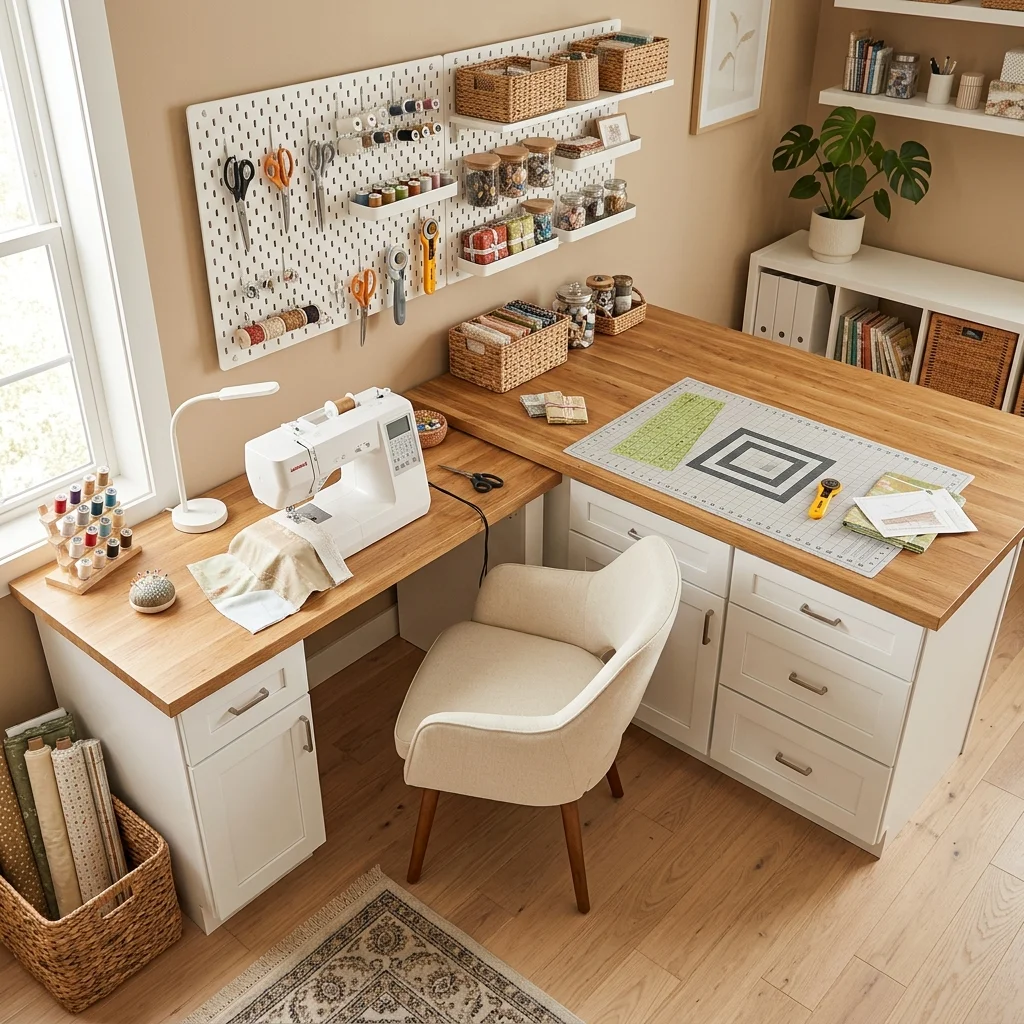
An L-shaped workstation can give you several useful surfaces without requiring multiple separate tables. Place the sewing machine on one side and use the adjoining counter for cutting, pressing, organizing, or temporary project storage. The corner becomes valuable space for small tools, thread, or a compact lamp. White cabinetry beneath the counters keeps supplies organized while a warm wood surface adds visual softness. In my experience, this layout is particularly helpful for people who move between several sewing tasks during one project. Everything stays close, but each activity still has a defined working area.
The layout also creates a natural workflow from preparation to sewing. Keep your most frequently used supplies near the corner or inside drawers within easy reach, while reserving the longer counter for fabric handling. A pegboard above the machine can organize scissors, rulers, and other tools without consuming countertop space. Make sure the chair can move comfortably along the inner corner and that cabinet doors will not interfere with movement. A consistent finish across both surfaces helps the workstation look like one cohesive piece. The result is an efficient craft zone with generous workspace and a polished appearance.
Sewing Island Table
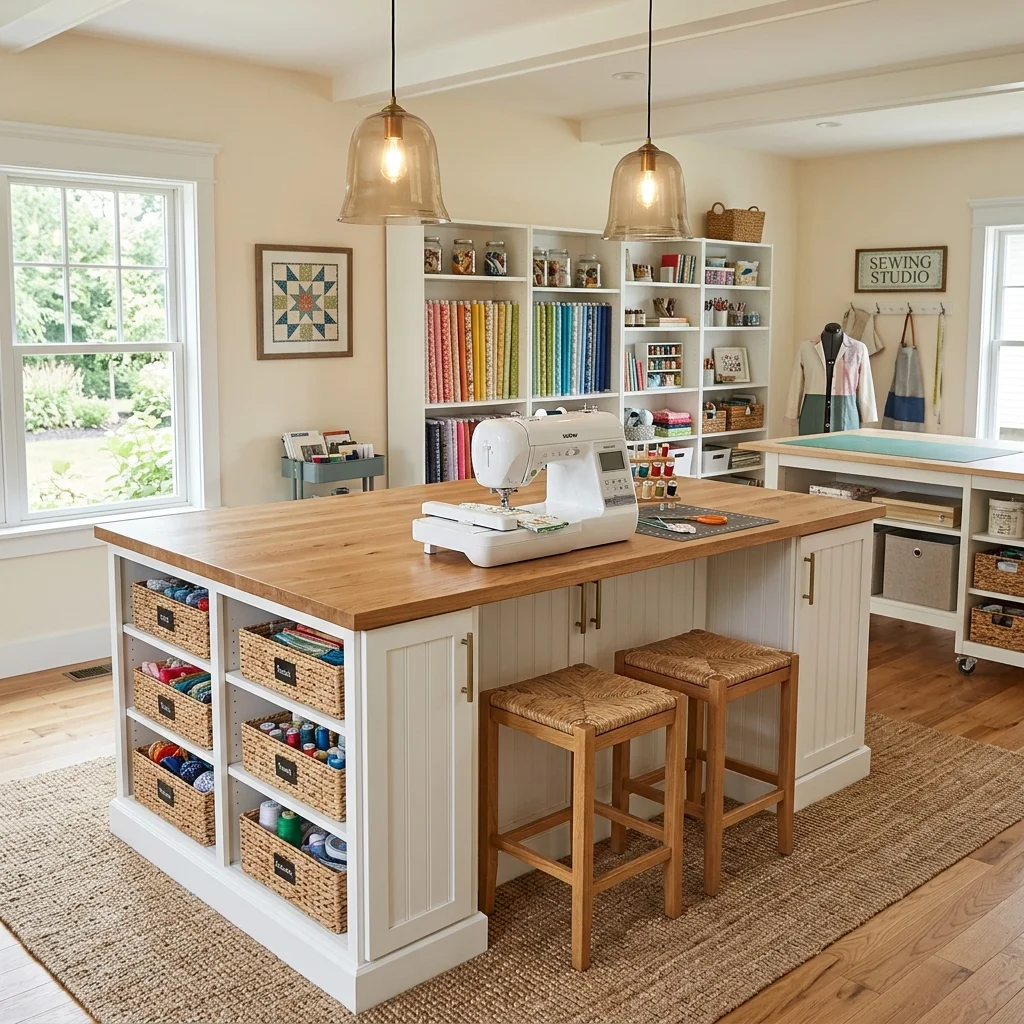
A sewing island can transform a larger craft room into a highly functional creative studio. Instead of pushing every surface against the walls, place a sturdy island near the center and use it for sewing, cutting, folding, or sorting materials. A natural oak countertop paired with white cabinetry keeps the furniture bright while providing substantial storage underneath. In my experience, an island works best when there is enough room to walk around it comfortably. That extra circulation makes large fabric pieces easier to handle and allows more than one person to use the room without feeling crowded.
A central table also gives the workspace a strong visual anchor. Position the machine where you can comfortably face the room, then use the opposite countertop for preparing fabric or arranging patterns. Open shelves can display baskets and neatly folded textiles, while closed cabinets hide less attractive supplies. Pendant lighting above the island provides focused illumination and adds architectural interest. Choose stools that slide completely underneath when they are not needed to preserve circulation. With thoughtful spacing and storage, the island becomes more than a table—it becomes the practical center of an organized sewing room.
Dual-Purpose Console
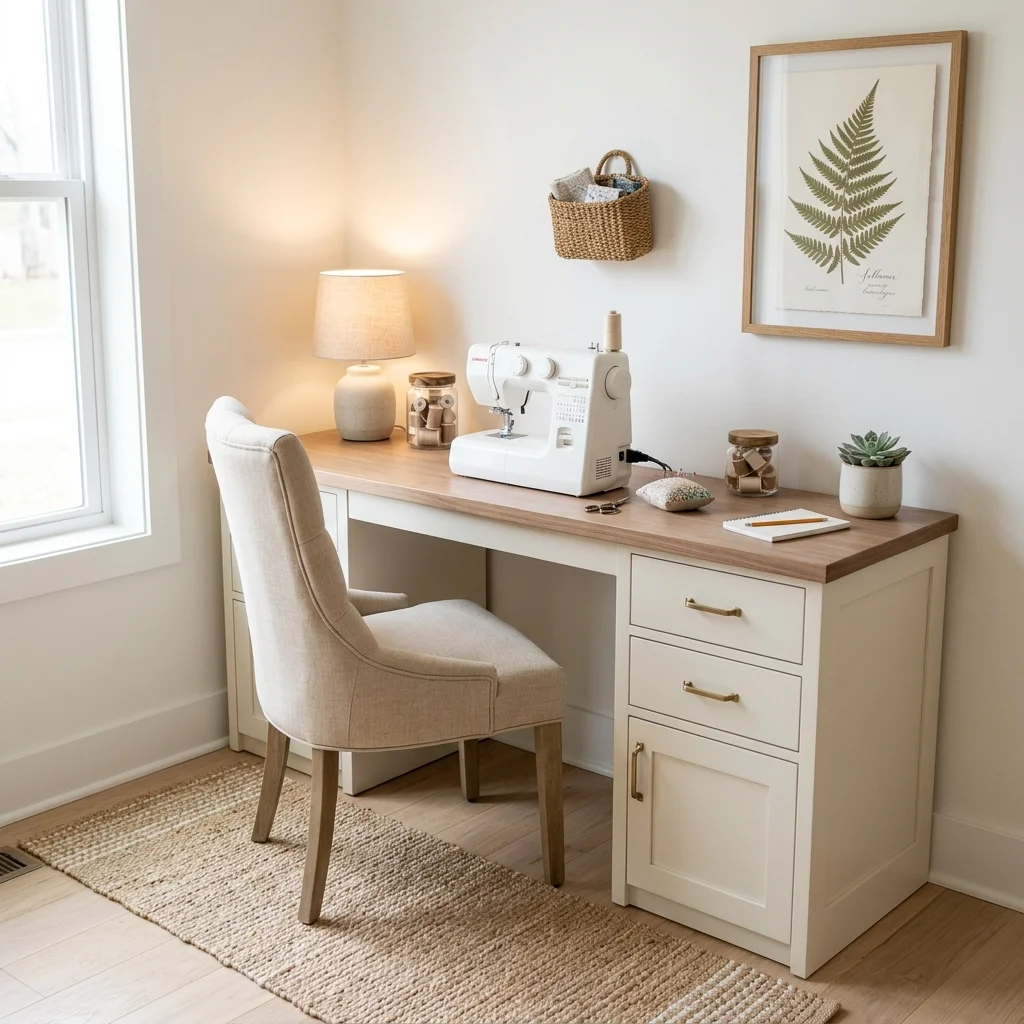
A dual-purpose console makes a sewing area feel naturally integrated into the home. Choose a slim table that can support your machine but still resemble everyday furniture when the project is packed away. Closed cabinets or drawers keep thread, fabric, and accessories hidden, while a warm wood surface adds character. This approach works especially well in guest rooms, living areas, or home offices where every piece needs to earn its space. I’ve noticed that furniture with a flexible role is easier to live with because the room can change function without looking permanently dedicated to crafting.
The beauty of a console setup is how quickly it can transition between uses. When sewing, keep the machine centered and use one side of the surface for tools or fabric. Afterward, store the equipment inside nearby cabinets and leave the tabletop available for decor, books, or everyday items. Choose finishes that already appear elsewhere in the room so the workstation feels intentional rather than added later. A comfortable chair, soft runner, and understated lamp can make the area inviting even when the machine is stored. The result is a polished workspace that adapts beautifully to real-life routines.
Conclusion
A thoughtfully designed sewing station can make every project feel more enjoyable, organized, and inspiring. From compact apartment desks to spacious islands, these sewing machine table ideas that elevate your workspace show how small design decisions can create a meaningful transformation.
Focus on what you actually need: comfortable height, useful storage, dependable lighting, and enough room to move fabric freely. Then add personal touches that make the space feel like yours.
I’ve seen how small changes like these can completely transform a workspace. Save your favorite ideas on Pinterest, try the setup that fits your room, and share this article with another sewing enthusiast ready for a workspace refresh.
Read More : 15 Sewing Corner Bedroom Ideas That Save Space Smartly