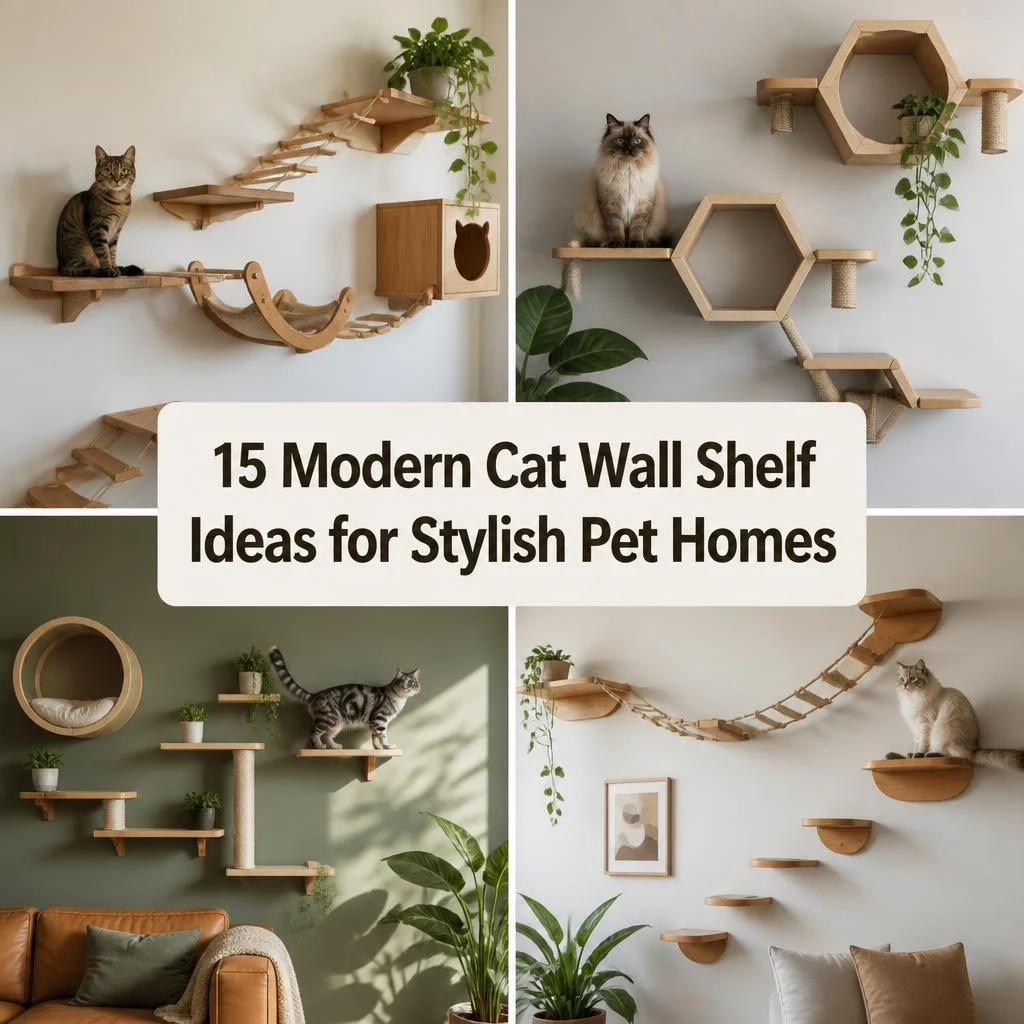
15 Modern Cat Wall Shelf Ideas for Stylish Pet Homes
Introduction
A blank wall can become your cat’s favorite place in the house with the right setup. Modern Cat Wall shelves designs offer a stylish way to add climbing, lounging, and enrichment without taking over valuable floor space. From floating wooden platforms and cozy hammocks to geometric ledges and built-in niches, these ideas make it easier to create a dedicated vertical space that complements your interior.
Whether you live in a compact apartment or a spacious home, the right arrangement can turn an unused wall into an attractive feature. You’ll discover practical layouts, modern materials, calming neutral palettes, and creative ways to combine comfort with contemporary decor. With thoughtful spacing and secure installation, your cat can enjoy a stimulating environment while your home stays organized, polished, and inviting.
Floating White Shelves
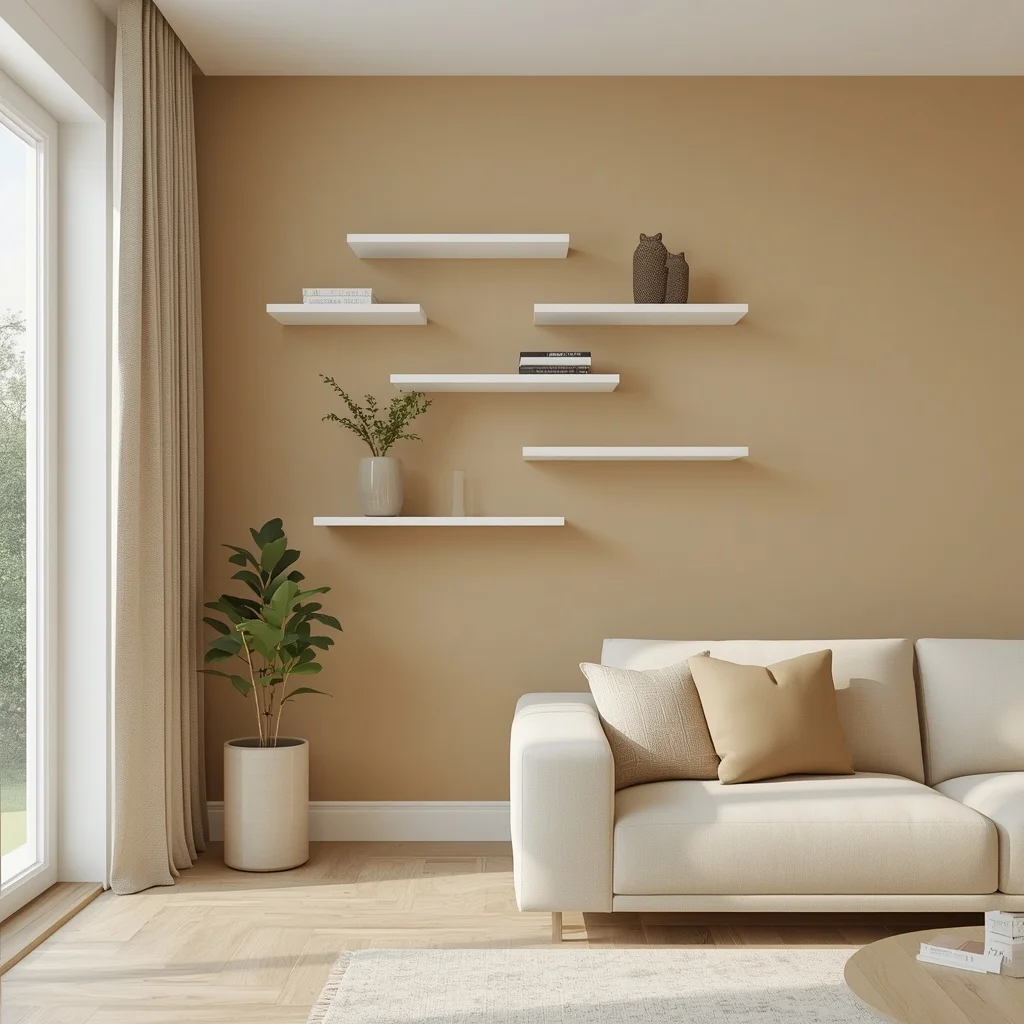
Bring a clean vertical rhythm to your cat’s favorite hangout with floating shelves in a simple, modern arrangement. Choose matte white, pale oak, or warm walnut boards with hidden brackets for a polished finish. Mount several shelves at staggered heights, leaving comfortable jumping space between them. A soft neutral wall keeps the setup airy, while a washable cushion adds comfort without visual clutter. In my experience, this style works especially well in smaller rooms because it gives cats usable territory without taking up valuable floor space or making the room feel crowded.
A sleek floating layout can turn an unused wall into an attractive climbing zone while keeping your furniture footprint small. Place the lowest shelf where your cat can reach it easily, then gradually increase the height to create a natural route upward. Add a small felt mat or removable cushion to each resting spot for warmth and traction. Keep edges smooth and shelves securely anchored into appropriate wall supports. The result feels more like intentional home decor than pet equipment, making it easy to blend with contemporary living rooms, bedrooms, or home offices.
Scandinavian Wood Platforms
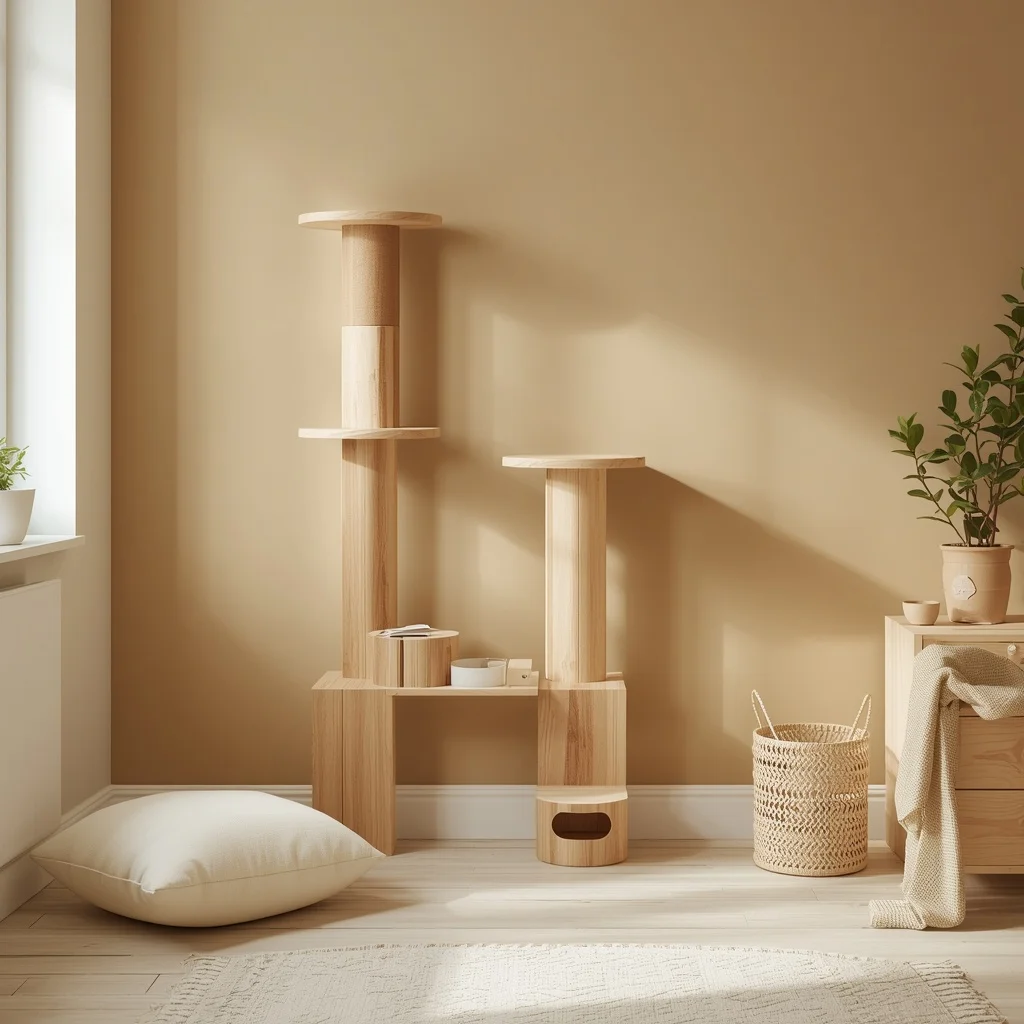
Create a cozy climbing corner by combining natural wood platforms with one or two compact wall-mounted cat steps. Light oak boards, cream cushions, and a warm beige wall create a soft Scandinavian palette that feels calm and inviting. Position the platforms beside a window for natural daylight, then add a small woven basket nearby for toys. Rounded edges and visible wood grain bring warmth to the minimalist arrangement. I’ve noticed that mixing open platforms with resting spots makes a wall feel more thoughtfully designed while giving cats different ways to move, perch, and relax throughout the day.
Natural materials can make a pet-friendly wall installation feel connected to the rest of your room instead of looking like a separate cat zone. Use matching wood tones if your furniture already has timber accents, or choose a lighter finish to keep the area visually fresh. Arrange platforms in an easy diagonal path so your cat can climb without awkward gaps. A nearby window perch can become the favorite destination, especially when sunlight reaches the surface. For everyday practicality, choose washable covers and sturdy finishes that can handle claws, jumping, and regular cleaning without losing their attractive appearance.
Geometric Perch Wall
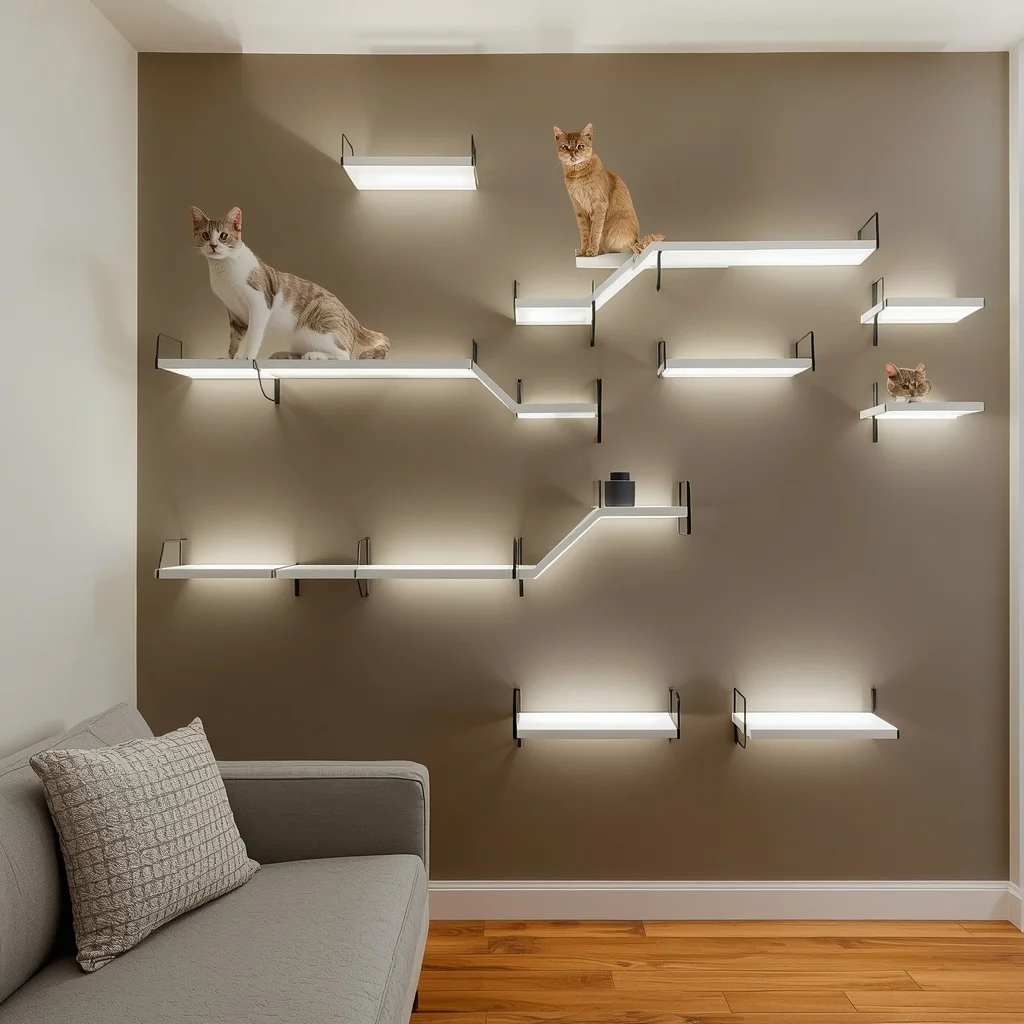
Make a modern statement with geometric shelves arranged like a balanced wall sculpture. Use black metal brackets, crisp white boards, and a muted gray or taupe background for a refined contemporary look. Mix rectangular platforms with one small hexagonal perch, keeping the overall composition open and symmetrical. Soft LED lighting or nearby daylight can highlight the shapes without overwhelming the space. Add a neutral cushion on the widest shelf for comfort. This arrangement is ideal when you want your cat’s climbing area to double as an intentional design feature that complements modern furniture and clean architectural lines.
Geometric shelving gives you a chance to make a practical cat setup feel like part of the room’s artwork. Start with two or three larger platforms, then add smaller levels to create visual movement without making the wall look busy. Keep enough open space around each piece so your cat can land comfortably and the shapes remain easy to see. I’ve seen this approach work particularly well in apartments where every wall needs to earn its space. Choose durable surfaces that wipe clean easily, especially on the lower levels where dust and fur tend to collect.
Black Accent Ledges
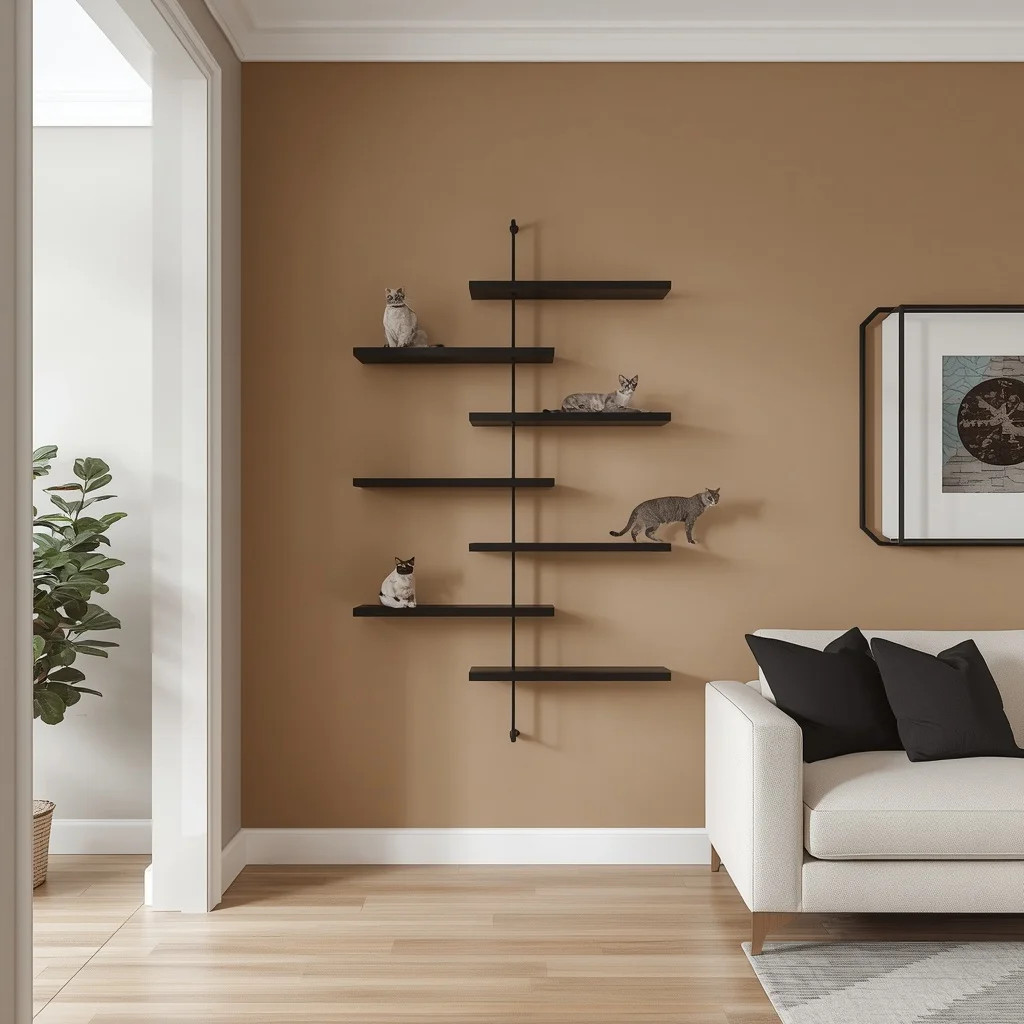
Give a plain wall a dramatic upgrade with slim black ledges arranged in a clean vertical pattern. The dark finish creates beautiful contrast against warm white, beige, or greige walls while complementing contemporary furniture. Add small neutral cushions to soften the look and keep each resting area comfortable. Instead of placing every ledge directly above another, shift them slightly to create an easy climbing route. This arrangement works particularly well when you want a pet-friendly feature that feels sophisticated, structured, and intentional rather than overly playful or visually distracting.
Black shelving can also help connect a cat wall with existing accents such as dark lighting fixtures, picture frames, cabinet handles, or furniture legs. Keep the surrounding decor restrained so the climbing structure remains visually clear. For a practical setup, choose ledges with enough depth for your cat to turn around and settle comfortably. Check every mounting point carefully before allowing jumping access. A washable fabric pad can add softness while protecting the surface from scratches. With thoughtful spacing and sturdy installation, a simple black arrangement can become one of the room’s strongest design details.
Built-In Cat Steps
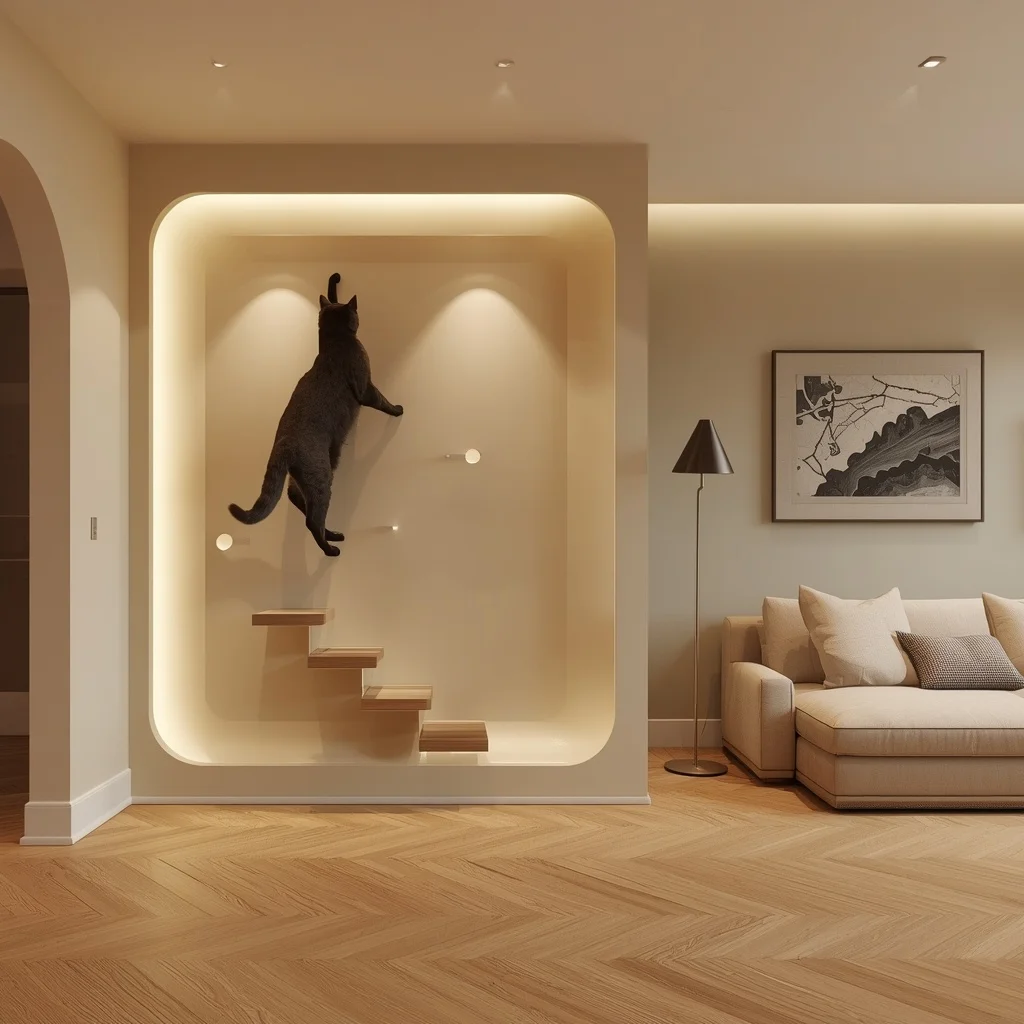
Turn an ordinary wall into a seamless climbing feature by incorporating cat steps directly into the design. Recessed cubbies, small wooden platforms, and compact ledges can create a staircase effect without adding bulky furniture. Paint the surrounding structure in the same shade as the wall for a built-in appearance, then introduce warm wood on the platforms for contrast. This approach looks especially polished in contemporary homes where clean architectural details matter. In my experience, integrated designs are also useful when you want the cat area to remain visually quiet while still offering several levels for exploration.
A built-in route can be planned around existing furniture, doorways, or unused wall sections, making it adaptable to different room layouts. Begin with a low platform and gradually work upward toward a favorite resting location, such as a window or high corner. Make each step stable and comfortably sized before adding decorative elements. Soft lighting can emphasize the structure after dark, while removable pads make the resting surfaces easier to maintain. The finished wall feels intentional and permanent, almost like custom cabinetry, while giving your cat a dedicated vertical environment that blends naturally into the home.
Window View Perches
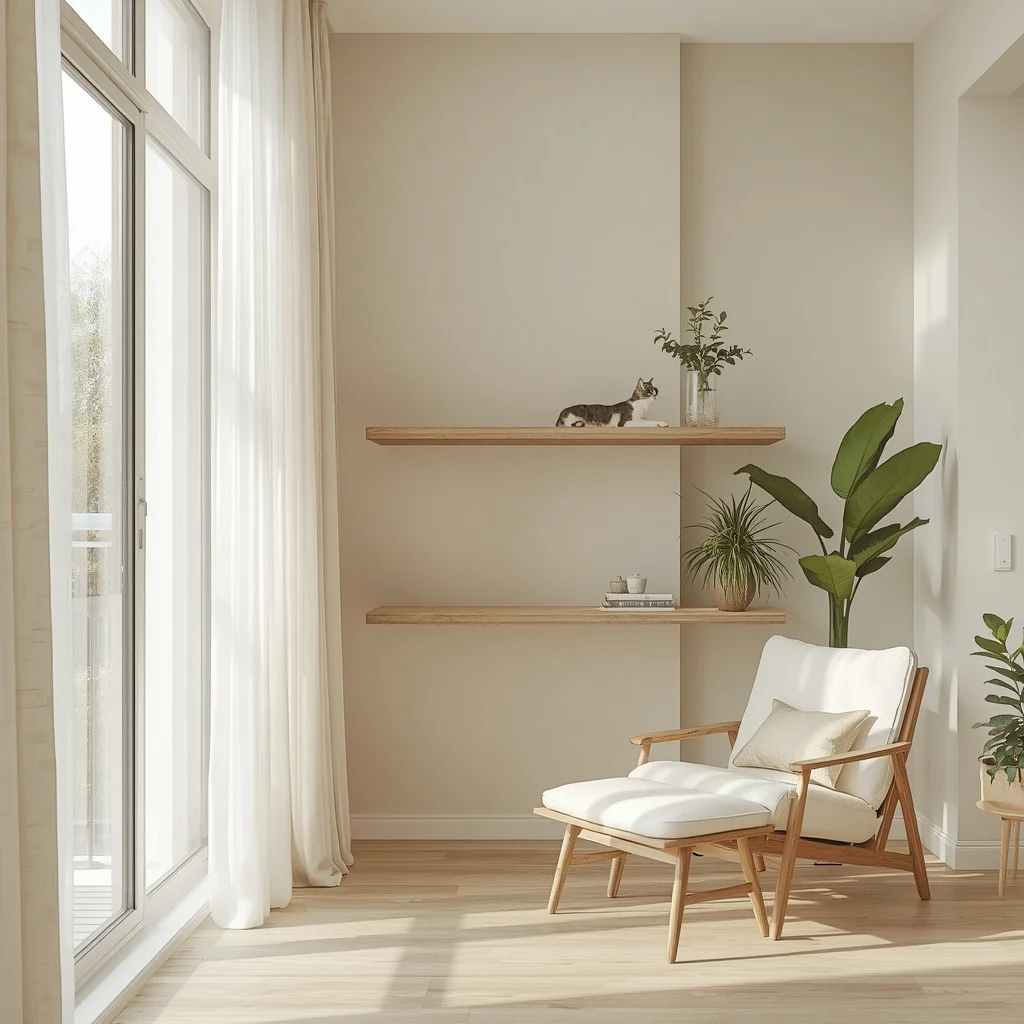
Create a dedicated lookout by positioning wide wall shelves beside a bright window. Cats naturally enjoy observing movement, sunlight, and outdoor activity, so a well-placed perch can become a favorite resting destination. Choose a broad wooden platform with a removable cushion, then add one or two smaller steps below it. Light oak works beautifully with cream walls and soft textiles, creating a warm contemporary appearance. Keep the surrounding area uncluttered so the window remains the visual focus. This simple arrangement combines enrichment with attractive decor, giving an unused section of wall a clear purpose.
A window perch becomes even more useful when it forms part of a complete climbing route rather than standing alone. Place lower shelves at comfortable intervals so your cat can reach the highest platform naturally. Check that curtains, blinds, cords, and nearby objects cannot interfere with jumping or become tangled. If direct sunlight makes the surface hot, choose a breathable washable cushion and provide another shaded resting option nearby. The combination of natural light, elevated space, and a clear view can make a small corner feel more stimulating while keeping the overall room calm, organized, and stylish.
Arched Wooden Shelves
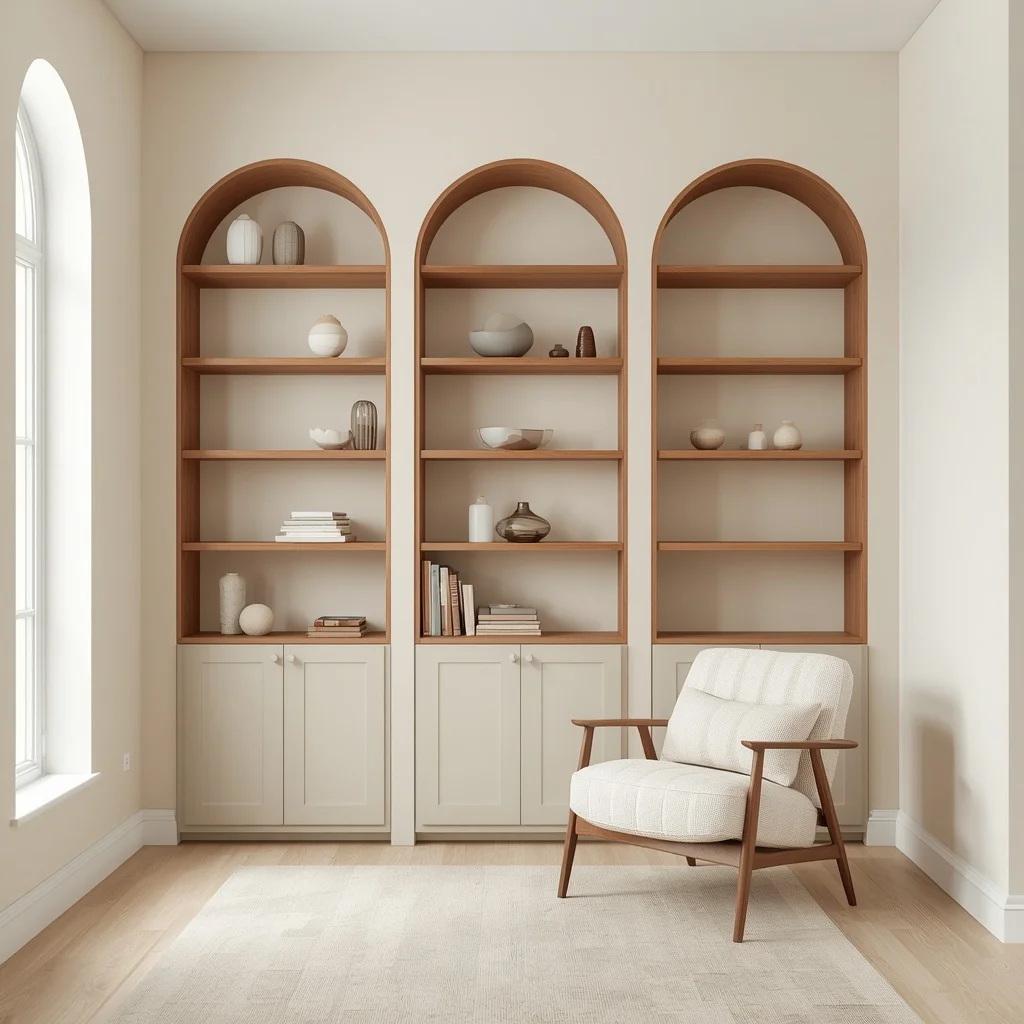
Soften a modern cat wall with graceful arched shelves that introduce curves into an otherwise structured room. Warm walnut or medium oak creates a welcoming contrast against ivory, cream, or light beige walls. Arrange the rounded platforms vertically with enough separation for comfortable movement, then place a soft cushion on the widest perch. The curved shapes pair especially well with contemporary furniture featuring rounded sofas, boucle chairs, or circular lighting. This design proves that functional pet furniture does not need sharp, industrial lines to look sophisticated and carefully coordinated with the surrounding interior.
Arched platforms can also make a narrow wall feel more decorative because the curved silhouettes create visual softness without requiring extra accessories. Choose shelves with sturdy construction and generous landing areas, particularly for larger cats that need more room to turn and settle. A combination of two wood tones can add dimension, but keeping the palette restrained usually produces a cleaner result. I’ve found that simple finishes are often easier to live with because fur and everyday marks can be cleaned quickly. Add removable fabric pads where your cat spends the most time resting.
Minimalist Gray Platforms
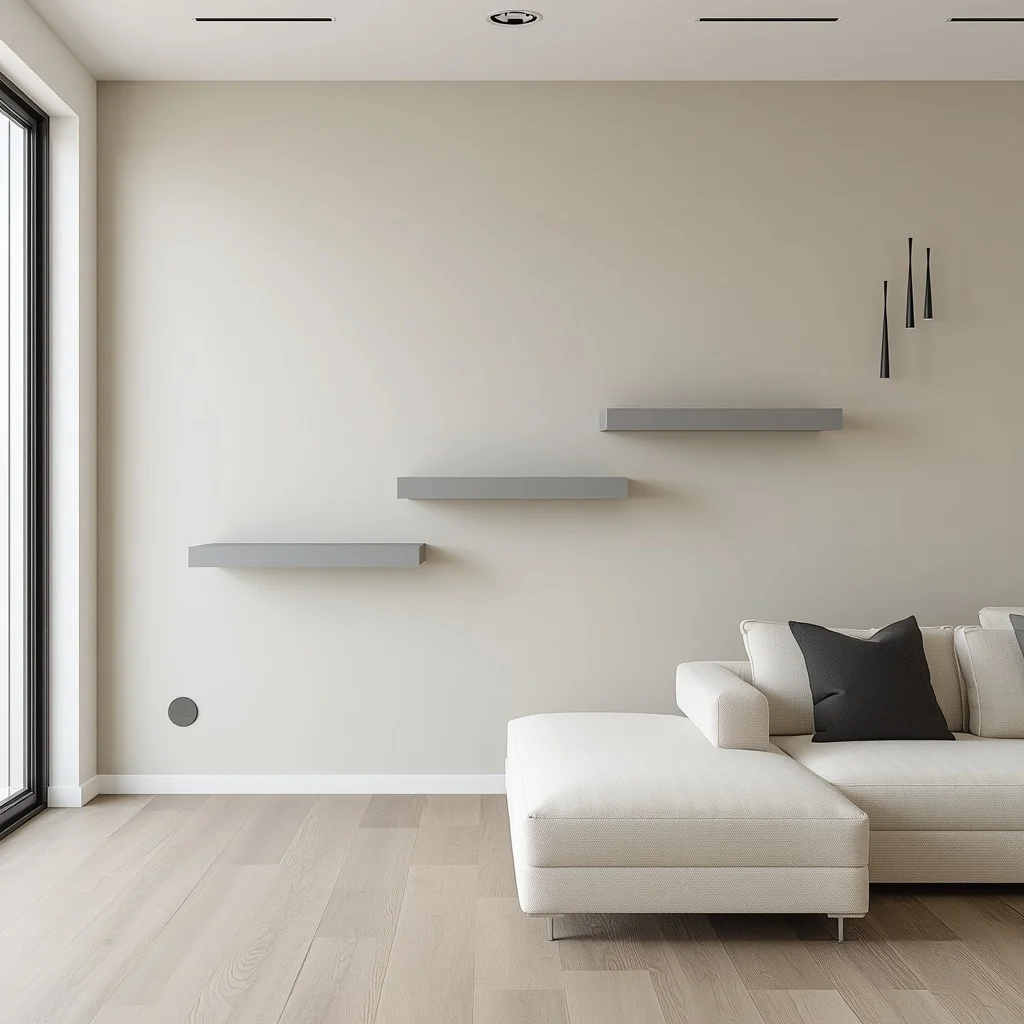
Keep things effortlessly modern with a series of minimalist gray platforms mounted against a soft neutral wall. Shades such as stone, charcoal, or warm gray work beautifully with cream upholstery, pale wood, and black accents. Use different platform widths to create visual variation while maintaining a consistent shape and finish. The restrained palette lets the architecture of the shelving speak for itself. This approach is particularly useful if you prefer pet accessories that disappear into the overall interior rather than becoming a colorful focal point. The result feels calm, polished, and easy to coordinate.
Minimalist design works best when every element has a clear purpose. Start with three or four platforms, then position them so your cat can move upward without making difficult jumps. Keep the largest surface toward the top or near a preferred resting area, giving your cat a comfortable place to settle after climbing. Choose sealed or laminate finishes that resist moisture and can be wiped clean. If the room already contains several textures, keep the shelves visually simple. A few thoughtfully placed platforms can provide plenty of enrichment without overwhelming a carefully styled modern space.
Cozy Fabric Hammock
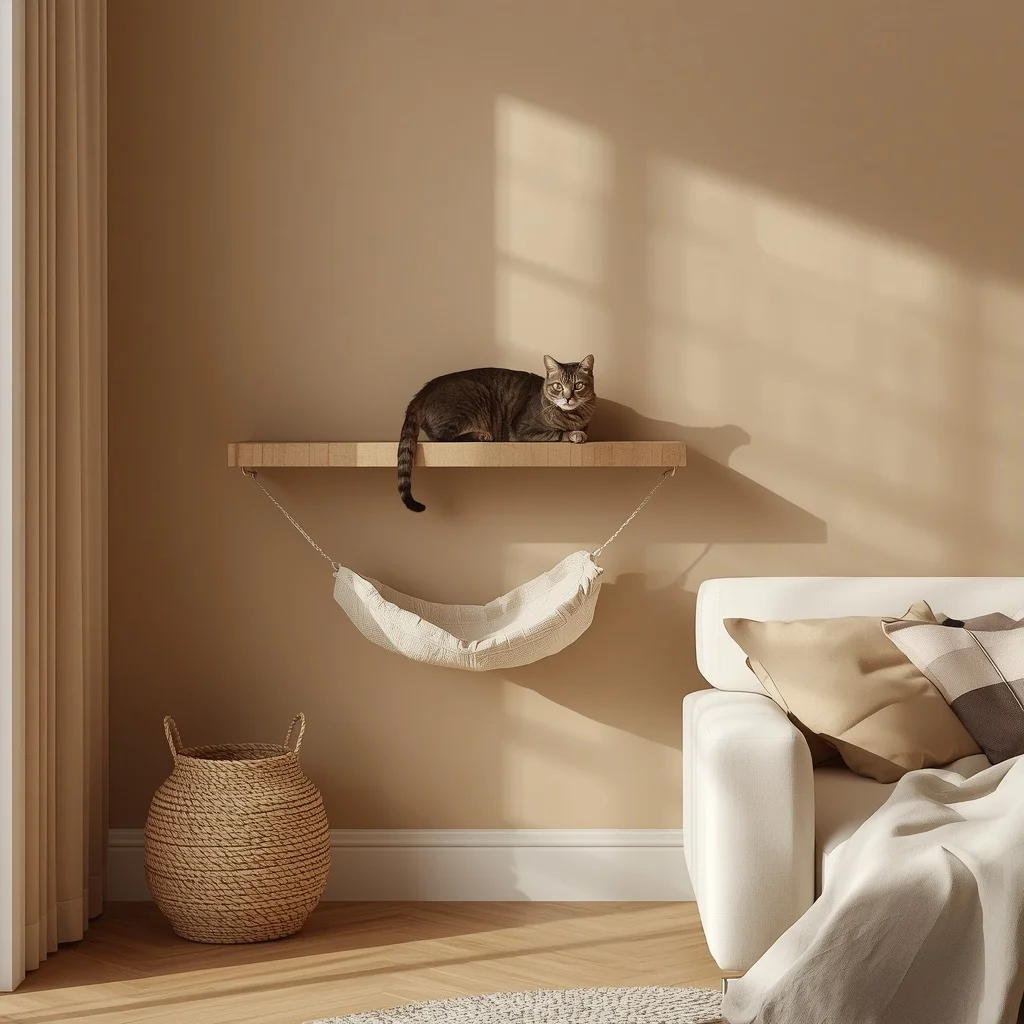
Add softness to a structured climbing wall with a fabric hammock suspended beneath a sturdy wooden platform. Neutral shades such as oatmeal, taupe, ivory, or muted gray keep the feature aligned with modern interiors while making the resting area look inviting. Position the hammock at a comfortable height where your cat can easily settle after climbing. Pair it with one or two solid shelves above or beside it to create variety. The contrast between firm wood and soft fabric gives the arrangement more texture, making a simple wall feel warmer and more thoughtfully designed.
A hammock can be especially appealing for cats that prefer curling up rather than stretching across a rigid shelf. Choose durable fabric with secure attachment points and enough support for your cat’s size. Removable covers are useful because they can be washed when fur or dust accumulates. Keep the hammock away from sharp corners, cords, and unstable decorative objects. For a cohesive look, repeat the fabric color elsewhere in the room through cushions, throws, or a small rug. That simple connection can make the cat wall feel like a natural extension of your existing decor rather than an added accessory.
Vertical Climbing Tower
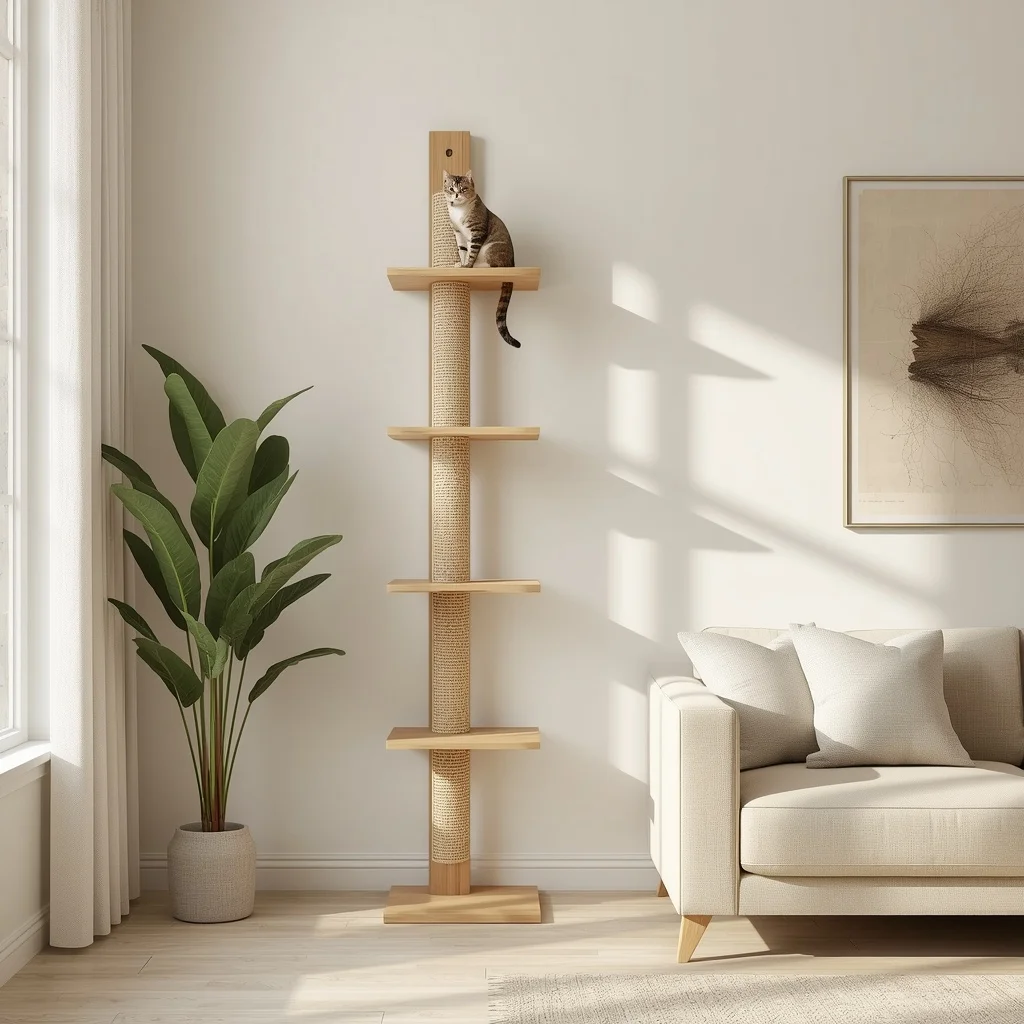
Turn an unused vertical wall into an active climbing zone with a slim tower of platforms, steps, and scratching surfaces. Natural oak paired with beige sisal creates a warm look that feels more like modern furniture than traditional pet equipment. Keep the structure narrow if floor space is limited, then vary platform sizes as the tower rises. A wider perch near the top can provide a comfortable destination after climbing. This setup is especially practical for apartments because it adds enrichment upward instead of consuming the limited floor area needed for walking, seating, and storage.
A vertical tower can also create a stronger sense of organization when its components follow one consistent material and color palette. Mount each level securely and check that the climbing path feels comfortable rather than forcing your cat into unusually large jumps. Adding a scratching section gives the structure another useful purpose, while a removable top cushion creates a dedicated resting point. Keep the lowest section accessible for inspection and cleaning. With thoughtful proportions, the tower becomes both a functional activity area and a striking architectural feature that draws the eye upward without making the room feel crowded.
Floating Box Niches
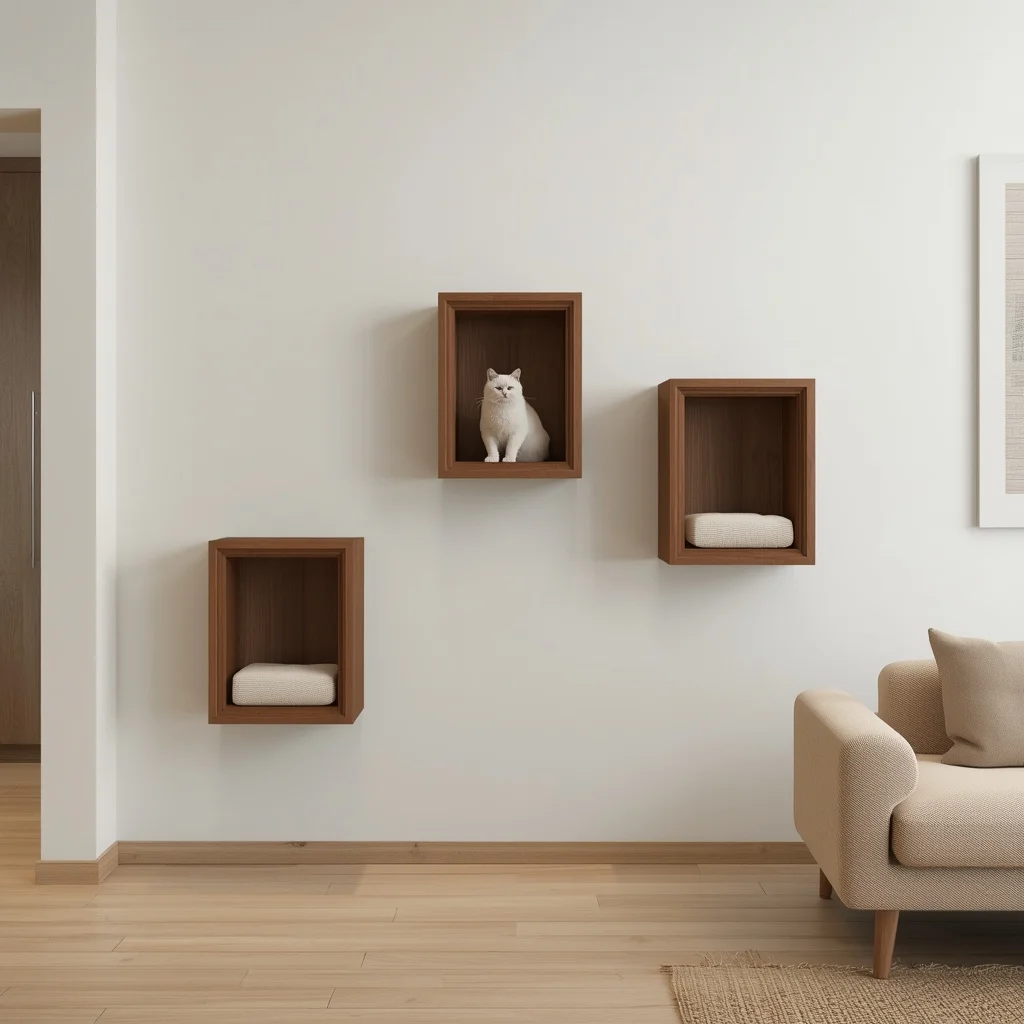
Create a more private retreat with floating box niches arranged at different heights. Open-front cubes made from walnut, oak, or painted MDF can give cats a sheltered place to rest while adding strong geometric interest to the wall. Mix two or three box sizes rather than repeating identical compartments for a more natural composition. Place a washable cushion inside the largest niche and leave another open for climbing through. This arrangement works particularly well for cats that enjoy hiding, observing quietly, and retreating from busy household activity without completely disappearing from view.
Box-style shelving can make a cat wall feel more substantial while still maintaining a clean modern appearance. Choose sturdy materials and reinforce every mounting point according to the wall type and expected load. Keep openings generously sized so your cat can enter, turn, and exit comfortably. A combination of open niches and flat platforms gives the wall more functional variety than enclosed boxes alone. To maintain a polished appearance, repeat the finish somewhere else in the room, such as a coffee table or shelving unit. The finished arrangement feels like custom storage designed specifically around your cat’s needs.
Two-Tone Climbing Grid
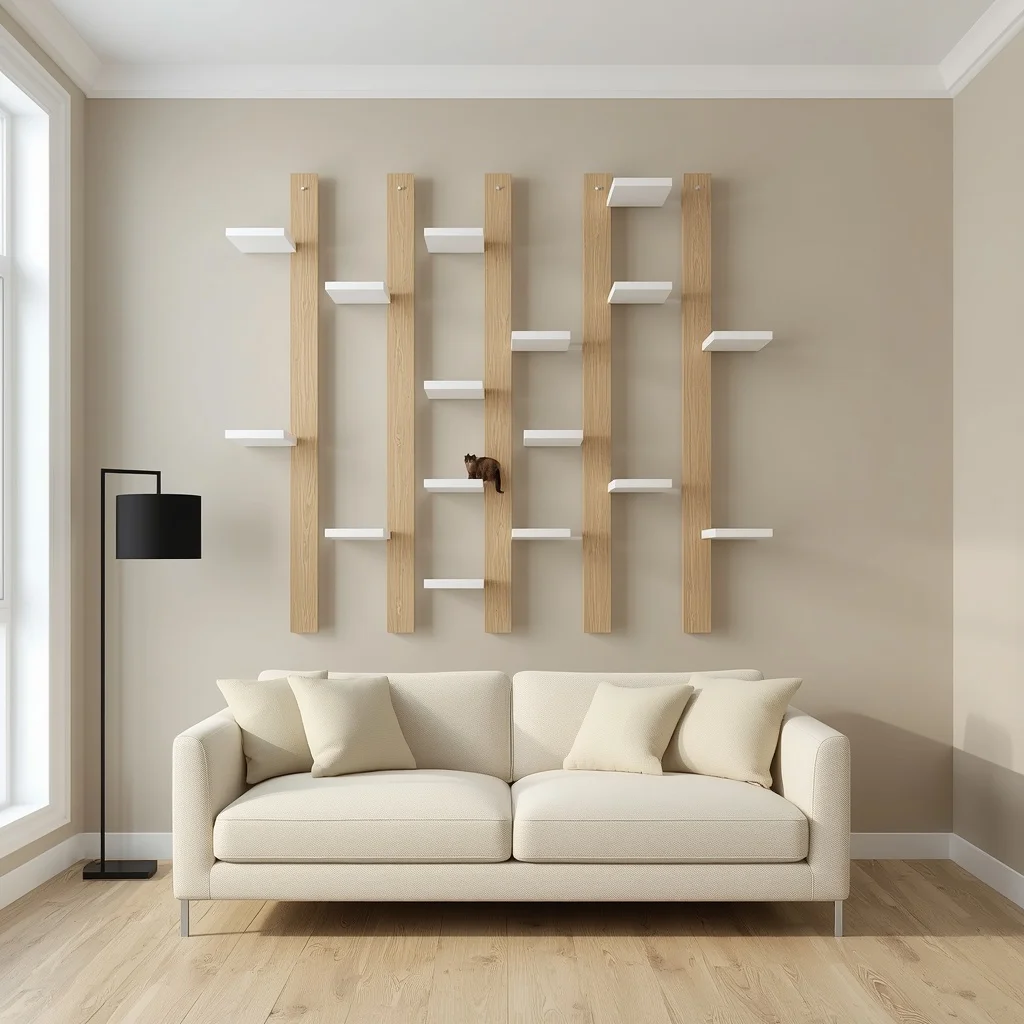
Bring structure and personality to a plain wall with a two-tone arrangement of white and natural wood platforms. Alternating finishes create subtle contrast while keeping the palette sophisticated and easy to coordinate with existing furniture. Arrange the shelves in a loose grid rather than making every gap perfectly identical, allowing the climbing route to feel natural while preserving an organized appearance. This design works beautifully above a low sofa or along an empty hallway wall where vertical space is available. The result feels contemporary, balanced, and intentionally designed rather than randomly assembled.
A two-tone grid is also a useful way to visually separate climbing levels from resting areas. For example, natural wood can identify wider lounging platforms while white shelves create smaller transition steps. Keep enough negative space around each piece so the wall remains breathable and your cat has clear landing zones. Secure every shelf carefully before introducing the full route. I’ve noticed that repeating the same two finishes elsewhere in a room can make a pet feature look surprisingly integrated. Even a small matching accent, such as a wood tray or white lamp, can visually connect the entire setup.
Corner Climbing Route
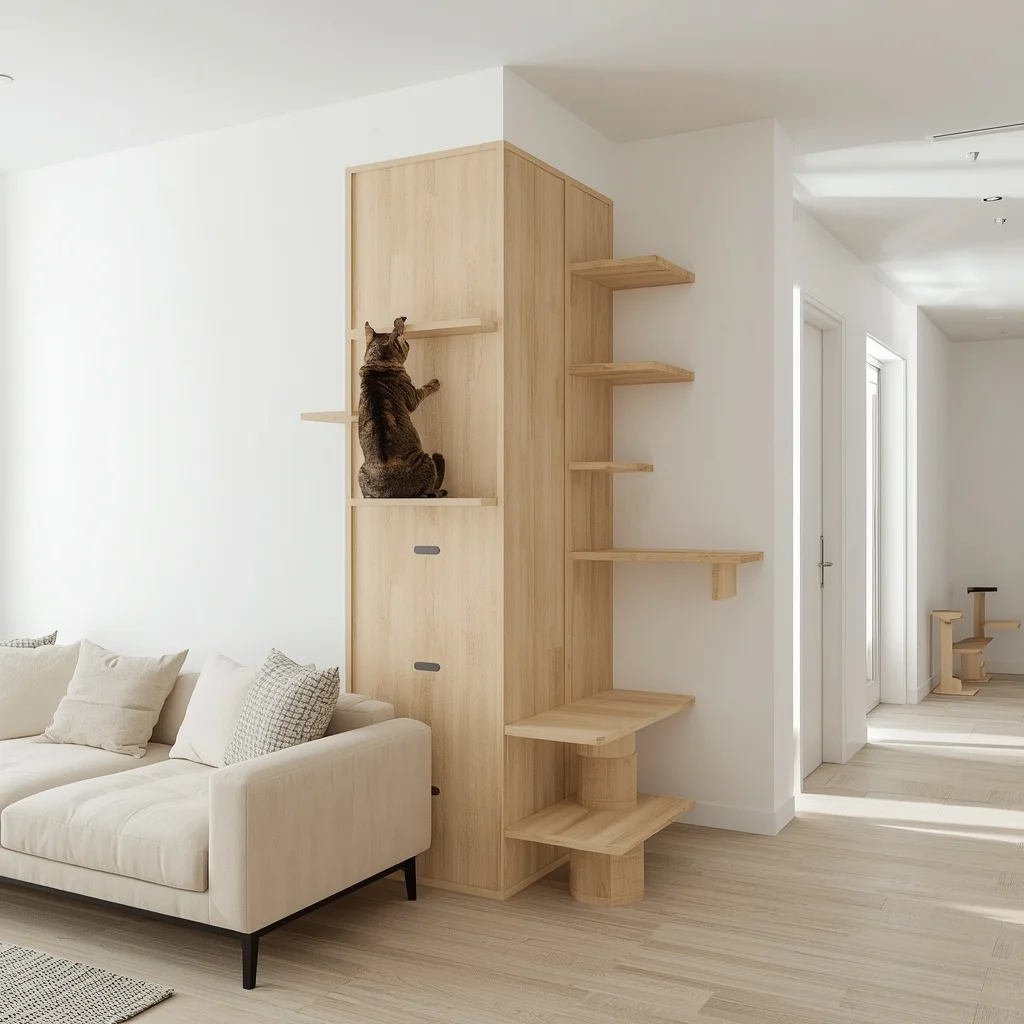
Make an overlooked corner useful by wrapping a series of shelves around two adjoining walls. This layout creates a natural climbing route while adding dimension to an otherwise empty area. Light oak or white platforms keep the installation visually clean, while a few soft cushions provide comfortable stopping points. Start on one wall with lower shelves, then continue the route around the corner at gradually increasing heights. The change in direction makes the setup more engaging for cats and gives the room a custom-designed appearance without requiring a large freestanding tower.
Corner routes are especially helpful when a straight wall is already occupied by furniture, windows, or artwork. Before mounting anything, map the climbing path with removable tape so you can check spacing from different angles. Keep the corner transition comfortable and avoid placing shelves where a jump could lead toward fragile objects. Matching the shelf finish to nearby furniture can make the installation feel intentional. For smaller rooms, this approach offers a smart balance between function and style because it uses vertical corner space while keeping the central floor area open and easy to navigate.
Luxe Marble Shelves
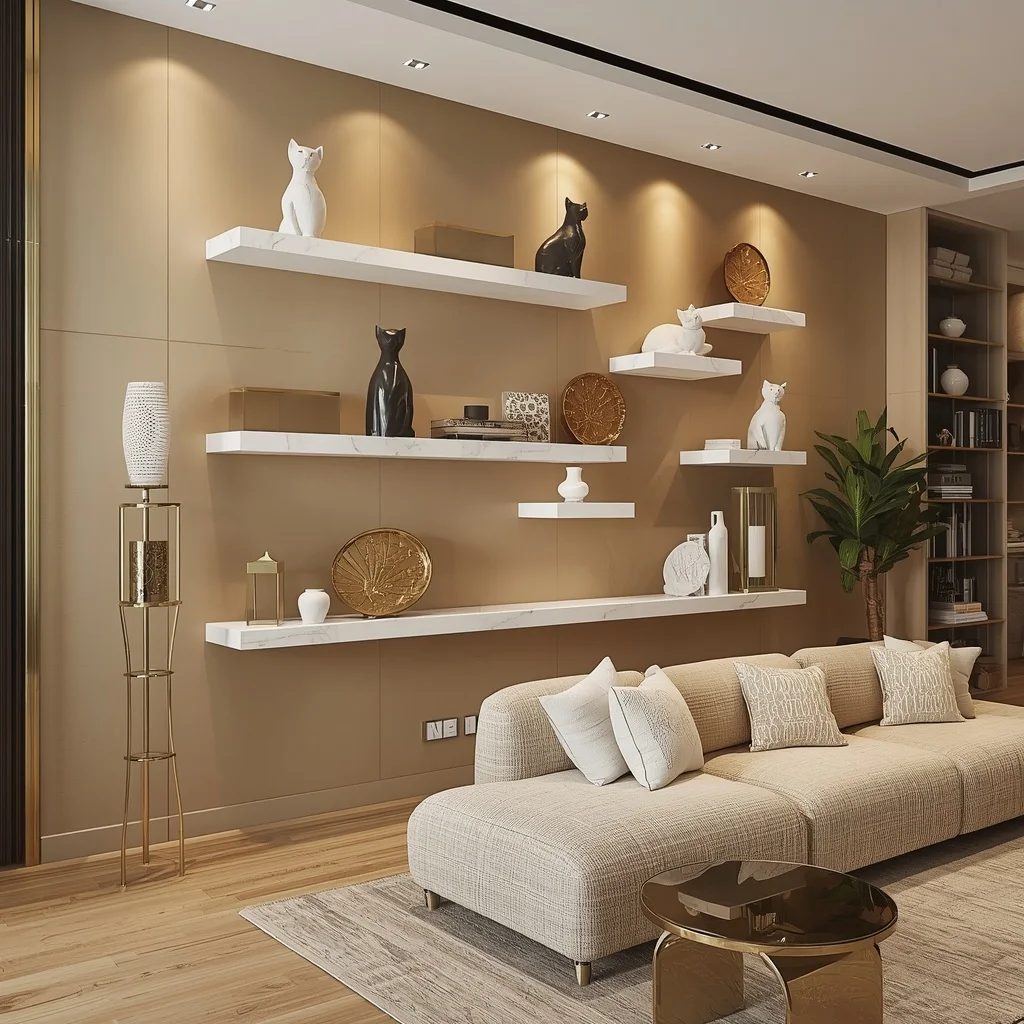
Give your cat wall a polished upgrade with marble-effect platforms paired with subtle brass or brushed-gold accents. A warm beige wall, cream boucle furniture, and pale wood flooring can soften the luxurious materials so the room still feels comfortable rather than overly formal. Use the marble finish selectively on wider resting platforms and keep smaller climbing steps simpler. This balance prevents the design from becoming visually heavy. The result is a sophisticated feature that can blend beautifully into upscale living rooms, bedrooms, or dressing areas where ordinary pet furniture might feel out of place.
Luxury-inspired materials should still be practical enough for everyday use. Choose durable, sealed surfaces that can be wiped clean easily, and avoid overly slippery finishes on jumping surfaces. Soft removable pads can provide additional traction and comfort without covering the decorative material completely. Keep metallic details minimal so they complement rather than compete with the shelves. A few matching brass accents elsewhere in the room can create continuity. When carefully balanced, marble-inspired textures and warm metals can transform a functional climbing area into a refined decor feature that feels deliberately integrated into the overall interior.
Multi-Level Cat Gallery
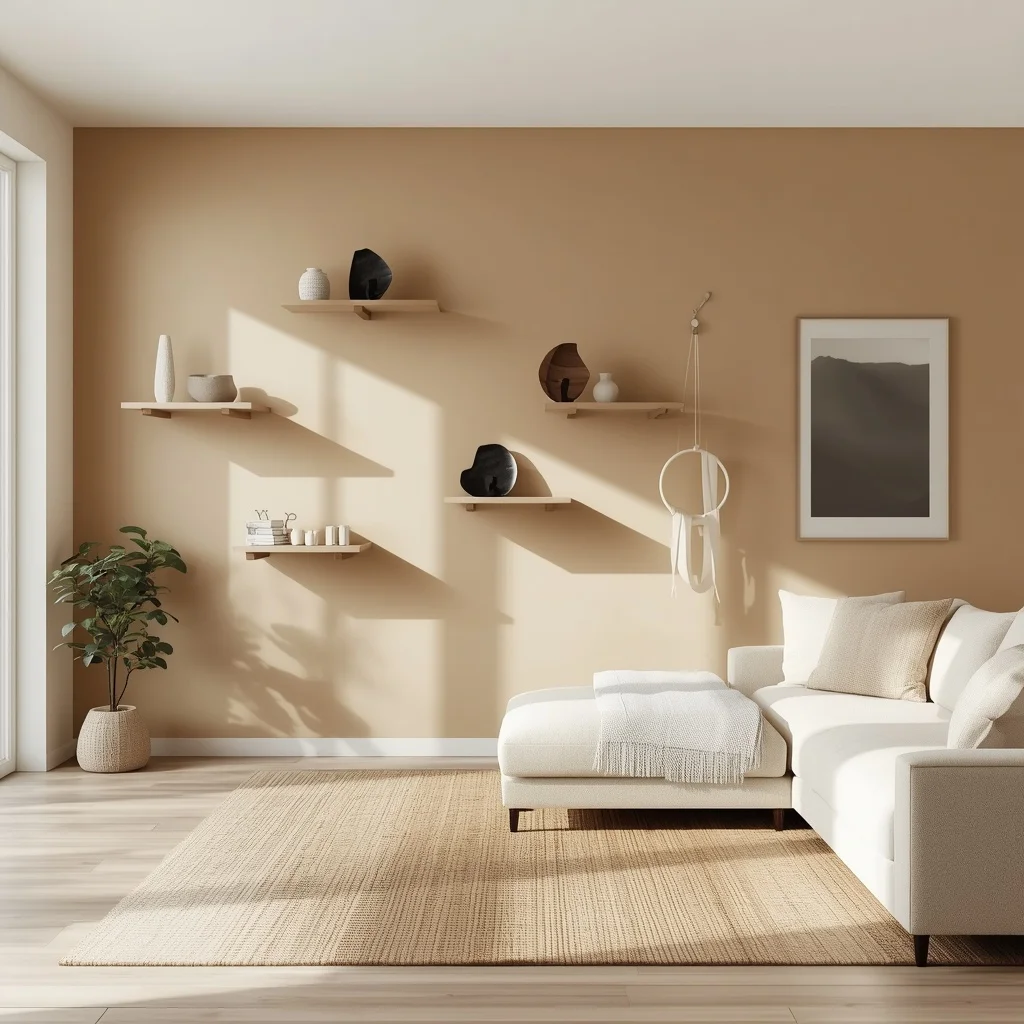
Bring all your favorite features together in a thoughtfully planned multi-level cat gallery. Combine floating platforms, a rounded perch, a small hammock, and a few climbing steps to create different experiences across one wall. Keep the materials consistent, such as natural oak with neutral fabrics, so the larger arrangement feels cohesive. Place wider resting areas near the top and smaller transition platforms below. This design works particularly well for multi-cat homes because different levels can provide separate lounging choices. It also turns a large blank wall into a functional centerpiece with genuine visual personality.
The key to a successful gallery wall is balance rather than simply adding as many pieces as possible. Sketch the arrangement first and leave clear routes between platforms, especially if more than one cat will use the space. Include surfaces for climbing, resting, observing, and scratching so the wall offers more than one type of enrichment. Secure every component appropriately for its location and expected use. Once installed, watch how your cats move through the setup and adjust removable cushions or accessories accordingly. A well-planned gallery can make vertical space feel purposeful, stylish, and genuinely useful.
Conclusion
A thoughtfully designed cat wall can do much more than give your pet somewhere to climb. It can transform an empty wall into a beautiful, functional part of your home while adding enrichment and comfortable resting spots. From minimalist platforms to layered gallery arrangements, modern cat wall shelves designs offer plenty of ways to match your personal decorating style.
Choose materials that suit your room, plan a safe climbing route, and focus on surfaces your cat will genuinely enjoy using. Save your favorite ideas on Pinterest, try the layout that best fits your space, and share these inspirations with another cat lover. Small design changes can make a surprisingly big difference.
Read More: