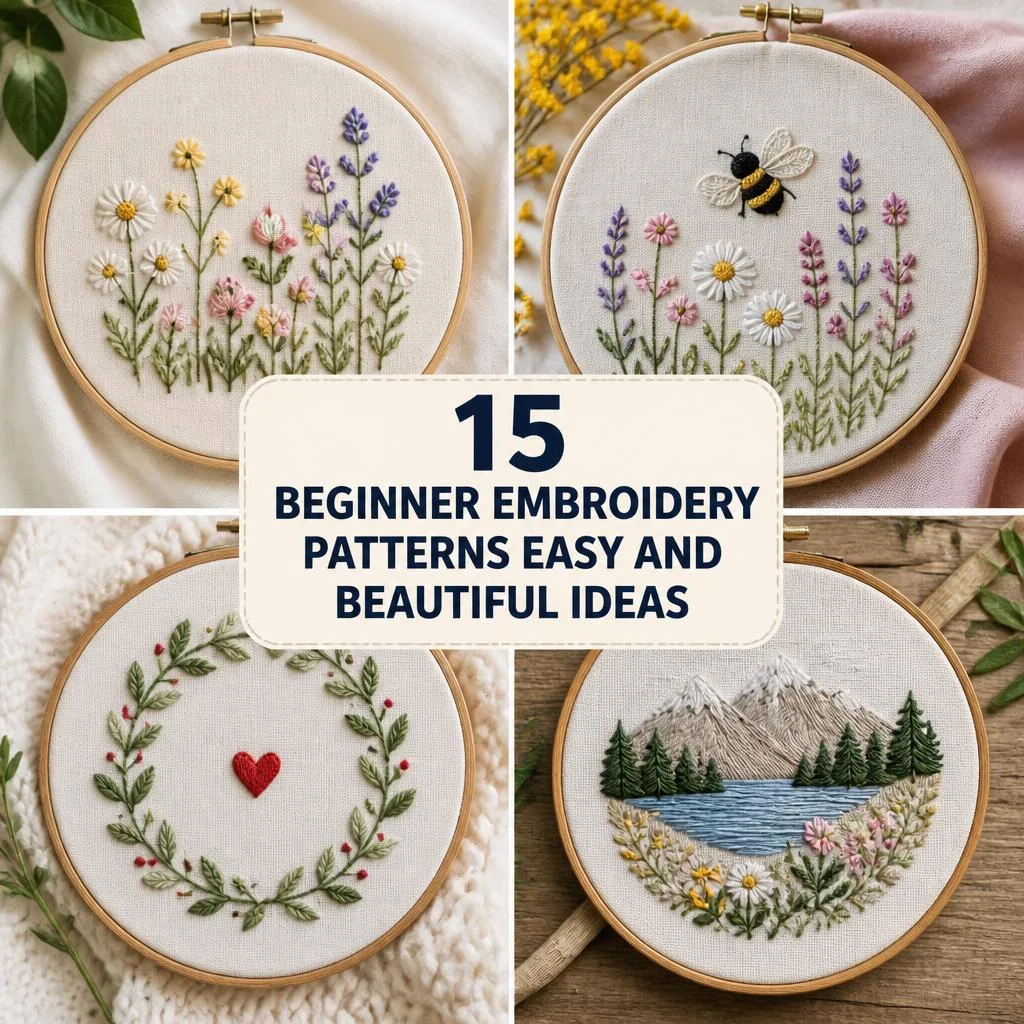
15 Beginner Embroidery Patterns Easy and Beautiful Ideas
Introduction
Want to create something beautiful with just fabric, thread, and a little patience? These beginner embroidery patterns make it easy to start stitching without feeling overwhelmed.
From delicate flowers and leafy branches to cheerful strawberries, cozy coffee cups, and dreamy moons, these ideas offer something for every style. Each project uses approachable shapes and practical design choices, making them suitable for a first hoop or a relaxing weekend craft. You’ll also find inspiration for choosing colors, arranging motifs, and displaying finished pieces around your home.
I’ve noticed that the best beginner projects are not necessarily the simplest-looking ones. They are designs that make it easy to see progress while leaving room for personal touches. Whether you want a small handmade decoration, a thoughtful gift, or a new creative hobby, these ideas can help you start stitching with confidence.
Floral Hoop Starter
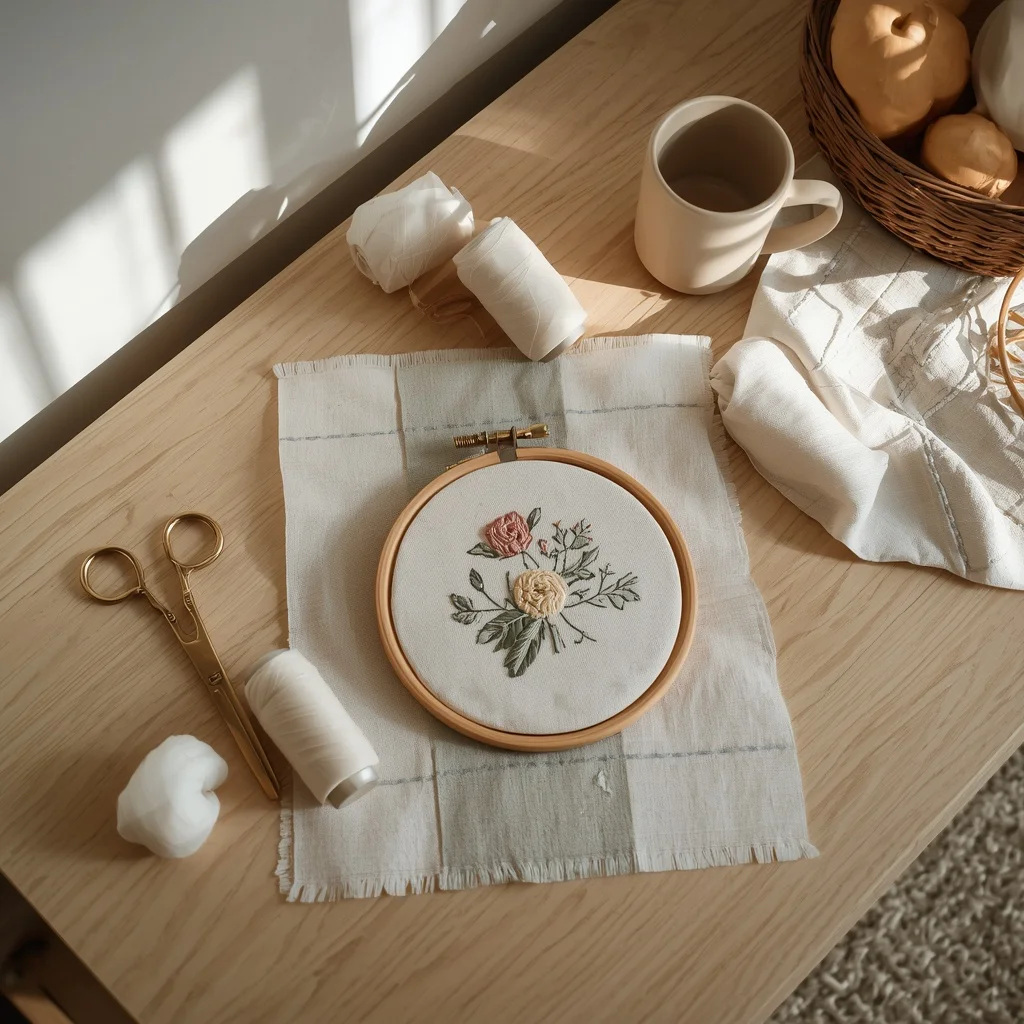
A simple floral hoop makes a lovely first project because the design feels decorative without demanding advanced stitching skills. Small petals, leaves, and stems can be built from familiar stitches, so beginners can focus on steady thread tension and neat placement. The finished hoop also gives you an immediate sense of progress. In my experience, soft botanical motifs are especially forgiving because tiny inconsistencies can look like natural variation. Once complete, the piece can brighten a shelf, bedside table, craft corner, or gallery wall without needing an expensive frame or complicated finishing process.
The beauty of this setup is how easily it fits into everyday decorating. A pale linen background keeps the embroidery airy, while muted thread colors add interest without overwhelming nearby furniture or artwork. Try placing the hoop beside a small vase, stacked books, or a woven basket to create a relaxed handmade vignette. If you prefer a bolder result, deepen one flower color and repeat that shade elsewhere in the room. This small project can also become a thoughtful handmade gift, especially when the palette is chosen to match someone’s home.
Rainbow Thread Art
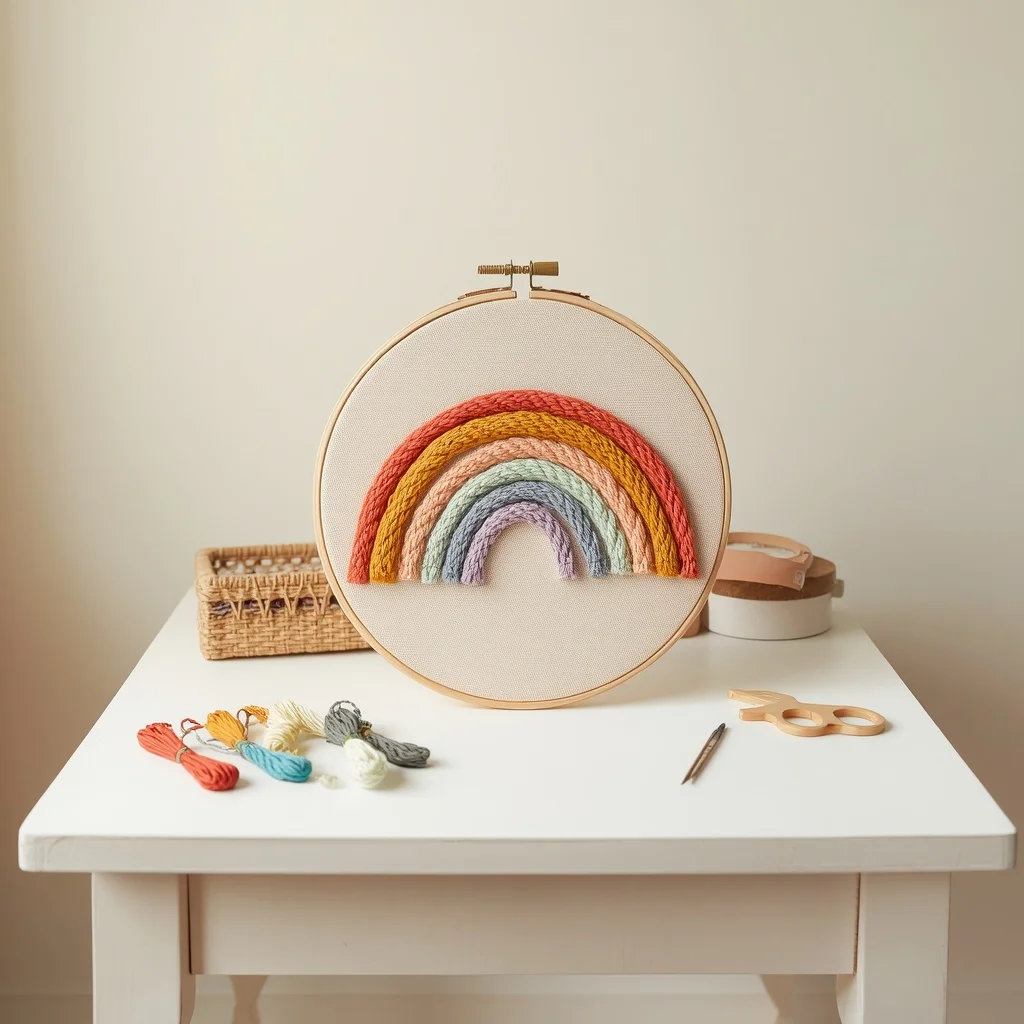
A rainbow design brings instant color to a beginner project while keeping the shapes wonderfully uncomplicated. Curved bands are easy to sketch, and repeated lines help new stitchers practice consistent spacing without juggling many complicated details. The finished piece works beautifully in a craft room, nursery, reading nook, or cheerful office corner. I’ve noticed that repeating colors in nearby accessories makes handmade art feel intentionally connected to the room. Choose three to six shades, depending on your style, and let the background fabric provide enough quiet space around the design.
A bright hoop can transform an otherwise plain wall into a small focal point without making the room feel crowded. Hang it above a narrow shelf, pinboard, or compact desk where the colors can echo stationery, cushions, or artwork nearby. For a softer look, replace vivid rainbow shades with dusty pastels and natural wood. For a playful display, arrange two or three hoops at different heights. The project is also useful for learning how thread color changes visual weight, giving beginners a simple way to experiment with contrast, balance, and personal style.
Leaf Border Hoop
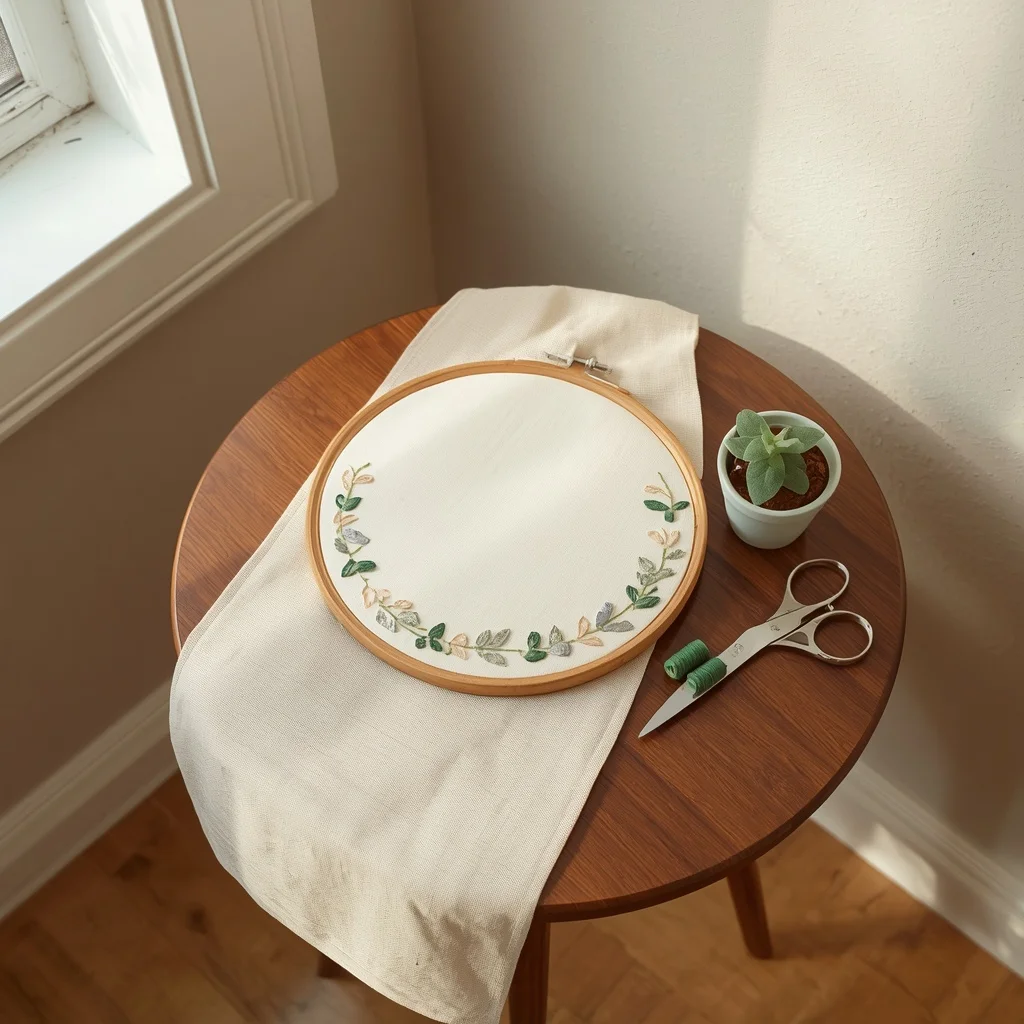
A leafy border is a smart choice when you want something elegant without drawing a complicated pattern. Repeating one or two leaf shapes creates rhythm, while small changes in size keep the design from looking mechanical. The open center also makes the hoop feel light and modern, which suits bedrooms, entryways, and quiet workspaces. That balance is useful for beginners because there is room to practice stitches without filling every inch of fabric. A restrained palette of greens and neutrals can also blend naturally with wood, linen, rattan, and other relaxed materials.
This idea works particularly well when a room needs decoration that feels finished but not overly colorful. Place the hoop near a plant, woven basket, or wooden shelf to reinforce the botanical theme through texture rather than matching everything exactly. If your stitching is still developing, keep the border slightly irregular; handmade variation can add warmth and character. For a more polished arrangement, make two hoops using the same leaf family but different border shapes. The result feels coordinated while still giving each piece enough individuality to remain interesting and beautiful.
Tiny Mushroom Hoop
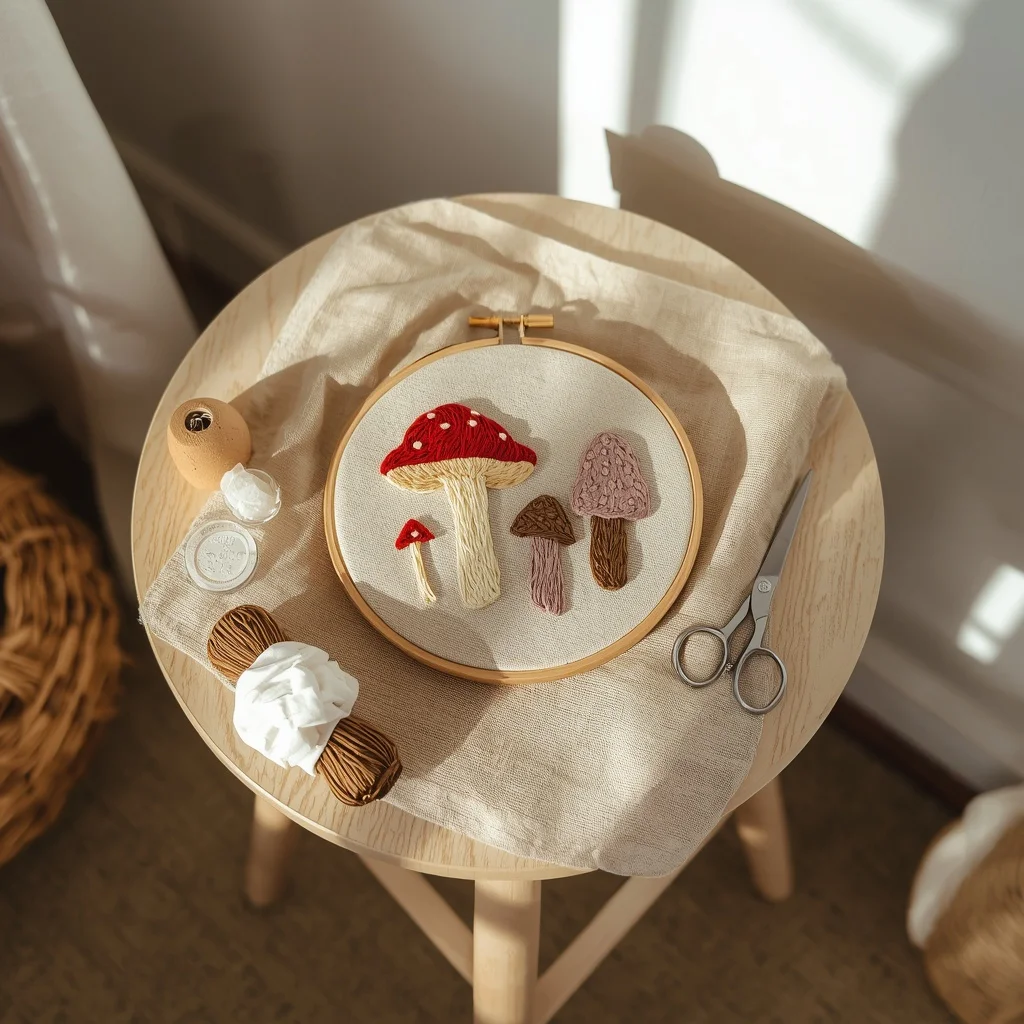
A tiny mushroom design adds personality without requiring a complicated pattern. The rounded caps, short stems, and simple decorative dots give beginners several easy shapes to practice while creating something that feels playful and finished. This kind of small motif is especially useful when you want to complete a project quickly rather than committing to a large hoop. In my experience, compact designs can also make stitching feel less intimidating because you can clearly see progress after every few stitches. A natural linen background keeps the finished piece relaxed and handmade.
The woodland-inspired look works beautifully with cozy interiors, especially when paired with warm wood, woven baskets, dried flowers, or neutral textiles. Try hanging the hoop above a small shelf or placing it beside books and plants for a collected craft-room feel. You can also change the palette to suit your space: terracotta and mustard create warmth, while sage and dusty pink make the design softer. Because the motif is small, it is easy to personalize with initials, tiny stars, or extra leaves. That flexibility makes the project ideal for experimenting with your own decorative style.
Simple Sun Motif
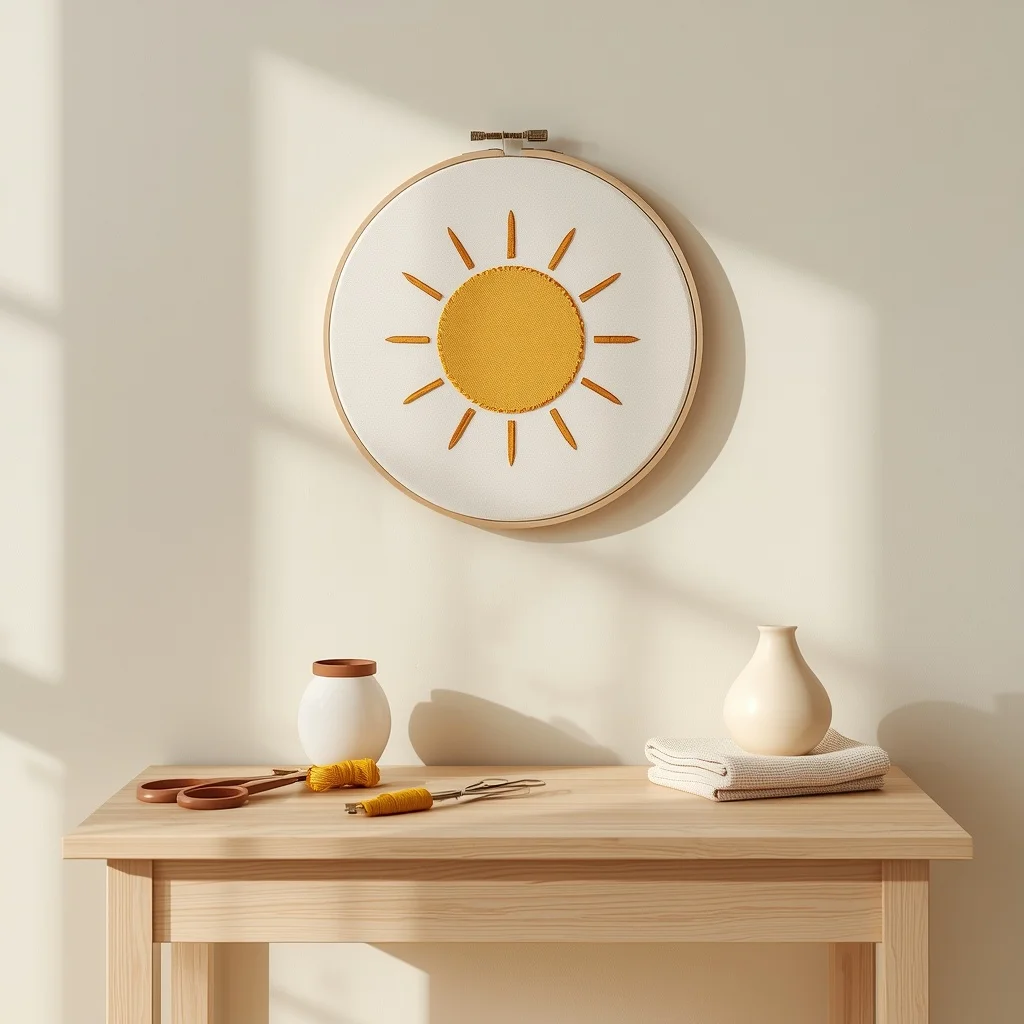
A simple sun motif is one of those projects that looks more detailed than it actually is. A circular center and repeated rays create a recognizable shape, while straight or slightly curved stitches give beginners plenty of practice. The design can be scaled from a tiny accent to a larger statement hoop without changing its basic structure. I’ve seen this type of motif work especially well for first projects because the repeated elements help build stitching confidence. Even spacing matters more than perfection, so small variations usually remain visually pleasing.
The finished hoop brings warmth to spaces that feel plain or visually cool. Hang it above a desk, bedside table, or reading chair where the golden thread can catch daylight and create a cheerful accent. For a minimalist room, use one shade of yellow against cream fabric. If you prefer more contrast, add orange, rust, or muted brown details. A small collection of sun-themed hoops can also create a relaxed gallery arrangement. The design feels decorative enough for everyday display while remaining simple enough to complete during a quiet afternoon of crafting.
Monogrammed Floral Hoop
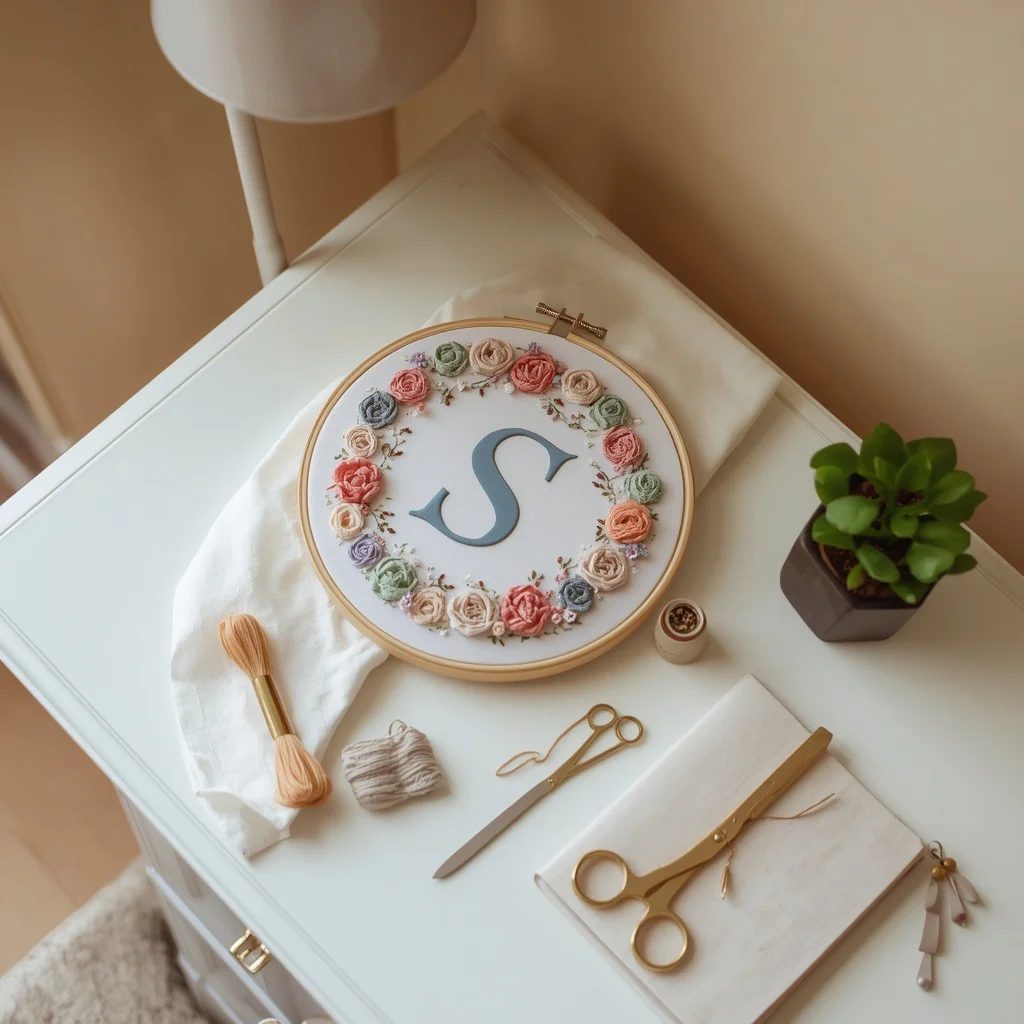
A personalized monogram turns a straightforward embroidery project into something that feels genuinely special. The large initial provides a clear focal point, while small flowers soften the lettering and create a balanced composition. Beginners can work with basic outlines, simple petals, and small leaves instead of attempting highly detailed illustrations. This makes the project practical for gifts, nursery décor, bedrooms, or home offices. One useful approach is to sketch the letter first and place the decorative elements afterward. That keeps the central shape readable and prevents the surrounding flowers from becoming visually crowded.
The personalization is what makes this design especially versatile. Choose colors that complement the room rather than simply matching every accessory, and the finished hoop can look intentional rather than overly themed. A pale blue letter works beautifully with blush and cream flowers, while deeper green or terracotta can create a more grounded appearance. Display the finished piece on a small picture ledge, shelf, or wall hook. For gifting, consider the recipient’s initials and favorite palette. The result feels thoughtful, useful, and handmade without requiring advanced embroidery techniques.
Mountain Landscape
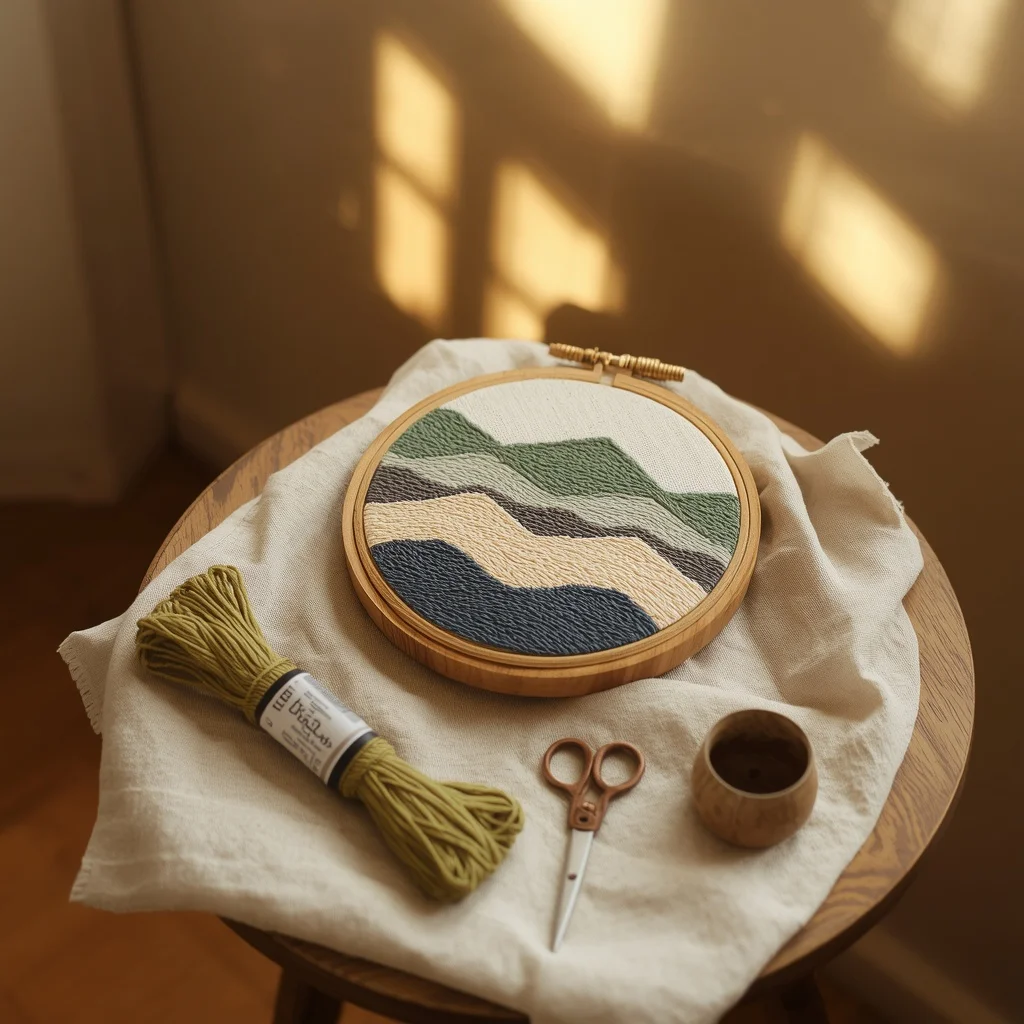
A small mountain landscape gives beginners a chance to create scenery without drawing every tiny detail. Simple peaks, overlapping hills, and a few trees can establish depth with only basic stitches. The design feels artistic while remaining manageable, making it a good choice when you want to move beyond flowers and geometric motifs. In my experience, landscape embroidery becomes easier when you treat each section like a simple shape rather than trying to recreate a photograph. Natural linen and earthy thread colors also help small stitching imperfections blend naturally into the overall handmade look.
This design brings a quiet outdoor feeling into rooms that benefit from a little visual calm. Place the hoop near books, plants, travel souvenirs, or natural wood accessories to create a relaxed display. A muted blue sky can make the piece feel airy, while sage and brown create a warmer woodland effect. You can also personalize the landscape with a small moon, sun, cabin, or winding path. Because the basic composition is so flexible, one pattern can inspire several variations. Displaying two different landscapes together can create a cohesive handmade collection without making the wall feel repetitive.
Geometric Flower
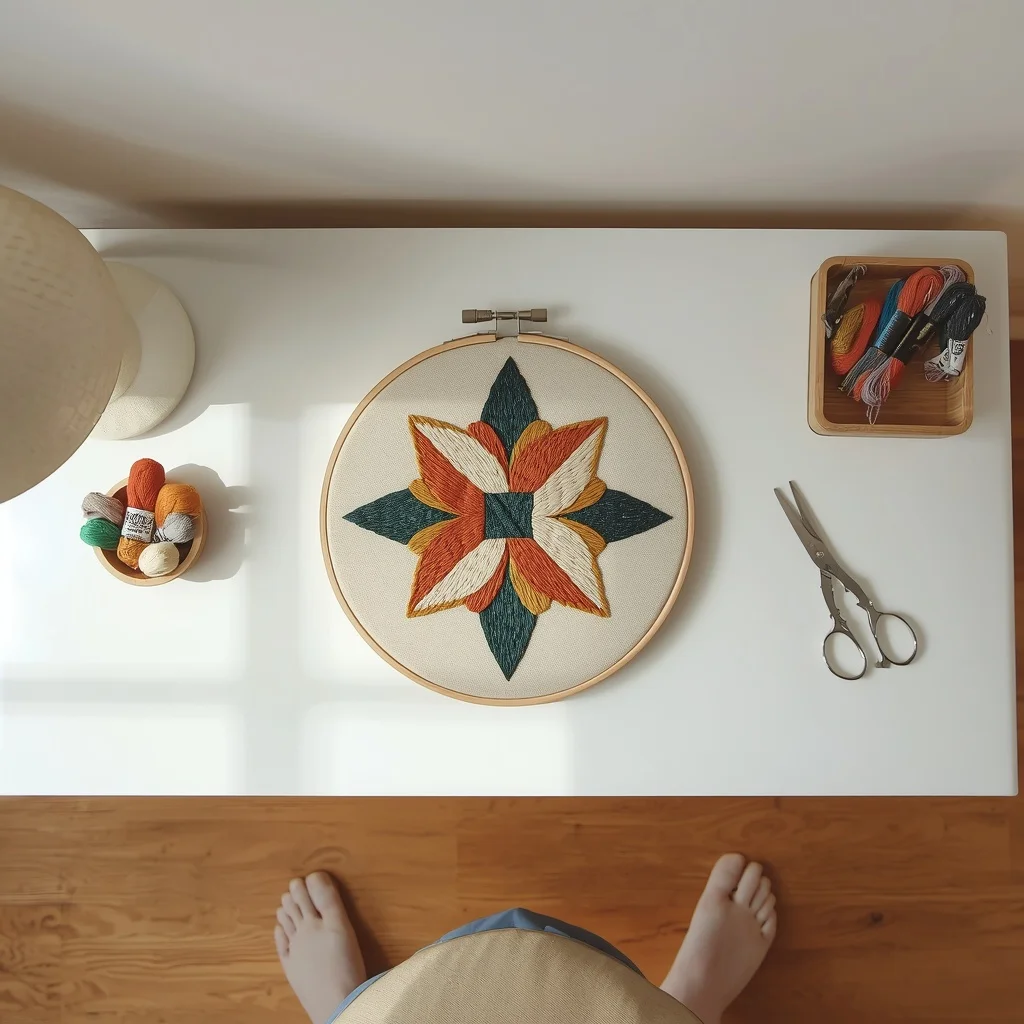
A geometric flower combines the softness of botanical embroidery with the clean structure of repeated shapes. Beginners can create the design by dividing the flower into simple sections and repeating the same stitch around the center. This repetition makes the project easier to plan while still producing a striking finished piece. If perfect symmetry feels difficult, lightly mark guide points on the fabric before starting. I’ve found that a limited palette also makes geometric designs look more polished, because the strong shapes already provide plenty of visual interest without needing many colors.
The finished hoop can add a modern handmade accent to spaces that use clean lines and simple décor. Try placing it above a minimalist desk, beside framed prints, or on a floating shelf with ceramic objects. Terracotta and mustard create warmth, while sage and cream keep the composition softer. For an even more contemporary look, use only two contrasting thread colors. The design can also be repeated in different sizes to create a coordinated wall arrangement. Because the pattern relies on structure rather than intricate details, it offers beginners a practical introduction to spacing and visual balance.
Cozy Coffee Cup
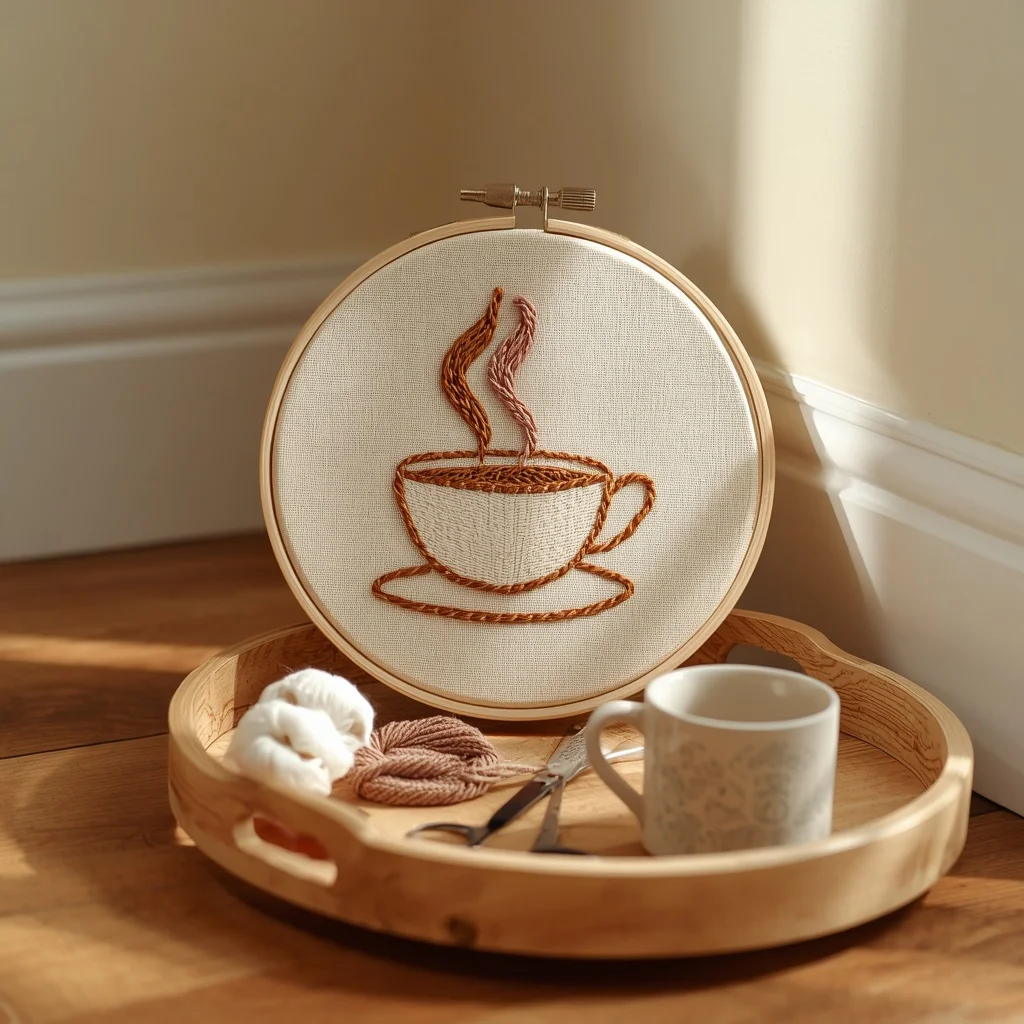
A coffee cup motif is a friendly project for anyone who wants something recognizable, useful, and quick to finish. The basic shape can be outlined with simple stitches, while the steam provides an easy opportunity to practice curved lines. Small details such as a heart or leaf can be added after the main cup is complete. This makes the project flexible for different skill levels. In my experience, familiar everyday objects can be particularly satisfying to embroider because the finished design immediately feels personal. Warm thread colors also make the hoop look inviting before it even reaches the wall.
This little design works beautifully in kitchens, breakfast corners, home offices, or reading spaces. Place it near a coffee station with wooden trays, ceramic mugs, and neutral textiles to create a coordinated handmade display. If your room already has strong colors, choose cream, brown, and muted caramel for a quieter result. For a playful accent, introduce blush pink or sage green. The hoop can also make a thoughtful housewarming gift when paired with a favorite coffee-themed phrase or small decorative detail. Its compact size makes it easy to frame, display, or incorporate into a larger gallery wall.
Botanical Branch
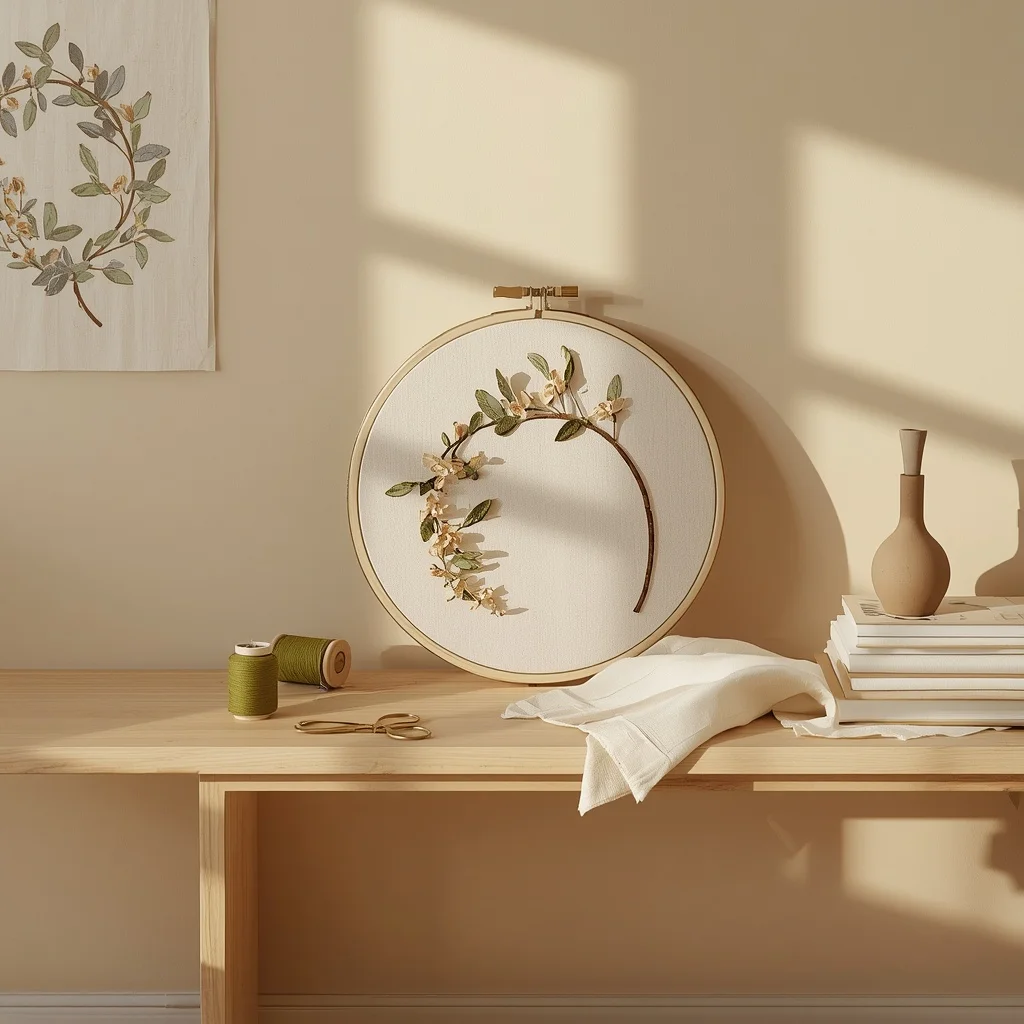
A curved botanical branch creates an elegant result from surprisingly simple elements. One flowing stem becomes the foundation, while small leaves and blossoms add rhythm without requiring complex techniques. Beginners can practice straight, curved, and detached stitches within the same project, making it useful for building confidence gradually. The open composition also gives you plenty of room to adjust spacing as you work. I’ve noticed that botanical designs often look more polished when the stitches are not overly crowded. Letting the fabric show through keeps the finished hoop light, modern, and naturally handmade.
This style fits beautifully into bedrooms, entryways, offices, and quiet reading corners. Place the hoop beside a small vase or leafy plant to reinforce the botanical theme without making the décor feel overly matched. Neutral fabric works especially well with muted greens, while darker backgrounds can create a richer, moodier effect. You can also curve the branch around one side of the hoop rather than placing it in the center. That asymmetrical arrangement gives the design a contemporary feel and makes a small piece look more sophisticated without adding extra stitching.
Celestial Moon Hoop
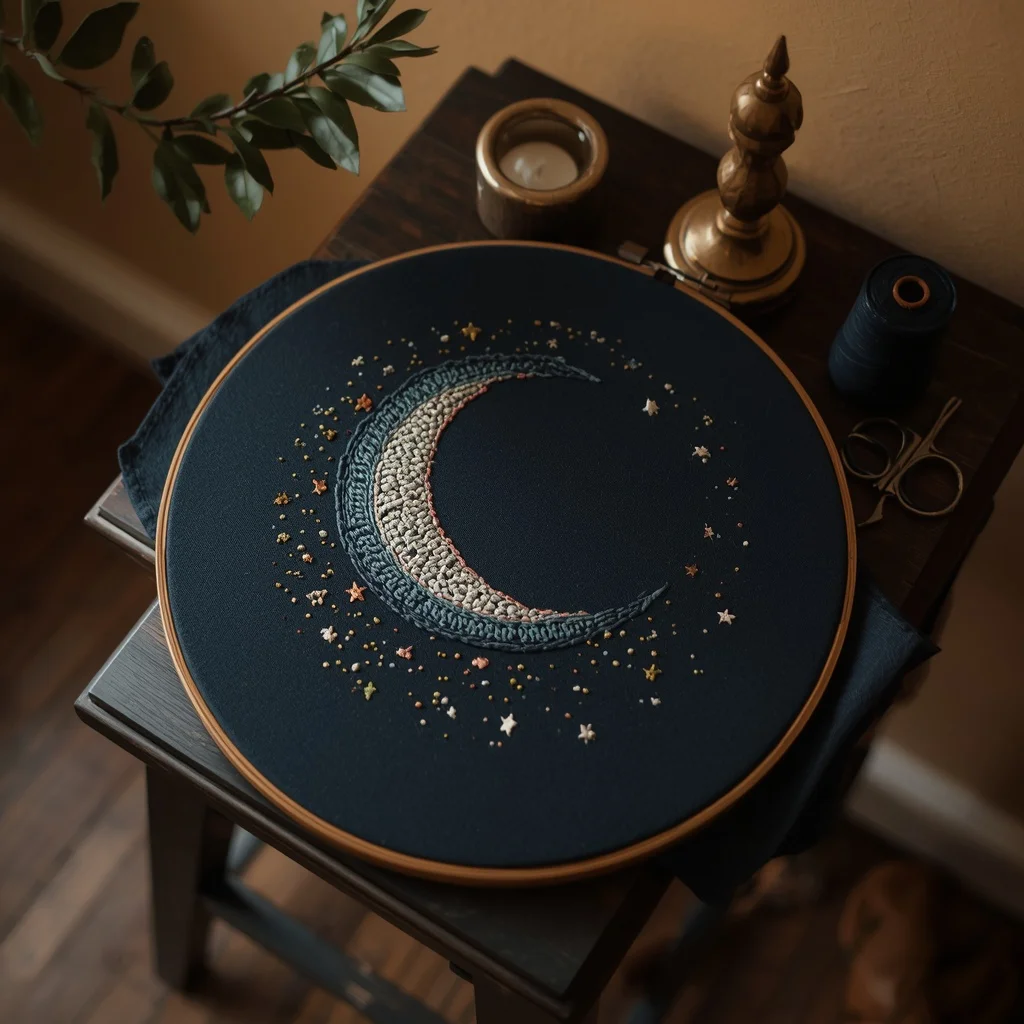
A crescent moon design gives beginners a beautiful way to experiment with contrast and small decorative stitches. The moon itself can remain a simple curved outline, while tiny stars add variety without requiring complicated shapes. Dark fabric makes light-colored thread immediately visible, so even a minimal design can look striking. This is also a useful project for practicing placement because scattered stars teach you to balance empty and filled areas. If working on dark fabric feels unfamiliar, use a light marking tool designed for embroidery so the pattern remains easy to follow.
The finished hoop can bring a calm, slightly magical accent to bedrooms, reading corners, or creative spaces. Pair it with warm wood, cream textiles, and soft lighting to keep the overall display cozy rather than overly dramatic. For a modern version, limit the palette to navy, ivory, and one metallic-looking gold shade. You can also personalize the design with a constellation, tiny initials, or a few additional dots. Hanging the hoop slightly away from brighter artwork allows the dark background to become a focal point. The result feels decorative, personal, and surprisingly sophisticated.
Simple Strawberry
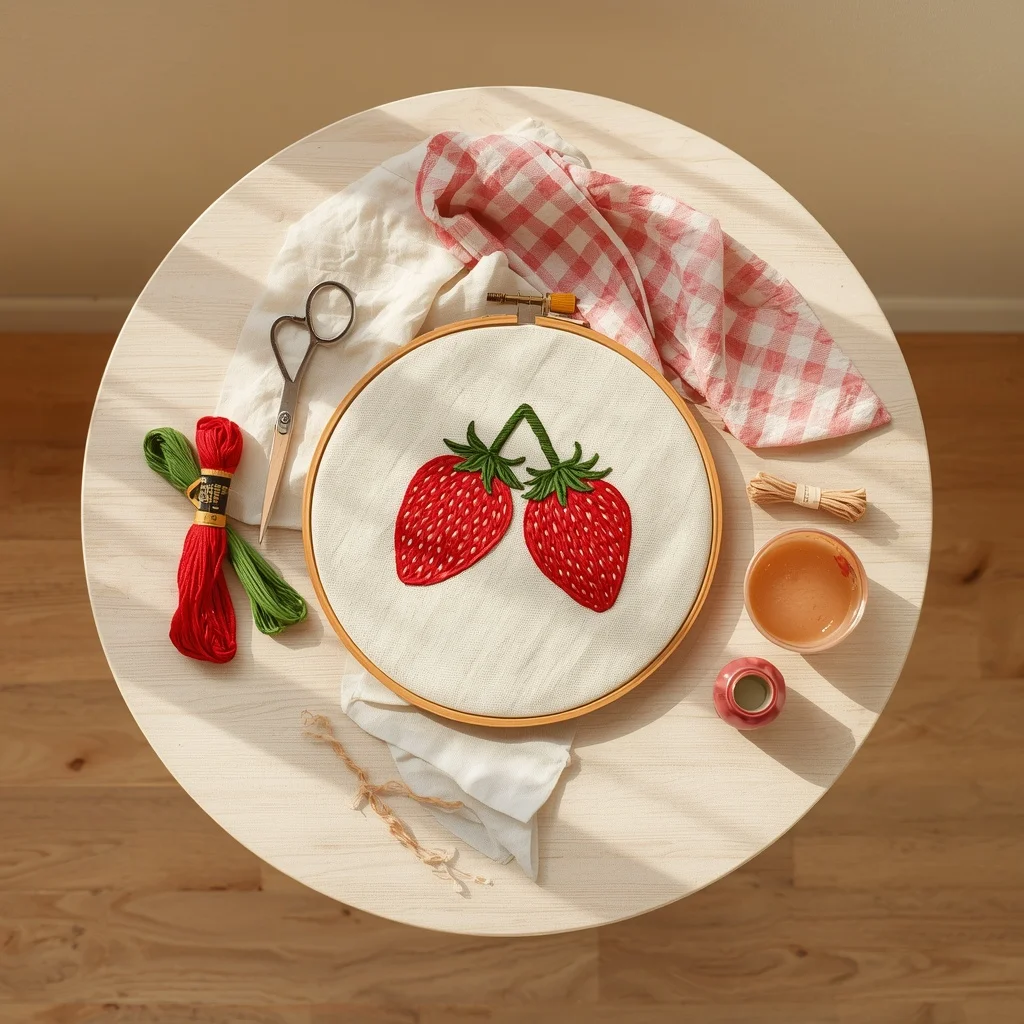
A strawberry motif is small, recognizable, and packed with opportunities to practice basic stitches. The fruit can be formed with a simple rounded shape, while green leaves create an easy contrast at the top. Tiny seed stitches add texture and make the design feel more detailed without making the project difficult. Beginners can also experiment with different shades of red to create subtle dimension. In my experience, small food-inspired motifs are satisfying because they can be completed quickly and immediately turn into useful decorative pieces. The cheerful subject also works well for seasonal or kitchen-themed embroidery.
The finished hoop adds a playful handmade touch to kitchens, breakfast nooks, craft rooms, or cottage-inspired spaces. Try displaying it near a fruit bowl, wooden cutting board, gingham textile, or open shelf of ceramic dishes. For a softer look, replace bright red with dusty rose and muted sage. If you enjoy collecting small hoops, make matching designs with cherries, lemons, or flowers and arrange them together. Each piece can remain simple while the group creates a stronger visual statement. This is an especially approachable project when you want something colorful, decorative, and achievable in a short crafting session.
Daisy Cluster
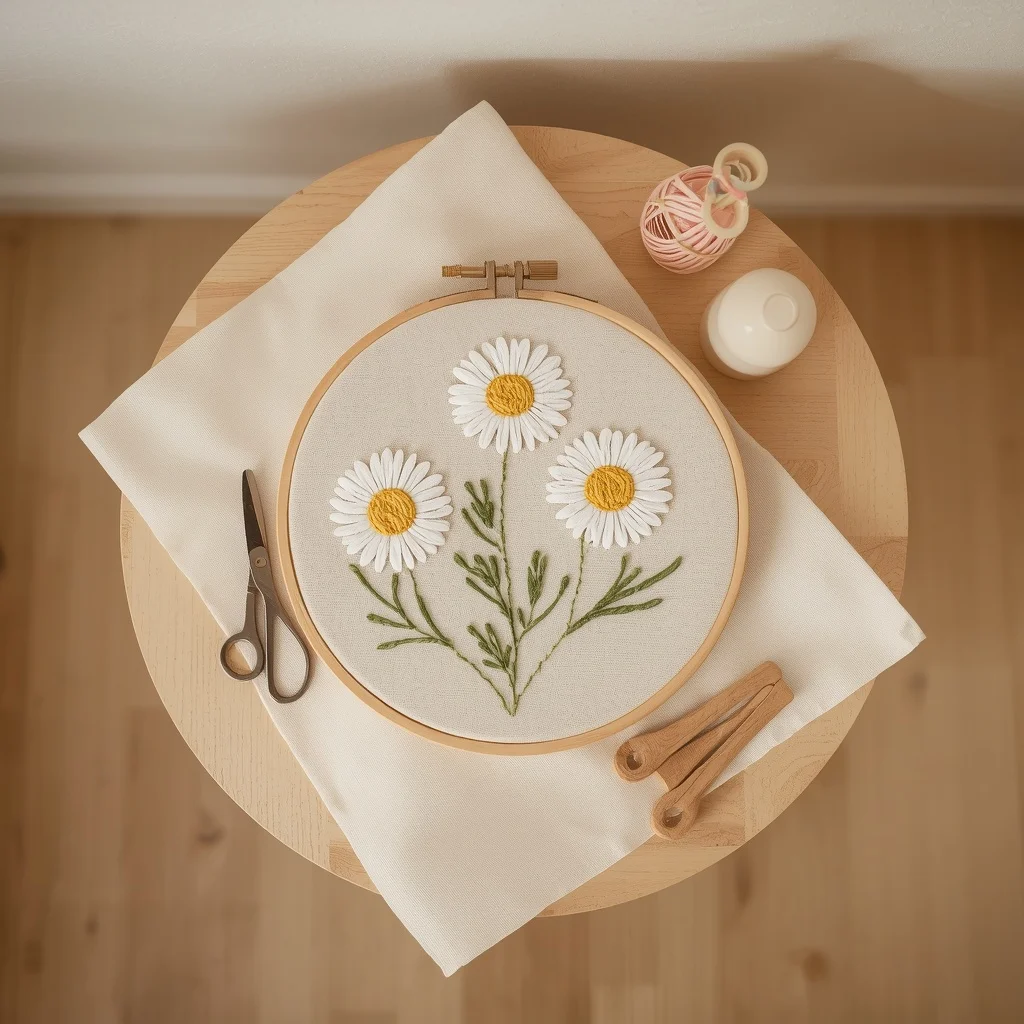
A daisy cluster is an approachable way to practice floral embroidery while creating a cheerful finished piece. Each flower uses the same basic structure, so beginners can repeat the process without constantly learning new techniques. Slight differences in petal size can actually make the arrangement look more natural. Start with the largest flower and build the smaller blooms around it, which helps keep the composition balanced. I’ve seen simple floral clusters work especially well when the background fabric remains visible because the open space gives the stitches room to breathe.
The finished hoop brings a light, fresh feeling to bedrooms, entryways, craft areas, and small shelves. Pair it with white ceramics, pale wood, linen, or a few green plants to create a relaxed botanical display. If you want a more colorful result, introduce blush, lavender, or pale yellow petals instead of using traditional white. A cluster can also become the beginning of a larger floral collection, with each hoop featuring a different flower. The simple shapes make these projects easy to coordinate while still allowing each design to have its own personality.
Tiny House Scene
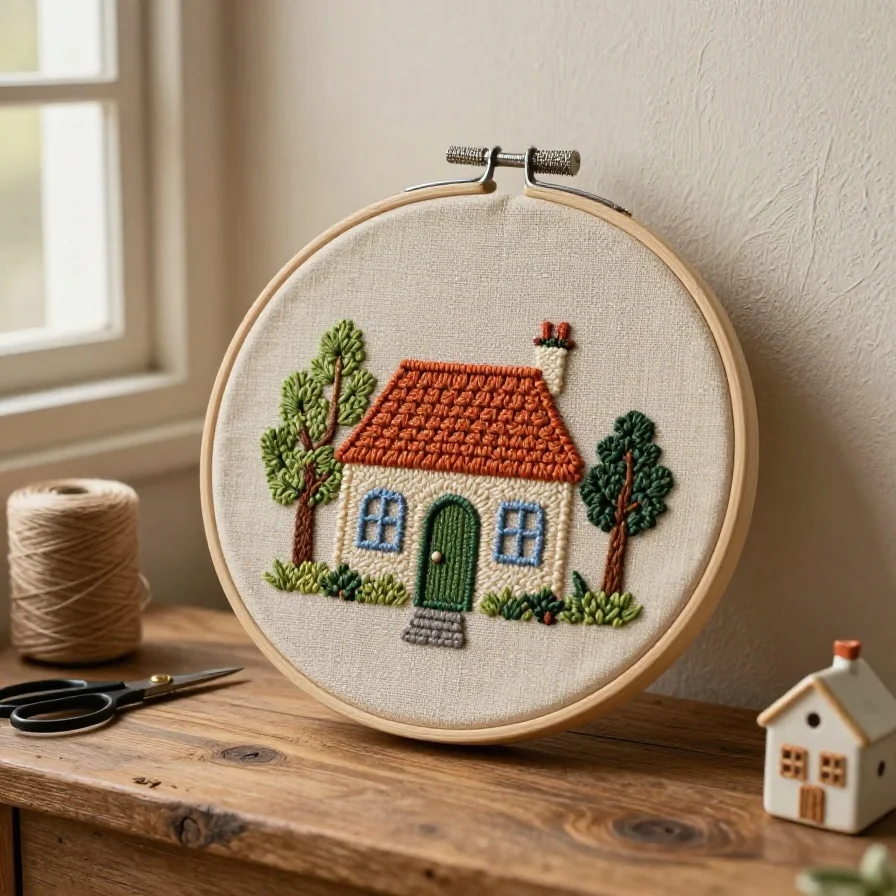
A tiny house scene turns a few basic shapes into a miniature world. The building can be created from rectangles and triangles, while a door, windows, trees, and flowers provide recognizable details. Beginners do not need perfect architectural lines; slightly uneven stitching can make the scene feel more charming and handmade. One practical approach is to sketch the main house first and add surrounding elements only after the structure is stitched. This keeps the composition manageable and prevents small decorative details from competing with the main focal point.
This design works especially well in cozy rooms where natural textures and small decorative objects already have a place. Display the hoop beside books, pottery, dried flowers, or a woven basket to create a collected cottage-style corner. A terracotta roof can add warmth, while sage green and cream keep the overall palette calm. You can also personalize the house by changing the door color, adding a favorite flower, or stitching a tiny tree. The finished piece feels more meaningful than a generic decoration because small details can reflect the maker’s preferred colors and imagined surroundings.
Minimal Heart Design
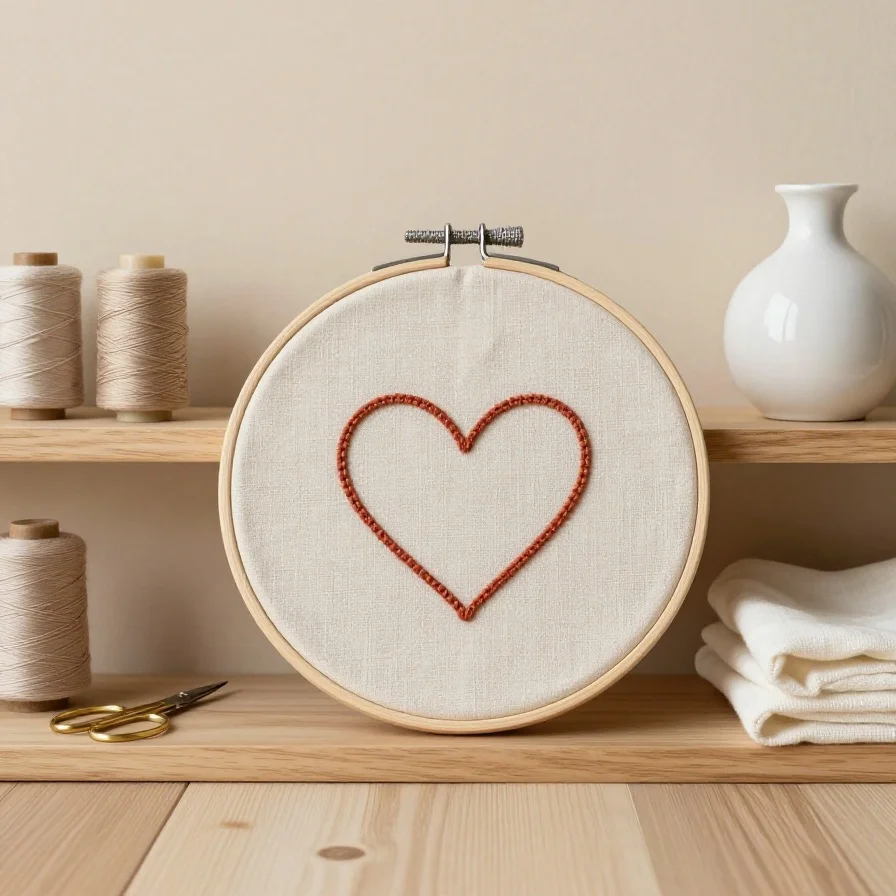
A minimal heart is one of the easiest designs to adapt for different skill levels and occasions. A single outline requires very little stitching, yet the finished hoop can look intentional and refined when the spacing is clean. Beginners can use the project to practice smooth curves and consistent thread tension without managing a large composition. The simplicity also makes it easier to notice how fabric, thread thickness, and color affect the final appearance. If the outline feels too plain, add one tiny leaf, flower, or initial without changing the overall minimalist character.
The understated design fits almost anywhere, from a bedroom shelf to a home office or small gallery wall. Terracotta creates a warm accent, dusty pink feels softer, and deep green gives the heart a more natural appearance. Try pairing the hoop with neutral ceramics, pale wood, linen textiles, or a small plant to create a calm vignette. Because the design is compact, it can also work as a handmade gift or personalized keepsake. A collection of hearts in different colors can create a playful display while maintaining the same simple visual language throughout the arrangement.
Conclusion
Beautiful embroidery does not have to begin with complicated stitches or elaborate patterns. A small flower, colorful rainbow, leafy branch, or simple heart can become a meaningful piece when you choose colors and details that feel like you.
These beginner embroidery patterns offer an easy starting point for building confidence, practicing basic techniques, and creating handmade décor you’ll actually want to display. Save this collection on Pinterest so you can return to your favorite ideas whenever inspiration strikes. Pick one design, gather your thread, and start with a few simple stitches. I’ve seen how a small creative project can bring both personality and warmth into a space. Now it’s your turn to make something beautiful.
Read More:18 Crochet Home Decor Projects for Beautiful Cozy Homes