

18 Unique Coffee Table Design Ideas for Modern Homes
Introduction
Your coffee table can do much more than hold a cup of coffee. The right piece can completely change how your living room looks, feels, and functions. These unique coffee table design ideas explore sculptural shapes, natural materials, clever storage, transparent finishes, and modern textures that can give an ordinary seating area a designer-inspired finish.
Whether you have a compact apartment, spacious family room, or minimalist open-plan interior, there is an idea here to suit your space. From warm live-edge wood to elegant travertine and practical lift-top designs, each option combines visual appeal with everyday usability. I’ve found that the best furniture choices are the ones that look beautiful while making daily life easier. Use these ideas to find a centerpiece that feels intentional, functional, and completely at home in your space.
Sculptural Curves
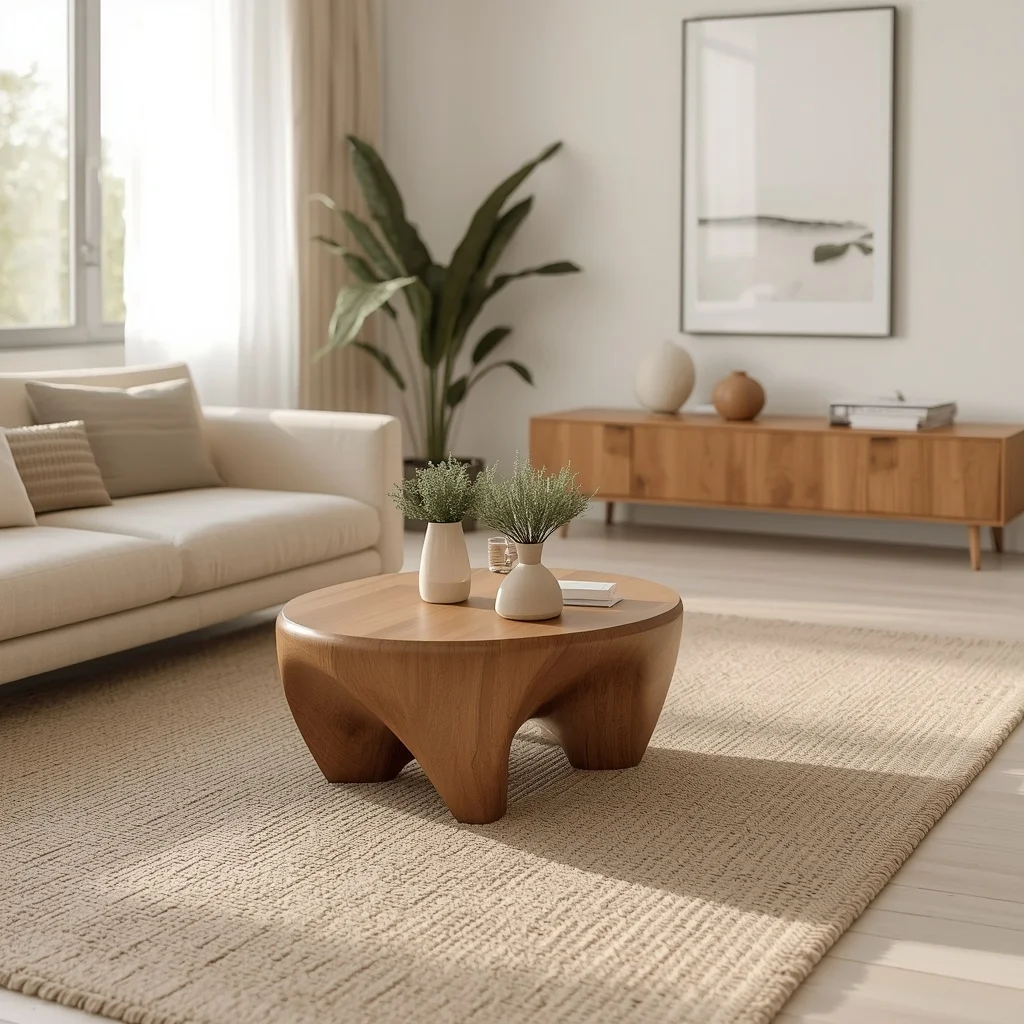
Imagine a sculptural table becoming the room’s quiet focal point. A curved coffee table softens straight-lined sofas and sharp architectural details. Choose rounded edges, natural wood, or textured stone to add movement without clutter. The shape encourages easier circulation, making the seating area feel open and welcoming. In my experience, organic silhouettes work especially well in modern rooms because they introduce warmth without sacrificing a clean aesthetic. Pair the table with a low-profile rug and simple accessories so its unusual form remains visible. This approach feels intentional, polished, and effortlessly contemporary.
A beautiful room often needs just one unexpected shape. An irregular tabletop can break the predictability of matching furniture while creating a more relaxed visual rhythm. Look for asymmetrical designs with balanced proportions, especially when the surrounding pieces are rectangular. The contrast makes the seating arrangement feel curated rather than overly coordinated. Rounded corners also reduce visual heaviness and make the table easier to move around in busy living spaces. Add a small ceramic bowl or a single sculptural object instead of several decorations. The result is modern, practical, and interesting from every viewing angle.
Natural Stone
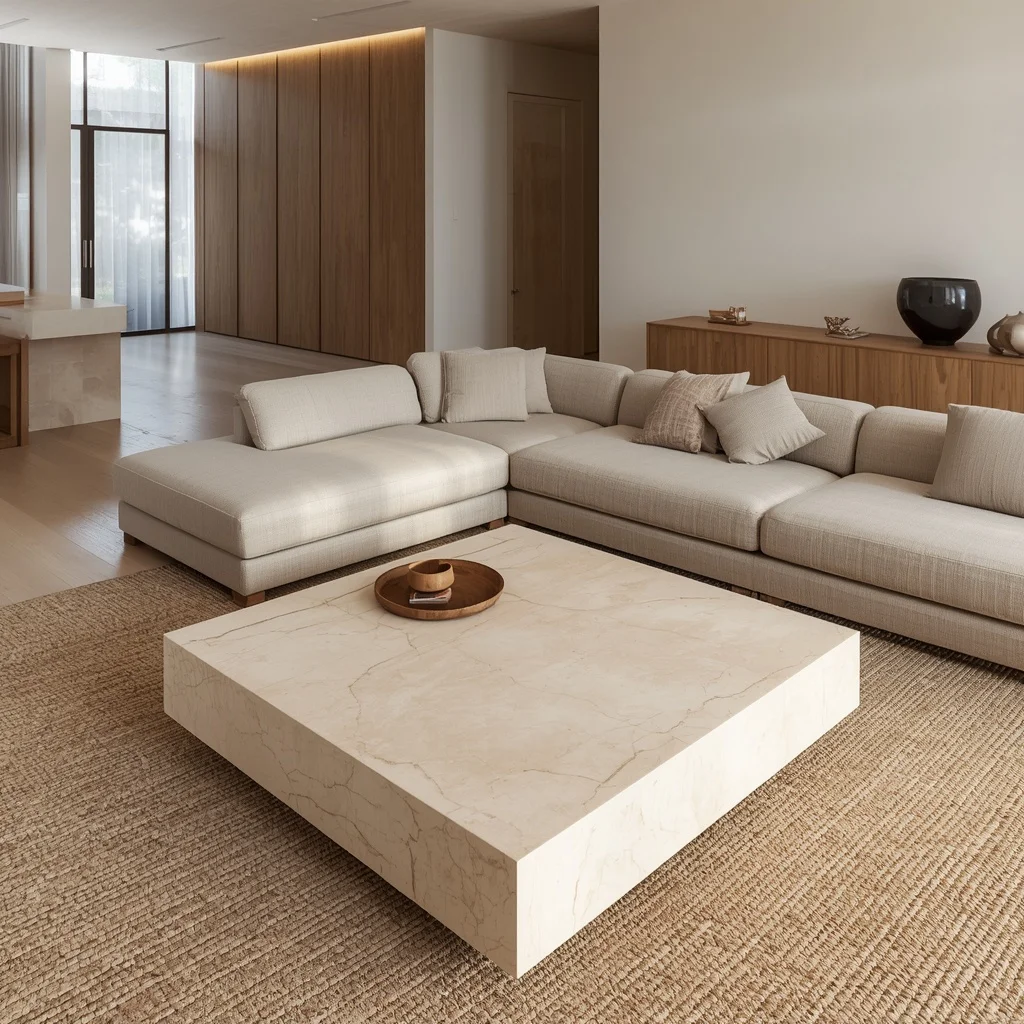
Bring a grounded, tactile feeling into the living room with a thick stone tabletop and a simple architectural base. Marble, travertine, or limestone can introduce subtle veining and natural variation that instantly enriches a restrained palette. Keep the surrounding furniture understated so the material remains the star. Soft daylight across the stone surface highlights its texture, while a neutral rug prevents the arrangement from feeling cold. I’ve noticed that natural stone looks especially sophisticated when paired with warm wood, linen upholstery, and brushed metal accents. The combination feels refined without becoming overly formal.
Natural materials can make a contemporary room feel far more inviting. A substantial stone table adds visual weight, which helps anchor large sofas or spacious open-plan seating areas. Choose a finish that complements the room’s undertones rather than competing with them. Creamy stone works beautifully with beige and oak, while darker slabs can create stronger contrast against lighter upholstery. Because stone already provides plenty of character, styling should stay simple. A low tray, coffee table books, or one small vase is often enough. This balance keeps the space functional while letting the material create the main design statement.
Glass And Metal
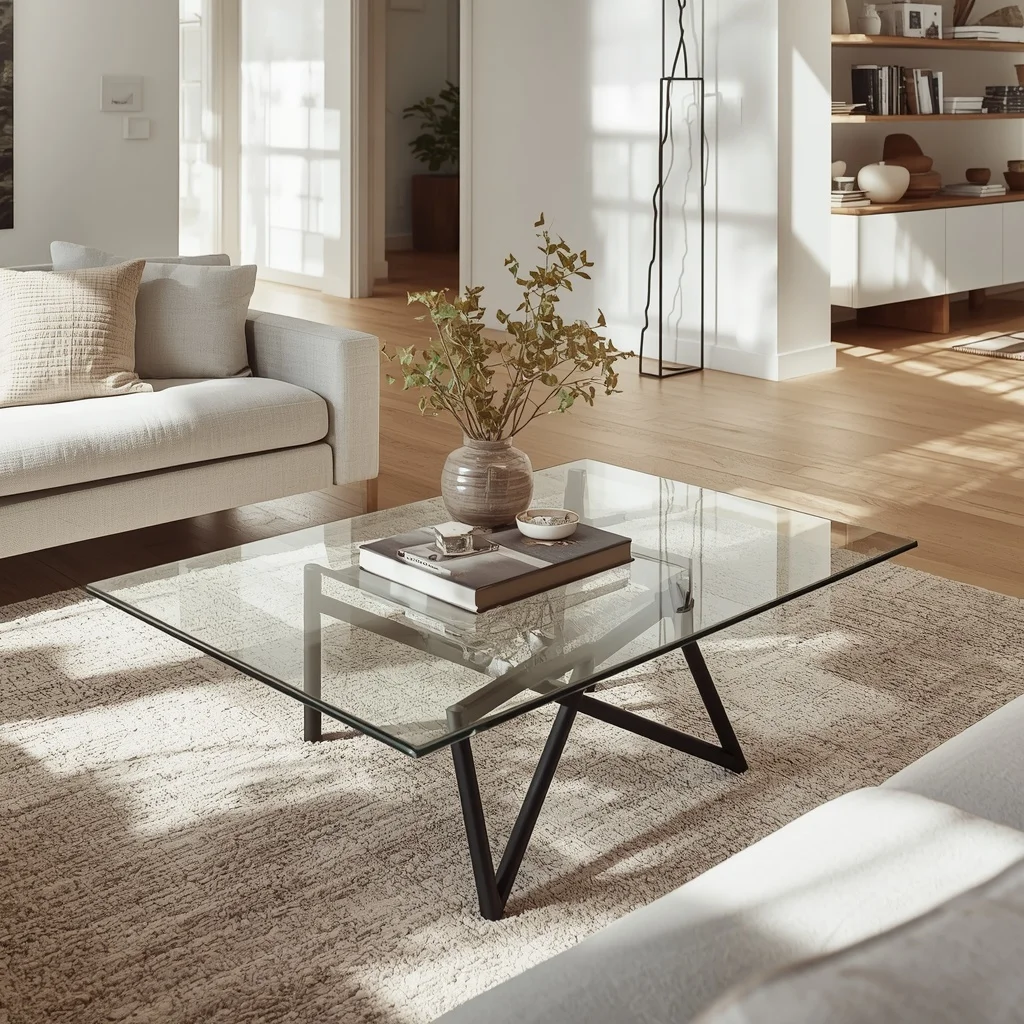
Sometimes the smartest way to make a small room feel larger is to reduce visual interruption. A transparent tabletop allows the rug, flooring, and surrounding furniture to remain visible, creating a more continuous composition. This makes glass particularly useful in compact apartments or rooms with limited natural light. Select tempered glass with softened edges for everyday practicality, and avoid overcrowding the surface with decorative pieces. A slim tray can organize essentials while preserving the table’s open appearance. The result feels sophisticated without adding bulk, giving the seating area a clean and spacious character.
Sometimes the smartest way to make a small room feel larger is to reduce visual interruption. A transparent tabletop allows the rug, flooring, and surrounding furniture to remain visible, creating a more continuous composition. This makes glass particularly useful in compact apartments or rooms with limited natural light. Select tempered glass with softened edges for everyday practicality, and avoid overcrowding the surface with decorative pieces. A slim tray can organize essentials while preserving the table’s open appearance. The result feels sophisticated without adding bulk, giving the seating area a clean and spacious character.
Nested Table Set
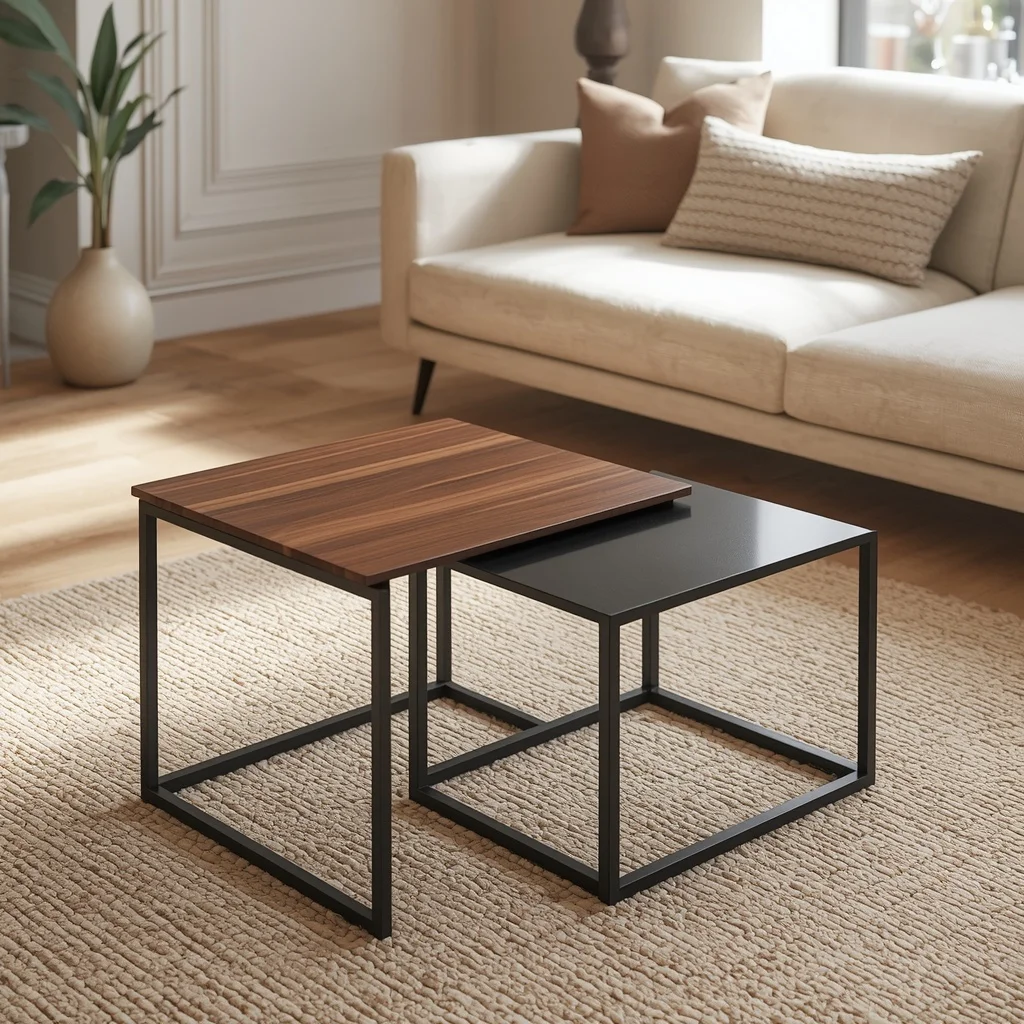
A nested table set offers flexibility without making the seating area feel crowded. Two or three tables can overlap neatly when extra surface space is unnecessary, then separate whenever guests arrive or activities spread across the room. This makes the design especially useful for busy households and compact living areas. Choose tables with different heights and complementary finishes to create natural layering. In my experience, keeping the smaller table slightly tucked underneath produces a cleaner silhouette. When needed, simply slide it outward for drinks, books, or snacks without rearranging the entire room.
Layered furniture can make a living room feel thoughtfully designed rather than overly matched. Nested tables create that effect naturally because their different heights and proportions introduce subtle variation. Try pairing a warm wood tabletop with a darker metal frame for contemporary contrast, or choose matching finishes for a quieter look. Their flexible arrangement also works beautifully around sectional sofas, where guests may need surfaces at different positions. Style the largest table with a low tray and leave the smaller one mostly clear. This keeps the arrangement practical while preserving the open, uncluttered feeling modern interiors need.
Live Edge Wood
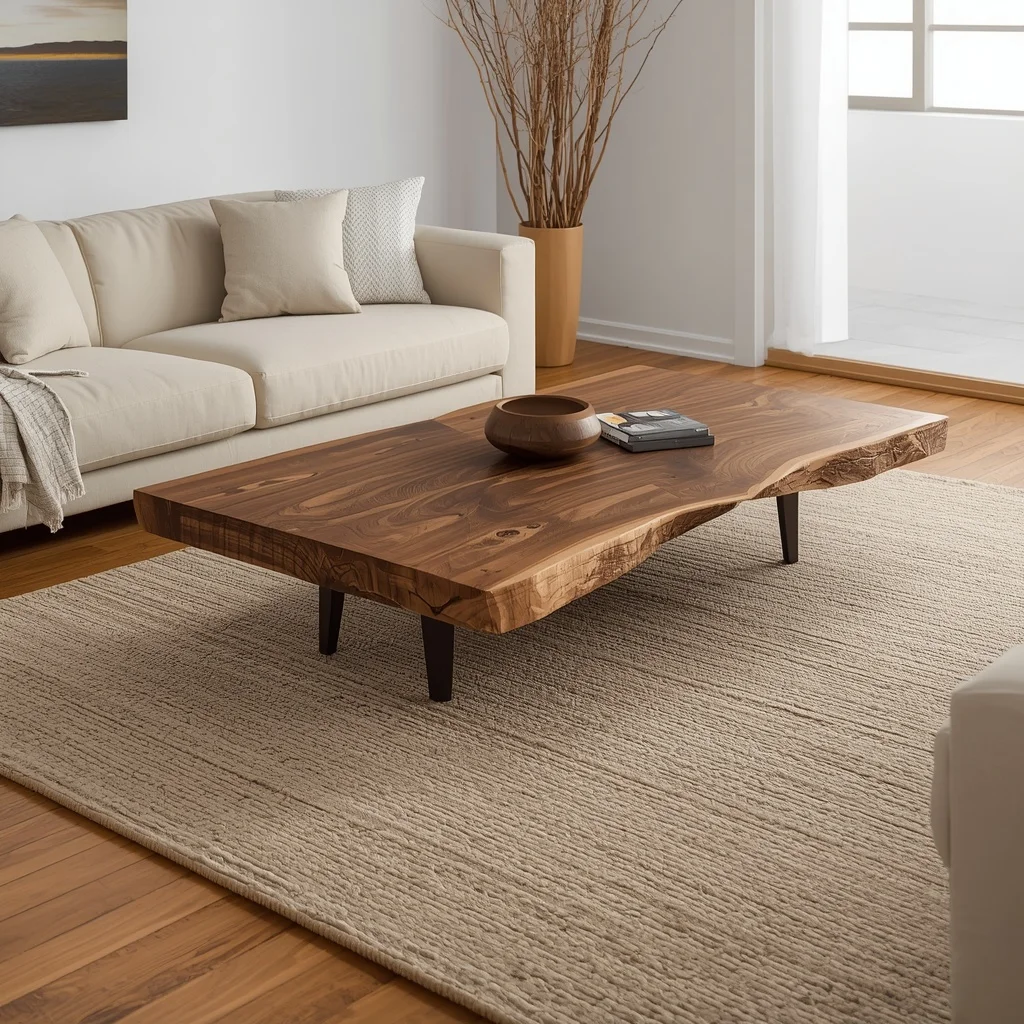
Let the natural edge become the personality of the room. A live-edge wooden tabletop brings organic movement, visible grain, and subtle imperfections that instantly make a contemporary space feel warmer. Because every slab has a different outline, the table feels more individual than mass-produced furniture. Choose walnut, oak, or another durable hardwood that complements your flooring and cabinetry. A clear protective finish helps preserve the surface while making daily cleaning easier. Keep nearby furniture simple so the irregular edge remains visible and becomes a natural focal point rather than competing with surrounding details.
Wood can make even a minimalist living room feel more relaxed and welcoming. A live-edge design works particularly well when the rest of the room has straight architectural lines because its natural contour creates contrast. Pair it with linen, boucle, leather, or woven textiles to emphasize the tactile quality. Avoid placing too many objects on the surface, since the wood grain already provides visual interest. A simple ceramic bowl or carefully stacked books is usually enough. The combination creates a balanced space where natural character and contemporary simplicity work together without feeling overly rustic.
Mixed Material Form
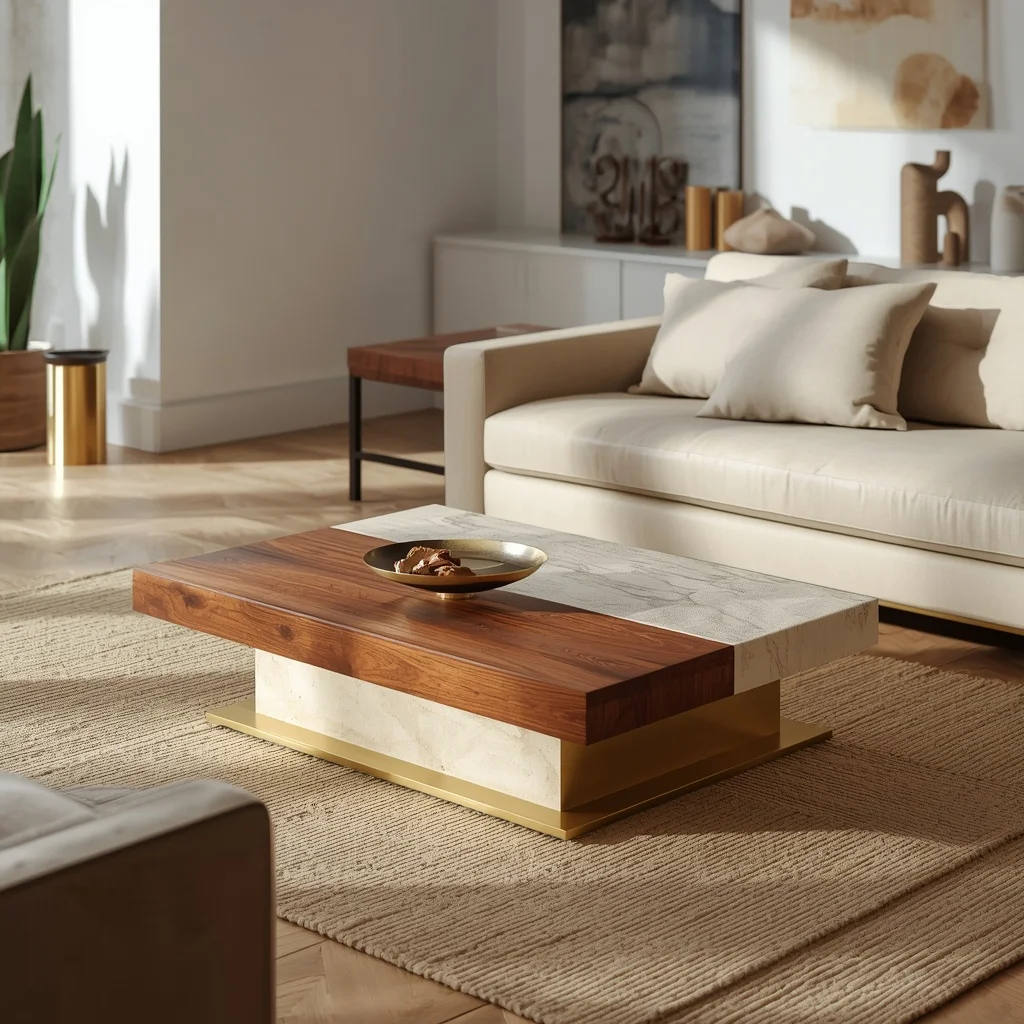
Mixing materials can turn an ordinary tabletop into a memorable design feature. Imagine warm walnut meeting smooth stone, brushed brass, or matte metal in one carefully balanced piece. The contrast creates depth because each surface reflects light and texture differently. To avoid a chaotic appearance, choose one dominant material and let the others act as accents. For example, a wood base with a stone top feels grounded and sophisticated. I’ve seen this combination work especially well in neutral interiors because the materials provide enough visual interest without relying on strong colors or complicated patterns.
A mixed-material table can also connect different finishes already present in the room. If your lighting uses brass, echoing that tone subtly in the table creates continuity. Likewise, a walnut tabletop can connect beautifully with wood flooring, shelving, or cabinetry. The key is repetition without exact matching. Choose finishes that complement rather than duplicate one another. Keep accessories restrained so the furniture itself remains the visual focus. With thoughtful proportions and contrasting textures, the table becomes more than a practical surface—it helps unify the entire seating area and gives a modern room a distinctly curated appearance.
Oval Marble Top
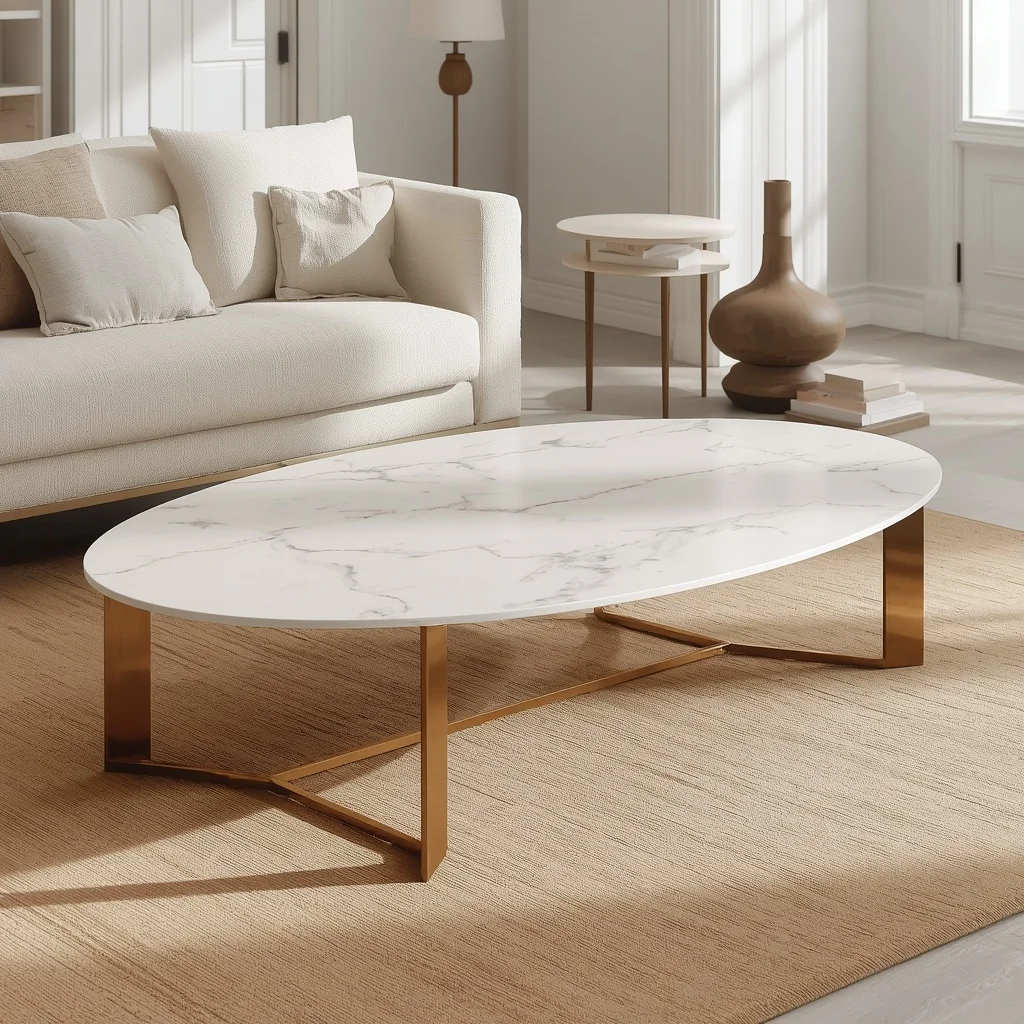
An oval marble table brings elegance without making the room feel overly formal. Its elongated shape provides generous surface space while rounded edges soften nearby rectangular furniture. White or cream marble works particularly well in neutral interiors because its natural veining introduces movement without overwhelming the palette. Choose a slim base if you want a lighter appearance, especially in smaller rooms. In my experience, marble looks most sophisticated when its natural pattern remains visible rather than hidden beneath accessories. A single vase, tray, or small stack of books can complete the arrangement beautifully.
The beauty of marble comes from its ability to combine simplicity with natural variation. Every subtle vein adds character, so the table can become a focal point even when the rest of the room remains understated. Pair it with boucle, linen, wood, or brushed metal to create layers of texture. An oval silhouette also improves circulation around sofas because there are no sharp corners interrupting the walkway. Keep the surrounding palette warm and restrained for a cohesive appearance. The finished space feels polished, comfortable, and timeless while still fitting naturally into a modern home.
Low Profile Design
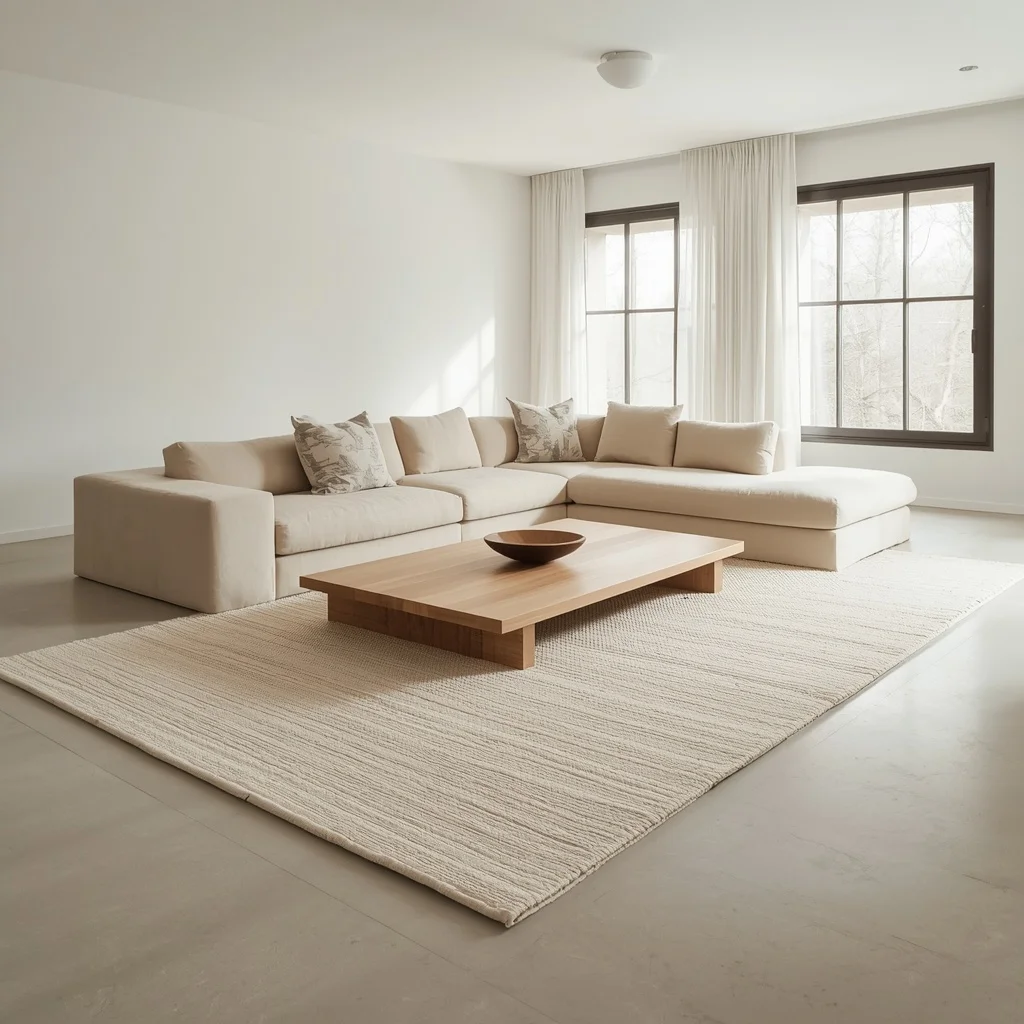
Low-profile furniture can instantly change how spacious a living room feels. A table positioned close to the floor creates a strong horizontal line, drawing the eye across the seating area instead of upward. This works especially well with deep sofas, large rugs, and open-plan layouts. Choose a wide tabletop with a simple base to balance the room’s proportions. Keep decorative objects low as well, such as shallow trays, books, or small bowls. The result feels calm and architectural while still providing enough surface space for everyday drinks, reading materials, and entertaining.
A low table is especially effective when you want the room to feel relaxed rather than formal. Its proportions encourage a comfortable, lounge-like atmosphere and pair naturally with oversized sofas or floor-level seating. Light wood keeps the design approachable, while darker finishes can create stronger contrast in pale interiors. Make sure the table remains easy to reach from the main seating positions before choosing an especially low model. Thoughtful placement matters as much as appearance. When proportioned correctly, this simple design can make the entire room appear wider, calmer, and more intentionally styled.
Fluted Wood Texture
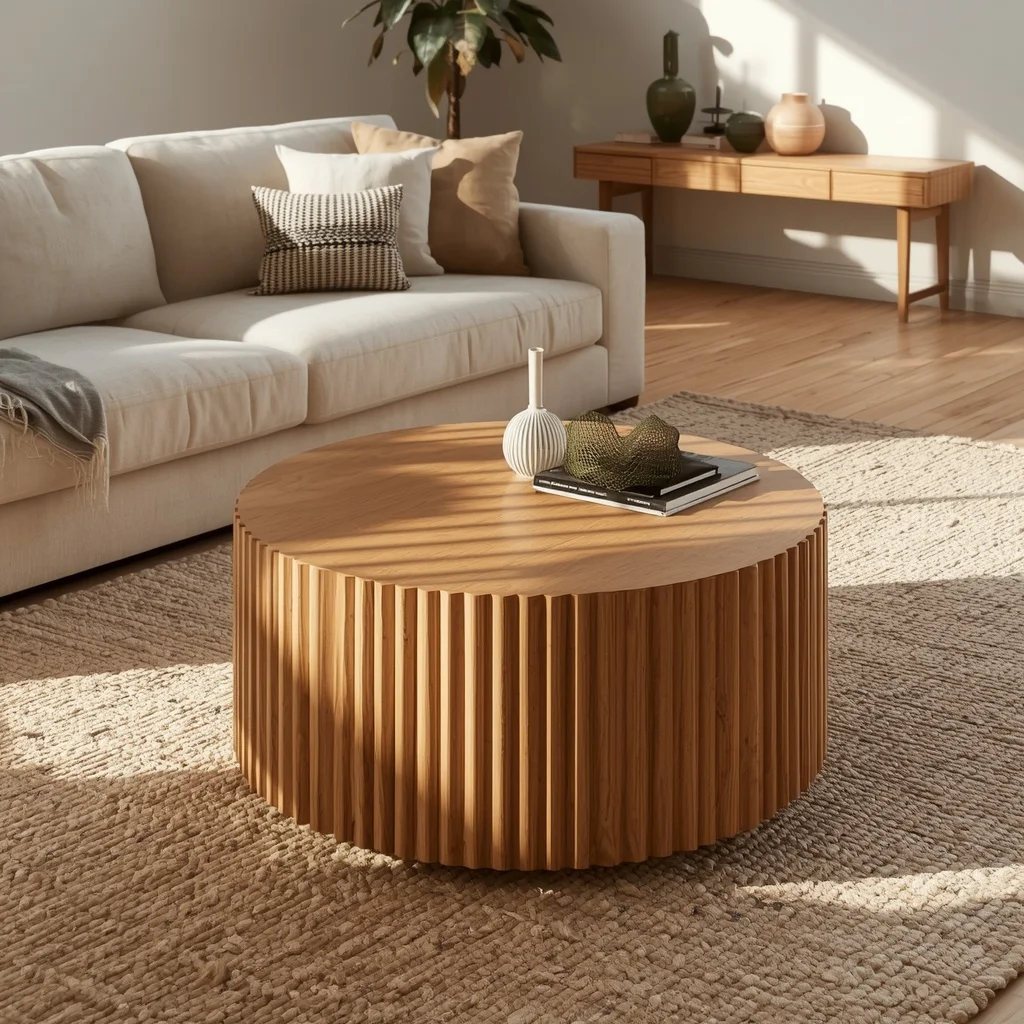
Texture can make a simple coffee table feel surprisingly sophisticated. Fluted wood adds vertical rhythm through repeated grooves, creating shadows and highlights that change throughout the day. The effect is subtle enough for minimalist interiors but distinctive enough to make the table memorable. Warm oak or walnut works beautifully with neutral upholstery and woven rugs. Keep other patterns restrained so the ribbed surface remains the main textural feature. I’ve noticed that fluted details look particularly attractive beside soft fabrics because the contrast between hard and tactile materials gives the room more depth without introducing visual clutter.
Fluted furniture also adds architectural interest without requiring dramatic color. The repeated lines can echo wall paneling, cabinetry, or other vertical details already present in the room, helping the table feel integrated rather than isolated. Choose a rounded or softly rectangular silhouette if you want to balance the structured grooves. For styling, use a smooth ceramic bowl or polished tray to contrast with the textured wood. This combination creates a pleasing mix of surfaces. The finished space feels warm, contemporary, and layered while remaining easy to maintain and practical for everyday living.
Geometric Base
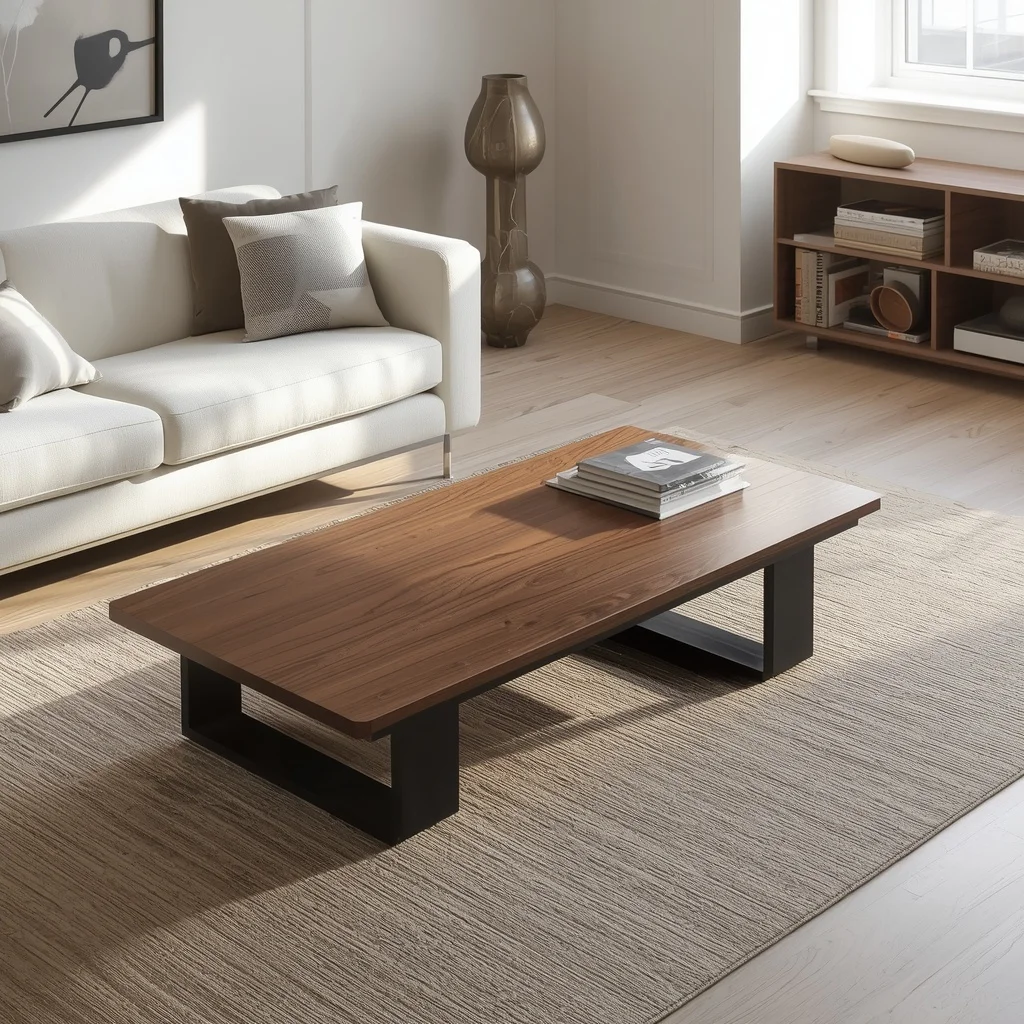
A striking base can completely change the character of a simple tabletop. Geometric frames made from black metal, brass, or dark wood introduce architectural structure beneath the surface. This works particularly well when the tabletop itself remains simple, allowing the base to provide visual interest without creating unnecessary complexity. Pairing angular metal with warm timber creates a balanced contrast between industrial and inviting elements. Keep the surrounding furniture relatively soft and streamlined. The result is a table that feels contemporary and intentional while giving the seating area a stronger visual anchor.
Geometry becomes even more effective when it quietly repeats elsewhere in the room. A table with triangular, crossed, or rectangular supports can echo the shapes found in lighting fixtures, shelving, artwork, or architectural details. This repetition helps the furniture feel connected to the larger design rather than appearing randomly selected. Choose proportions carefully so the base remains stable and does not visually overwhelm the tabletop. A few carefully chosen accessories are enough to finish the look. With the right balance, an angular coffee table adds personality while preserving a polished, organized atmosphere.
Rounded Wood Block
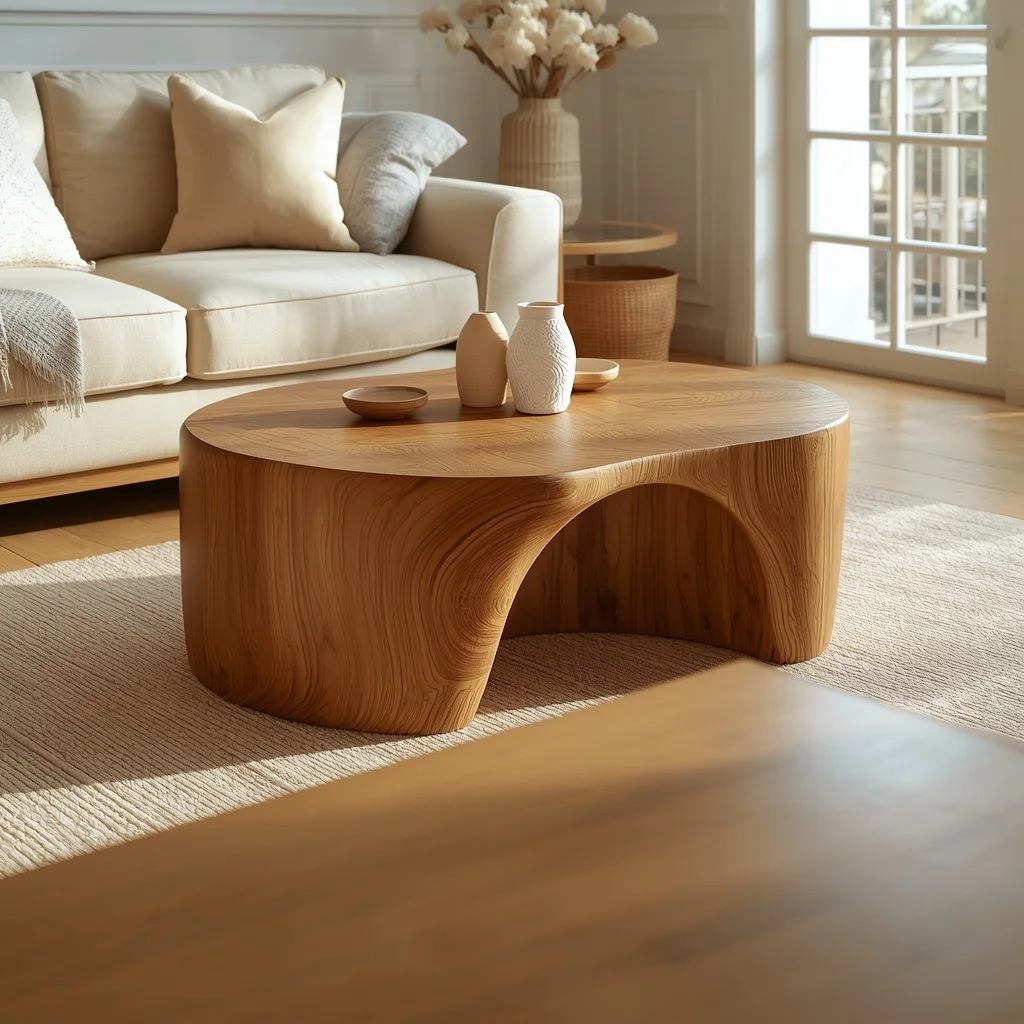
A chunky wooden table can bring warmth and confidence to an otherwise minimal room. Its substantial shape creates a strong focal point, while rounded corners keep the design approachable rather than severe. Natural oak, walnut, or ash can reveal beautiful grain patterns that add character without requiring decorative finishes. This style works especially well with soft sofas, woven rugs, and neutral walls because the contrast between solid timber and tactile fabrics creates balance. For everyday homes, a durable sealed surface also makes the piece practical enough for coffee, books, and casual entertaining.
The secret to making a substantial table feel elegant is surrounding it with enough visual breathing room. Avoid placing oversized furniture too close together, and let the tabletop remain clearly visible from different seating positions. A rounded block design works beautifully in open layouts because its softened edges improve circulation around the seating area. Style it with one shallow tray or a small ceramic piece rather than a collection of objects. The natural material already provides plenty of visual richness. Together, these choices create a comfortable centerpiece that feels substantial, modern, and effortlessly welcoming.
Lift Top Table
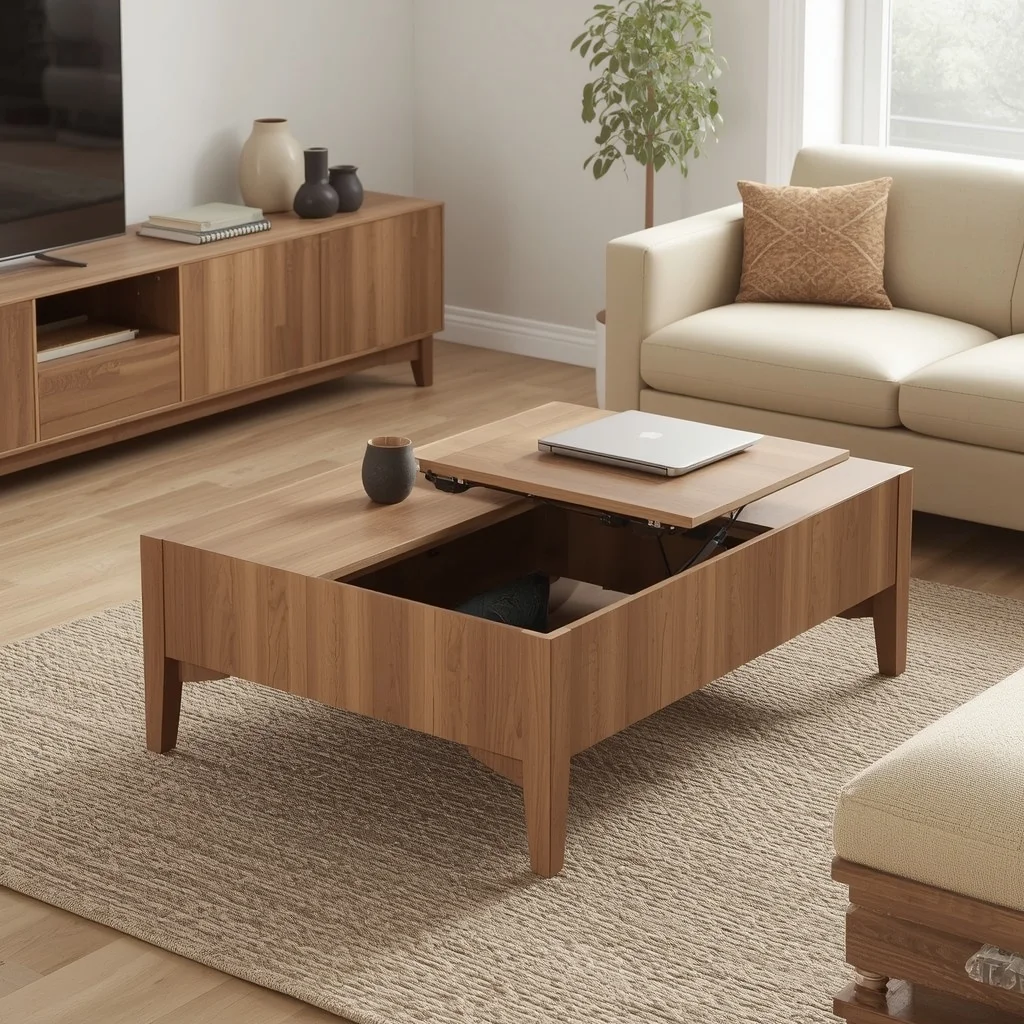
A lift-top table proves that practical furniture can still look beautifully designed. Its tabletop rises toward you, creating a comfortable surface for working, eating, writing, or using a laptop without moving to another room. When lowered, it returns to the appearance of a conventional coffee table. This makes the design especially useful in apartments, family rooms, and multifunctional spaces where every piece needs to work harder. Choose a finish that matches your existing furniture, and look for sturdy hardware with a smooth lifting mechanism. Good construction makes the feature feel effortless rather than cumbersome.
Hidden storage adds another useful layer to this design. Compartments beneath the lifting surface can hold remote controls, chargers, notebooks, games, or other small items that usually create visual clutter. That makes it easier to keep the living room tidy while keeping frequently used belongings within reach. A lift-top model also works well when the room doubles as a casual office or dining area. Keep the surrounding decor simple so the functional mechanism does not dominate visually. With thoughtful styling, the table can provide flexibility, organization, and everyday convenience without sacrificing modern appeal.
Drum Style Table
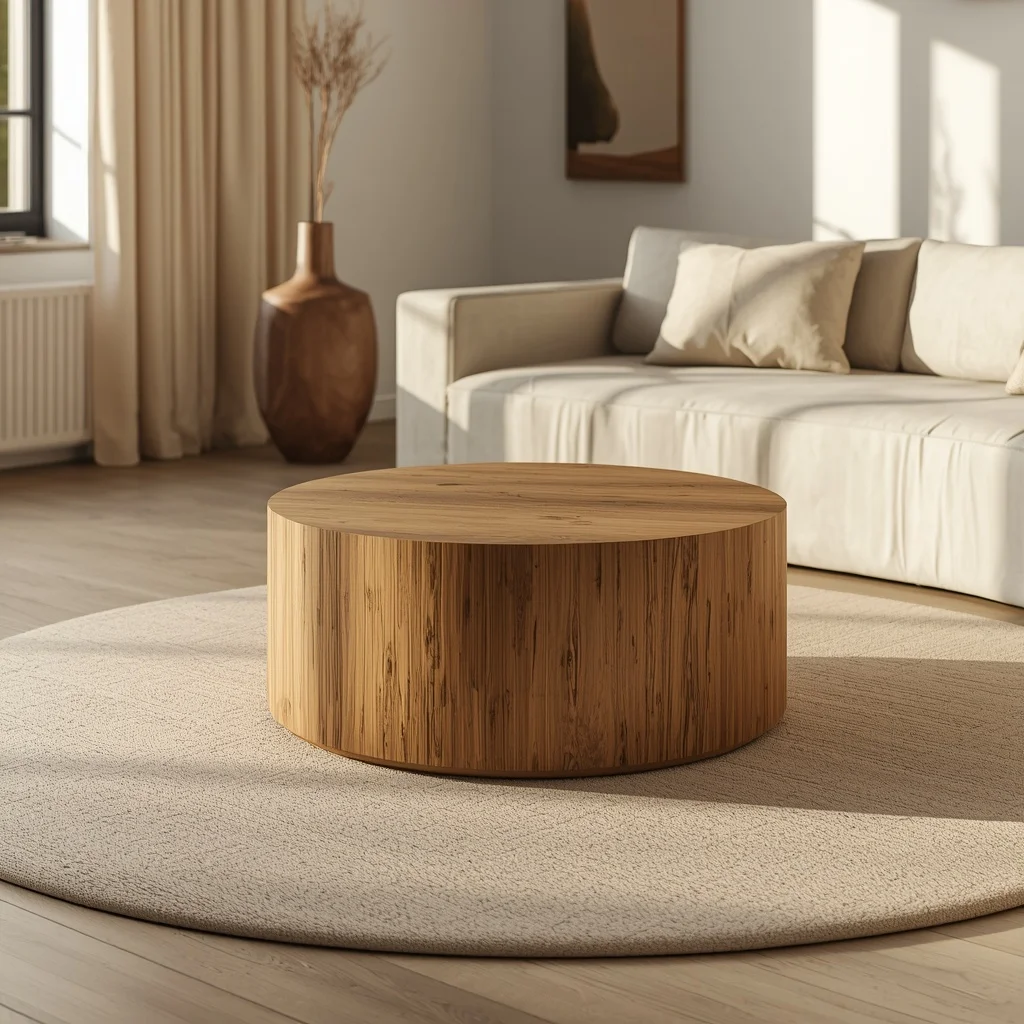
A drum-style table creates an immediate sense of visual balance. Its rounded, substantial base gives the seating area a grounded appearance while eliminating the need for complicated decorative details. Natural wood, textured plaster, or woven finishes can make the cylindrical form even more interesting. Because the shape is visually strong, it pairs best with sofas and chairs that have relatively simple silhouettes. Leave enough space around the table for comfortable movement, especially in smaller rooms. The result is a confident centerpiece that feels modern, warm, and surprisingly versatile.
Round furniture also helps soften rooms dominated by straight lines. A cylindrical coffee table can bridge the gap between angular sofas, rectangular rugs, and linear shelving, creating a more relaxed visual rhythm. Choose a tabletop size that leaves comfortable walking space around the seating arrangement. For styling, one low bowl or a small stack of books is usually enough. Too many accessories can hide the sculptural form. When the proportions are right, the table becomes both a functional gathering point and a distinctive design element that gives the room a more polished appearance.
Black Glass Accent
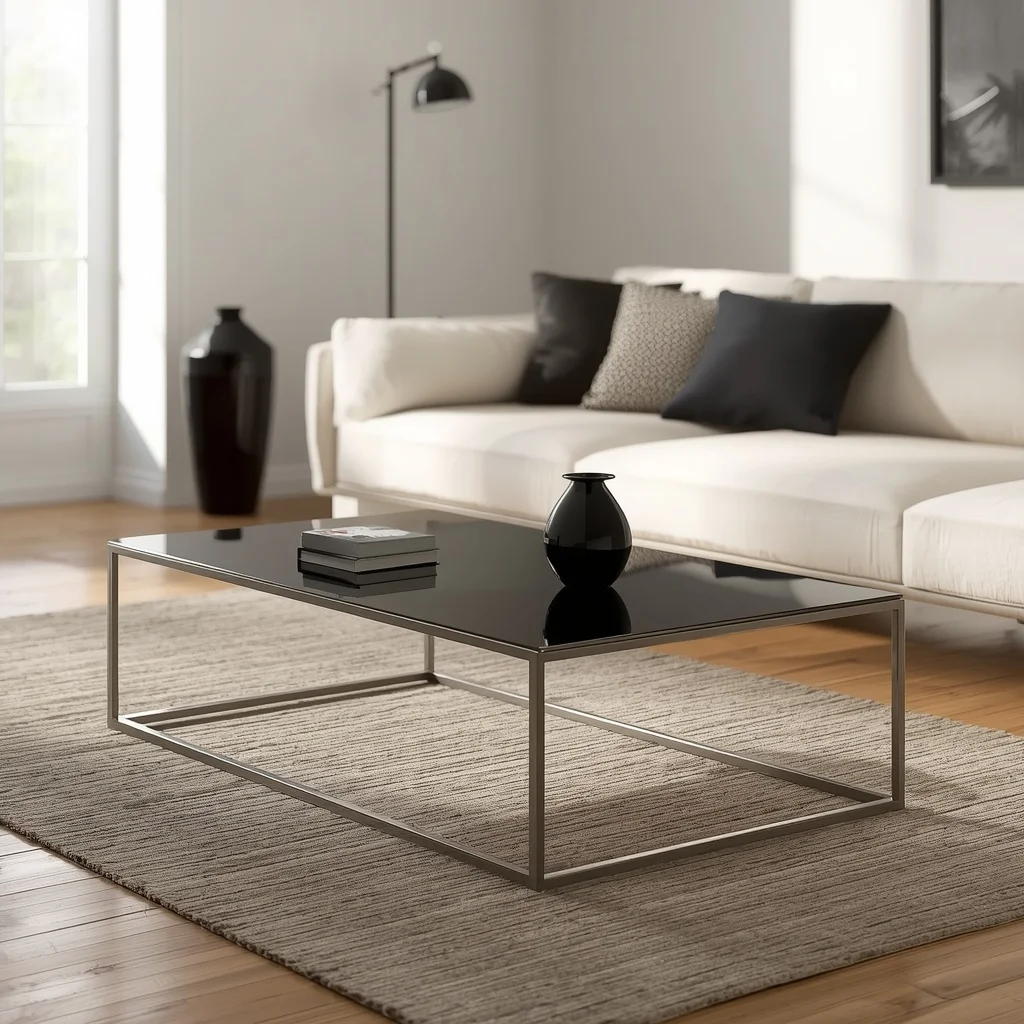
Black glass can create a dramatic focal point without requiring a complicated shape. Its reflective surface introduces depth, while the dark tone creates crisp contrast against cream sofas, pale rugs, and warm walls. This makes it especially effective in contemporary rooms where a small amount of contrast is needed to prevent a neutral palette from feeling flat. Choose a slim metal frame to keep the silhouette lightweight. Since glass naturally reflects surrounding objects, keep nearby surfaces visually organized. A clean tabletop will look much more sophisticated than one covered with scattered accessories.
The beauty of a dark glass table is its ability to shift depending on the surrounding light. During the day, reflections can make the surface feel luminous, while evening lighting creates a moodier and more intimate atmosphere. Pair it with small black accents elsewhere in the room, such as picture frames, lighting details, or decorative objects. Avoid overusing the dark finish, since too much can make a space feel visually heavy. With careful placement and restrained styling, black glass gives a modern living room a refined edge while remaining functional for everyday use.
Storage Drawer Table
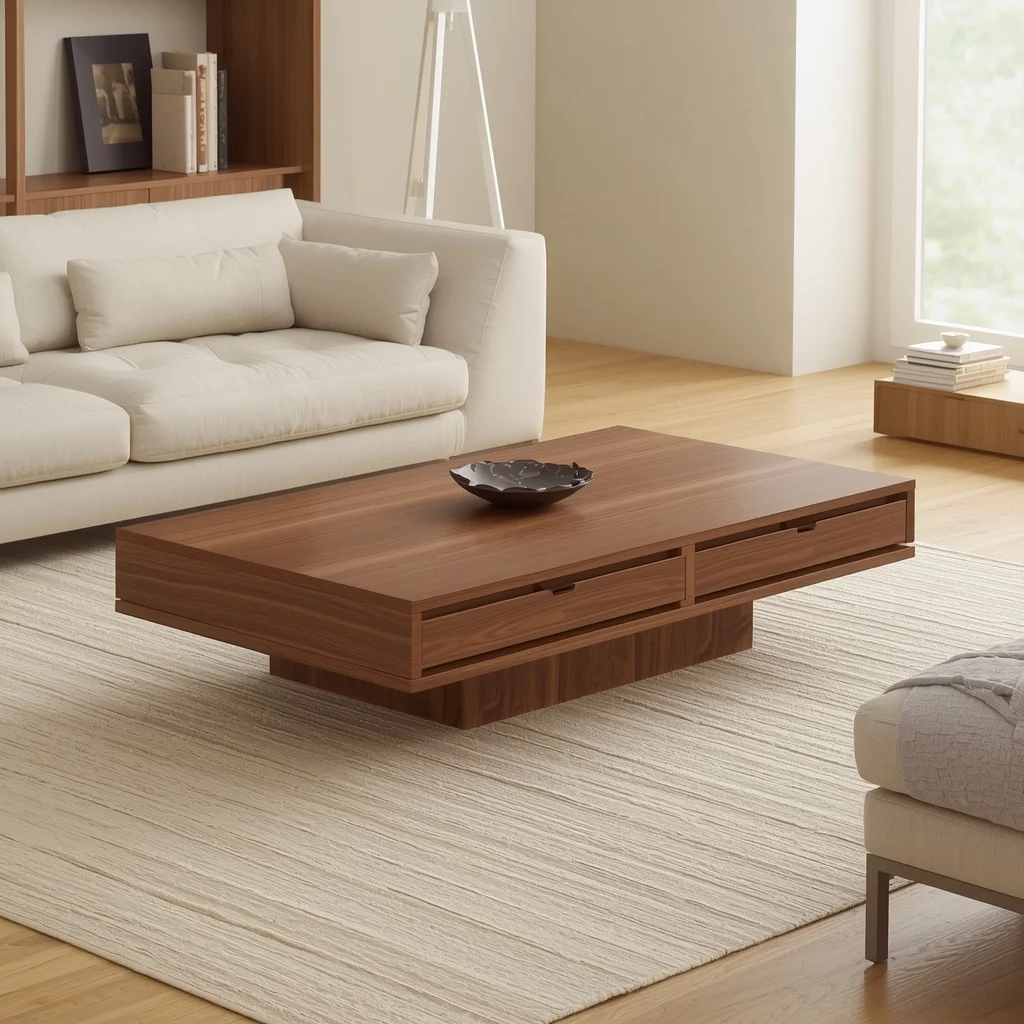
A coffee table with concealed drawers can make everyday organization much easier. Instead of leaving remotes, chargers, magazines, or small accessories on the tabletop, you can tuck them away while keeping everything close at hand. This is particularly useful in family rooms where the table needs to serve several purposes throughout the day. Choose drawers with smooth hardware and enough depth for the items you actually use. A simple walnut or oak finish keeps the furniture looking decorative rather than overly utilitarian. The result is a cleaner surface and a more relaxed living environment.
Smart storage does not have to look bulky or obvious. Many contemporary designs hide drawers within clean horizontal lines, allowing the table to maintain a streamlined appearance. This makes the furniture suitable for minimalist rooms where visible storage would interrupt the aesthetic. Keep only useful items inside the compartments so the storage remains functional rather than becoming another place for clutter to accumulate. Style the open tabletop with a tray, books, or one decorative object. By combining hidden organization with attractive materials, the table can improve both the appearance and everyday usability of the entire seating area.
Acrylic Waterfall Table
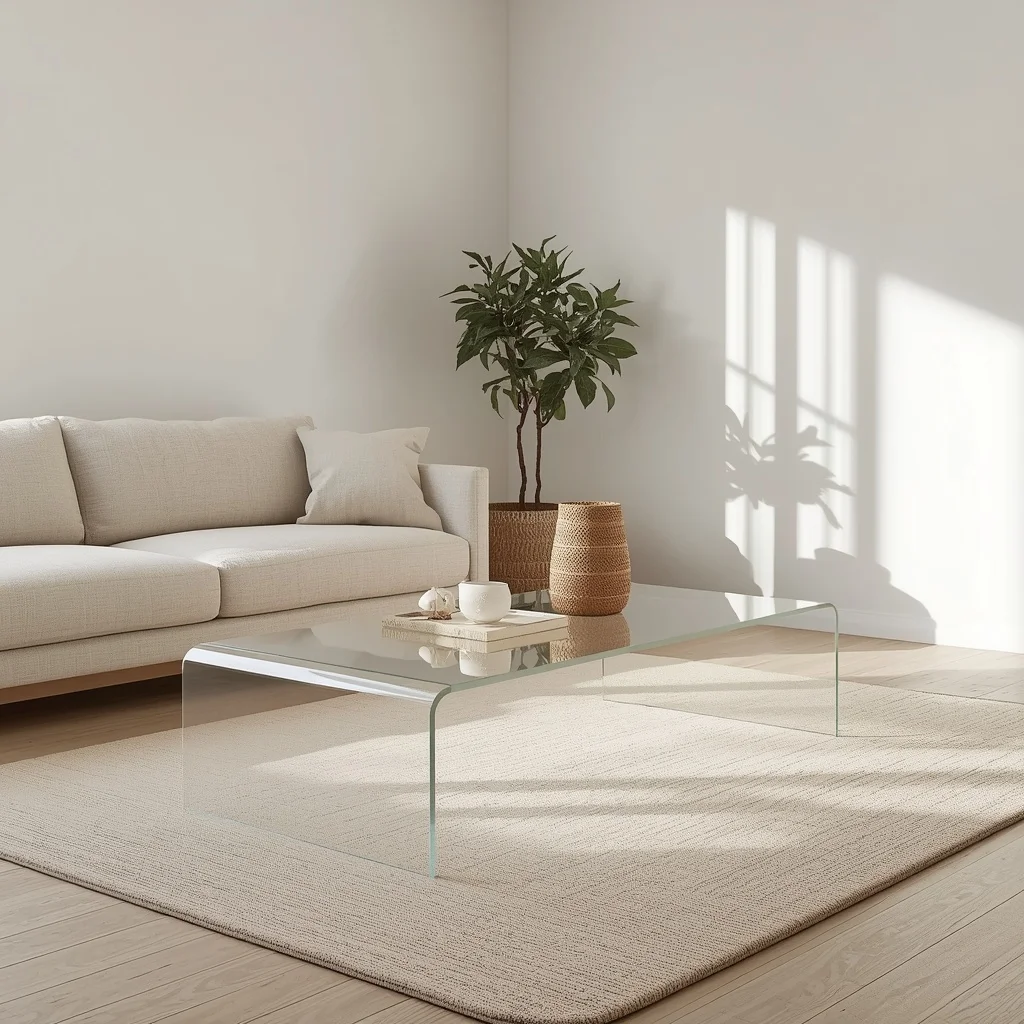
A transparent waterfall table can make a room feel remarkably open while still adding a distinctive design element. Its continuous curved or folded silhouette creates a clean architectural shape without introducing heavy visual weight. Acrylic works especially well in smaller living rooms because the material allows flooring and rugs to remain visible underneath. This uninterrupted view can make the seating area appear larger and less crowded. Choose a substantial enough thickness for everyday stability, and keep the surrounding palette soft. The result is contemporary, airy, and easy to combine with different decorating styles.
Clear furniture also gives you more freedom with rugs and flooring. Instead of hiding a beautiful pattern beneath a solid tabletop, the transparent surface allows those details to remain part of the composition. Pair the table with warm textiles and natural materials to prevent the room from feeling too stark. A small ceramic bowl, coffee books, or a single vase can provide just enough contrast. Avoid excessive accessories because reflections can quickly make a transparent surface look busy. When styled thoughtfully, this design offers a clever balance of function, openness, and modern visual simplicity.
Travertine Pedestal
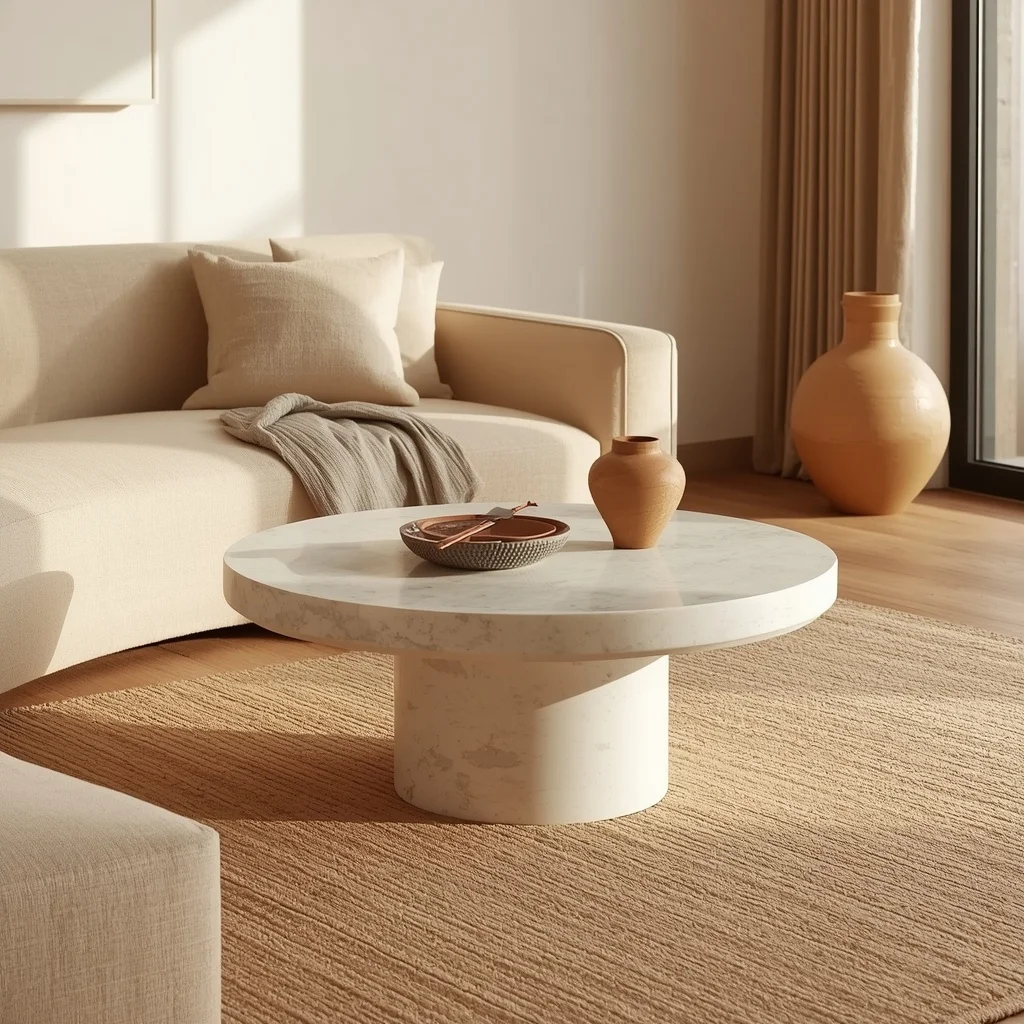
A pedestal coffee table creates impact through simplicity. Instead of multiple legs competing for attention, one substantial central base supports the tabletop and gives the furniture a sculptural presence. Travertine is particularly appealing because its warm neutral coloring and natural pores add texture without demanding bold decoration. A round version works beautifully with curved sofas and softer furnishings, while a larger rectangular design can anchor a spacious sectional. Because the base is centralized, seating can feel less visually restricted around the table. This combination makes the piece both practical and quietly architectural.
Natural stone becomes even more inviting when surrounded by soft materials. Pair travertine with boucle, linen, wool, or woven textures to balance its solid appearance and create a comfortable atmosphere. Its earthy undertones also work beautifully with oak, walnut, cream, and muted brown accents. Keep styling uncomplicated because the stone itself provides enough character. A shallow wooden tray or sculptural ceramic object can add contrast without hiding the surface. With careful proportions, a pedestal table becomes a lasting centerpiece that feels sophisticated today while remaining adaptable as your decorating style evolves.
Sculptural Metal Frame
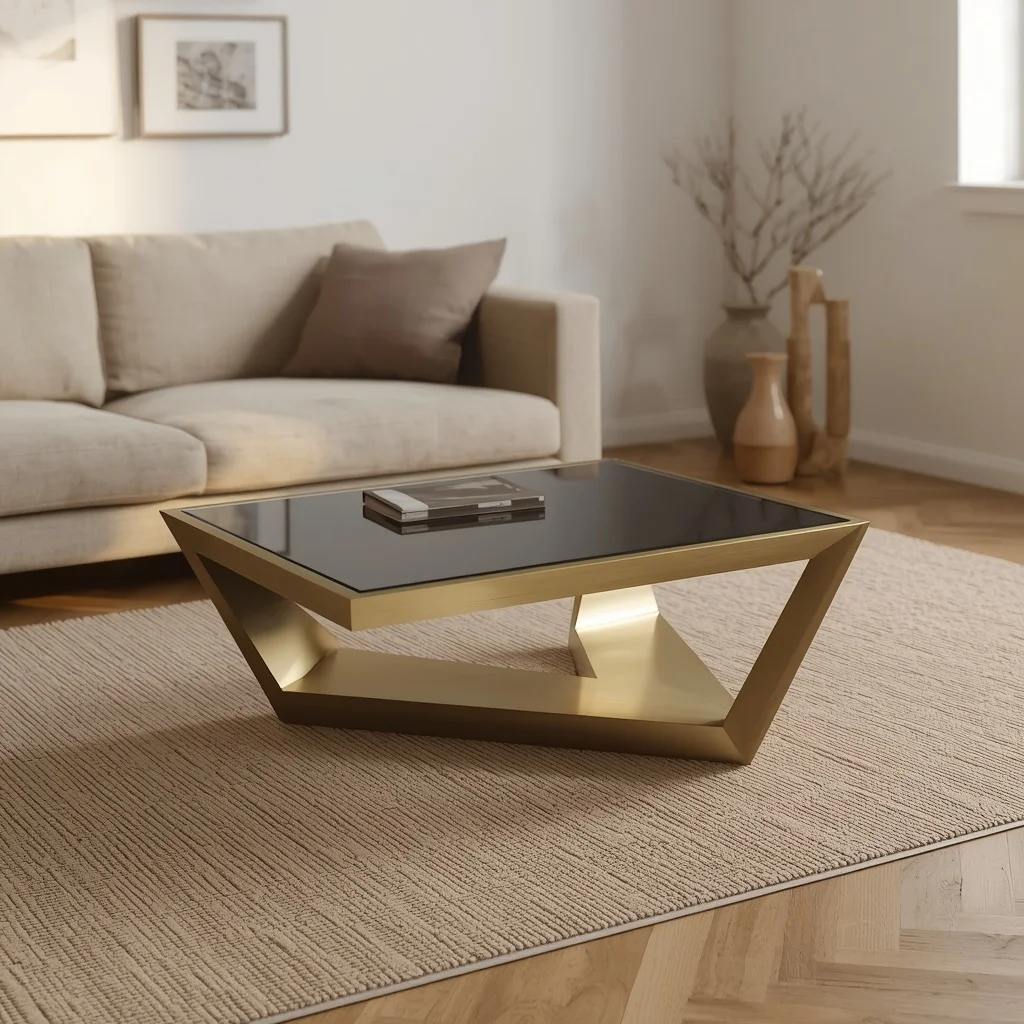
A sculptural metal frame can transform a simple coffee table into functional artwork. Curved steel, interlocking forms, or carefully angled supports create visual interest beneath an otherwise restrained tabletop. Brushed brass brings warmth, while black metal provides stronger contrast and a more graphic appearance. Pairing an intricate frame with clear or lightly tinted glass keeps the overall design from becoming visually dense. In my experience, this approach works best when the rest of the room has clean silhouettes. The table gets room to stand out, while the surrounding furniture keeps the composition balanced.
The frame can also help connect different design elements throughout the room. Repeat its finish subtly in a floor lamp, cabinet hardware, picture frame, or decorative object for a cohesive appearance. Avoid matching every metal surface exactly; small variations often make the room feel more collected and natural. Keep the tabletop relatively uncluttered so the structure remains visible from multiple angles. Whether your style leans contemporary, glamorous, or transitional, a thoughtfully designed metal frame can add personality without overwhelming the space. It is a practical centerpiece with enough character to make the entire seating area feel considered.
Conclusion
The right coffee table can bring the entire living room together. From natural stone and warm wood to sculptural metal, hidden storage, and transparent acrylic, these ideas show how one carefully chosen piece can add personality, texture, and function without overwhelming your space.
When choosing your favorite unique coffee table design ideas, consider your room size, seating arrangement, existing finishes, and everyday needs. A beautiful table should work with your lifestyle as well as your decor. Save this collection on Pinterest for inspiration, revisit your favorite designs, and choose the one that speaks to your space. Small furniture changes can create surprisingly big transformations, so start exploring and make your living room feel uniquely yours.
Read More: 17 Thrift Store Upcycle Ideas That Look High End DIY