16 Upcycled Button Down Shirt Ideas to Try
Introduction
You can transform pre-owned clothing into unique treasures by exploring these creative upcycle button down shirt ideas. These projects help you repurpose men’s button down shirt fabric into functional accessories, home decor, and even new wardrobe pieces.
This article covers a variety of ways to breathe new life into your textile collection, ranging from simple no sew button down shirt crafts to more involved upcycled dress shirt sewing projects. You will find guidance on how to maximize your material usage, including common practices like using fusible interfacing for structural support in small pouches or stuffed toys. Whether you are a beginner looking for an easy thrift flip button up shirt project or an experienced sewer seeking inspiration for your fabric scraps, the following list provides actionable steps to help you get started with your next creative challenge.
Essential Tools and Materials
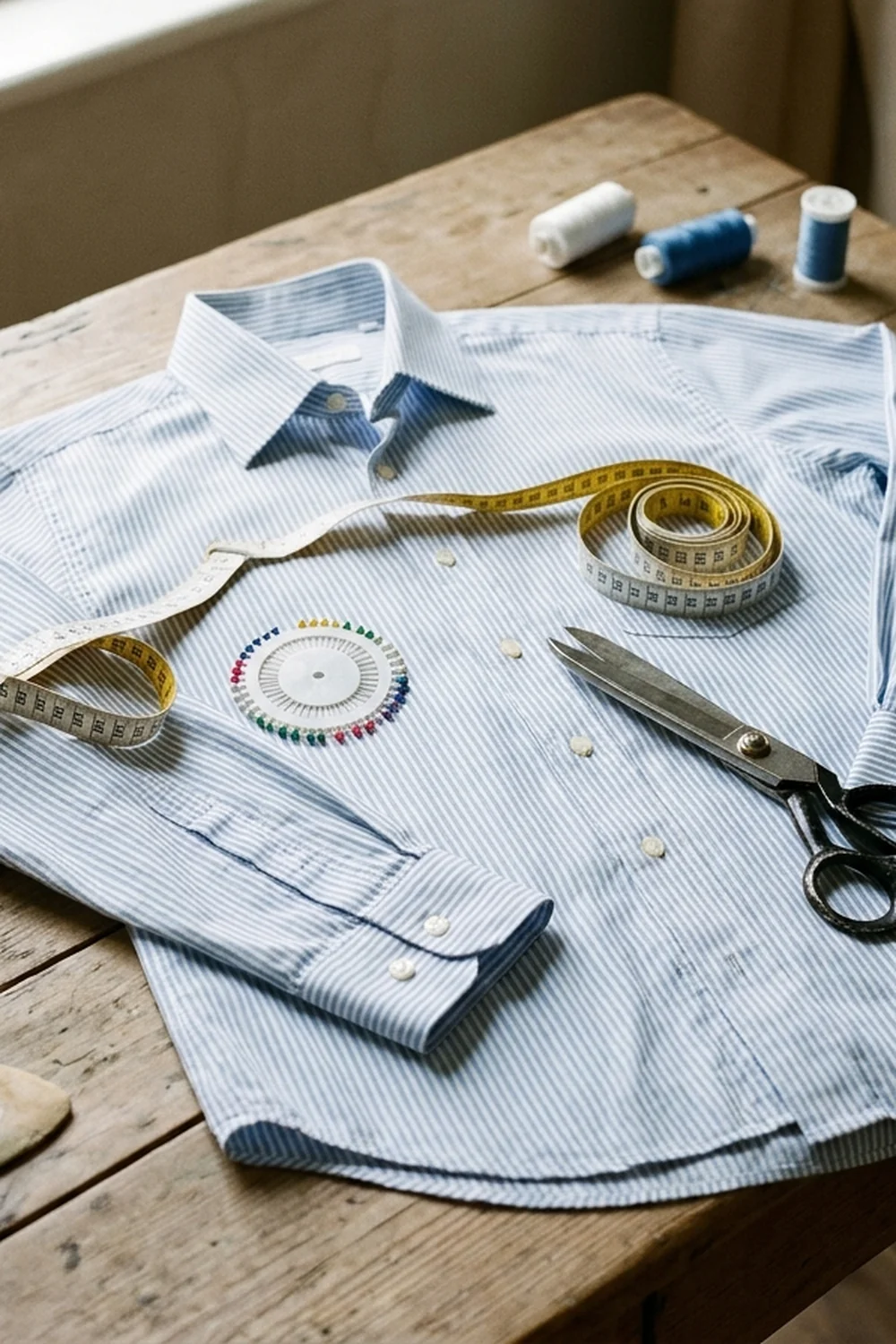
You need a few reliable basics to successfully begin your textile recycling journey. A standard men’s dress shirt with a 16.5 inch neck size typically provides enough cotton broadcloth to complete several smaller projects. Having a dedicated space and the right instruments ensures your creative process stays enjoyable and organized.
For those exploring no sew button down shirt crafts, your toolkit should focus on precision and adhesion. Sharp fabric shears are non-negotiable for clean cuts that prevent fraying. Keep a seam ripper handy to carefully salvage buttons, pockets, or cuffs from your source garment before you start cutting the main panels.
If you are moving into intermediate sewing projects, a sewing machine becomes your primary partner. Equip it with a buttonhole foot if you plan on creating garments that require functional closures. You will also find a rotary cutter and a self-healing mat invaluable for achieving straight lines, especially when working with the crisp texture of cotton broadcloth.
Structural support is the secret to professional-looking results. When crafting items like zippered pouches, common guidance suggests using fusible fleece to add necessary shape and rigidity. Similarly, when sewing stuffed toys or more complex figures, using fusible interfacing helps reinforce the fabric pieces so they hold their shape over time.
- Fabric shears for clean edges
- Seam ripper for salvaging hardware
- Rotary cutter and self-healing mat
- Sewing machine with a buttonhole foot
- Fusible interfacing for structure
- Fusible fleece for padding
Sustainability starts with choosing high-quality pre-owned materials. Cotton broadcloth is a favorite for many because it is durable, easy to press, and holds a crisp edge during construction. By repurposing these items, you reduce textile waste while building a collection of unique, handmade goods tailored to your personal style.
Washing and Preparing Shirts
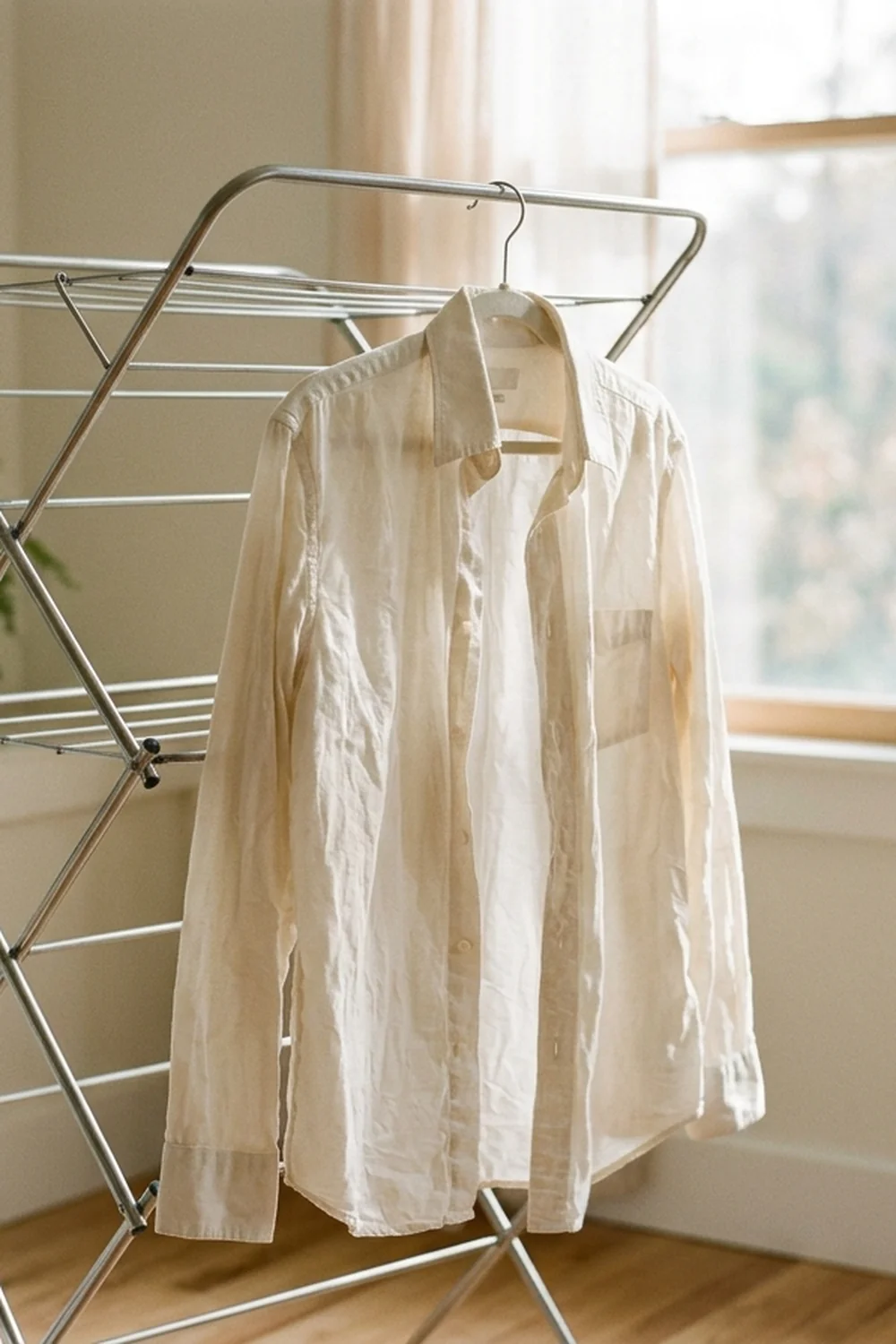
Clean and sanitize every thrifted garment before you begin any project to ensure your workspace remains hygienic. Wash the items in hot water and dry them on a high heat setting to eliminate allergens or residue from previous owners.
Inspecting the material helps you choose the right project for your needs. Natural fibers like 100 percent cotton are breathable and hold a crisp press, which is ideal for structured items like bags or stuffed animals. Blends often contain polyester, making them more resistant to wrinkles but potentially trickier to press into sharp, permanent creases.
Efficiently harvesting fabric requires a methodical approach to dismantling the construction. Use a seam ripper to carefully break the threads along the flat-felled seams, which are common on most dress shirts. Taking your time here prevents accidental snags or holes in the usable panels.
- Always wash and dry thrifted fabrics thoroughly to remove potential dust or lingering odors before you start cutting.
- Check the garment labels for material composition, as 100 percent cotton is generally easier to work with for beginners than synthetic blends.
- Use a sharp seam ripper to gently remove the sleeves, collar, and cuffs before opening up the side seams to lay the fabric flat.
- Keep in mind that a standard men’s dress shirt with a 16.5 inch neck size typically offers a generous amount of material for multiple small items.
- Organize your harvested pieces by size and grainline to make it easier to repurpose men’s button down shirt fabric for your specific pattern.
Once the shirt is deconstructed, you can stabilize lighter fabrics with fusible interfacing to give your creations professional structure. This is especially helpful when making small pouches or accessories that need to maintain their shape during regular use.
Creating Wearable Fashion
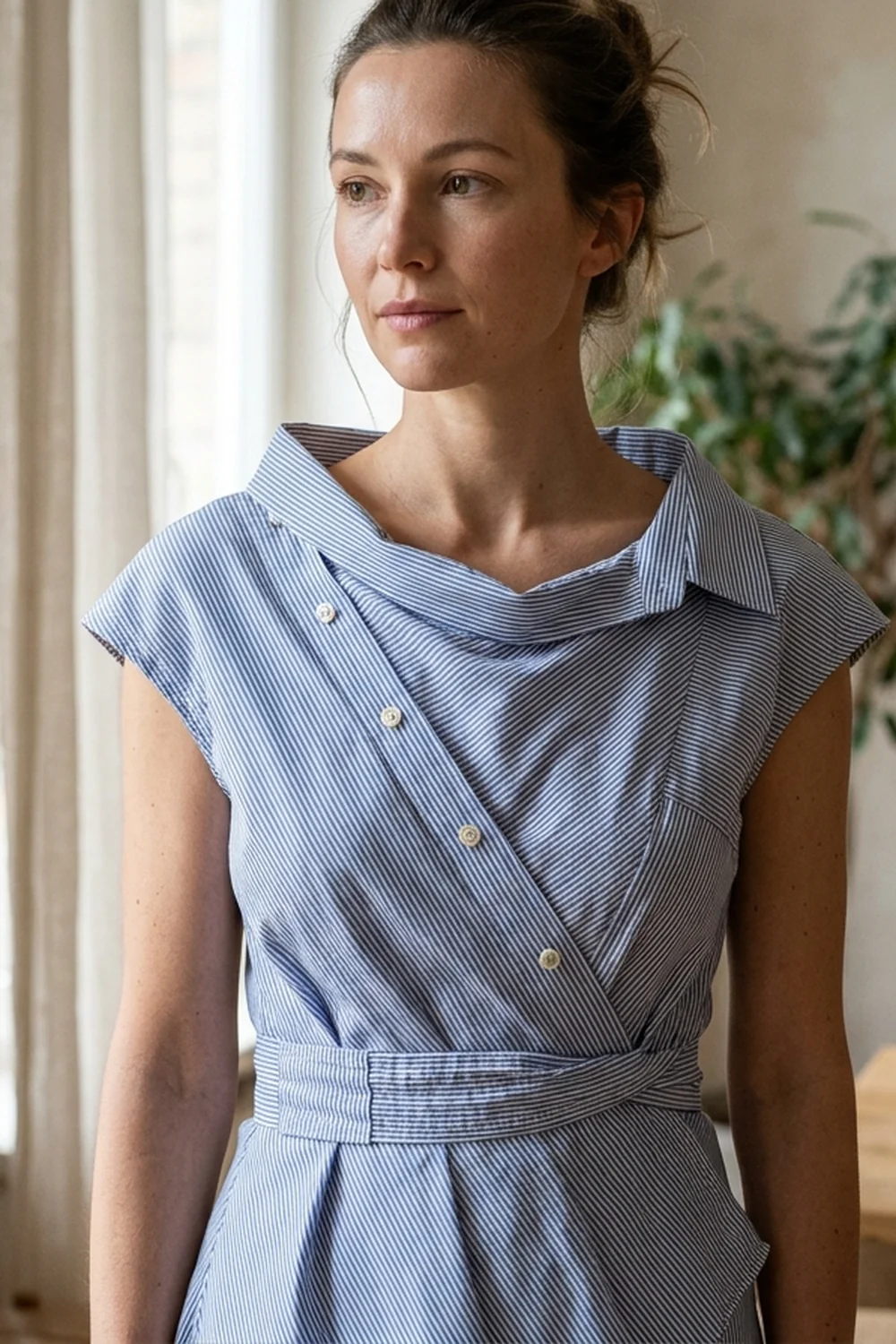
You can transform an oversized garment into a fitted piece by strategically removing excess fabric and defining the waistline. Start by trying on the shirt inside out and pinning the sides to your desired shape before trimming the excess with fabric shears. This diy women’s top from men’s shirt approach often involves converting a boxy silhouette into a tailored look by sewing new side seams that follow your natural curves.
Using elastic or ribbon provides a simple way to adjust the fit without complex tailoring. You can sew a casing along the waist or back panel and thread elastic through it to create a gathered, feminine effect. Alternatively, adding ribbon ties at the sides allows for a customizable cinch that makes the garment more adjustable. These methods are common staples for a successful thrift flip button up shirt project, as they offer flexibility in sizing.
Working with button plackets on a sewing machine requires extra care to maintain a professional finish. Keep these tips in mind as you navigate the thicker layers:
- Use a walking foot or a standard presser foot with a slightly longer stitch length to help the machine feed over the bulky, multi-layered placket area.
- Slow down your speed significantly when approaching the buttons or thick seams to avoid breaking your needle.
- Consider using a hand wheel for the final few stitches if you feel the machine struggling with the fabric density.
- Ensure you have a fresh, sharp needle installed, as the reinforced fabric in these areas can be quite tough.
Common guidance suggests that a standard dress shirt with a 16.5 inch neck size provides ample material for these types of modifications. Because the fabric is often a stable cotton broadcloth, it holds its shape well under the presser foot. Take your time to align the placket edges before you begin stitching to ensure the front remains centered and straight throughout the process. Proper preparation keeps the buttons aligned while you reshape the body of your new garment.
Small Accessories Projects
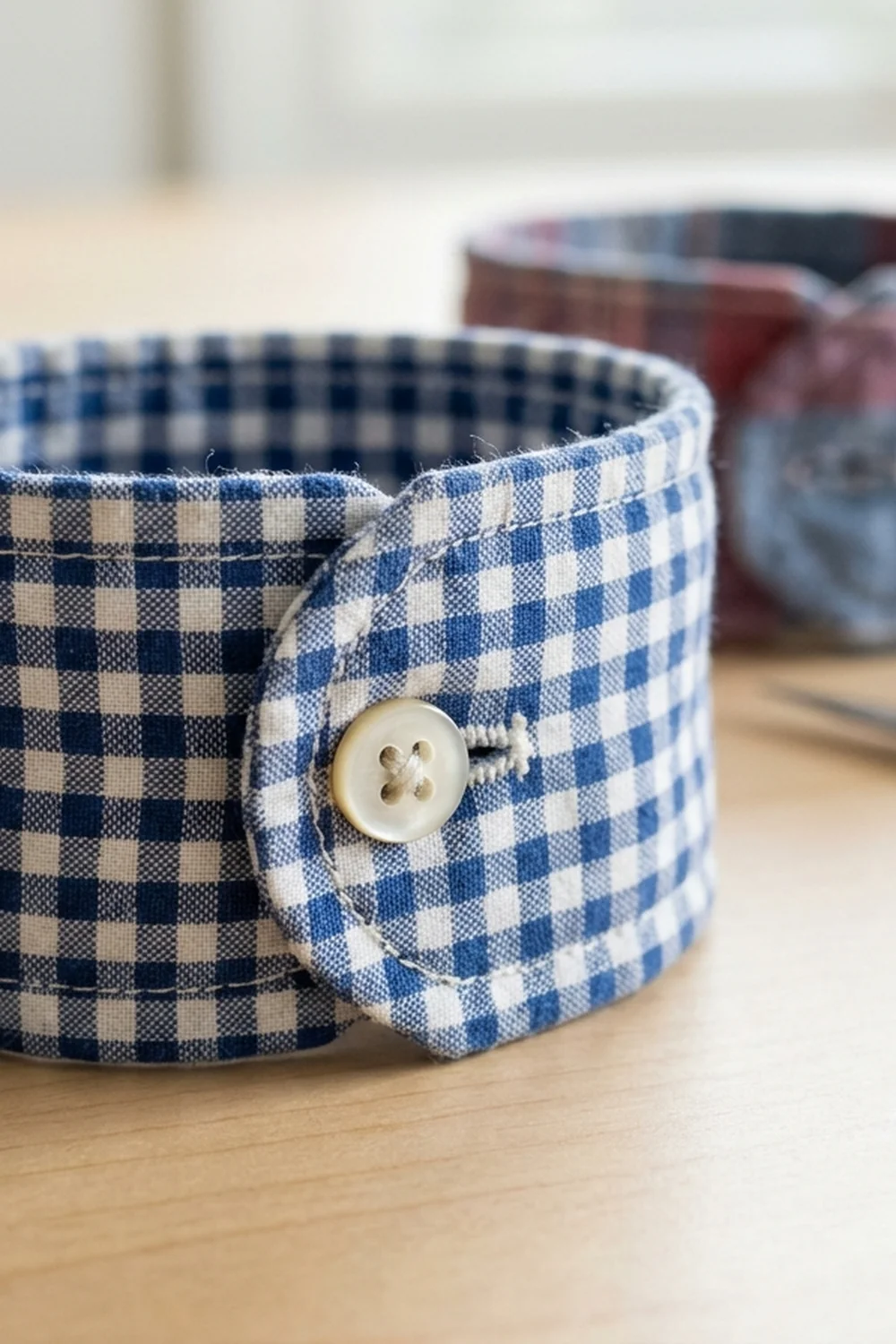
You can transform the smallest components of a thrifted garment into functional pieces by focusing on structural elements like cuffs and collars. These upcycled dress shirt sewing projects provide a clever way to minimize waste while creating custom gifts or personal items.
When you detach the cuffs from a button up shirt, you are left with a readymade base for unique fabric bracelets. These cuffs already have buttonholes and stiffening, providing natural structure for your wristwear. Simply trim the seam allowance, add a decorative ribbon or charm, and you have a personalized accessory that showcases the original fabric texture.
Collar scraps serve as excellent material for compact storage solutions, such as custom chapstick holders. By folding the collar layers and securing them with a small loop, you create a durable casing that protects your lip balm while keeping it easily accessible. This is an efficient way to use the firm, multi-layered fabric found in the neckline.
Remnants from the shirt body are perfect for crafting small, everyday items that keep your essentials organized. Common guidance suggests that a standard men’s dress shirt provides enough fabric for multiple small projects, making it a sustainable choice for your craft stash.
- Convert shirt cuffs into stylish bracelets by utilizing the existing buttons for a secure, adjustable fit.
- Fashion tiny chapstick holders from collar sections to keep your essentials attached to a bag or set of keys.
- Sew rectangular fabric remnants into sturdy bookmarks by using fusible interfacing to add necessary thickness.
- Create personalized keychains by wrapping shirt scraps around a metal ring and stitching the ends together.
- Use leftover collar fabric to design miniature pouches that hold loose change or small hardware.
- Construct fabric-covered elastic hair ties by encasing thin strips of cotton broadcloth around a hair elastic.
Constructing Tote Bags
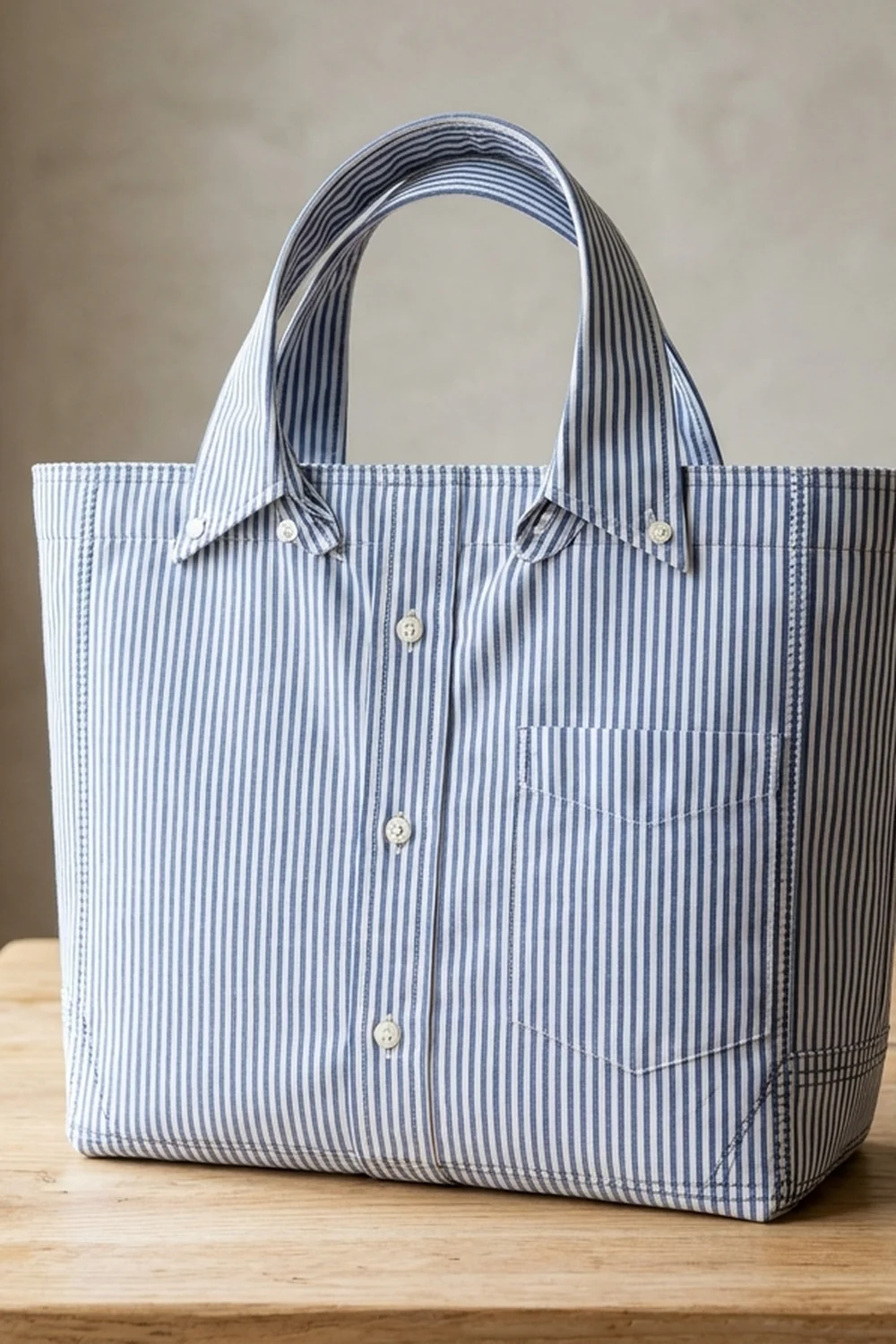
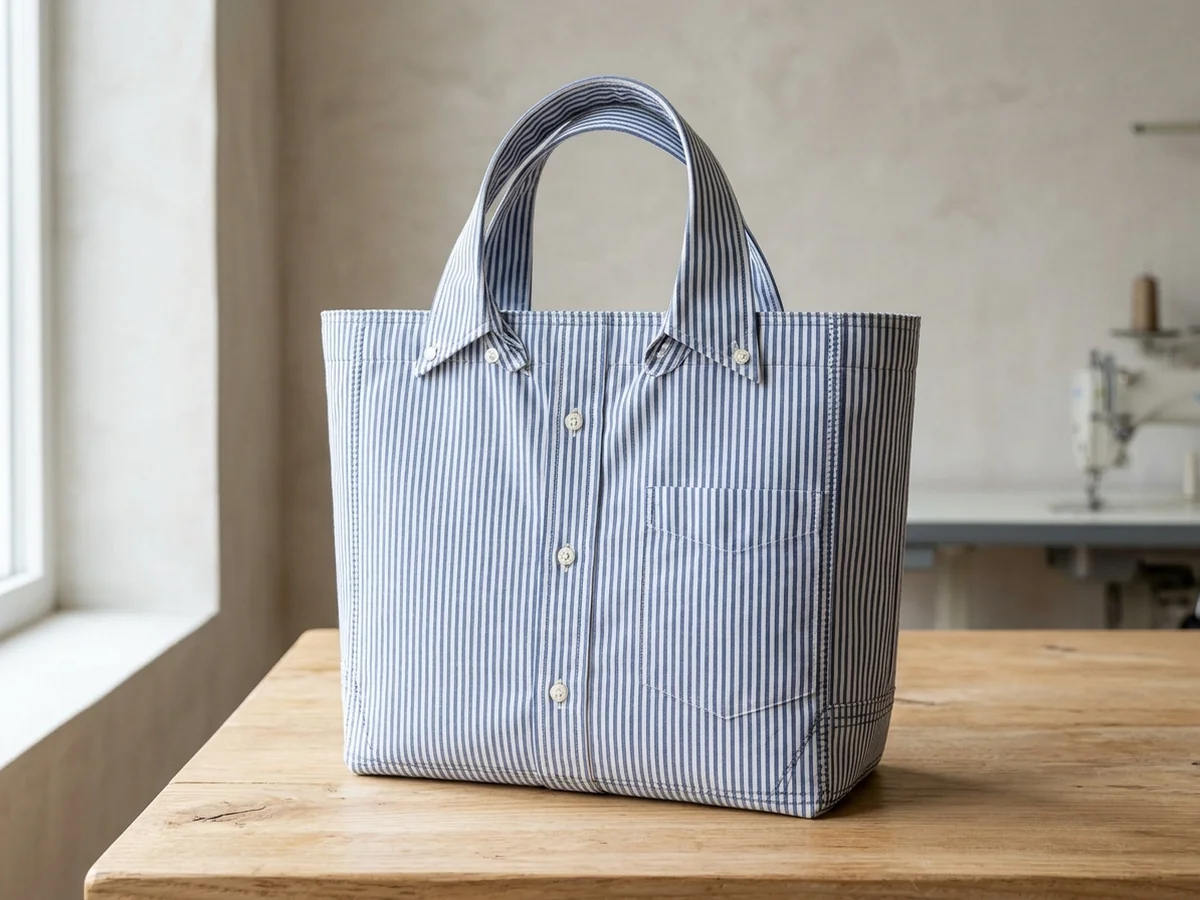
You can create sturdy tote bags and zippered pouches by incorporating stabilizing materials that give shirt fabric structure. When choosing from various upcycle button down shirt ideas, keep in mind that the material itself is often lightweight cotton broadcloth, which needs extra support to hold its shape as a bag.
For zippered pouches, common guidance suggests using fusible fleece to add rigidity. Applying this layer to the wrong side of your shirt panels creates a professional, padded feel that prevents the bag from collapsing. It provides enough body for the pouch to stand on its own while remaining easy to sew through with a standard machine.
If you prefer a structured tote or a smaller fabric pouch, fusible interfacing is your best tool for stiffening the fabric. You can iron it directly onto the cut panels to create a crisp finish. This prevents the finished item from looking limp and helps it maintain its intended silhouette during daily use.
When you decide to sew stuffed toys using shirt scraps, internal reinforcement is essential for durability. Common guidance advises using fusible interfacing on the fabric pieces before you start stitching them together. This step stops the fabric from stretching out of shape when you stuff the toy with fiberfill.
- Use a walking foot on your sewing machine if you are stitching through multiple layers of fabric and fusible fleece.
- Always test a small scrap of your shirt fabric with the fusible product to ensure the adhesive bond holds correctly.
- Keep your seam allowances consistent to ensure the internal support materials line up perfectly at the edges.
- Press your seams flat after sewing to make sure the interfacing remains securely attached to the fabric.
No Sew Creative Options
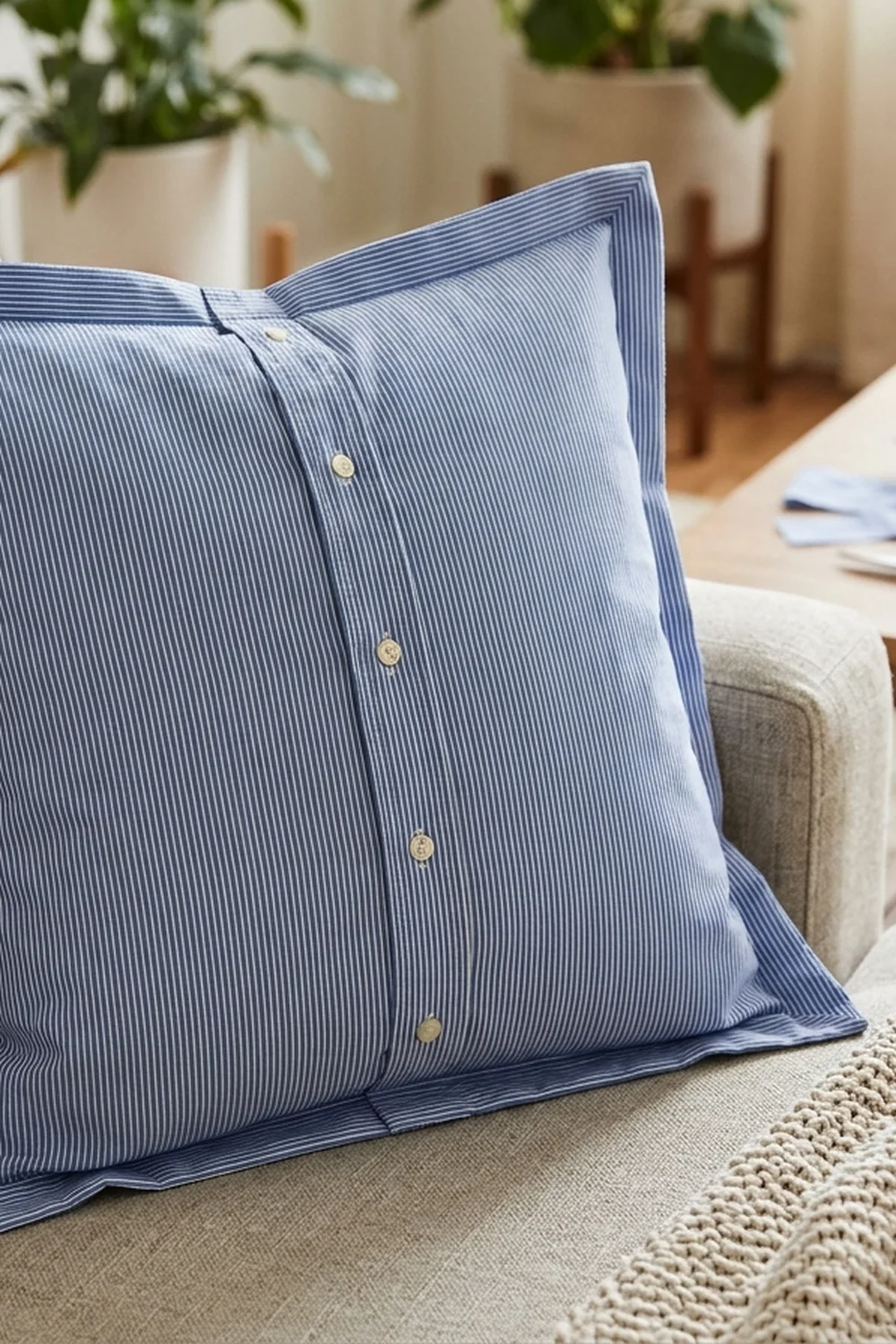
You can transform a standard dress shirt into functional decor and accessories without ever touching a needle or thread. These no sew button down shirt crafts rely on simple adhesives and clever structural manipulation to repurpose fabric effectively.
Fabric glue provides an excellent solution for securing layers when you want to create wall hangings or decorative fabric panels. Because a typical men’s dress shirt offers plenty of material, you can easily cut shapes or strips to mount onto a backing board using a strong, permanent bond. This method keeps edges crisp and prevents fraying without requiring traditional hem finishes.
Knotting techniques offer a durable way to construct functional items like tote bags entirely through mechanical tension. By tying strips of fabric together in specific patterns, you create a sturdy structure capable of holding weight, making this an ideal approach for beginners looking to avoid complex assembly.
Iron on adhesives serve as a versatile tool for quick repairs or structural modifications. Common guidance suggests using these strips to stabilize hems or create clean folds on pocket openings, which provides a professional look that stays secure through regular use.
- Use fabric glue to mount geometric shirt patterns onto rigid frames for instant wall art.
- Create a sturdy tote bag by braiding and knotting the body of the shirt into a base.
- Apply iron on adhesive tape to secure a clean hem on a repurposed apron or placemat.
- Fashion quick wall hangings by gluing shirt fabric scraps directly onto canvas supports.
- Use heat activated tape to reinforce the edges of a fabric pouch for added durability.
- Knot the sleeves of a shirt together to form the handles of a casual grocery tote.
Preventing Fabric Fraying
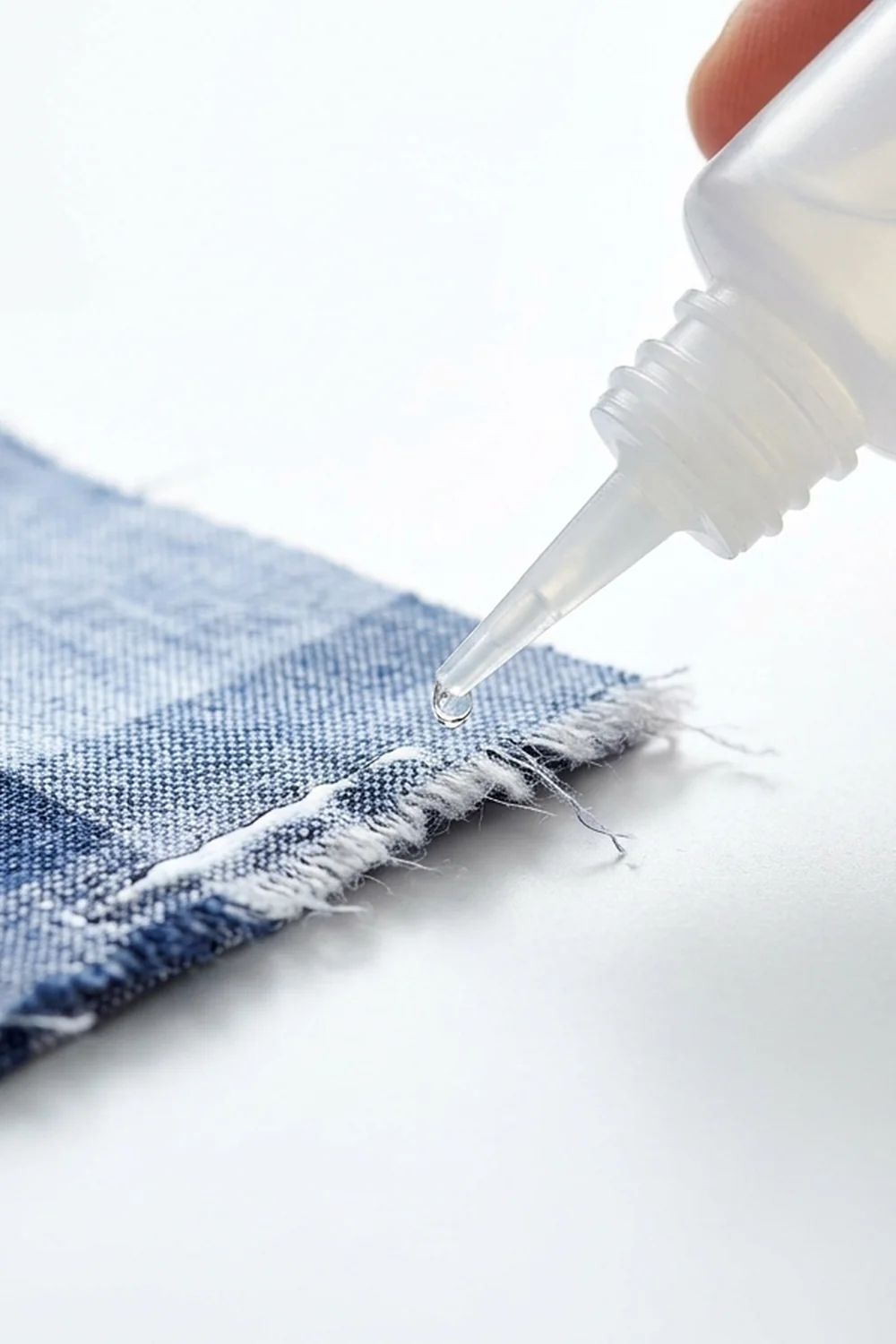
When you start to repurpose men’s button down shirt materials, the weave of the fabric can sometimes be prone to unraveling. Managing these edges is essential for maintaining the structural integrity of your finished pieces. Whether you are crafting small accessories or a diy women’s top from men’s shirt, addressing fraying early ensures your final result looks professional rather than unfinished.
One of the best ways to prevent fraying before you even begin sewing is through proper material assessment. Many shirts are made from cotton broadcloth, which is crisp and easy to work with, but it can still fray if cut on the bias. Always use sharp fabric shears or a rotary cutter to ensure clean lines. A common mistake is using dull scissors, which can chew the fabric fibers and encourage unraveling. Before committing to your main pieces, test your machine settings on a scrap of fabric. This allows you to check your tension and stitch width without risking your project.
Strategic reinforcements are your best tools when working with upcycled dress shirt sewing projects. Consider these techniques to keep your edges secure:
- Use Fusible Interfacing: This is a standard method to reinforce fabric pieces. It is particularly helpful when crafting stuffed toys, as it prevents the seams from pulling apart under the pressure of stuffing.
- Add Rigidity with Fusible Fleece: If you are creating zippered fabric pouches, fusible fleece provides the necessary shape and structure, preventing the fabric from bunching near the zipper teeth and minimizing strain on the seams.
- Mind the Grain: Aligning your pattern pieces with the fabric grain prevents skewed results. Off-grain cutting often causes pieces to twist or stretch unevenly as you sew, which puts extra stress on your seams and leads to premature fraying.
- Manage Buttonholes Manually: If you do not have a dedicated buttonhole foot, you can still manage closures. Manually adjust your sewing machine stitch width and length to create a dense zigzag stitch, which acts as a durable frame to stop the fabric from fraying around the opening.
Finally, be realistic about your yield. While common guidance suggests that a standard men’s dress shirt with a 16.5 inch neck size provides enough fabric for multiple small items, you should always account for seam allowances. If you cut your pieces too close to the edge of the fabric, you reduce the room available for securing those edges, which makes your project more susceptible to fraying over time.
Upcycling Vintage Flannels
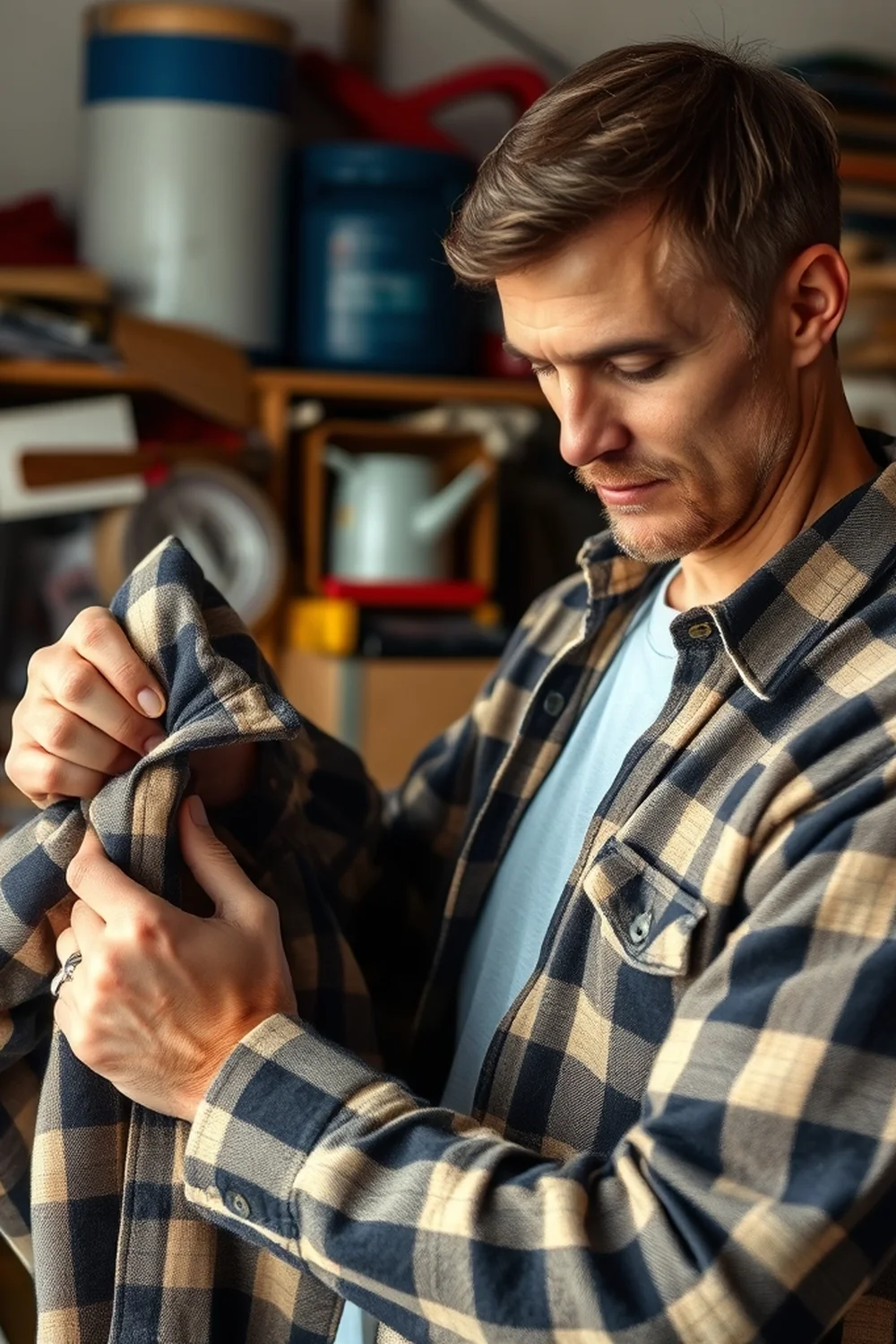
Before cutting into a cherished vintage piece, assess the fabric for structural integrity and complexity. If you notice signs of extensive rot, thinning, or intricate tailoring that requires advanced pattern drafting, it is often safer to preserve the garment as is rather than attempt a transformation. Professional textile conservators can provide guidance if you are dealing with a rare or historically significant fabric that needs specialized care.
Home sewing machines often struggle with the heavy interfacings found in formal collars and cuffs. When working with these dense layers, you might find that a standard machine jams or breaks needles frequently. It is often wise to remove original interfacings and replace them with lighter, modern alternatives that suit your domestic setup. This change ensures your machine runs smoothly and prevents unnecessary frustration during the construction phase.
When you begin your project, keep these practical limitations and considerations in mind to ensure a successful outcome:
- A standard men’s dress shirt with a 16.5 inch neck size typically provides enough fabric for several small creative projects.
- Fusible fleece is commonly used to add necessary shape and rigidity when creating zippered fabric pouches from shirt remnants.
- Fusible interfacing is frequently employed to reinforce fabric pieces when sewing stuffed toys, helping them maintain their intended form over time.
Always inspect the shirt for hidden structural damage, such as worn seams or weakened fibers around the buttonholes, before you begin. If a piece requires major reconstruction, like changing the set-in sleeve angle or taking in a complex dart structure, consider whether your current sewing skills match the project’s needs. Starting with simpler designs allows you to build confidence and understand how different shirt fabrics behave under the needle without risking a favorite vintage find.
FAQ
How do I prepare an old shirt for a sewing project?
Start by machine washing and drying the garment to account for any potential fabric shrinkage before you begin cutting. Once clean, use a seam ripper to remove buttons or pocket labels if they interfere with your pattern layout.
What can I make with leftover shirt fabric scraps?
You can turn smaller remnants into practical items like chapstick holders, patchwork coasters, or stuffed animal toys. Using fusible interfacing is common guidance for reinforcing these smaller fabric pieces to provide extra durability and structure.
Can I turn a men’s dress shirt into a tote bag?
Yes, the back panel of a shirt often provides enough surface area to create a sturdy bag body without needing complex seams. A standard men’s dress shirt with a 16.5 inch neck size typically offers enough fabric for multiple small upcycling projects.
How can I make a zippered pouch using shirt fabric?
You can create a custom pouch by cutting two identical rectangles from the shirt body and adding a zipper across the top edge. It is common guidance to apply fusible fleece to the fabric panels, which helps the pouch maintain its shape and rigidity during daily use.
Are shirt cuffs useful for making jewelry?
Shirt cuffs are excellent for creating structured bracelets because they already feature finished edges and button closures. Simply trim the cuff from the sleeve, embellish the surface if desired, and secure it around your wrist using the existing buttonhole.
Do I need a sewing machine for all shirt upcycling projects?
Not every project requires a machine, as many shirt transformation projects rely on fabric glue or clever knotting techniques to hold pieces together. However, a sewing machine is highly recommended for projects that require structural integrity or multiple layers of cotton broadcloth.
Conclusion
The best way to begin is by assessing the fabric quality of your available shirts and selecting a project that matches your current sewing skill level. Once you have gathered your supplies, browse these creative upcycle button down shirt ideas to find your next weekend craft. Choosing a simple item like a pouch or a set of fabric scraps helps you gain confidence before moving on to larger clothing transformations.
You might also like: 16 Y2K Party Outfit Ideas Women Trending Pinterest Now