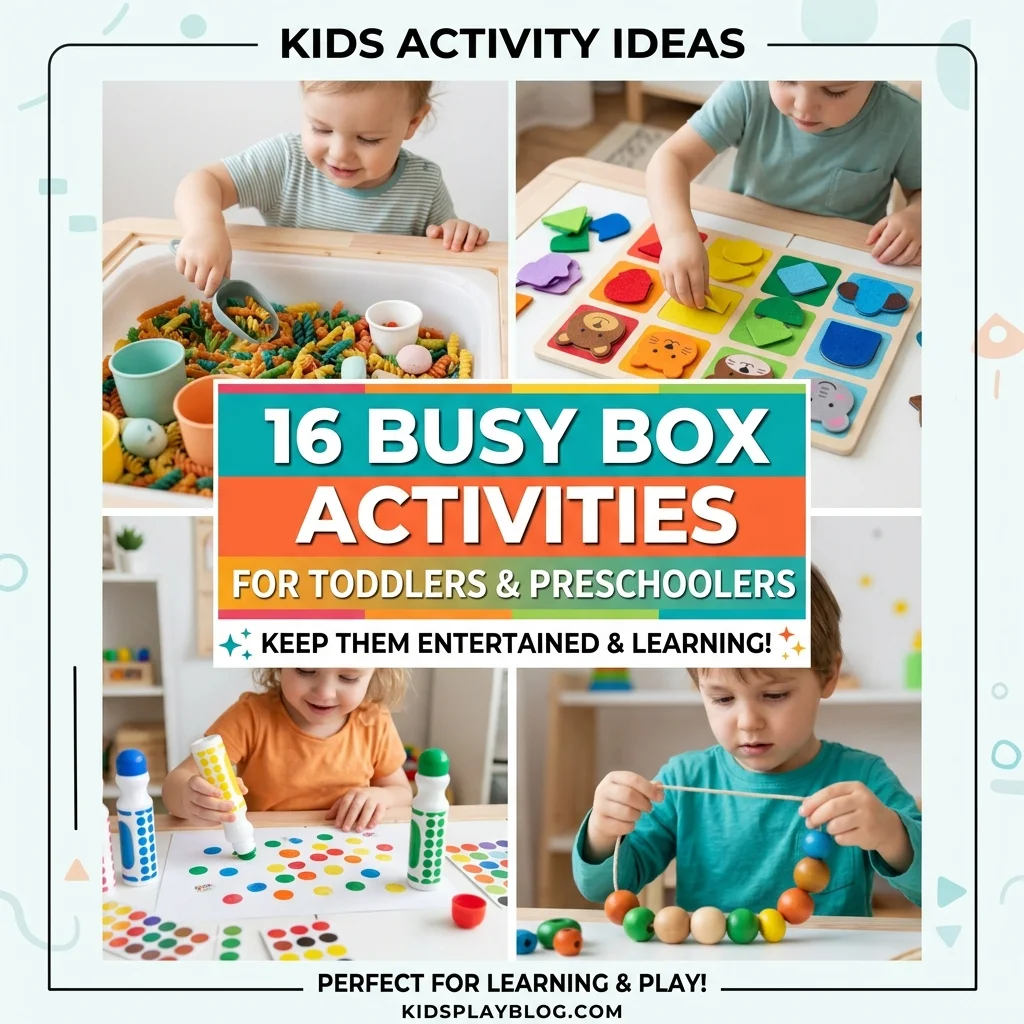
16 Busy Box Activities for Toddlers and Preschoolers
Introduction
Looking for Busy Box for toddlers and preschoolers activities that are simple to set up, fun to use, and genuinely keep little hands busy? You’re in the right place. These creative ideas are designed to encourage independent play while helping children develop important early skills through hands-on exploration.
Whether you need a quiet activity for rainy afternoons, a screen-free learning option, or a portable play idea for travel, a well-designed busy box can make everyday routines easier and more enjoyable. From sorting colorful pom poms to threading buttons and building miniature construction sites, each activity offers a balance of creativity, learning, and fun without requiring expensive materials.
In my experience, the most successful busy boxes are the ones children can return to again and again while discovering new ways to play. Rotating activities every few weeks helps maintain excitement and encourages growing curiosity. The ideas in this collection are beginner-friendly, practical, and easy to customize with materials you may already have at home. By the end of this guide, you’ll have plenty of inspiration to create engaging activity boxes that support fine motor development, early learning, problem-solving, and imaginative play while giving your child meaningful, screen-free experiences they’ll love.
Pom Pom Sort
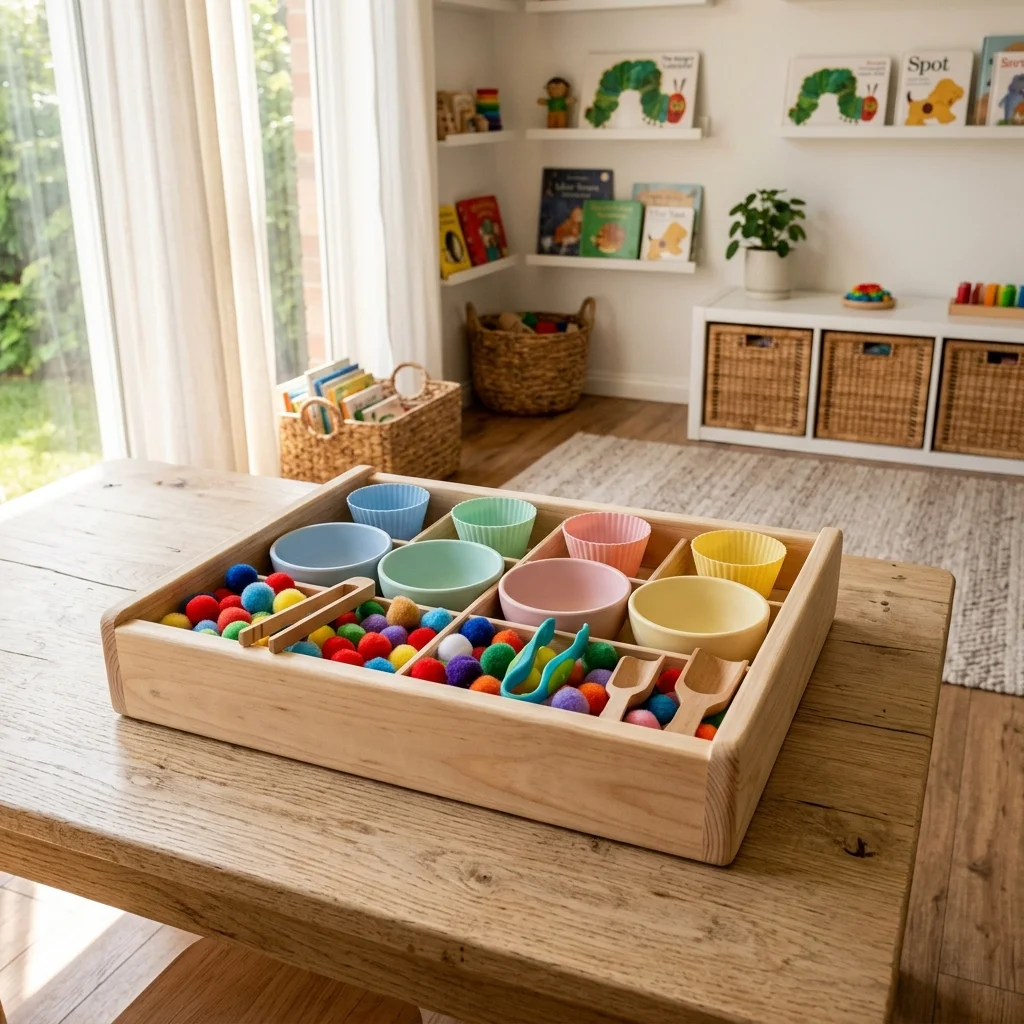
Nothing captures a toddler’s attention quite like bright colors waiting to be explored. A simple pom pom sorting box encourages little hands to practice grasping, matching, and organizing while naturally building concentration. Children can sort by color, size, or texture without feeling pressured to perform. In my experience, rotating the colors every few weeks keeps the activity feeling fresh. This compact setup also stores neatly on a shelf, making it easy to pull out whenever you need a calm, engaging activity during busy afternoons or rainy mornings at home.
Simple materials often create the longest-lasting engagement because children enjoy discovering new ways to play. This activity supports early learning while giving caregivers a quick setup that requires very little maintenance. Soft pom poms, lightweight containers, and child-friendly tools help create a safe environment for independent exploration. As confidence grows, children naturally invent their own sorting games, extending playtime without additional supplies. Many families appreciate how this idea combines creativity, organization, and practical skill building inside one reusable box designed for everyday use.
Sticker Match
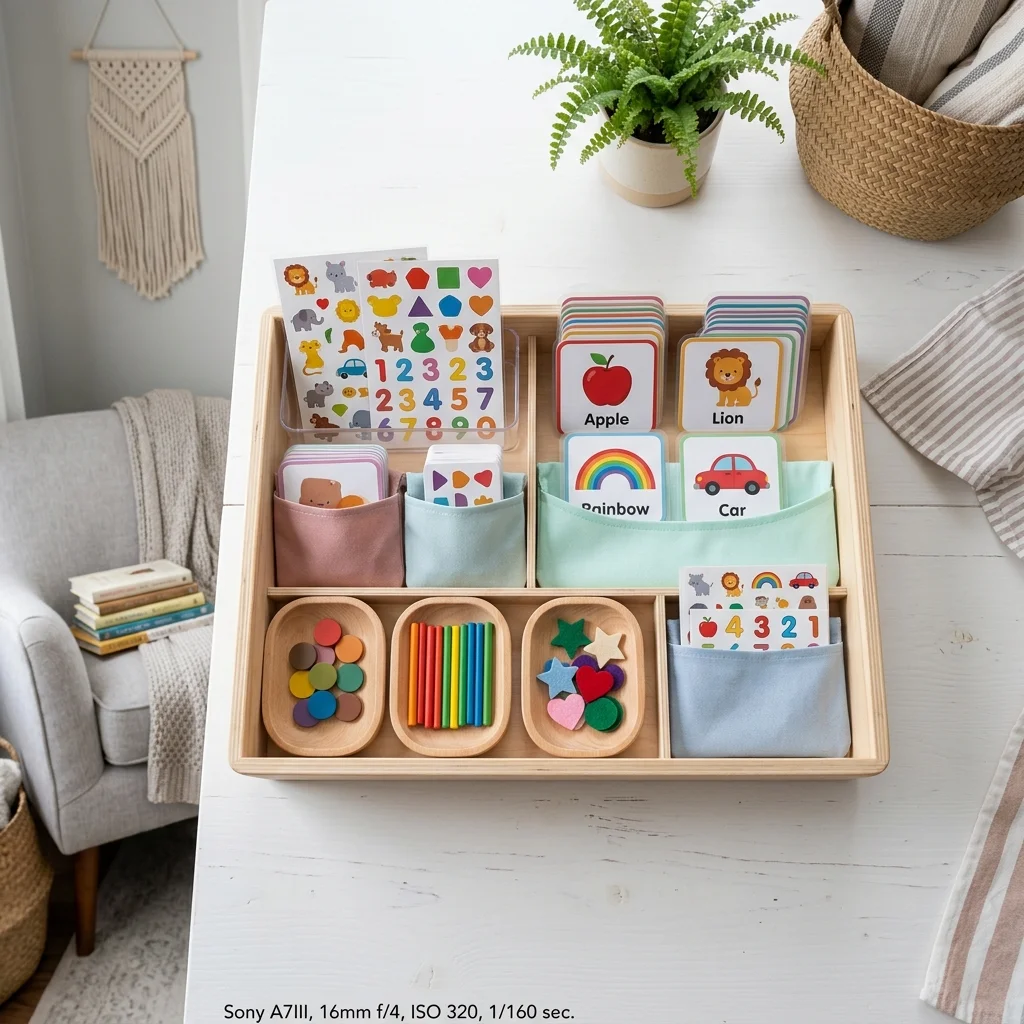
Peeling and placing stickers feels exciting while quietly strengthening important developmental skills. Children focus on matching shapes, animals, letters, or everyday objects as they compare each sticker with its correct space. I’ve noticed reusable stickers make this activity even more enjoyable because little learners happily repeat the challenge without frustration. The organized layout reduces distractions, allowing children to concentrate while experiencing small successes throughout each session. That growing confidence often encourages them to stay engaged longer and return to the activity independently throughout the week.
Parents appreciate activities that combine learning with minimal preparation, and this one delivers both. Laminated cards withstand repeated use, while organized pockets keep every piece together between sessions. As children become familiar with the matching process, they naturally improve memory, attention, and hand coordination. Swapping themed cards throughout the year keeps the experience interesting without replacing the entire box. This practical design makes one of the easiest busy boxes for toddlers and preschoolers activities to reuse across different ages and skill levels with consistent success.
Button Threading
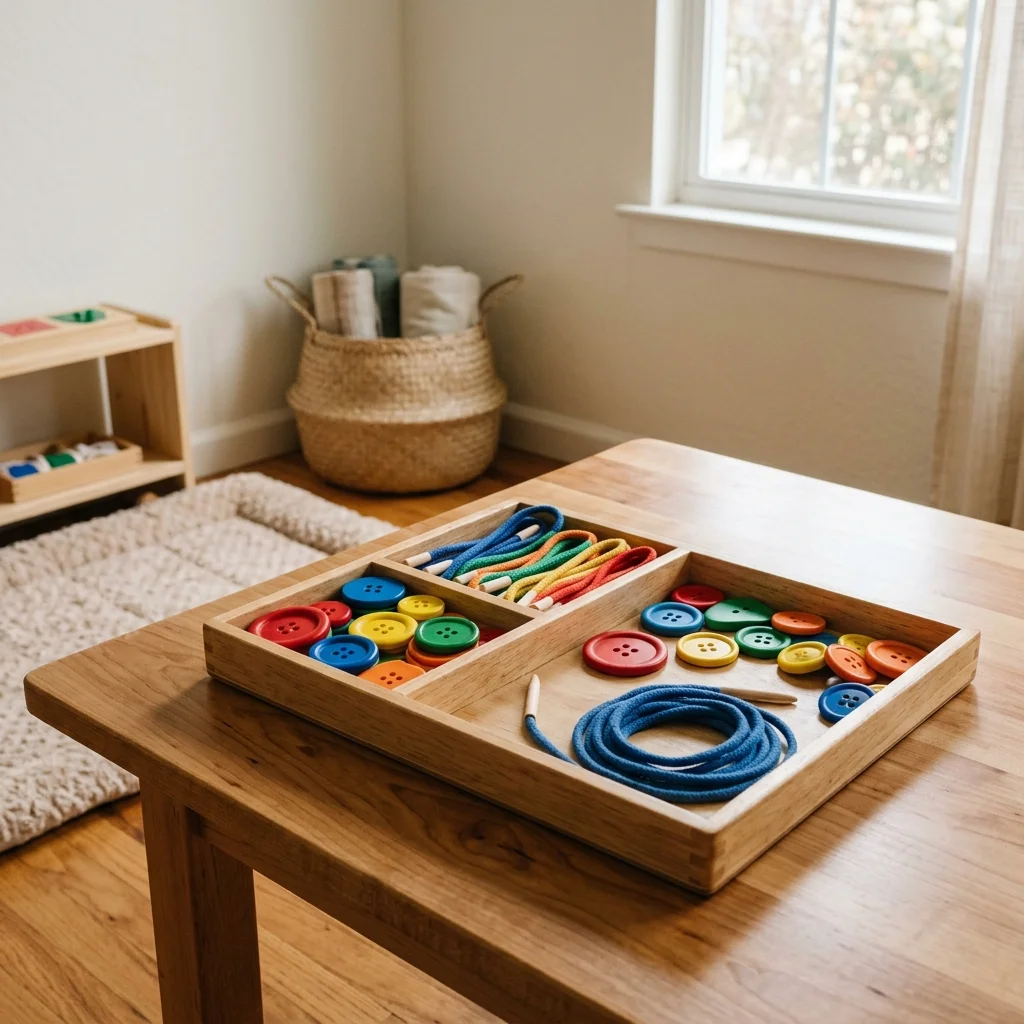
Few activities feel as satisfying as sliding colorful buttons onto sturdy laces one by one. Children strengthen finger control while experimenting with colors, sequences, and simple patterns at their own comfortable pace. Oversized pieces help beginners succeed safely without overwhelming small hands. I’ve seen this activity work especially well during quiet time because it encourages focus without requiring constant guidance. The portable design also makes it easy to bring along for travel, restaurant visits, or waiting rooms when calm entertainment is helpful.
As threading becomes easier, children often begin creating their own colorful combinations and playful challenges. This natural progression keeps interest high while supporting early problem-solving and coordination. Choosing buttons with different textures and shapes adds another sensory element without increasing complexity. The organized container prevents pieces from becoming scattered, making cleanup quick for adults and manageable for children. Activities like this offer lasting value because they grow alongside developing abilities while remaining enjoyable through repeated everyday use.
Nature Treasure
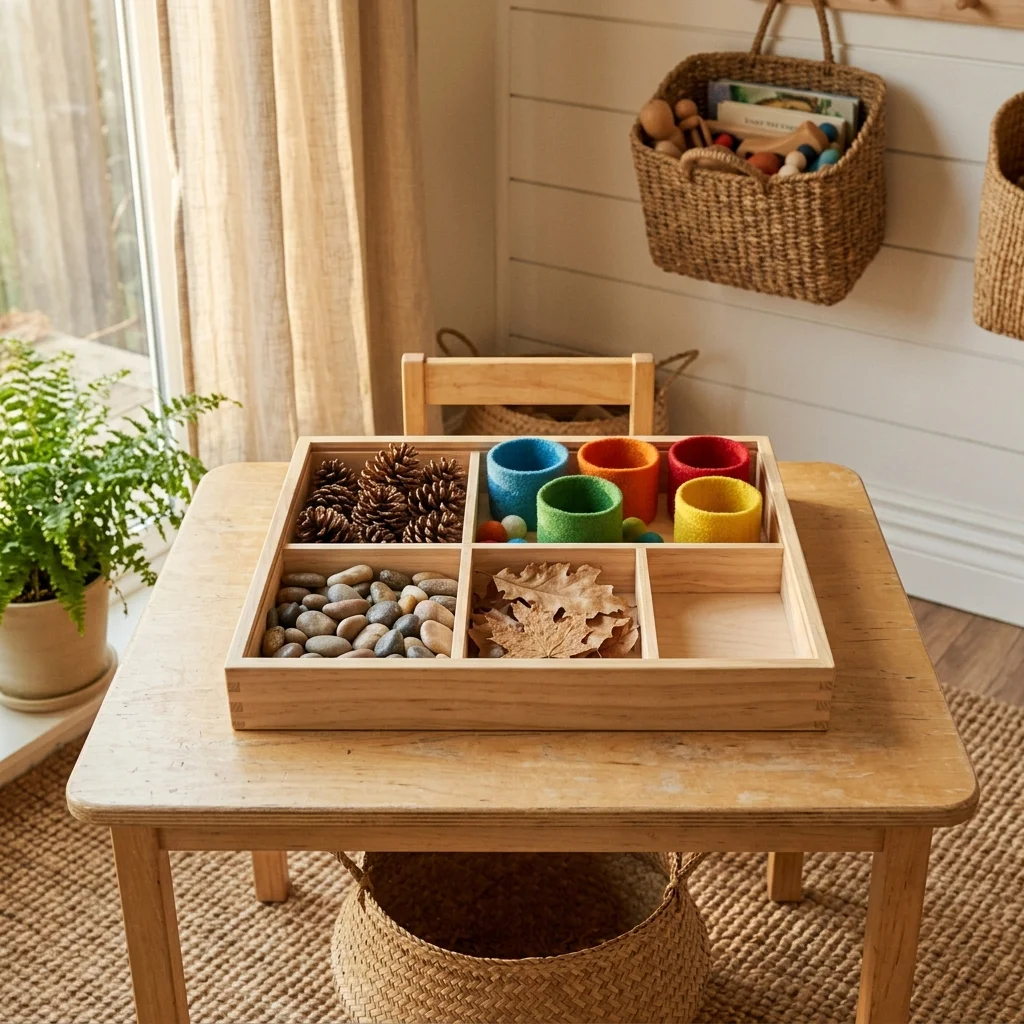
Nature has a wonderful way of turning ordinary objects into fascinating learning tools. Filling a busy box with carefully chosen natural materials invites children to touch, compare, and sort interesting textures while building observation skills. Smooth stones, pinecones, and large leaves create endless opportunities for open-ended exploration without overwhelming young learners. In my experience, children become even more engaged when they help collect the items during family walks. That personal connection makes every object feel meaningful and encourages repeated play long after the adventure ends.
Simple nature collections also inspire language development as children describe rough bark, soft leaves, or rounded stones using their own words. Rotating seasonal finds keeps the activity fresh while introducing gentle lessons about changing weather and local environments. The organized compartments prevent materials from becoming mixed together, making cleanup surprisingly quick. Families often appreciate how this reusable box encourages curiosity without relying on electronic entertainment. It transforms everyday outdoor discoveries into meaningful hands-on experiences that continue supporting creativity and independent learning throughout the year.
Pasta Patterns
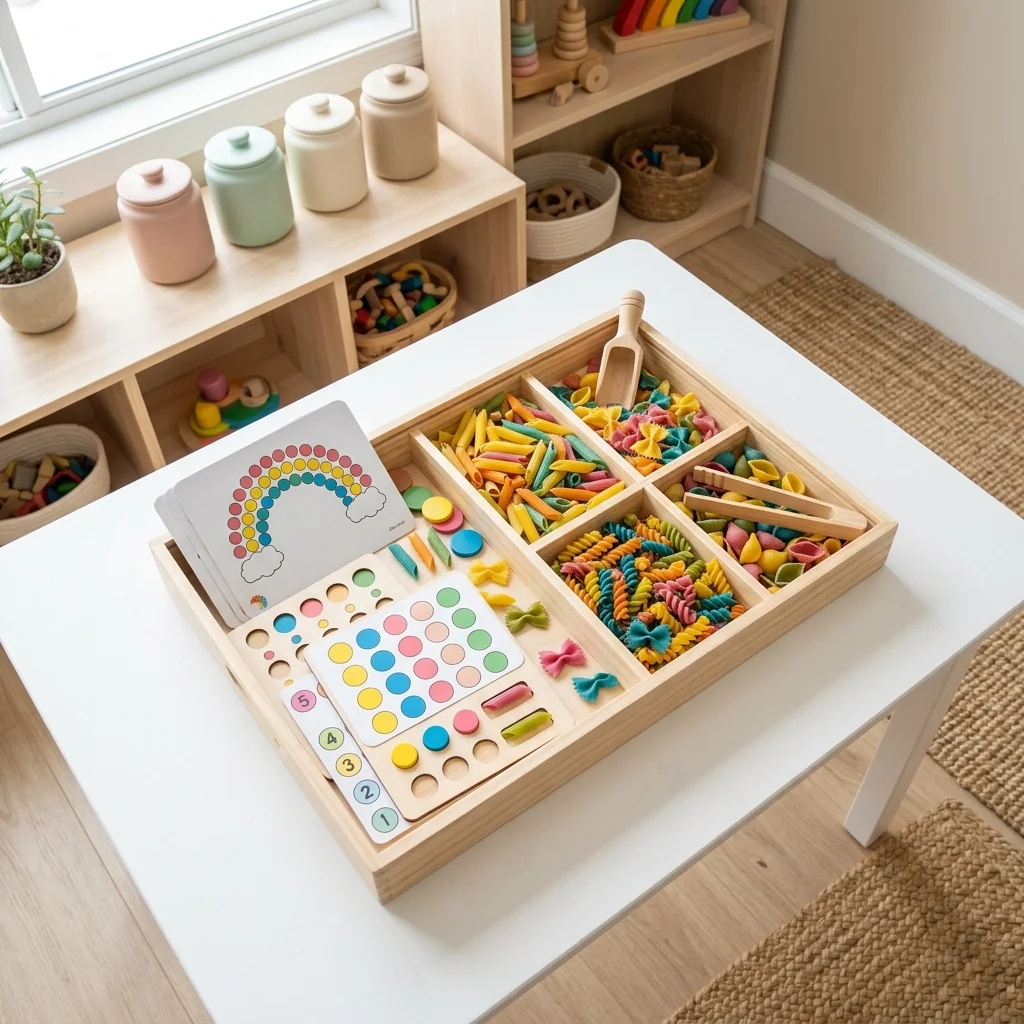
Bright pasta pieces instantly transform a simple learning activity into something exciting and approachable. Children enjoy copying easy pattern cards before experimenting with their own colorful designs, strengthening logical thinking one sequence at a time. Large pasta shapes are easy for little fingers to grasp, making the activity suitable for beginners developing fine motor control. I’ve noticed that introducing only two colors at first helps prevent frustration. As confidence grows, adding extra shapes naturally increases the challenge without changing the overall setup.
Pattern activities quietly build important early math foundations while still feeling like imaginative play. Children begin recognizing repetition, predicting what comes next, and creating original combinations without realizing they are practicing valuable cognitive skills. Keeping the pasta inside divided compartments encourages organization and makes cleanup simple after each session. This versatile idea also adapts easily for different ages by adjusting the complexity of the patterns. A well-prepared activity box like this provides countless opportunities for creative learning using inexpensive household materials that last through repeated use.
Velcro Shapes
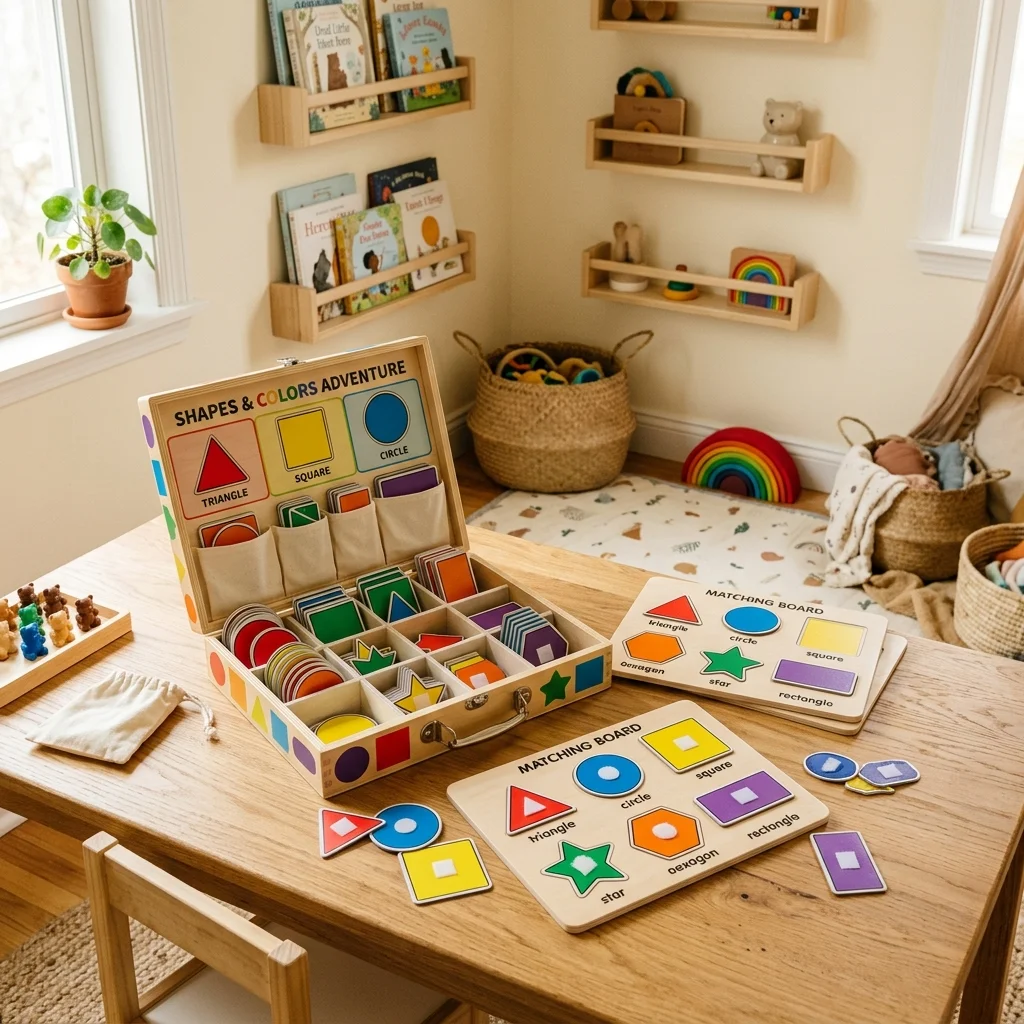
Pulling apart and reattaching Velcro shapes creates an engaging sensory experience that keeps young children interested from beginning to end. Matching circles, squares, triangles, and other familiar forms encourages careful observation while reinforcing early geometry concepts through repetition. The satisfying sound of each piece attaching to the board adds another playful element that motivates children to continue exploring. Many caregivers find this activity especially helpful because it combines movement, problem-solving, and independent practice within one compact setup that stores neatly between sessions.
Durable laminated boards allow this activity to withstand enthusiastic daily use without showing much wear. As children master basic matching, introducing colors, numbers, or simple pictures keeps the experience fresh and appropriately challenging. The reusable design reduces preparation time while offering countless opportunities for repeated practice. That’s why many early childhood educators recommend activities that invite children to learn through touch as well as sight. This approachable setup supports growing confidence while making learning feel playful, calm, and naturally rewarding every single day.
Rainbow Clothespins
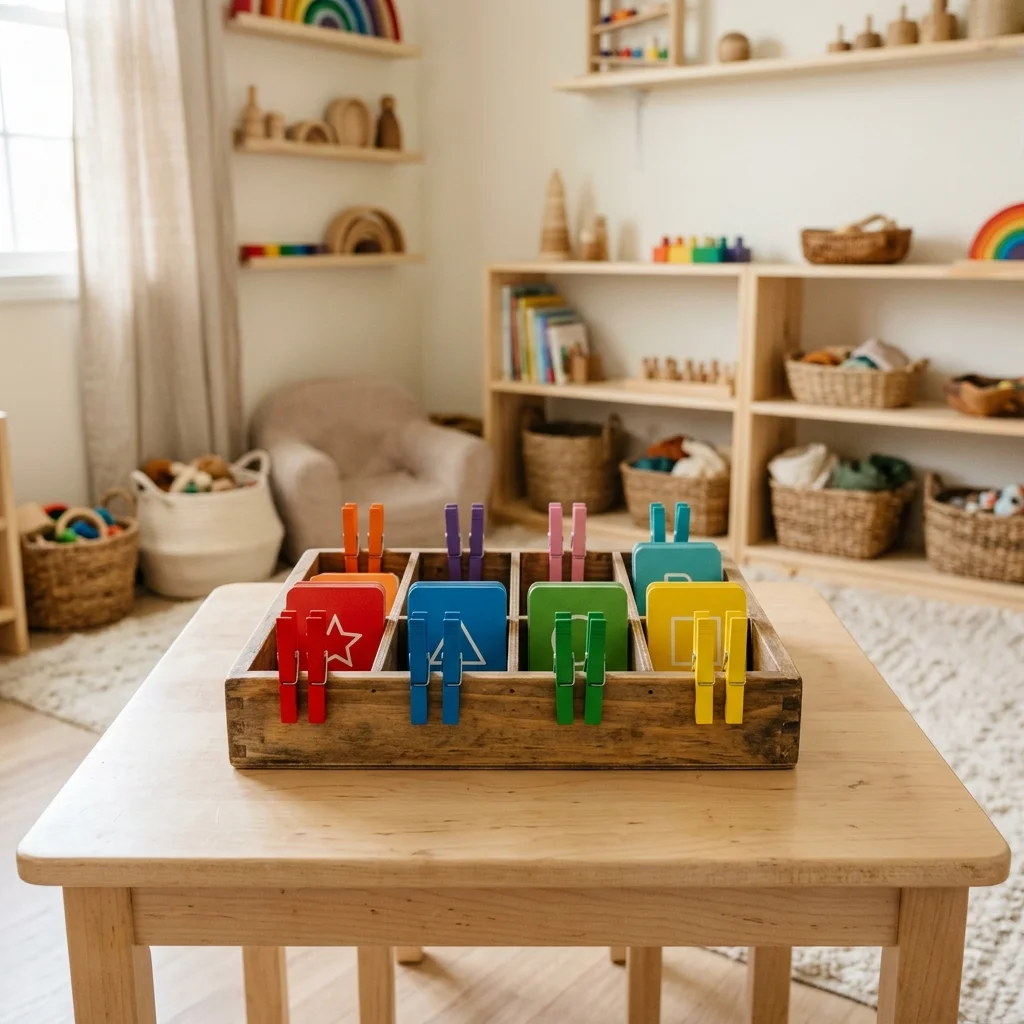
Sometimes the simplest activities hold a child’s attention the longest. Clipping colorful clothespins onto matching cards helps strengthen tiny hand muscles needed for future writing while making learning feel playful. Children enjoy the satisfying snap of each clip and naturally practice patience as they work around the board. In my experience, starting with just a few colors prevents frustration and encourages success. Once confidence grows, adding more shades or simple number labels creates fresh challenges without changing the familiar setup.
This activity also promotes problem-solving because children pause to compare colors before making each choice. The organized layout keeps every piece within easy reach, helping young learners stay focused without unnecessary distractions. Wooden clothespins are durable, inexpensive, and easy to replace if needed, making this box practical for everyday use. Over time, children often invent their own matching games, extending the activity beyond its original purpose. That flexibility makes it a valuable addition to any collection of reusable learning materials designed for preschool-aged explorers.
Magnetic Letters
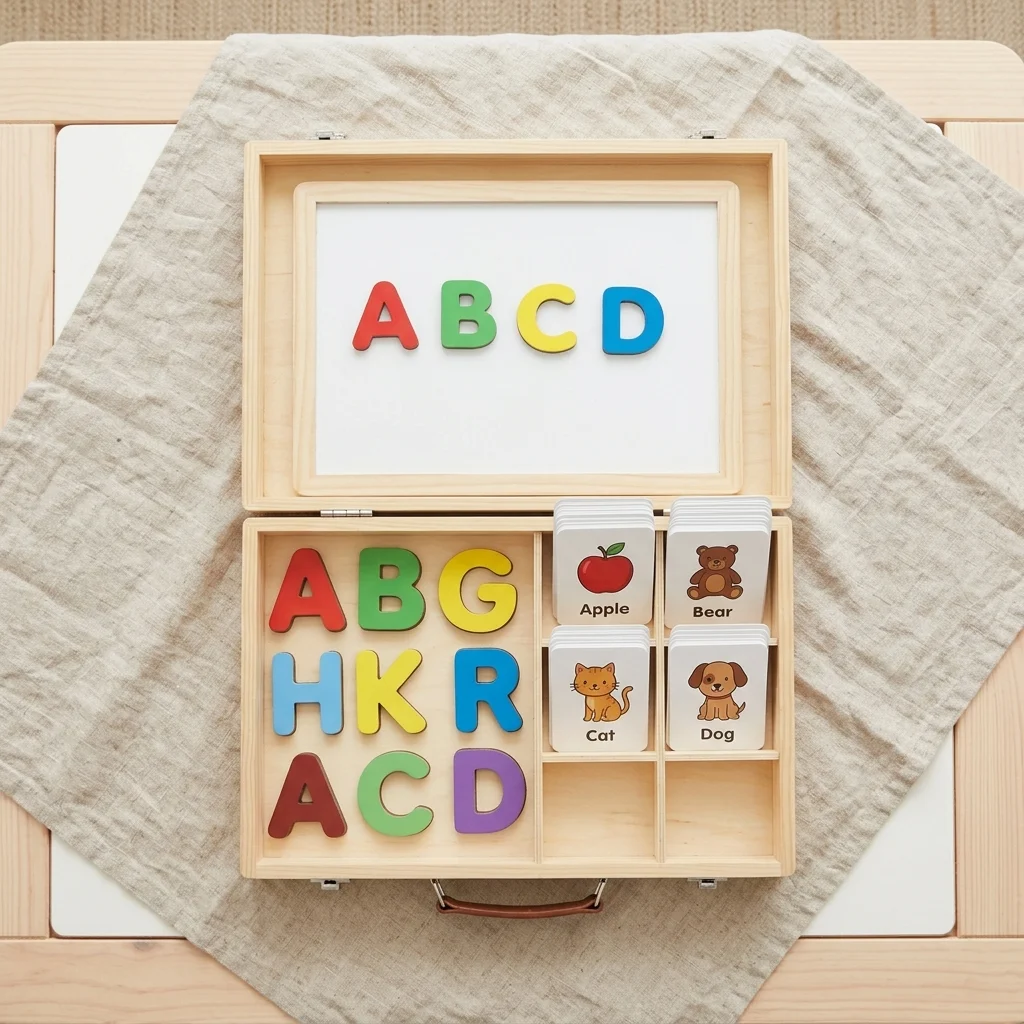
Letters become far more exciting when children can move, arrange, and explore them with their own hands. A magnetic alphabet box encourages playful experimentation while building familiarity with letter shapes and sounds. Young learners often begin by matching letters before gradually recognizing those in their own names. I’ve seen this approach reduce pressure because children discover language through curiosity rather than memorization. The magnetic board also prevents pieces from sliding away, making the activity less frustrating and easier for independent practice.
As children gain confidence, caregivers can introduce simple picture cards or familiar words to expand learning naturally. Rearranging the magnets encourages creativity while strengthening fine motor coordination and visual memory at the same time. Because every component stores inside one compact container, cleanup remains quick even after enthusiastic play sessions. This organized system works well at home, during travel, or while waiting for appointments. Consistent exposure to letters through enjoyable activities often builds positive early literacy habits that continue supporting learning as children grow.
Animal Rescue
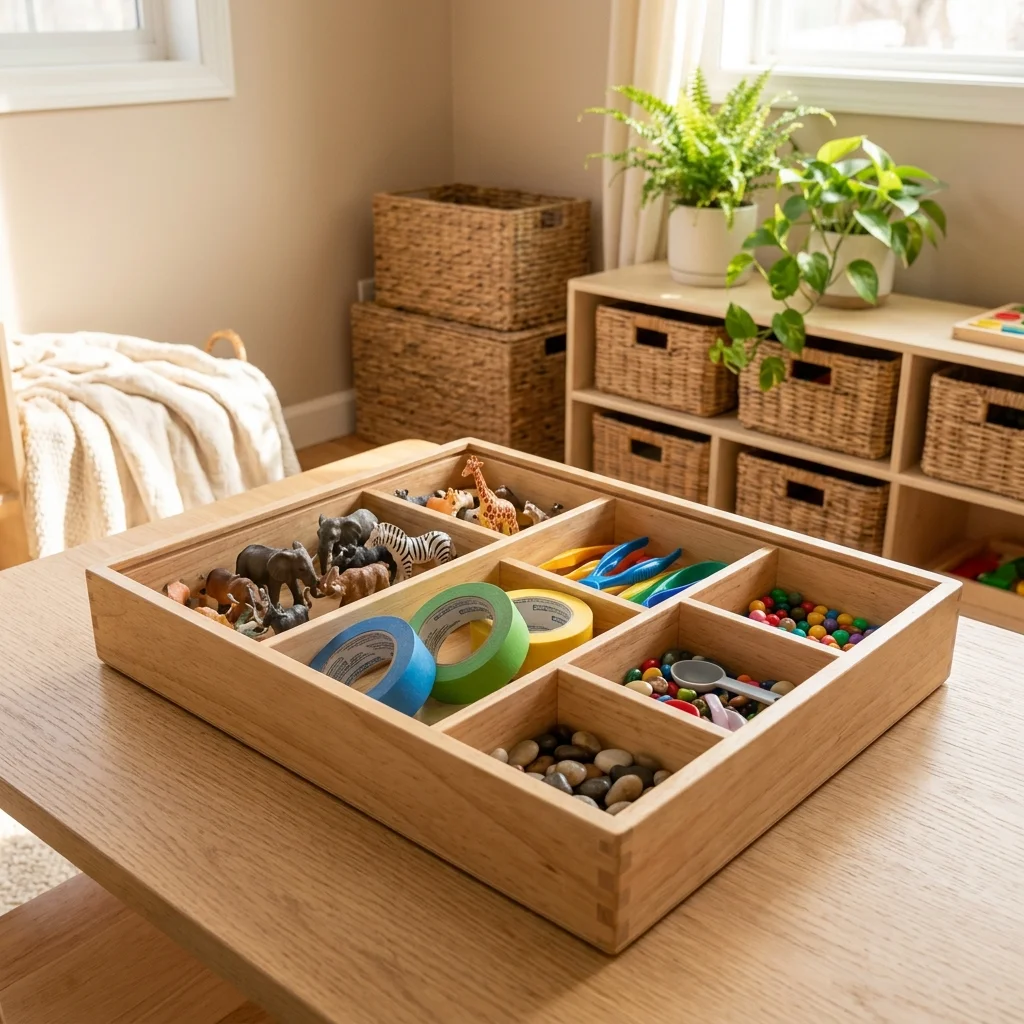
There is something instantly exciting about helping tiny animals escape a playful challenge. Wrapping small toy animals with painter’s tape inside a box invites children to peel, pull, and gently free each figure while strengthening hand coordination. The activity feels like an adventure instead of a lesson, encouraging longer periods of focused play. In my experience, using tape with gentle adhesive makes the experience enjoyable without unnecessary frustration. Children also love celebrating each successful rescue before eagerly moving to the next animal.
Beyond fine motor practice, this activity naturally encourages storytelling and imaginative thinking. Once every animal is rescued, children often create habitats, sort the figures by type, or invent new adventures using the same materials. The reusable setup makes preparation simple because fresh tape quickly resets the challenge for another day. Families appreciate how one small box supports creativity, concentration, and independent problem-solving with minimal expense. Activities like this show that meaningful learning experiences often begin with ordinary materials used in thoughtful, engaging ways.
Puzzle Sticks
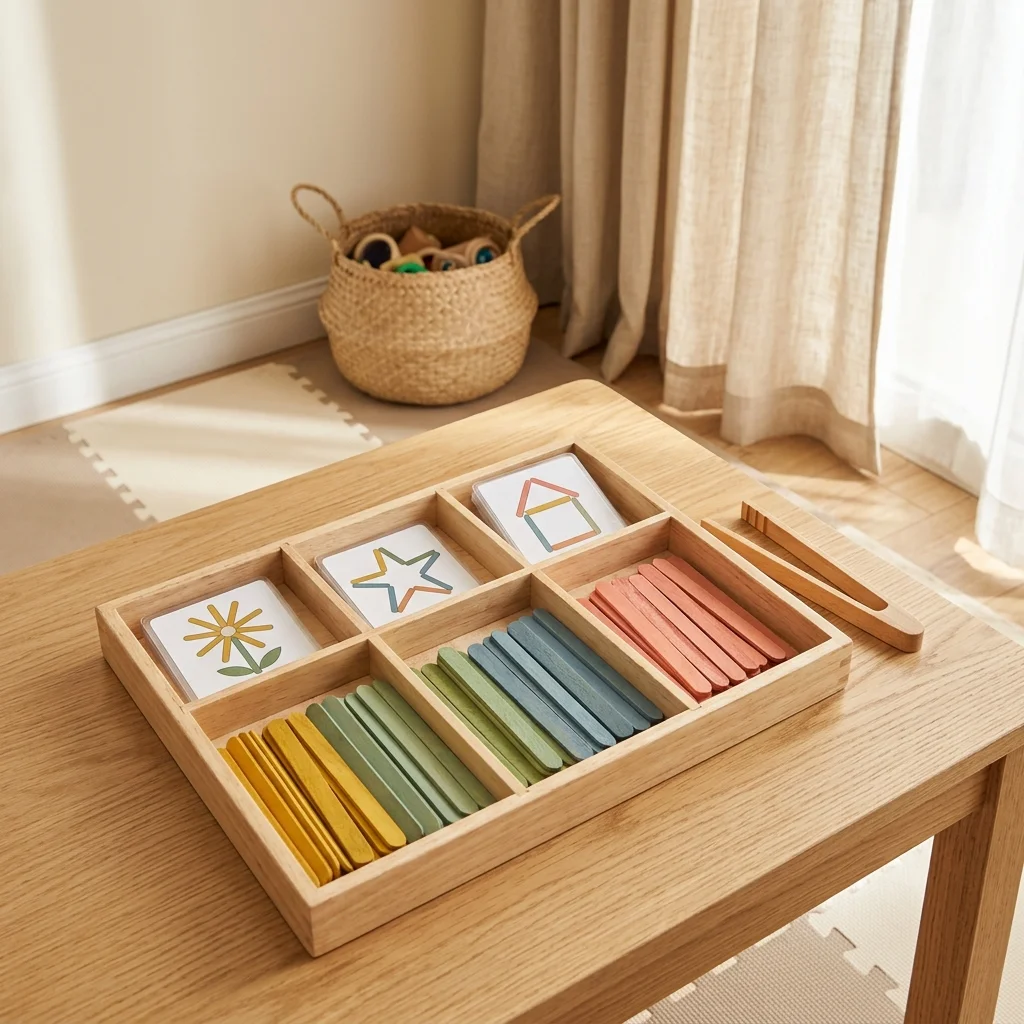
Few activities combine creativity and problem-solving as naturally as puzzle sticks. Children line up decorated craft sticks to reveal colorful pictures while practicing visual sequencing and careful observation. Beginning with simple images allows young learners to experience quick success before gradually exploring more detailed puzzles. I’ve noticed that using familiar animals or favorite objects keeps children motivated even when the challenge becomes slightly harder. Because every stick has a purpose, the activity also encourages organization and patience throughout each play session.
This compact idea grows alongside developing skills without requiring expensive materials or complicated preparation. Caregivers can easily create new picture sets using family photos, seasonal artwork, or simple illustrations to keep interest high. The lightweight sticks fit comfortably inside little hands, helping strengthen coordination while promoting independent play. Children often enjoy timing themselves or working together with siblings, adding another layer of fun. A well-organized puzzle stick box becomes a dependable quiet-time activity that encourages confidence, concentration, and creative thinking every day.
Cotton Ball Transfer
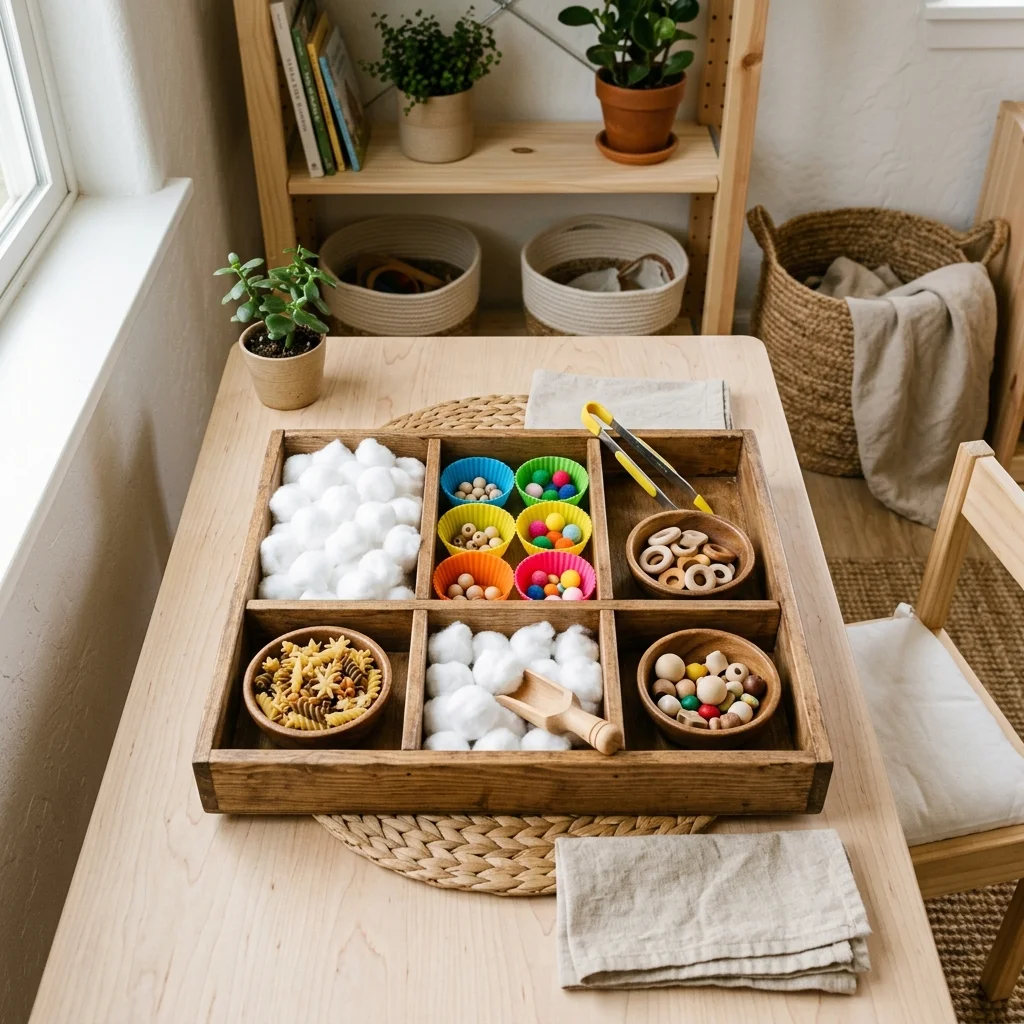
Watching a child carefully move soft cotton balls from one container to another is a wonderful reminder that meaningful learning often happens through simple repetition. Using tweezers or small tongs strengthens finger muscles while encouraging slow, controlled movements that improve coordination. In my experience, children enjoy pretending the cotton balls are clouds, snowballs, or fluffy animals, making the activity feel imaginative as well as educational. The lightweight materials also reduce frustration because they are easy to grasp and forgiving when accidentally dropped.
As confidence develops, adding colored cups or simple counting prompts introduces new challenges without changing the familiar routine. Children naturally practice concentration as they complete each transfer one piece at a time, building persistence through enjoyable play. The compact setup fits neatly into a small storage box, making it perfect for quiet afternoons or independent learning stations. Parents appreciate how affordable this activity is while still supporting valuable developmental milestones. Small adjustments keep the experience engaging across different ages and learning stages.
Shape Posting
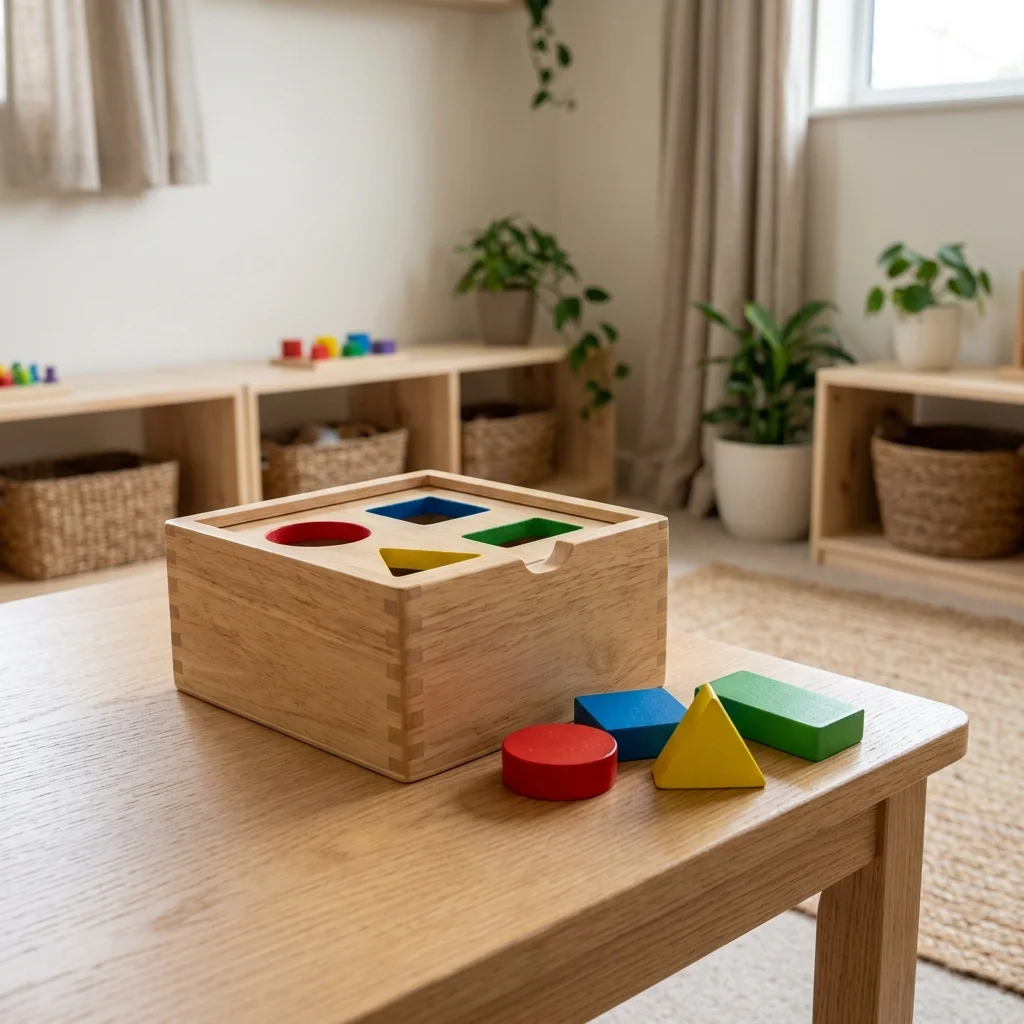
Simple posting activities have remained popular for generations because children naturally enjoy figuring out where each piece belongs. Sliding oversized wooden shapes through matching openings encourages observation, coordination, and early spatial awareness without feeling overwhelming. Young learners quickly discover that careful turning and positioning help each piece fit correctly. I’ve seen children happily repeat this challenge many times because every successful match provides immediate positive feedback. That sense of achievement keeps motivation high while supporting independent exploration at a comfortable pace.
This activity also introduces gentle problem-solving skills as children compare shapes, rotate pieces, and test different possibilities before finding the correct match. Durable wooden materials stand up well to frequent use while creating a warm, inviting appearance that complements any play space. Organized compartments keep every shape easy to find between sessions, reducing cleanup time for families. These thoughtful details transform an everyday learning tool into one of the most dependable busy boxes for toddlers and preschoolers activities for encouraging confidence, concentration, and joyful discovery.
Felt Garden
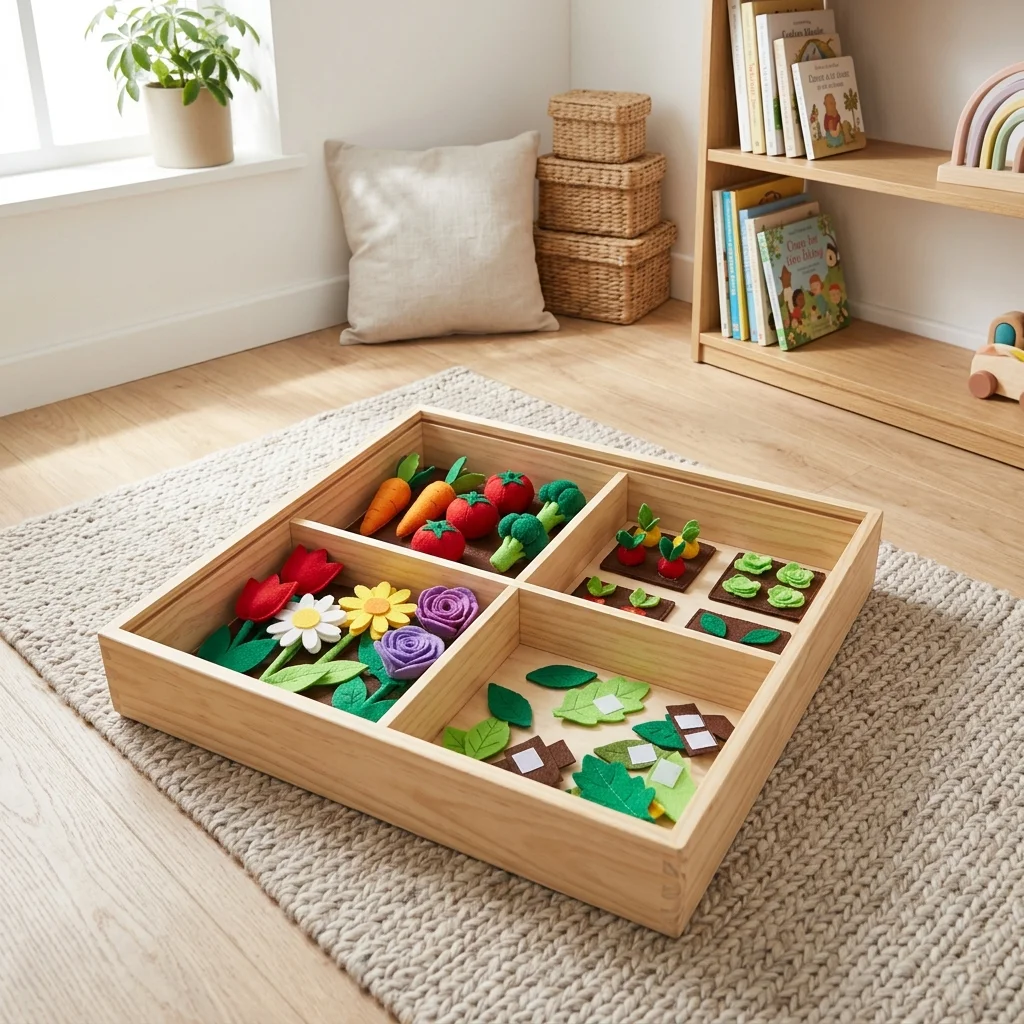
A miniature felt garden invites children to plant, harvest, and rearrange colorful pieces while exploring nature through imaginative play. Soft textures make every movement satisfying, encouraging little hands to practice careful placement without frustration. Children naturally create stories about watering flowers, picking vegetables, or attracting butterflies as they build their own tiny gardens. In my experience, open-ended activities like this inspire longer periods of focused play because there is no single correct way to complete the scene, allowing creativity to flourish naturally every session.
The reusable felt pieces are lightweight, durable, and easy for young children to handle independently. Swapping seasonal flowers, fruits, or vegetables throughout the year keeps the activity fresh while introducing gentle conversations about changing seasons and healthy foods. Organized compartments make cleanup quick and encourage children to return every piece to its place. This charming setup combines creativity, language development, and fine motor practice inside one inviting activity box that grows with children’s imagination and encourages meaningful everyday learning.
Bead Scoop
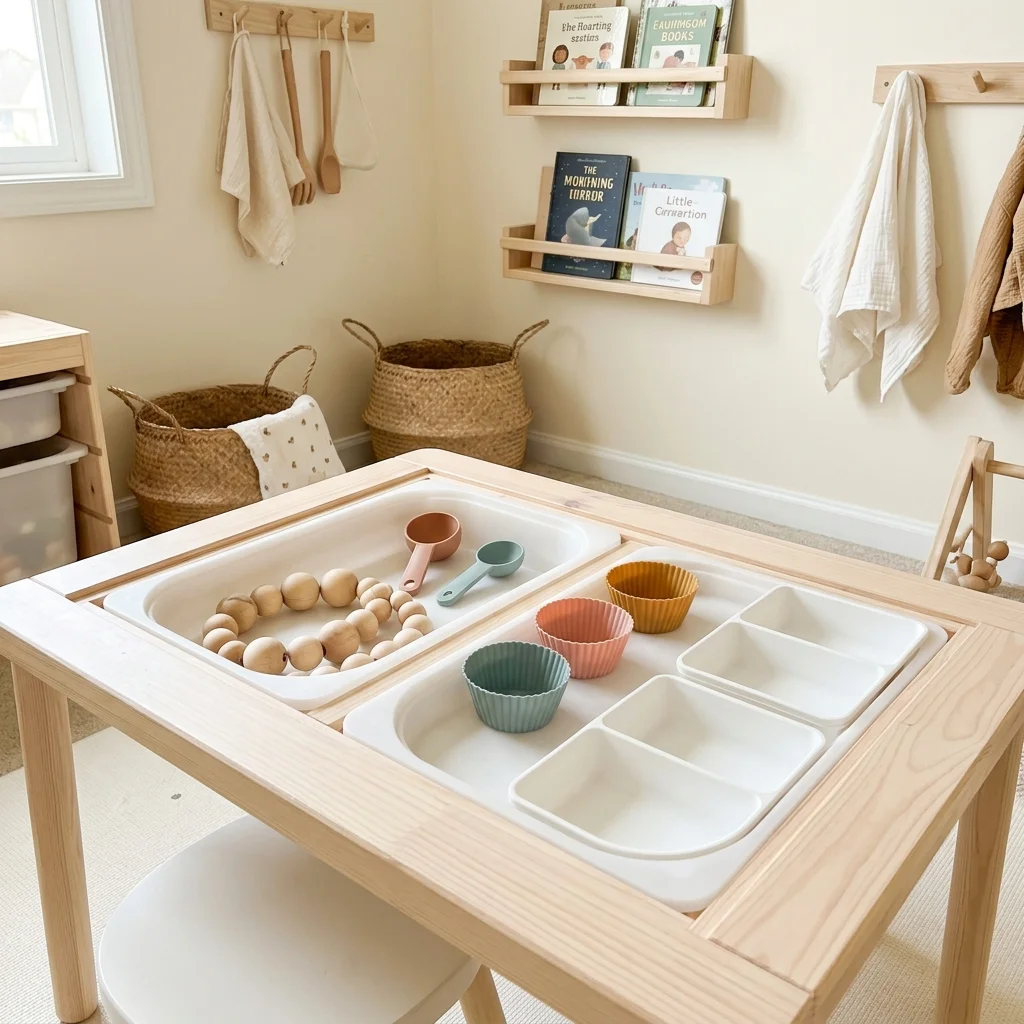
Scooping colorful wooden beads from one container into another creates a calming rhythm that many young children find deeply satisfying. Every careful movement strengthens coordination while encouraging focus and steady hand control. Large beads provide a safe size for supervised activities and are easy for small hands to grasp with scoops or spoons. I’ve noticed that adding cups of different heights makes the challenge more interesting without increasing frustration. Children often repeat the process happily while experimenting with speed, accuracy, and creative sorting ideas.
This flexible activity can evolve naturally as skills improve by introducing colors, simple counting, or size comparisons. Because the materials are durable and reusable, families can enjoy the same setup for months with only small adjustments to maintain interest. Keeping every piece inside a divided storage box simplifies cleanup and encourages children to organize independently after play. Activities built around movement and repetition often become favorite quiet-time options because they combine learning, sensory exploration, and relaxation in one simple, engaging experience.
Mini Construction
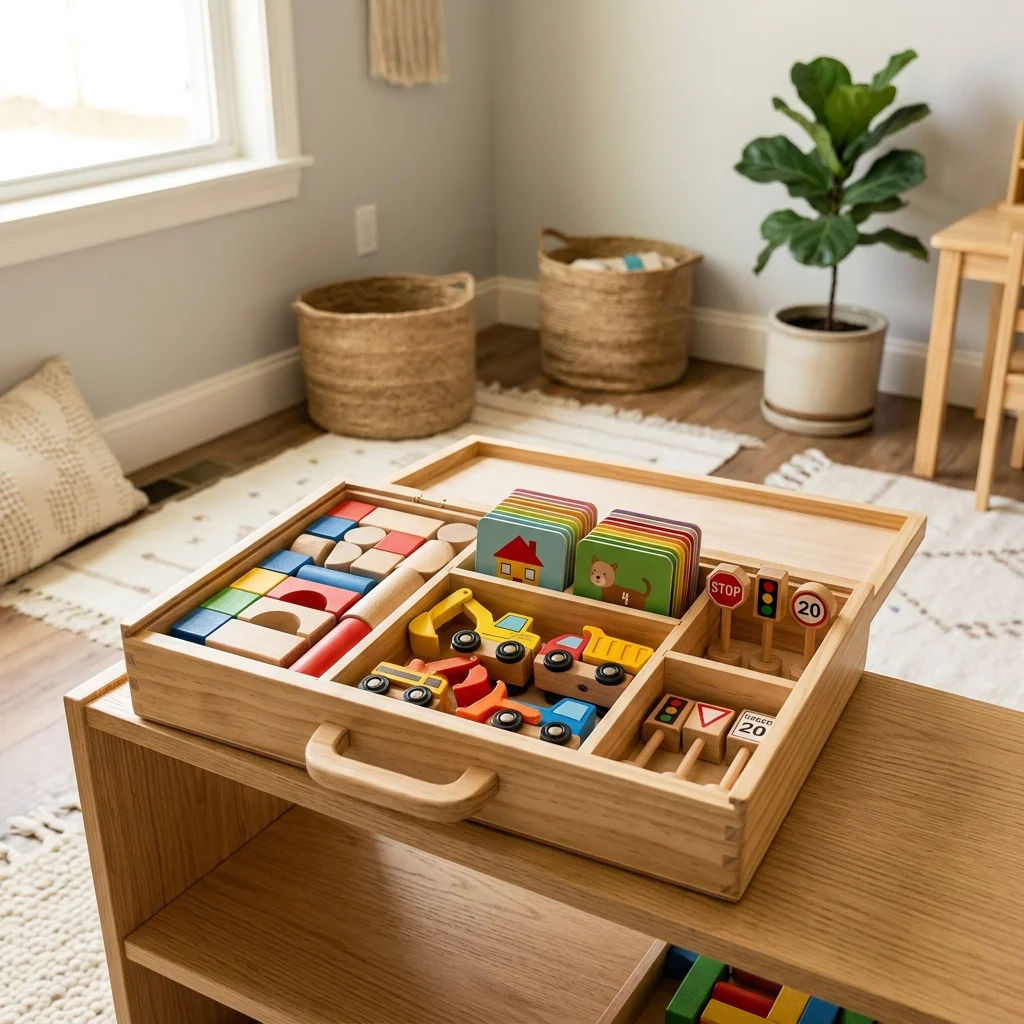
Building tiny roads, bridges, and towers transforms a simple activity box into a world of creative possibilities. Children experiment with balance, height, and structure while moving construction vehicles through their own miniature worksites. Every new arrangement encourages problem-solving without placing pressure on finding perfect answers. In my experience, providing just enough pieces inspires greater creativity because children invent clever solutions using what is available. This balance between structure and freedom keeps play engaging while supporting confidence and independent exploration.
The compact design makes this activity easy to transport from room to room or pack for visits with family and friends. Children naturally practice planning, sequencing, and storytelling as their construction projects grow more detailed over time. Wooden blocks and sturdy vehicles withstand everyday play while maintaining an attractive, organized appearance inside the storage box. Simple accessories such as signs or bridges can be rotated occasionally to refresh the experience. This versatile setup encourages imaginative learning that remains enjoyable across many developmental stages.
Lacing Cards
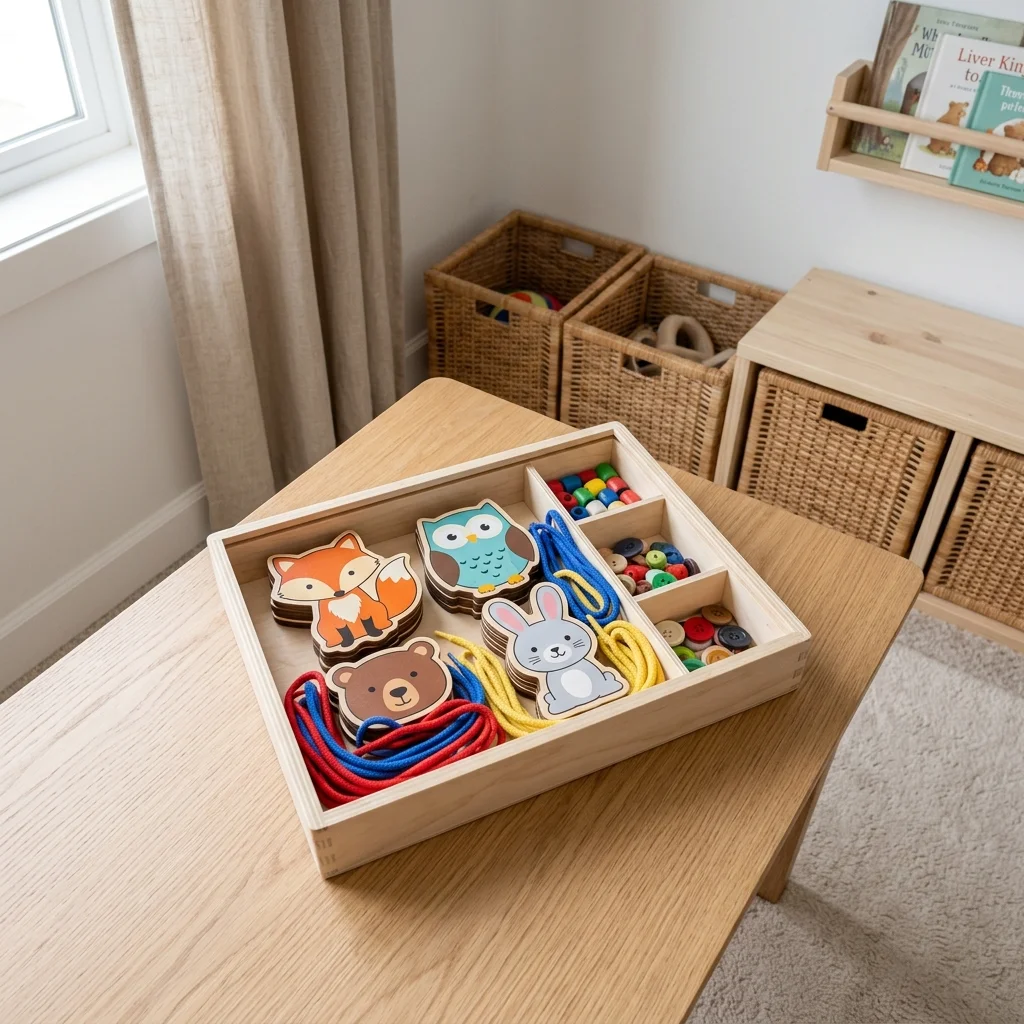
There is something wonderfully calming about guiding a lace through one hole after another. Lacing cards encourage children to slow down, concentrate, and enjoy steady progress while strengthening the small muscles needed for writing and everyday tasks. Animal, fruit, or vehicle designs keep the activity visually interesting without becoming overwhelming. I’ve seen this work especially well during quiet afternoons because children often become deeply focused on completing each design. The sense of accomplishment at the end encourages them to repeat the activity with growing confidence.
This timeless activity remains engaging because it combines creativity, coordination, and independent learning inside one compact setup. As children gain experience, they naturally lace more quickly, experiment with patterns, or invent stories about each completed picture. Durable cards and thick laces withstand frequent use, making the box a dependable favorite for home, travel, or classroom settings. Organized compartments simplify cleanup while teaching responsibility for materials. Small, consistent moments of focused practice like these build valuable lifelong skills while keeping learning playful and enjoyable.
Conclusion
Creating meaningful play experiences doesn’t have to be complicated or expensive. A thoughtfully prepared activity box can spark creativity, strengthen important developmental skills, and give children opportunities to learn through hands-on discovery every day. Whether you try one idea or build a complete collection, these busy boxes for toddlers and preschoolers activities can easily become a favorite part of your child’s routine.
Save these ideas on Pinterest so they’re always within reach, share them with friends or fellow parents, and enjoy adapting them to your child’s interests as they grow. I’ve seen how small, simple activities like these can encourage confidence, independence, and joyful learning in remarkable ways. Start with one box today, and watch curiosity lead the rest of the adventure.
Read More : 17 Simple DIY Bookshelf Ideas for Easy Home Storage