15 DIY Desk Organization Ideas for Clean Workspace
Introduction
Ready to refresh your workspace without spending a fortune? These diy desk organization ideas are designed to help you create a cleaner, more inspiring setup that makes every workday feel more enjoyable. Whether you’re working from home, studying, crafting, or managing daily tasks, a well-organized desk can make a surprising difference in both productivity and peace of mind.
In my experience, the biggest transformations rarely come from expensive furniture. Instead, they’re often the result of a few thoughtful storage solutions, better use of vertical space, and small organizational habits that are easy to maintain. When everything has a designated place, it’s easier to focus, stay motivated, and enjoy spending time at your desk.
This collection features 15 practical and visually appealing ideas that blend function with style. From clever wall storage and cable management to creative organizers and space-saving furniture, each idea is designed to help you reduce clutter while adding personality to your workspace. They’re simple enough for beginners, customizable for different decorating styles, and perfect for making the most of both large and small desks.
Whether your goal is a minimalist office, a cozy creative corner, or a more efficient work environment, you’ll find inspiration that fits your space and budget. Save your favorite ideas on Pinterest, try the projects that speak to you most, and enjoy creating a workspace that feels organized, inviting, and uniquely yours.
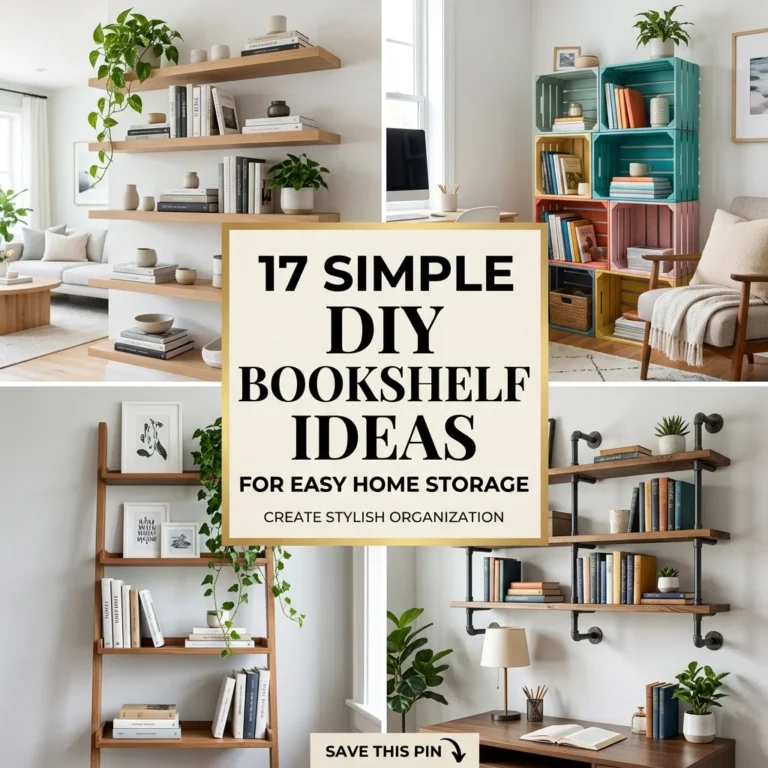
Wood Crate Shelves
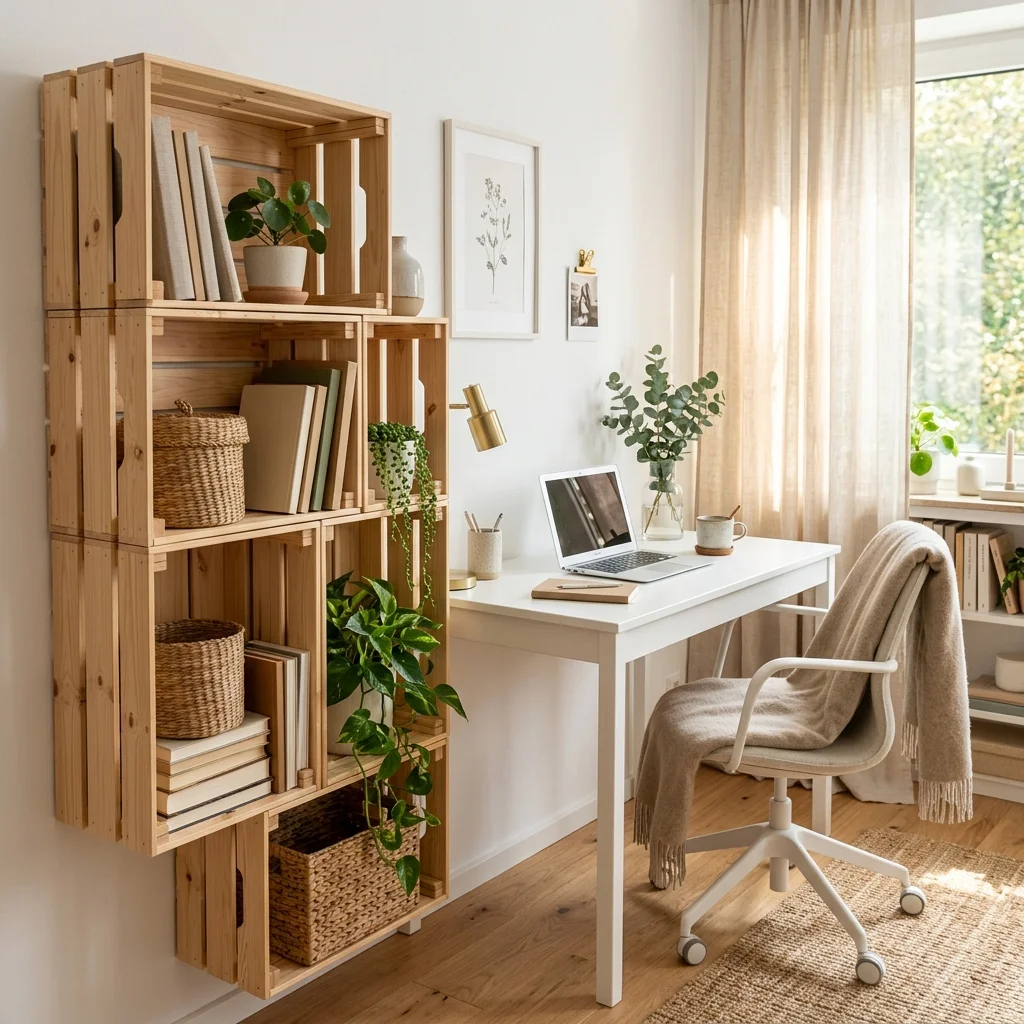
A simple shelving solution can completely change how a workspace feels. Wood crates offer generous storage while adding warmth and texture that standard office furniture often lacks. Mounting them vertically or horizontally creates flexible compartments for notebooks, folders, decorative accents, and frequently used supplies. I’ve noticed that open shelving encourages keeping only useful items within reach because everything stays visible. That balance between accessibility and simplicity helps maintain a cleaner desk throughout the day while giving the entire room a more welcoming, thoughtfully designed appearance.
Better organization often starts by making every inch count. Instead of allowing papers and accessories to spread across the desktop, crate shelves lift them into attractive displays that remain easy to access. Mixing practical storage with decorative pieces keeps the arrangement from feeling overly functional or sterile. Small baskets hide miscellaneous items, while framed prints or trailing plants introduce personality without adding clutter. This combination creates a workspace that feels calm, inspiring, and efficient, making daily tasks easier and encouraging consistent organization over time.
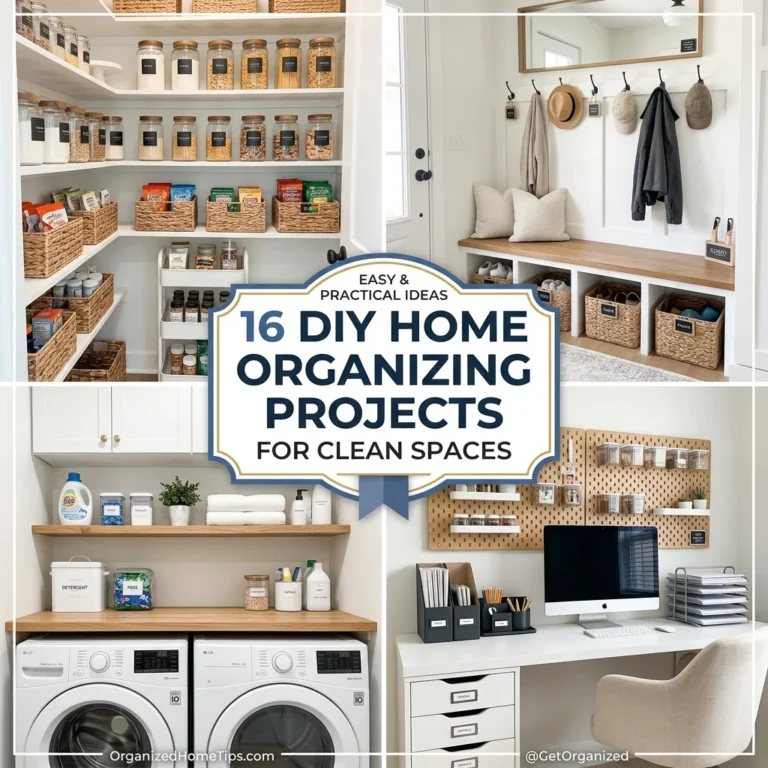
Pegboard Station
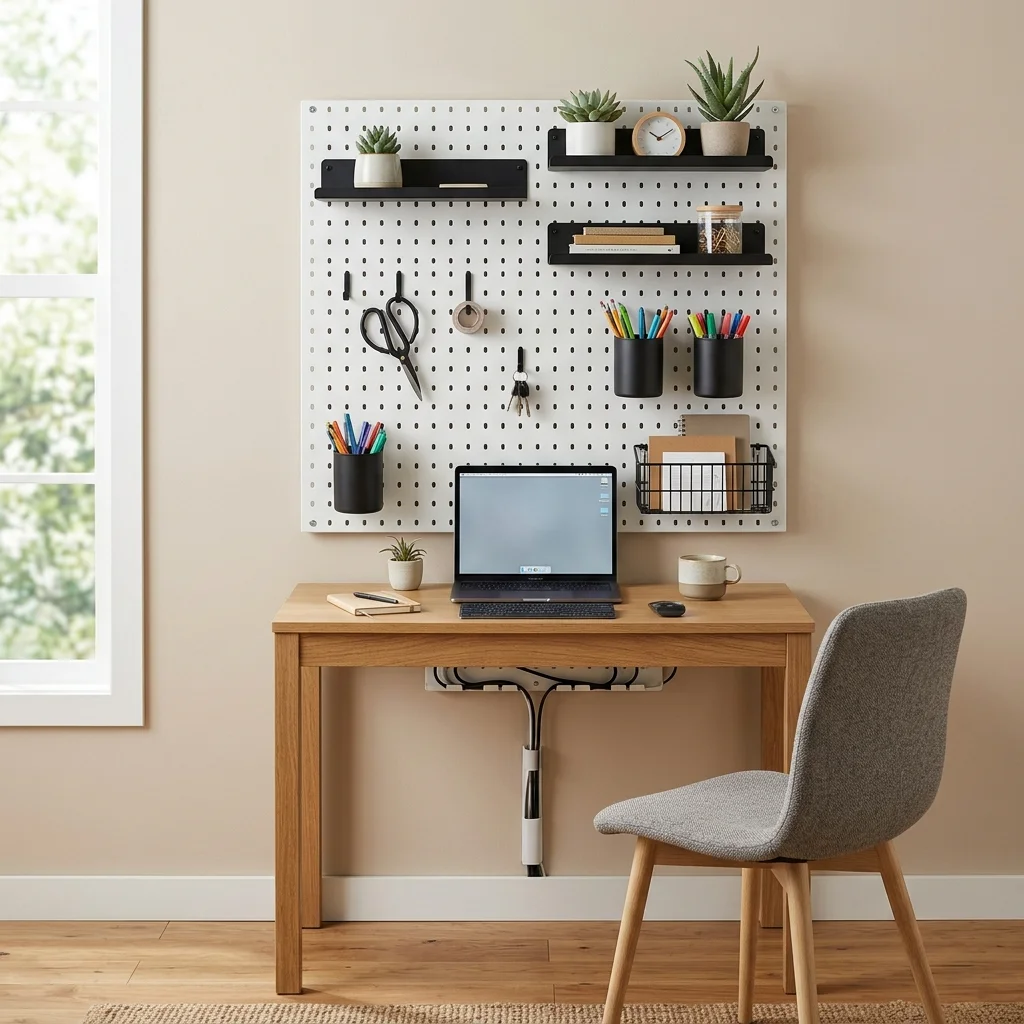
An empty wall can become one of the hardest-working areas in your office. A pegboard keeps frequently used supplies visible without crowding the desktop, making it easier to find exactly what you need. The adjustable layout allows hooks, bins, and shelves to move whenever your routine changes. In my experience, this flexibility keeps the system useful long after it’s installed because storage evolves alongside your projects. The result feels organized, practical, and visually pleasing without requiring expensive custom furniture or permanent built-in shelving.
Visual order often leads to better focus during busy work sessions. Separating pens, cables, scissors, sticky notes, and other essentials into dedicated holders reduces distractions while giving everything a clear home. Decorative touches such as small framed prints, hanging plants, or matching containers make the board feel intentional rather than purely functional. Choosing coordinated finishes helps create a polished appearance that blends seamlessly with the rest of the room. This organized backdrop also makes video calls look cleaner and more professional with very little effort.
Drawer Dividers
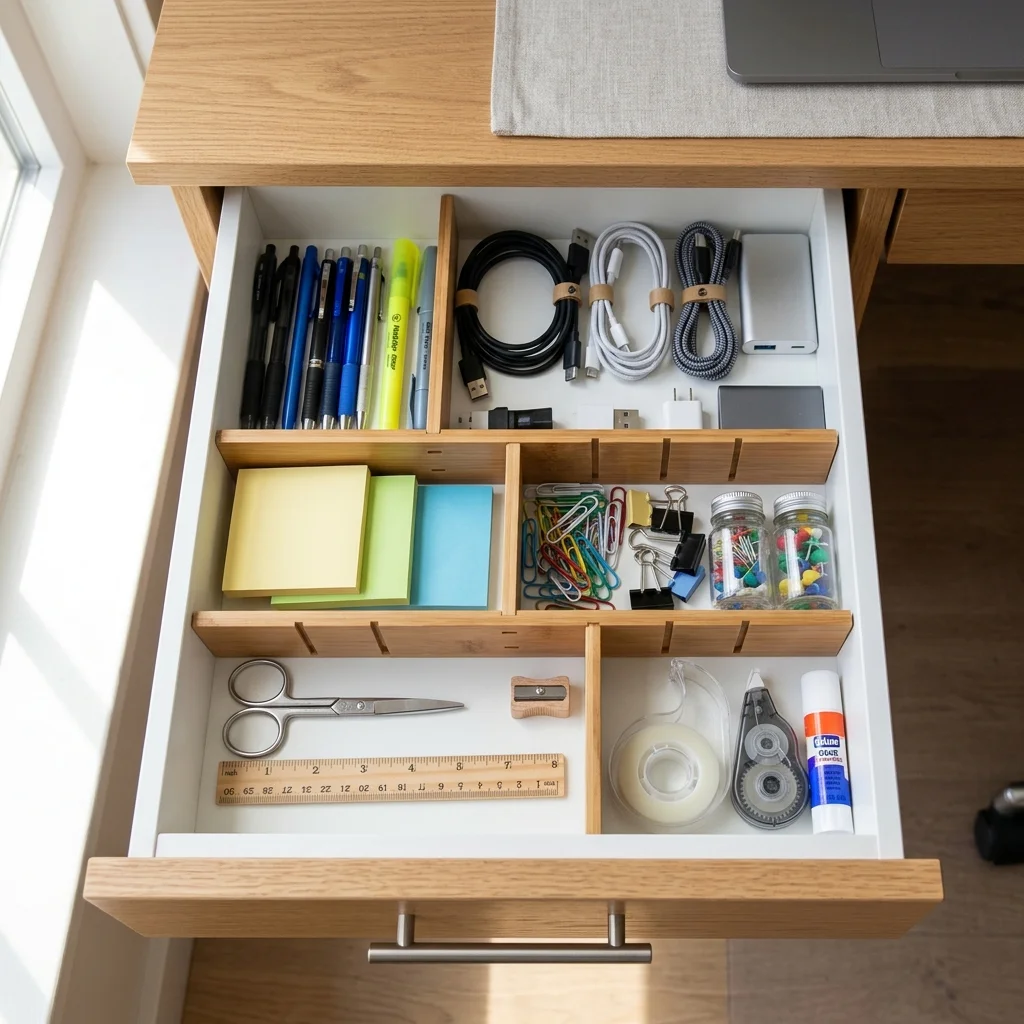
The quickest way to reduce visual clutter is often hiding it intelligently. Drawer dividers create designated spaces for office essentials, preventing small items from becoming an untidy pile. Instead of digging through tangled cables or scattered stationery, everything stays neatly separated and immediately accessible. I’ve seen this work especially well for busy desks where multiple supplies are used throughout the day. A few simple compartments can transform an overcrowded drawer into an organized system that saves time and reduces everyday frustration.
Efficient storage also encourages better daily habits. Returning each item to its designated section becomes effortless because every object has an obvious place. Choosing sturdy dividers made from bamboo or durable plastic helps maintain the layout even with frequent use. Pairing organized drawers with a clear desktop creates a noticeable sense of calm that carries into work sessions. Small improvements like these often deliver lasting results because they simplify routines instead of adding complicated maintenance or extra organizational steps.
Floating Corner Shelf
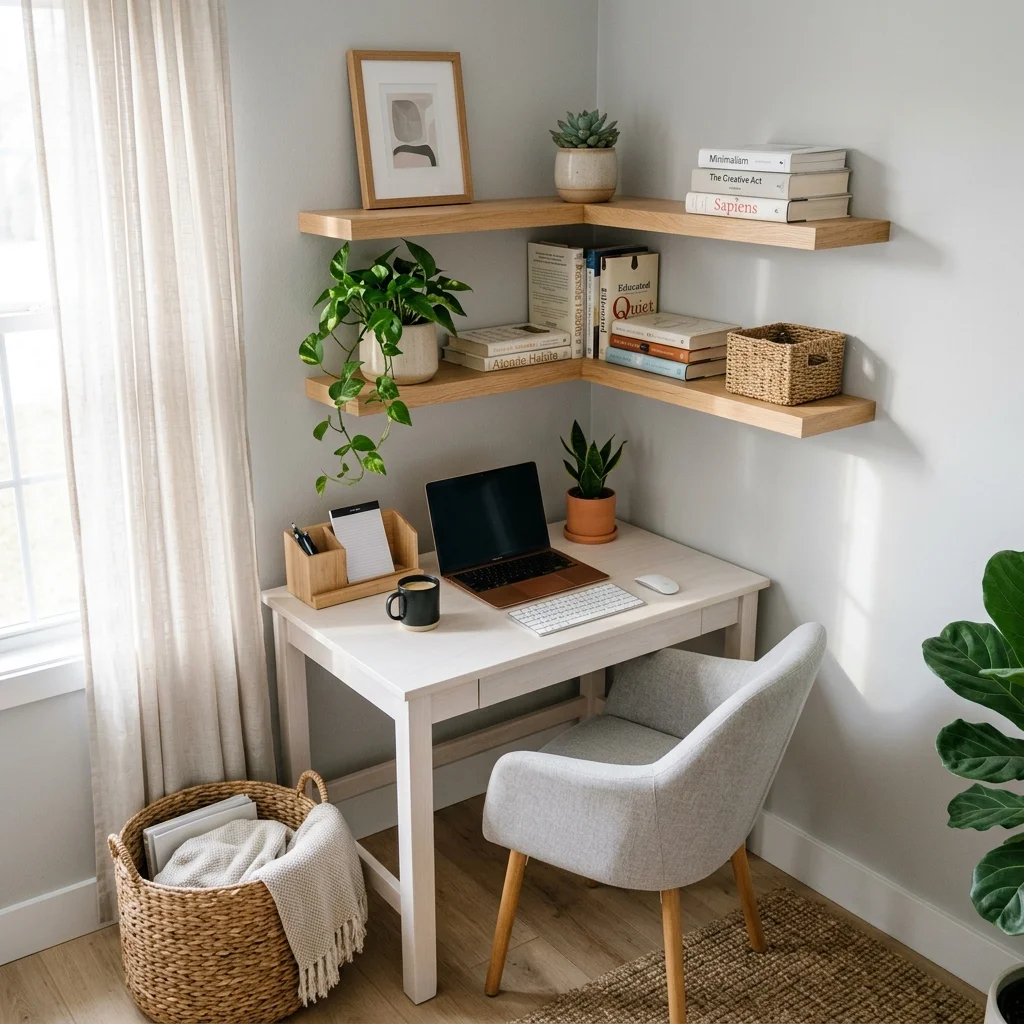
An unused corner can quietly become one of the most valuable storage spots in a workspace. Floating shelves make excellent use of vertical space while keeping the desktop open for daily tasks. Books, organizers, and decorative accents stay visible without feeling crowded because each shelf has a defined purpose. In my experience, limiting every shelf to a few carefully chosen items prevents visual overload and keeps the arrangement feeling light. The finished look feels balanced, airy, and thoughtfully styled without sacrificing everyday practicality or convenience.
Small design details often make a workspace feel intentionally curated instead of simply organized. Mixing framed prints, trailing plants, and matching storage containers creates a layered appearance that feels welcoming throughout the day. Frequently used supplies remain close enough to grab while less attractive necessities stay tucked inside decorative baskets. This combination supports productivity while adding warmth and personality to the room. Even compact offices benefit from the extra storage because corner shelving expands usable space without making the area feel cramped or visually heavy.
Rolling Supply Cart
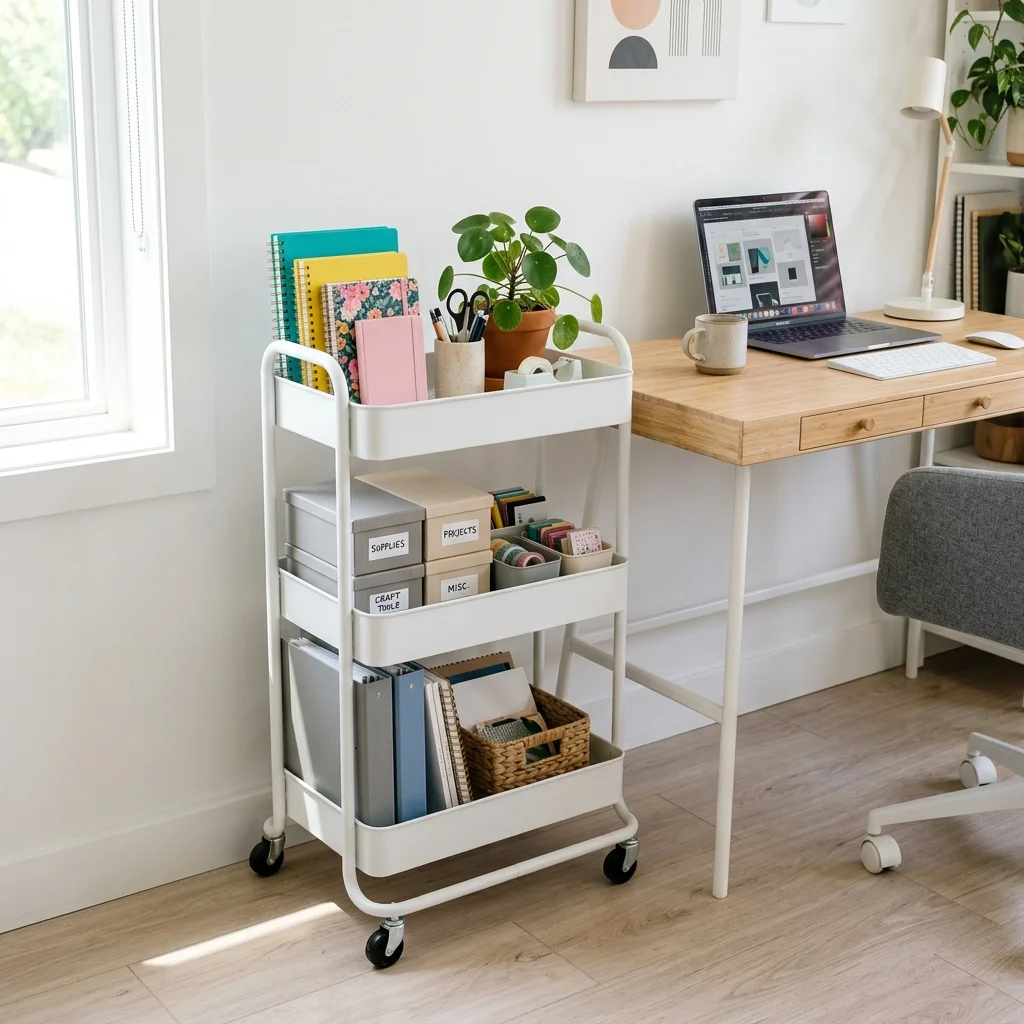
Flexible storage makes daily routines noticeably smoother, especially when a workspace serves multiple purposes. A rolling cart keeps frequently used supplies nearby while allowing everything to move out of the way whenever extra desk space is needed. Separate shelves naturally organize notebooks, electronics, stationery, and creative tools into easy-to-find categories. I’ve found that assigning each tier a specific purpose prevents clutter from spreading and makes cleanup much faster. The mobility also adds convenience during larger projects that require supplies in different areas.
A well-styled cart contributes just as much to the room’s appearance as it does to organization. Coordinated storage bins, neatly folded labels, and a touch of greenery transform practical storage into attractive décor. Open shelving encourages thoughtful editing because every item remains visible, making it easier to remove unnecessary clutter before it accumulates. This simple habit keeps the workspace feeling fresh and inviting over time. The result is an office that looks organized naturally while remaining highly functional for everyday work and creative tasks.
Glass Jar Storage
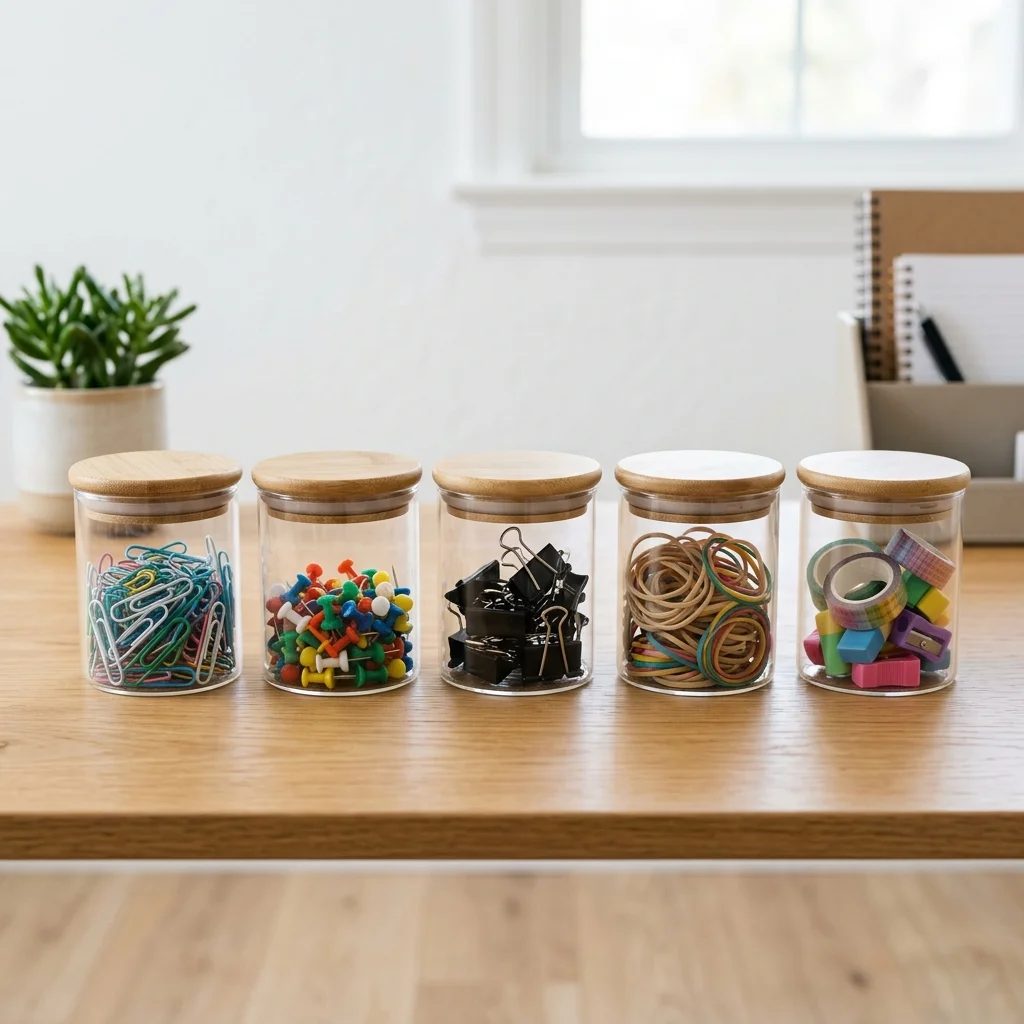
Sometimes the smallest accessories create the biggest mess. Clear glass jars offer an attractive way to organize paper clips, rubber bands, push pins, and other everyday essentials while keeping them easy to locate. Transparent containers eliminate unnecessary searching because contents remain visible from every angle. I’ve noticed that matching jars also create a sense of visual order even when they hold completely different supplies. Their simple design blends effortlessly with modern, rustic, or minimalist workspaces, making organization feel decorative rather than purely practical.
Consistency plays an important role in creating a polished workspace. Choosing containers with similar shapes or coordinating lids helps the desktop look intentional while preventing small items from becoming scattered. Arranging jars on a tray further defines the storage area and makes cleaning around them effortless. The combination of clear materials, natural textures, and neatly grouped supplies produces a tidy appearance that feels calm throughout the day. Simple upgrades like this prove that practical organization can also become an attractive design feature.
Cable Management Box
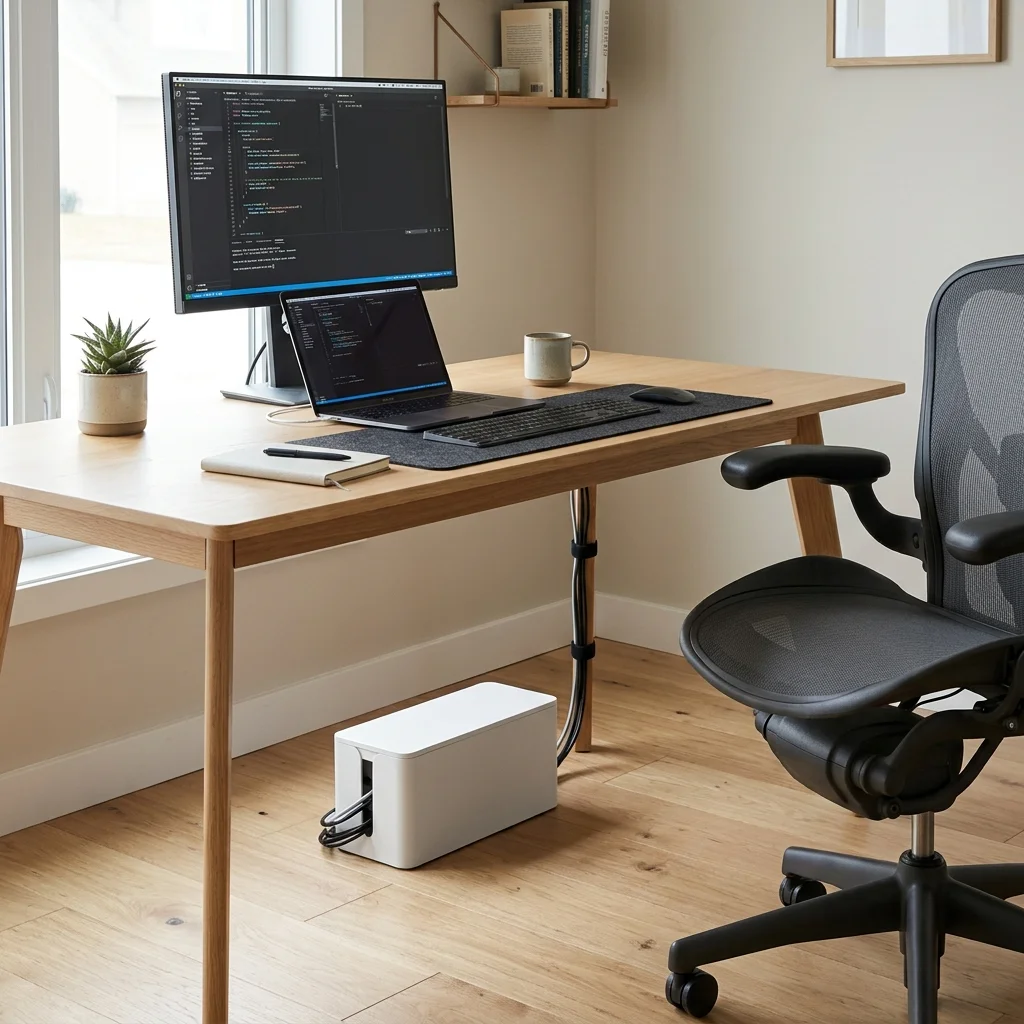
Nothing disrupts a beautiful workspace faster than tangled cables stretching across the floor or desktop. A cable management box instantly conceals power strips, adapters, and extra cord length while keeping everything accessible when needed. The result feels noticeably calmer because visual distractions disappear almost immediately. In my experience, organizing cables also makes cleaning around the desk much easier, especially in smaller offices. This simple upgrade creates a streamlined appearance that complements nearly every decorating style without requiring complicated installation or expensive equipment.
A cleaner floor contributes to both comfort and efficiency during everyday work. Grouping chargers, extension cords, and electronic accessories inside one container prevents accidental snags while protecting equipment from unnecessary dust. Pairing the box with reusable cable ties keeps individual cords easy to identify whenever devices need replacing or rearranging. The finished setup looks intentional instead of improvised, giving the entire workspace a more refined appearance. Small organizational improvements like this often have an unexpectedly large impact on how organized the entire room feels.
Magazine File Holders
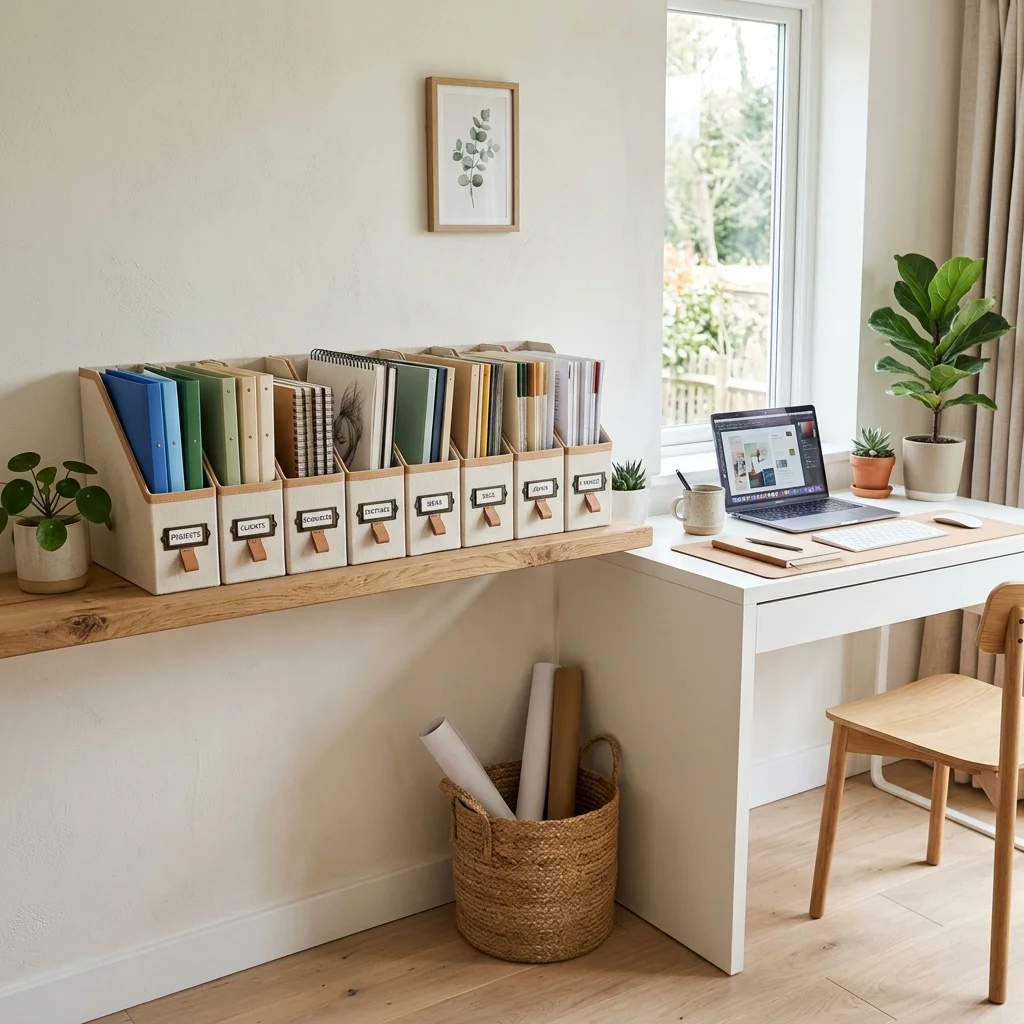
Paper clutter builds gradually, making even organized workspaces feel chaotic before you notice it. Magazine file holders provide a simple way to separate documents, notebooks, planners, and active projects into clearly labeled sections. Instead of creating uneven piles across the desk, everything stands neatly upright and remains easy to retrieve. I’ve seen this approach work especially well for home offices where paperwork changes frequently. It encourages regular sorting while helping important documents stay visible without overwhelming the overall appearance of the workspace.
Thoughtful organization also makes future tasks less stressful. Assigning each holder to a specific category reduces decision fatigue because every document has a predictable destination. Matching file holders in neutral tones create visual consistency that blends naturally with surrounding furniture and décor. Adding simple labels saves valuable time during busy workdays and minimizes unnecessary searching. Together, these small adjustments create a workspace that feels calmer, functions more efficiently, and remains easier to maintain even as projects and responsibilities continue to change.
Desktop Catchall Tray
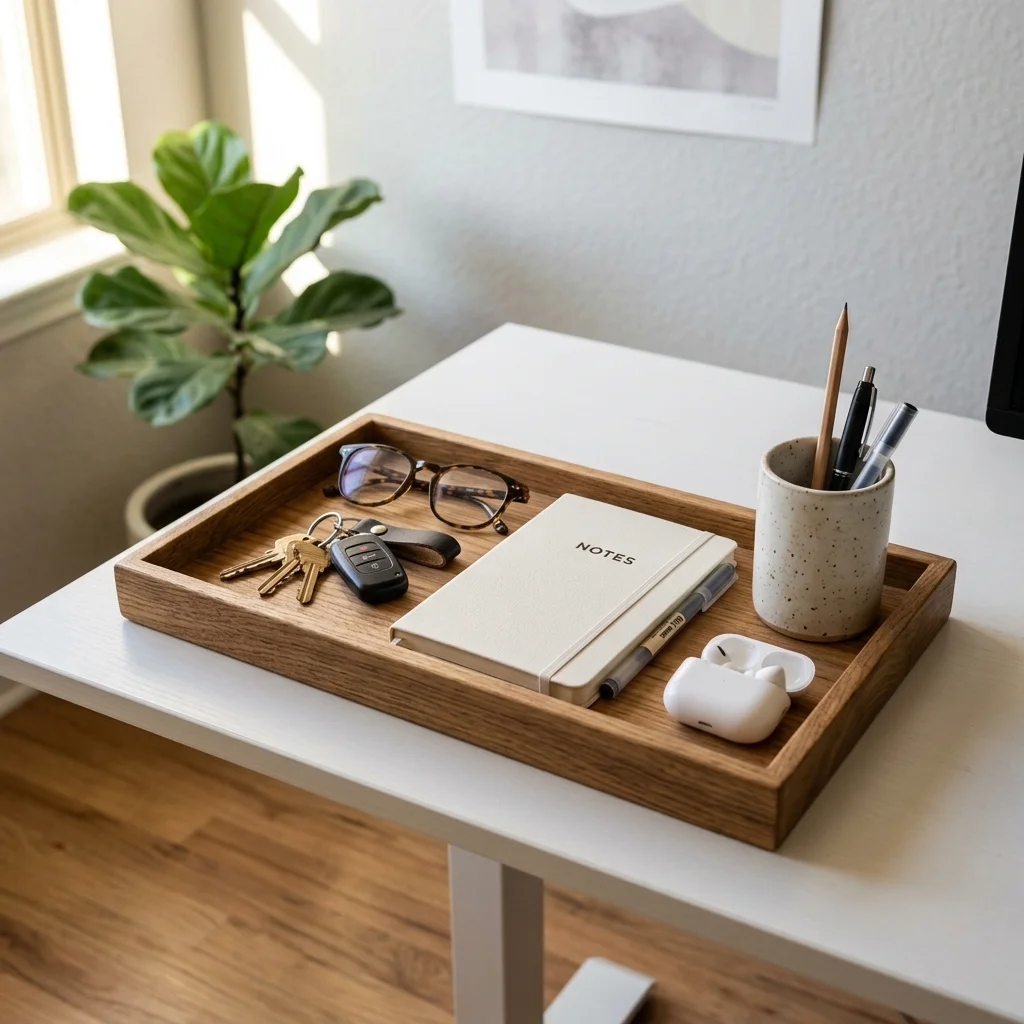
A designated landing spot for everyday essentials makes a workspace feel instantly more organized. A catchall tray gathers frequently used items such as keys, glasses, earbuds, and notebooks into one attractive location instead of allowing them to scatter across the desktop. This simple boundary reduces visual clutter while making important belongings easier to locate each morning. In my experience, keeping only daily essentials inside the tray prevents unnecessary accumulation and helps maintain a consistently tidy surface without demanding extra effort or complicated organizing systems.
The beauty of this idea lies in its balance between function and style. Wooden, marble, or woven trays introduce texture while complementing existing office décor and furniture. Pairing the tray with a small plant or ceramic pen holder creates an intentional arrangement that feels curated rather than crowded. Because everything has a dedicated place, quick cleanups become almost effortless at the end of the day. This small habit supports long-term organization while giving the workspace a polished, welcoming appearance that remains enjoyable to use.
Wall Grid Display
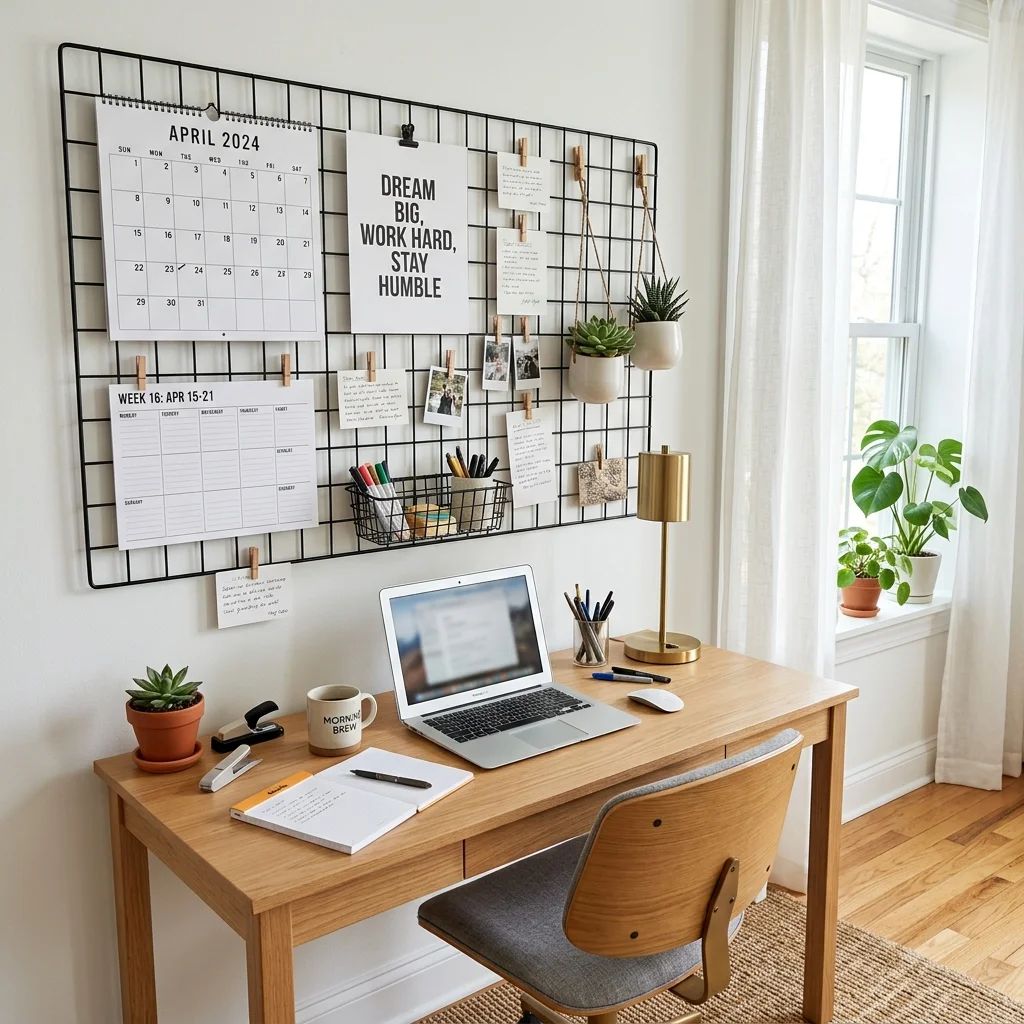
A wall grid transforms blank space into an organized command center that feels both practical and decorative. Notes, calendars, photos, and lightweight office supplies remain visible without taking over the work surface. Rearranging clips and baskets is simple, making the layout easy to adapt as priorities shift. I’ve found that displaying only current reminders helps prevent information overload while keeping the workspace visually balanced. The result encourages focus because important details stay within sight without creating the clutter that loose papers often introduce.
Layering different textures makes the display feel more personal and thoughtfully designed. Wooden clips, wire baskets, small planters, and framed prints add depth while maintaining an organized appearance. Choosing a limited color palette keeps everything cohesive even as notes and projects change throughout the year. This flexible system supports productivity while adding personality that reflects individual style. It proves that functional organization can also become an attractive design feature, making the office feel more inviting every time you sit down to work.
Label Everything
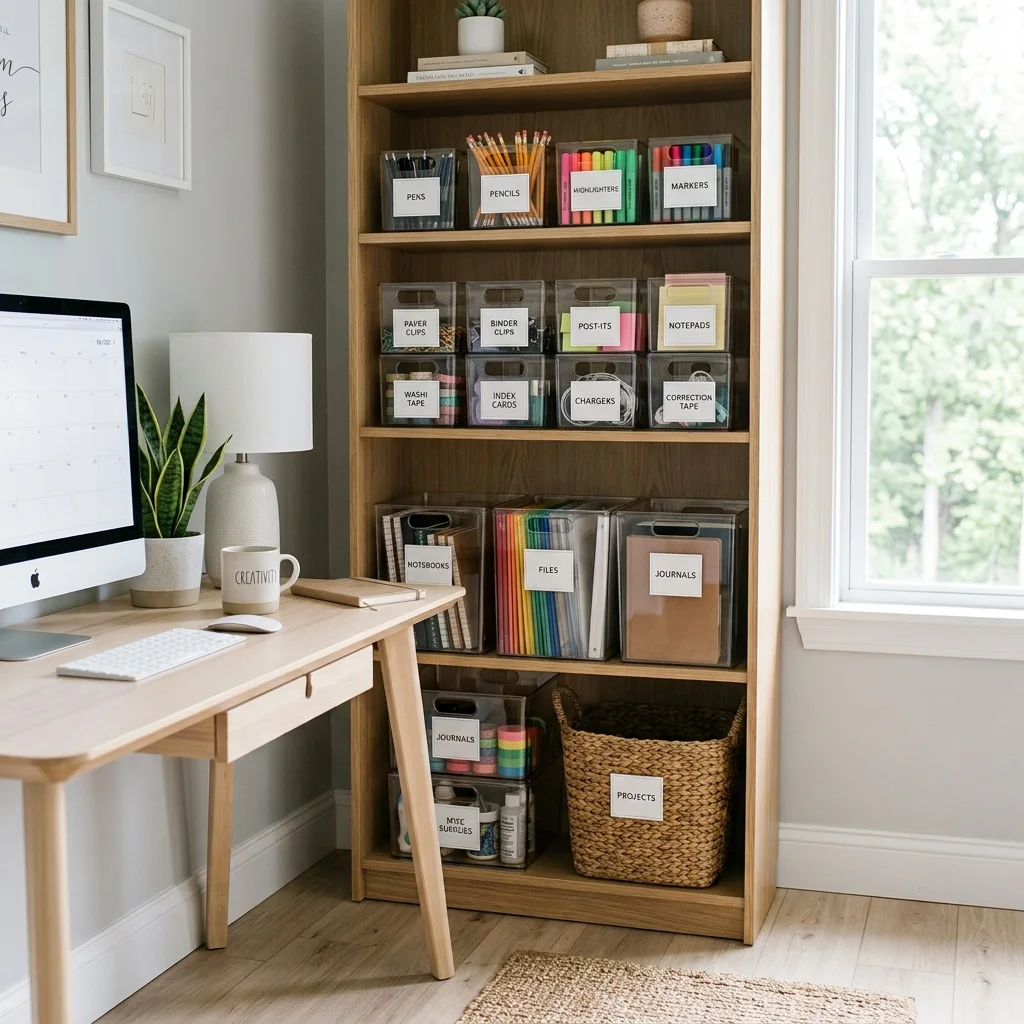
The simplest organizing systems often succeed because they remove unnecessary guesswork. Clearly labeled containers make it obvious where supplies belong, reducing the chance of clutter building up over time. Pens, cables, notebooks, and craft materials become easier to find, saving valuable minutes during busy workdays. I’ve noticed that even family members or coworkers are more likely to return items properly when storage is clearly identified. That consistency helps maintain an organized workspace with surprisingly little ongoing effort or constant tidying.
Labels also contribute to a cleaner visual aesthetic when they follow a consistent style. Matching fonts, colors, and placement create a coordinated look that complements minimalist and modern offices alike. Transparent bins paired with subtle labels strike a balance between visibility and simplicity, making storage feel refined rather than utilitarian. As projects evolve, labels can be updated quickly without redesigning the entire system. This adaptable approach keeps organization practical while maintaining a workspace that looks intentionally arranged throughout changing routines.
Monitor Riser Storage
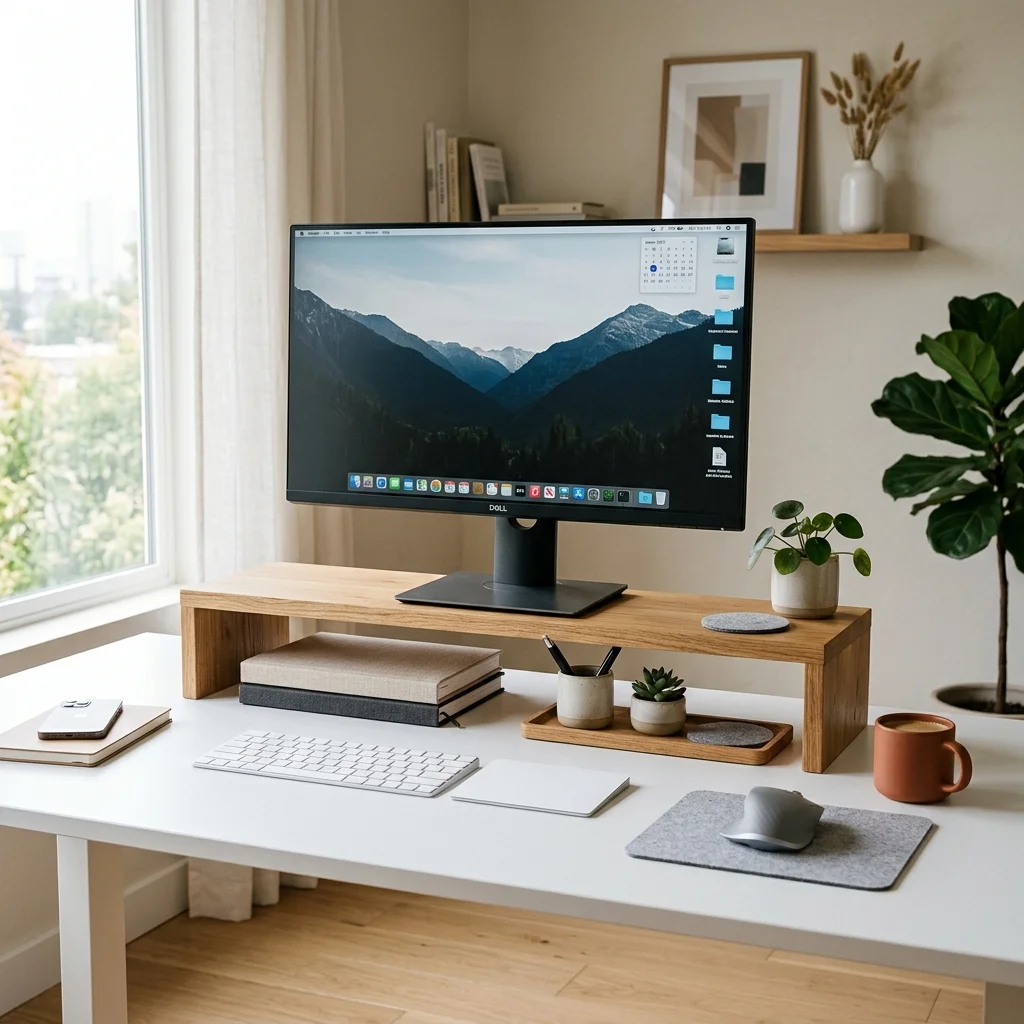
A monitor riser offers more than improved ergonomics because it also unlocks valuable storage space. Elevating the screen creates room underneath for keyboards, notebooks, and frequently used accessories that would otherwise occupy the desktop. This layered arrangement instantly makes the workspace appear larger and more organized. In my experience, keeping only essential items beneath the riser prevents overcrowding while preserving the clean visual effect. The combination of better posture and additional storage makes this upgrade both comfortable and highly practical for daily use.
Thoughtful styling enhances the impact of this simple addition. Choosing a riser with natural wood grain or a minimalist finish helps it blend seamlessly with surrounding furniture while introducing subtle texture. Decorative accents such as a small plant or compact organizer complete the arrangement without overwhelming the space. The elevated monitor naturally becomes the focal point, while hidden storage maintains visual simplicity below. Together, these elements create a workspace that feels spacious, balanced, and ready to support productive work sessions.
Mason Jar Organizer
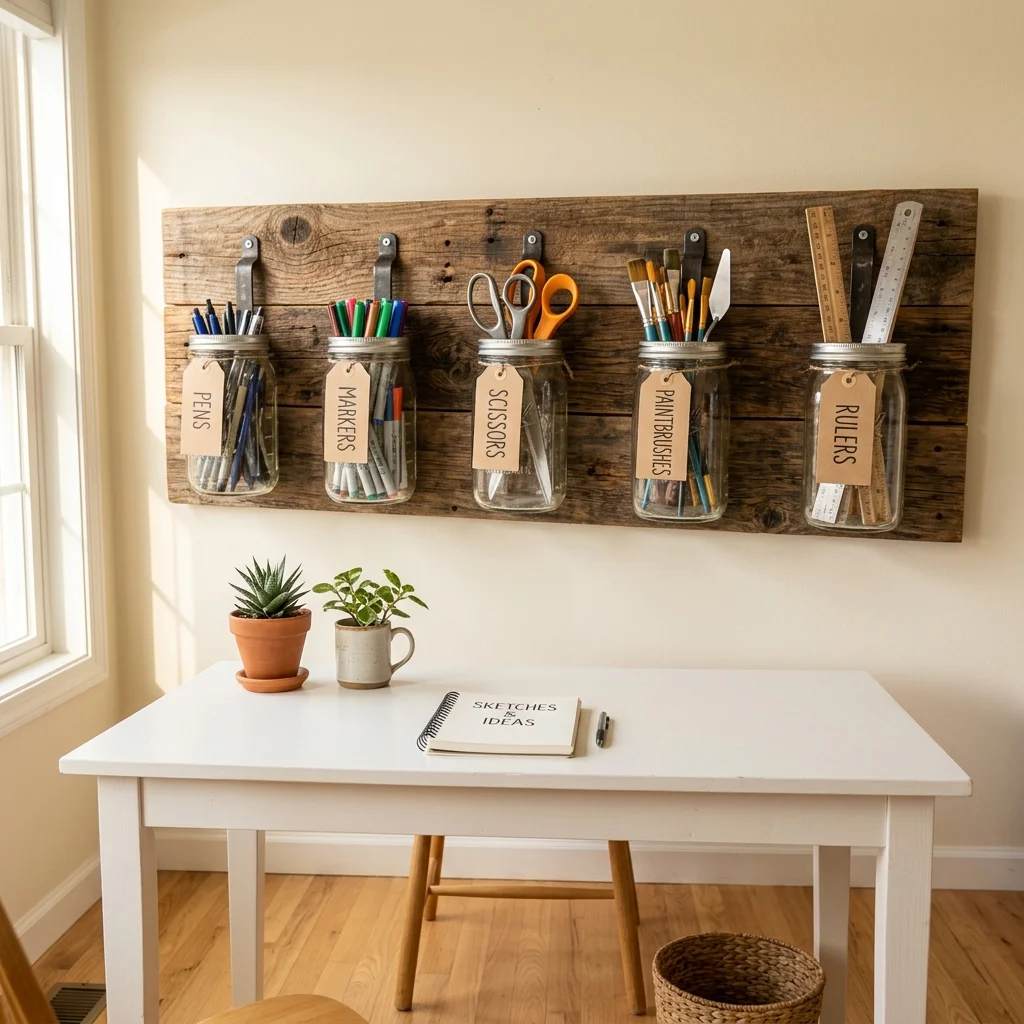
Every workspace has tall supplies that seem to wander across the desk over time. Mounted mason jars provide an attractive solution by keeping pens, brushes, scissors, and rulers neatly grouped while freeing valuable surface space. Their transparent design makes contents easy to identify at a glance, reducing unnecessary searching during busy projects. I’ve seen this arrangement work especially well in creative workspaces because it combines storage with decorative appeal. The finished display feels organized, welcoming, and full of handcrafted personality without becoming visually overwhelming.
The charm of this project comes from its flexibility and simple materials. A reclaimed wood backing adds warmth, while painted lids or decorative labels personalize the finished piece. Positioning the organizer above the desk keeps essential tools within comfortable reach without interfering with daily work. Mixing practical storage with subtle decorative details creates a balanced look that complements farmhouse, modern, or Scandinavian interiors alike. This thoughtful combination helps maintain tidy habits while giving the workspace a handcrafted feature that feels both useful and inviting.
Foldable Wall Desk
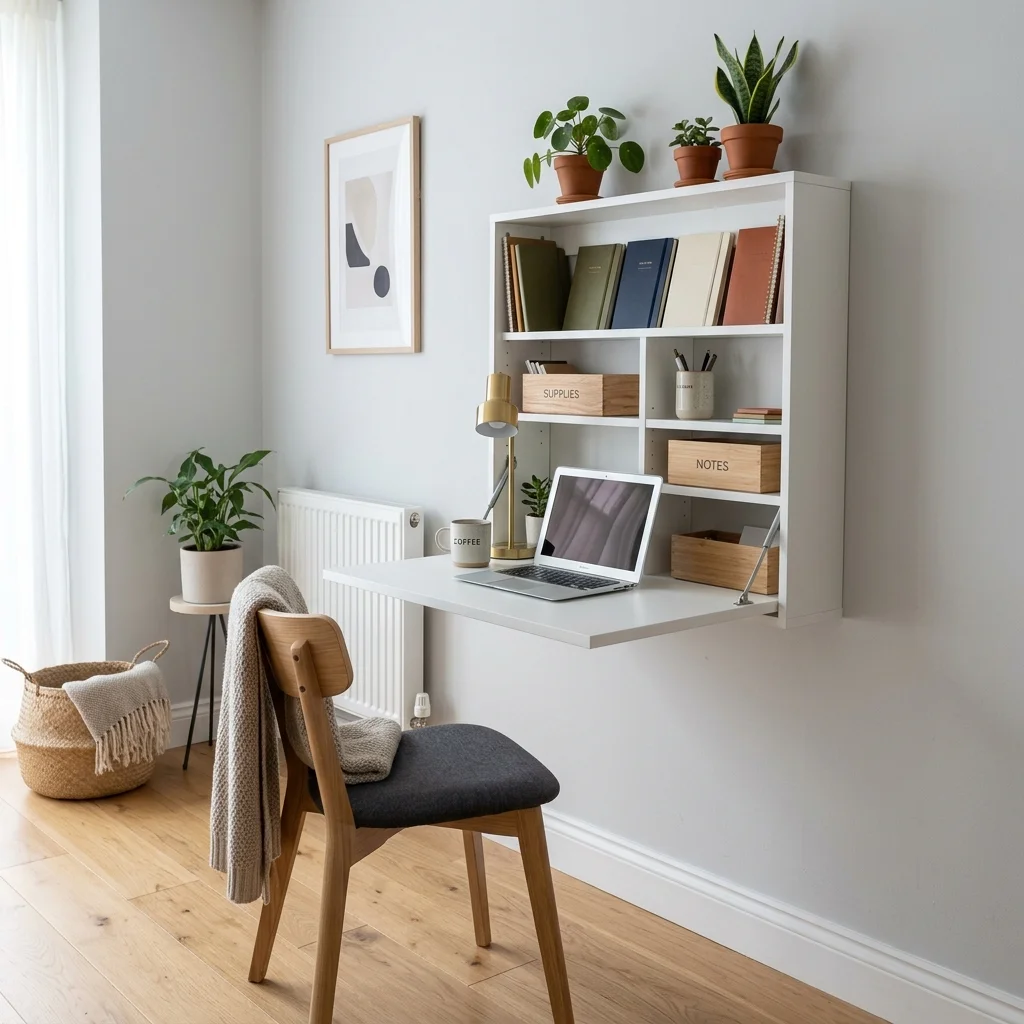
Limited square footage doesn’t have to limit organization or productivity. A foldable wall desk creates a dedicated workstation when needed, then folds away to restore valuable living space after the day ends. Built-in shelves keep essential supplies organized without requiring separate storage furniture. In my experience, compact solutions like this encourage keeping only necessary items nearby, naturally reducing clutter before it accumulates. The result is a workspace that feels intentional during work hours while allowing the room to transition smoothly back into everyday living.
Thoughtful organization inside the cabinet makes the design even more effective. Small baskets, labeled containers, and coordinated accessories keep everything neatly arranged behind closed doors. When the desk folds down, only a clean, organized setup remains visible, making it easier to focus on important tasks. Neutral finishes help the furniture blend seamlessly into surrounding décor without dominating the room. This practical design proves that even the smallest homes can support an efficient, attractive workspace with careful planning and smart storage choices.
Color-Coordinated Supplies
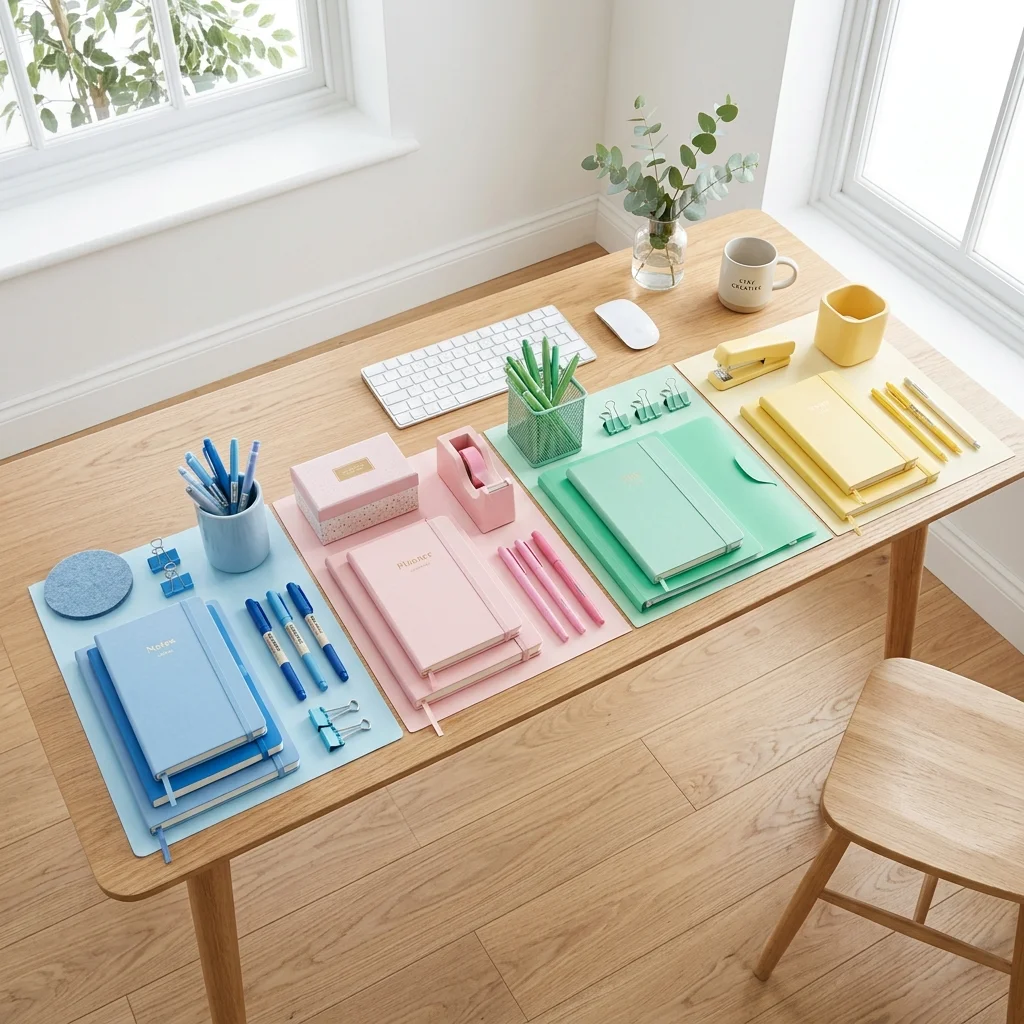
A cohesive color palette instantly gives a workspace a more polished and organized appearance. Grouping notebooks, folders, pens, and storage containers by complementary shades creates visual harmony while making supplies easier to identify. The arrangement feels deliberate rather than random, even when everyday essentials remain visible. I’ve noticed that consistent colors naturally encourage maintaining organization because misplaced items become easier to spot. This subtle design approach improves both aesthetics and functionality without requiring expensive furniture or complicated organizational systems.
Color coordination works best when combined with thoughtful editing instead of collecting unnecessary accessories. Choosing a few favorite tones and repeating them throughout the workspace creates unity without overwhelming the eye. Neutral furniture provides a calm backdrop, allowing coordinated office supplies to introduce personality in a balanced way. The finished space feels brighter, more welcoming, and easier to navigate during busy work sessions. Simple visual consistency often makes organization feel effortless while inspiring you to keep the workspace neat every day.
Conclusion
A beautifully organized workspace isn’t about perfection—it’s about creating a space that helps you feel focused, comfortable, and inspired every day. Even a few simple upgrades can make your desk more functional while adding warmth and personality to your surroundings. I’ve seen how small changes like these can completely transform a space, making everyday work feel less stressful and far more enjoyable.
If these diy desk organization ideas sparked inspiration, save this article to Pinterest so you can revisit your favorite projects whenever you’re ready to organize. Share it with friends or family who could use a workspace refresh, and start with just one idea today. Small improvements add up quickly, and before long, you’ll have a clean, stylish desk that supports both productivity and creativity with every task.
Read More : 16 Cheap DIY Fire Pit Ideas for Cozy Backyard Nights